The partnership between CTO and The Travel Foundation marks an important step in the evolution of tourism policies in the Caribbean. At the ITB Berlin 2026 international trade fair, the region’s tourism leaders confirmed that they would strengthen their cooperation to support a more sustainable tourism model, more resilient to climate change and more focused on local communities.
In a region where the economy is heavily dependent on tourism, climate change is no longer an abstract issue. The effects of global warming, the intensification of weather phenomena and the erosion of coastal ecosystems now represent immediate challenges for many island territories. It is against this backdrop that the partnership between CTO and The Travel Foundation takes on a strategic dimension. The objective is clear: to transform climate commitments into concrete actions capable of supporting the economic and social future of Caribbean destinations.
ITB Berlin, a strategic venue for the voice of the Caribbean
Every year, ITB Berlin brings together the world’s key tourism players: ministries, international organizations, airlines, destinations and industry experts. For the Caribbean, this event is an essential platform for recalling a reality that is often underestimated on an international scale: small island states are among the territories most exposed to the effects of climate change.
At a session devoted to the gap between climate risks and adaptation solutions in tourism, the Secretary General and CEO of the Caribbean Tourism Organization, Dona Regis-Prosper, highlighted the region’s real-life experience. The devastating hurricanes that regularly hit the Caribbean, rising sea levels and increasing pressure on marine ecosystems have had a profound impact on the territories. Today, this first-hand experience is a driving force for rethinking the region’s tourism strategies. The partnership between CTO and The Travel Foundation is precisely in line with this dynamic of transformation.

Moving from climate talk to concrete solutions
At the heart of the partnership between CTO and The Travel Foundation lies one overriding conviction: climate strategies must now go beyond declarations of intent. Caribbean destinations already have numerous studies, scientific data and prospective scenarios on climate risks. However, a persistent challenge remains: transforming this information into genuinely funded and operational projects.
This is one of the points raised by Narendra Ramgulam, Deputy Director of Sustainable Tourism at the Caribbean Tourism Organization. According to him, the region has no shortage of ideas and analyses, but the concrete implementation of projects is often hampered by a lack of access to funding. In this context, the partnership between CTO and The Travel Foundation aims to bridge the gap between strategic planning and real action on the ground.

A tourism model focused on local communities
One of the major thrusts of the partnership between CTO and The Travel Foundation concerns the role of local populations in tourism development. In many Caribbean destinations, the economic benefits of tourism sometimes remain concentrated in certain segments of the industry. The new cooperation framework aims to foster a more inclusive approach in which tourism projects generate direct benefits for communities.
This vision also implies a strengthening of local skills in sustainable tourism professions, as well as increased support for economic initiatives that enhance the region’s natural and cultural resources. This approach is in line with a global trend in the tourism sector. Today’s travelers are increasingly interested in responsible, authentic experiences that are closely linked to the realities of the areas they visit.
Caribbean tourism faces structural transformation
The partnership between CTO and The Travel Foundation comes at a pivotal time for the Caribbean tourism industry. Several profound transformations are redefining the future of the sector. The intensification of extreme climatic phenomena, the gradual weakening of coral reefs, the erosion of certain beaches and the evolution of travelers’ expectations in terms of sustainability are gradually changing the balance of regional tourism.
These elements are not just about the environment. They directly influence the tourism experience, the competitiveness of destinations and the livelihoods of many local populations. Against this backdrop, strengthening the resilience of Caribbean tourism is becoming as much an economic priority as an environmental one.
International cooperation to strengthen resilience
The renewal of the partnership between CTO and The Travel Foundation formalizes a strengthened collaboration between two organizations committed to the transformation of global tourism. The Travel Foundation has been working for several years on initiatives to make tourist destinations more sustainable, notably through climate planning, tourism flow management and ecosystem protection.
For its part, the Caribbean Tourism Organization represents the tourism interests of many of the region’s territories and plays a central role in coordinating regional policies. By combining their expertise, the two institutions aim to develop tools and strategies that will enable Caribbean destinations to better anticipate climate risks, while maintaining their attractiveness to tourists.
A regional vision for the future of Caribbean tourism
Beyond technical cooperation, the partnership between CTO and The Travel Foundation is also part of a broader vision: that of a coordinated regional approach to sustainable tourism. The Caribbean shares many common realities. The economies of many territories rely heavily on tourism, the islands remain particularly exposed to climatic risks, and the region boasts an exceptional natural and cultural heritage.
In view of these common characteristics, regional cooperation appears to be an essential lever for developing solutions tailored to the specific characteristics of island destinations. This approach is also in line with the ambitions of the CTO Reimagine Plan, a strategy that aims to reposition Caribbean tourism around sustainability, innovation and resilience.
The Caribbean, a global laboratory for sustainable tourism
Through the partnership between CTO and The Travel Foundation, the Caribbean is also seeking to assert its role in international debates on the future of tourism. The challenges facing the region today could foreshadow those that other tourist destinations will have to face in the coming decades. From this perspective, the Caribbean can become a veritable laboratory of innovation for climate-resilient tourism strategies, sustainable management of island destinations and the integration of communities into the tourism economy.
The stakes involved in the partnership between CTO and The Travel Foundation extend far beyond regional borders. The solutions developed in the Caribbean could inspire other regions of the world facing similar challenges.
The partnership aims to develop concrete strategies to make Caribbean tourism more resilient in the face of climate change, while supporting local communities.
Caribbean destinations have to cope with intensifying hurricanes, beach erosion, coral reef degradation and rising sea levels.
The Caribbean Tourism Organization aims to position the Caribbean as a sustainable destination, capable of reconciling tourism development, ecosystem protection and benefits for local populations.
TeMeUm 2026 marks a new stage in the policy of supporting local biodiversity initiatives in the French overseas territories. Launched by the French Office for Biodiversity (OFB), this annual campaign aims to finance micro-projects undertaken by associations, small communities and managers of natural areas who are active in the field.
At a time when island ecosystems are under heavy pressure from urbanization, climate change, pollution and biodiversity erosion, this program provides financial and technical resources to transform local initiatives into concrete, measurable actions. Project leaders have until April 14, 2026 to submit their applications via a fully paperless procedure.
Since its creation in 2010, the program has supported more than 420 micro-projects in the French overseas territories, confirming its role as a structuring force in supporting local environmental dynamics.
Financing tailored to small structures
One of the major assets of TeMeUm 2026 lies in its accessibility. The program deliberately targets smaller structures, which often have difficulty accessing traditional financing. Grants awarded range from a few thousand euros to 20,000 euros and can cover up to 80% of the total budget.
Aid is paid out in a single instalment as soon as the project is launched, enabling project sponsors to get their initiatives off the ground quickly, without having to wait for lengthy administrative procedures. This approach responds to a well-known reality in the French overseas territories: local players have solid expertise, but often lack immediate financial resources.
In addition to financial support, the OFB provides technical and administrative assistance to secure the implementation of projects and promote their development on a regional scale.
Three complementary schemes to structure projects
The campaign TeMeUm 2026 campaign is built around three distinct systems, designed to meet a variety of needs.
Springboard: supporting immediate local action
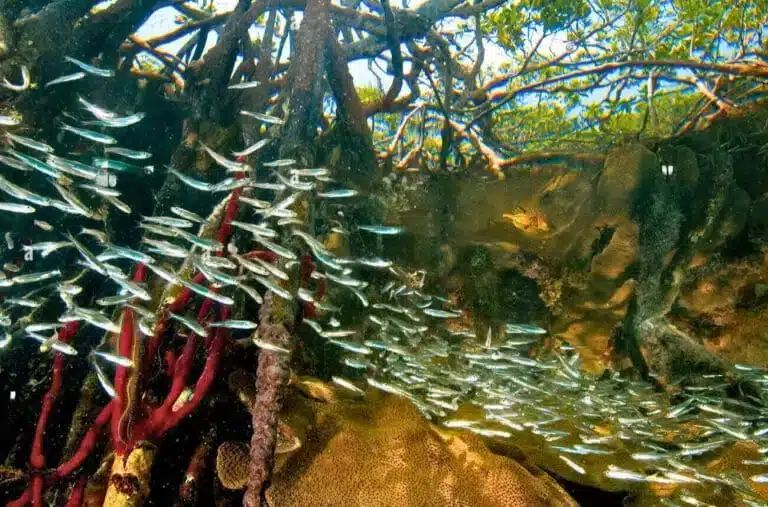
The Tremplin scheme is the operational heart of the program. It supports micro-projects for the protection or restoration of biodiversity, from first experiments in ecological management to innovative pilot initiatives.
Each year, around thirty projects are co-financed for amounts of up to 15,000 euros. The actions supported cover a wide range of fields: species monitoring, restoration of natural habitats, raising public awareness, and experimentation with new ecological management methods.
Among the initiatives supported in 2025 are participatory monitoring of marine biodiversity in Saint-Pierre-et-Miquelon, a project to mobilize citizens around sustainable urban development in French Guiana, and the creation of a botanical trail in Polynesia to preserve endangered endemic flora.
Cooperation: strengthening technical skills
The Cooperation component aims to structure partnerships between biodiversity stakeholders in order to strengthen local technical capacities. With a grant of up to 20,000 euros. This scheme supports collaborative projects involving several organizations.
These cooperative ventures enable us to pool scientific expertise, improve ecological management methods and develop more coherent territorial strategies. In 2025, a wetland restoration project in Mayotte benefited from this funding following a cyclone that weakened local ecosystems.
Companionships: transmission and training in the field
The Compagnonnages program focuses on vocational training and the transmission of know-how. It enables teams from the French overseas departments and territories to spend short periods of time – one to two weeks – working within expert structures.
The OFB will cover travel, accommodation and catering expenses, up to a maximum of 5,000 euros. This format encourages direct technical exchanges and rapid skills transfers.
In 2025, environmental agents in the Indian Ocean were trained in techniques for capturing and studying chiropterans, while an international partnership studied the impact of microplastics on green turtle egg-laying sites and seabird nesting.


Simplified procedures and local support
The program TeMeUm 2026 is based on a clear commitment to administrative simplification. Applications are submitted entirely electronically via the Démarches Simplifiées platform, making it easier for organizations located far from major administrative centers to apply. Applications are examined by local juries made up of biodiversity stakeholders from each region. This organization guarantees an assessment adapted to the ecological and social realities of each overseas zone.
Support doesn’t stop at the selection stage. TeMeUm’s national teams and the OFB’s regional delegations follow project leaders through the entire process, from dossier preparation to operational implementation, evaluation and valorization of results.
A handbook detailing eligibility criteria and expected commitments is available to applicants. Two information webinars are also scheduled on March 23 and 25, 2026 to help structures prepare their bid.
A major challenge for the Caribbean and Indian Ocean territories
For the French overseas territories, biodiversity is both an exceptional natural heritage and a factor of economic, cultural and tourist resilience. The marine and terrestrial ecosystems of the Caribbean, French Guiana and the Indian Ocean play a central role in protecting against climate risks, ensuring food security and enhancing the attractiveness of these territories. Against this backdrop, TeMeUm 2026 represents a strategic opportunity for local players wishing to develop concrete projects, whether to restore natural habitats, protect endemic species or raise public awareness.
The program also contributes to structuring a network of committed players, encouraging the circulation of skills and the sharing of experience between overseas territories.


Local mobilization for sustainable biodiversity
By renewing its call for projects, the OFB confirms the importance of a territorial approach to biodiversity, based on the expertise of local players. TeMeUm 2026 is more than just a funding scheme: it’s part of a global strategy designed to strengthen the capacity for action of structures in the French overseas territories, and to support initiatives tailored to the ecological realities of each territory. Applications for the three schemes – Tremplin, Coopération and Compagnonnages – are open until April 14, 2026. Project sponsors can contact their local OFB delegation or the TeMeUm team directly for further information.
Through this new campaign, TeMeUm 2026 confirms that preserving biodiversity in the French overseas territories depends above all on the commitment of local players, who are capable of transforming targeted initiatives into sustainable solutions for their territories.
TeMeUm 2026 is a program run by the French Biodiversity Office to finance micro-projects to protect and restore biodiversity in the French overseas territories. It supports associations, local authorities and natural area managers working in the field.
Associations, small local authorities, public establishments and managers of natural areas in the French overseas territories are all eligible to apply. The program is designed to be accessible to small structures with concrete projects in favor of biodiversity.
Applications for the Tremplin, Coopération and Compagnonnages schemes are open until April 14, 2026. Applications must be submitted online via the Simplified Procedures platform of the French Biodiversity Office.
The integration of Richès Karayib into the Caribbean Broadcasting Union (CBU) marks a new stage in the development of Caribbean media. This membership formalizes Richès Karayib’s regional roots and reinforces its determination to actively contribute to the structuring of the Caribbean media landscape.
In a context where the circulation of content remains fragmented between linguistic and geographic territories, joining the Caribbean Broadcasting Union represents a strategic lever for boosting the visibility and circulation of Caribbean content.
The Caribbean Broadcasting Union, a pillar of the Caribbean media landscape
The Caribbean Broadcasting Union is the regional organization that federates the Caribbean media, covering radio, television, print and digital platforms. It plays a central role in cooperation between broadcasters, the circulation of content, the professionalization of players in the sector and the promotion of Caribbean productions.
Every year, the Caribbean Broadcasting Union organizes the CBU Media Awards. These awards recognize the most outstanding productions in radio, television, print and digital. These awards are a major event for Caribbean media professionals, helping to raise standards of journalistic and editorial quality in the region. By becoming a member of the Caribbean Broadcasting Union, Richès Karayib joins a structured and recognized network at the heart of regional media dynamics.

A strategic step for Richès Karayib
Since its creation, Richès Karayib has been promoting culture, heritage, tourism and the women and men who shape the Caribbean’s attractiveness and influence. Membership of the Caribbean Broadcasting Union consolidates this trajectory by opening up new prospects:
- – publishing cooperation on a regional scale
- – increased circulation of content
- – professional exchanges between member media
- – enhanced visibility with institutional and economic players
Joining the Caribbean Broadcasting Union also enables Richès Karayib to place its productions within a demanding regional framework, where content quality, journalistic rigor and editorial impact are decisive. This new step comes at a time when the medium is developing its print, digital and audiovisual formats, with a clear ambition: to connect Caribbean territories beyond linguistic borders.
Building a structured Caribbean media space
The Caribbean is rich in talent, culture and initiative. However, content produced in one territory is still not widely distributed to other islands and countries in the region. One of the major challenges of the Caribbean Broadcasting Union is precisely to promote this circulation and encourage regional collaboration.
By joining the Caribbean Broadcasting Union, Richès Karayib is affirming its desire to play an active part in this dynamic. This is not just institutional recognition, but a commitment: to contribute to a more connected, visible and structured Caribbean media.
This approach is in line with Richès Karayib’s mission to promote the region’s talents, initiatives and heritage, while encouraging synergies between regions.
Setting course for the CBU Media Awards
As part of this membership, Richès Karayib will take part in the 37th CBU Media Awards organized by the Caribbean Broadcasting Union. Richès Karayib’s participation is in line with the company’s commitment to professionalization and regional outreach.
Beyond the competition, the CBU Media Awards represent a space for Caribbean media to meet, exchange ideas and gain visibility. For RK, it’s a further opportunity to promote a committed editorial voice in the service of the Caribbean.

A new development phase
Joining the Caribbean Broadcasting Union marks a natural evolution for Richès Karayib. After consolidating its presence in the French-speaking Caribbean, the medium is now taking a decisive step towards wider regional integration.
In a changing media environment, where cooperation, editorial quality and international visibility are essential, joining the Caribbean Broadcasting Union is a strong signal.
Richès Karayib’s ambition is to contribute to a more visible, coherent and assertive Caribbean media.
The Caribbean Broadcasting Union (CBU) is the regional media organization for the Caribbean, covering radio, television, print and digital platforms. It promotes cooperation, the circulation of content and the professionalization of players in the sector.
Membership of the Caribbean Broadcasting Union enables Richès Karayib to join a structured regional network, boost its visibility on a Caribbean scale and develop editorial collaborations with other member media.
The CBU Media Awards are an annual competition organized by the Caribbean Broadcasting Union to recognize the best radio, television, print and digital productions in the region.
Every February 19th, International Whale Day invites us to celebrate these emblematic marine mammals and reflect on their essential role in the health of the oceans. In the Caribbean, International Whale Day resonates with particular intensity: here, the turquoise waters become the scene of a natural ballet that attracts visitors from all over the world, combining wonder, environmental commitment and responsible tourism.
This region is no longer just a migratory stopover for humpback whales. It has become, for curious travelers and nature enthusiasts, a must-see destination for a unique cetacean-watching experience.

A well-established migration season, already active in 2025
The annual migration of humpback whales to the warm waters of the Caribbean continues to be a major seasonal phenomenon. Scientists and local observers confirm that the first individuals are seen as early as January, and that their presence intensifies throughout the following months. This spectacular migration, visible from the waters off Guadeloupe to the protected marine areas of the Dominican Republic, offers a prime viewing window for visitors between December and April, with peak activity often recorded around February and March – precisely when the Caribbean celebrates International Whale Day.
For travellers, these months represent the ideal time to combine vacations, the discovery of marine biodiversity and responsible tourism.


The Caribbean in the global cetacean ecosystem
The Caribbean region is home to a wide variety of cetaceans: whales, sperm whales and dolphins frequent these rich waters at different times of the year. According to the data collected, several species of mysticetes (baleen whales) and odontocetes (toothed whales and dolphins) are present, some permanently, others in transit.
This diversity enriches the observation experience and makes the Caribbean a global world crossroads for the study and conservation of marine mammals. It also offers visitors the chance to see different species on the same expedition.

A real and growing impact on tourism (2024-2025)
Although figures on whale-watching tourism in the Caribbean are still fragmentary, it is undeniable that this activity attracts a significant number of foreign visitors each season. In some of the region’s cruise ports, for example, over 375,000 passengers are expected during the 2024-2025 season, reflecting the strength of the island’s tourism sector as a whole.
If we take into account that whale watching is often integrated into these maritime experiences (excursions, nature stopovers, marine safaris), this shows the extent to which cetaceans have become a strong attraction in the Caribbean tourism offer.
In the most famous areas, such as Samaná Bay in the Dominican Republic, whale-watching activity is already recognized as one of the most important in the region. Dozens if not hundreds of individuals are identified each season, reflecting the importance of this marine area for the breeding and rearing of young whales.

Biodiversity as an attraction
What sets the Caribbean experience apart is the combination of natural spectacle and exceptional biodiversity. Unlike purely visual marine safaris, whale-watching trips here take place in a rich ecological context where different types of cetaceans co-exist: humpback whales, sperm whales and dolphin species, each with their own unique behaviors.
Passionate travelers have the opportunity not only to see these animals, but also to learn more about their life cycles, underwater songs and migration strategies – a scientific and educational dimension that simply transforms “observing” into “understanding”.
Exceptional observation hotspots
The Caribbean boasts several remarkable observation sites:
- – Samaná Bay (Dominican Republic): renowned for hosting numerous humpback whales during their breeding and calving periods.
- – The coasts of Guadeloupe particularly around the islands of Les Saintes and Marie-Galante, offer excellent conditions for watching spectacular whale jumps.
- – Silver Bank (off the coast of the Dominican Republic): a marine sanctuary where you can sometimes enjoy more immersive experiences.
- – French departments of America (Guadeloupe, Martinique) part of the Agoa sanctuary, which protects over 143,000 km² dedicated to marine mammals.


Responsible tourism: challenges and best practices
The growth of whale-watching tourism is not without its challenges. It involves a shared responsibility between tourism operators, local authorities and the travellers themselves. In many areas, ethical approach protocols have been adopted to minimize stress on the animals. These include respectful approach distances, speed limits at sea, controlled observation times, and a ban on swimming with whales without strict scientific supervision.
For travelers, choosing certified service providers committed to conservation has become a marker of quality experience. It’s also a concrete way of supporting sustainable tourism: by respecting the rules, you protect the animals while promoting responsible economic activity that benefits local communities.

An unforgettable human and ecological experience
International Whale Day is a reminder that these species are both jewels of biodiversity and vectors of connection between man and nature. For tourists visiting the Caribbean, whale watching is an encounter with an ancient animal intelligence, an immersion in a unique migratory cycle and an awareness of the importance of preserving these marine giants.
Witnessing these encounters, whether it’s a whale calf playing on the surface or a mother accompanying her calf, is rarely an indifferent experience. And for those with a passion for the Caribbean, the experience becomes a must. source of inspiration and commitment to protecting the oceans.
A call to action as conscious travelers
On International Whale Day, the Caribbean reminds us that it’s not just a postcard destination: it’s a living hub of marine biodiversity, where natural beauty meets environmental responsibility. For travelers and enthusiasts alike, International Whale Day is an invitation to enjoy authentic, informed and respectful experiences, enriching not only their stay but also their understanding of the marine world around us.
Every whale-watching excursion can become a moment of sharing, knowledge and respect, a personal contribution to the preservation of these giants of the sea, today and for future generations.
International Whale Day coincides with the peak migration season of humpback whales to the warm waters of the Caribbean. This makes the region a major breeding and whale-watching site, reinforcing its role in the preservation of marine biodiversity and the development of sustainable tourism.
The whale-watching season generally runs from December to April, with a peak between February and March. It is during this period that humpback whales calve in Caribbean waters, offering visitors ideal viewing conditions.
Yes, when governed by strict rules. Many Caribbean territories apply regulated approach protocols: minimum distance, limited number of boats, controlled speed and operator training. Choosing a certified service provider is essential to guarantee a responsible and sustainable experience.
Black History Month 2026 is more than just an annual commemoration in the American cultural calendar. February 2026 marks a major historical turning point: the centenary of what was to become Black History Month. A century earlier, in 1926, an intellectual and activist initiative laid the foundations for an in-depth effort to correct a glaring absence: that of the history of black populations in official narratives and educational programs.
In 2026, Black History Month celebrates more than symbolic longevity. It invites us to question the way societies produce, select and transmit their memories, as well as the power relations that determine what deserves – or not – to be taught, recognized and commemorated.
Origins of Black History Month: from Negro History Week to national recognition
The history of Black History Month officially began in 1926 with the creation of Negro History Week the initiative of African-American researchers united within the Association for the Study of Negro Life and History. At a time when black history is largely absent from school textbooks and universities, this initiative aims to produce rigorous, documented and transferable knowledge about the contributions of people of African descent to the United States.
From the outset, the challenge went beyond mere symbolic recognition. It’s about rebalancing the historical narrative, based on research, archiving and educational dissemination. Negro History Week gradually became a space for contesting dominant narratives, highlighting trajectories, struggles and creations long relegated to the margins.

2026, a pivotal year: the centenary of Black History Month
A century after this first initiative, Black History Month 2026 is part of a dynamic of historical rereading. The transformation of a week of commemoration into an officially recognized month in the mid-1970s marked an important, but not definitive, step in the institutional recognition of black history.
The theme chosen for this edition, “A Century of Black History Commemorations”. A century of commemorations is an opportunity to take a critical look at the road we’ve travelled. The aim is not simply to measure the progress made, but to analyze the profound dynamics revealed by a century of commemorations: tensions between institutions and communities, issues of educational transmission, struggles for historical legitimacy.

Miami, Afro-American and Afro-Caribbean crossroads for Black History Month 2026
In this context, Miami occupies a singular place in the celebrations of Black History Month 2026. As a crossroads between North America, the Caribbean and Latin America, Miami embodies a transatlantic black memory, shaped by migration, exile and cultural circulation.
The programming supported by local and community institutions reflects this plurality. It articulates African-American and Afro-Caribbean heritages, underlining the historical continuity between the United States and the Caribbean. In Miami, Black History Month is not just a tribute to the past, but a living space for diasporic dialogue.
Black History Month 2026 program in Miami: highlights
Ceremonies and times of remembrance
- – February 1st – Trayvon Martin Remembrance Gala
- – February 2 – Dr. Martin Luther King, Jr. and Pieces of Black History Exhibition
- – February 3rd – HistoryMiami Icon Awards
– Institutional launches and public events
- – February 6th – Black History Month Kickoff and Exhibit (Miami-Dade County)
- – February 20th – Black History Month Food Truck & Vendor Fair
Music, jazz, gospel and stage creations
- – Concerts and performances throughout the month at the Adrienne Arsht Center, the New World Center and the African Heritage Cultural Arts Center
- – Jazz, spirituals and gospel highlights, including creations dedicated to Malcolm X, Langston Hughes and Margaret Bonds
- – Symphonic and vocal programming combining Afro-American heritage and contemporary expression
Festivals, gastronomy and diasporic culture
- – Heritage Fest (February 7)
- – Culinary events integrated into the South Beach Wine & Food Festival, with an explicit focus on Afro-Caribbean cultures
- – Cultural brunches and community gatherings in Miami’s historic neighborhoods
Exhibitions and events throughout February
- – Art exhibitions at Historic Hampton House, Pérez Art Museum Miami and in the public library network
- – Heritage tours and Black History Bus Tours of historic black neighborhoods
- – Screenings, performances and educational activities throughout the month

Black arts, music and heritage: passing on a living history
Black music and collective memory
Music takes center stage at Black History Month 2026. Jazz, gospel, spirituals and contemporary creations tell the story of a black sound that spans the centuries. These musical forms bear witness to resistance, adaptation and cultural transmission from African and Caribbean worlds, transformed in the American context.
Through concerts and performances, music becomes a tool tool of memory capable of linking the history of slavery with contemporary artistic expression.
Visual arts, exhibitions and urban narratives
The exhibitions and heritage projects presented during Black History Month 2026 contribute to a critical re-reading of urban and social history. They shed light on long-invisibilized narratives, rooted in the neighborhoods, cultural practices and individual trajectories of black communities.
Afro-American and Afro-Caribbean gastronomy: an embodied cultural history
Gastronomy is another essential vector of transmission. Afro-American and Afro-Caribbean cuisines tell a story of constraint, inventiveness and resilience. Born of contexts marked by slavery and migration, they have established themselves as cultural heritages in their own right.
As part of Black History Month 2026, the showcasing of these culinary traditions highlights the historical circulations between the Caribbean and the United States, as well as the contemporary recognition of these heritages.
The Caribbean, an essential dimension of Black History Month 2026
Even when the Caribbean is not explicitly named, it remains omnipresent in Black History Month 2026. Caribbean migrations have profoundly shaped black American cultures, influencing music, religious practices, cuisine and intellectual movements.
Miami illustrates this historical continuity, where Afro-Caribbean and Afro-American narratives intersect and respond to each other. The Caribbean thus appears not simply as a background, but as a structural component of black history in the United States.

A century of commemoration: passing on long-marginalized stories
The centenary of Black History Month raises a fundamental question: how does a society choose to pass on the stories it has long marginalized? The recognition of black history has never been a linear process. It is the result of intellectual struggles, community mobilizations and ongoing institutional negotiations.
In 2026, Black History Month presents itself not as a finished celebration, but as a critical tool for the present. It reminds us that history is a field of debate, where dominant narratives can and must be interrogated.
Black History Month 2026 marks the centenary of Negro History Week, created in 1926 by African-American scholars to document and transmit the history of black populations, long absent from mainstream narratives. This centenary edition invites critical reflection on a century of commemorations and the transmission of historical knowledge.
Miami is a unique Afro-American and Afro-Caribbean crossroads. In 2026, the city will host a dense program of memory, arts, music, gastronomy and heritage, illustrating the historical links between the United States and the Caribbean in the construction of contemporary black cultures.
Yes, the black history of the United States is inseparable from Afro-Caribbean migration and heritage. Black History Month 2026 highlights these cultural circulations, particularly in Miami, where Caribbean music, cuisine and stories play a central role in the celebrations.
The Caribbean coral reefs are one of the region’s most precious natural pillars. They protect coasts, feed populations, support tourism and harbor exceptional biodiversity. Yet this strategic ecosystem is undergoing an unprecedented crisis. In just over forty years, almost half of all hard corals have disappeared, under the combined effect of global warming and increasing human pressure. Behind this silent erosion lies a central issue for the future of the Caribbean territories: their ecological, economic and social resilience.
Caribbean coral reefs: a historic loss since 1980
Data compiled by the Global Coral Reef Monitoring Network have drawn a stark conclusion. Between 1980 and 2024, hard coral cover in the Caribbean fell by 48 %. This decline occurred in fits and starts, during several episodes of mass mortality, often correlated with major climatic anomalies.
Some years were marked by abrupt changes. In 1998 and again in 2005, widespread bleaching episodes led to major losses. More recently, the 2023-2024 period has been marked by a further fall estimated at 16.9% reduction in coral cover in a single year. This is a direct consequence of exceptionally high ocean temperatures. These figures now place Caribbean reefs among the world’s most threatened marine ecosystems.

Coral bleaching and thermal stress: the causes of the decline
Warming waters and record-breaking sea temperatures
The main factor explaining the decline of Caribbean coral reefs is ocean warming. In the region’s reef zones, the average surface temperature has risen by around 1.07°C between 1985 and 2024 at a rate higher than that observed on a global scale. In 2023, some areas recorded temperatures exceeding 30°C for several weeks. This is a critical threshold for coral survival.
Ocean acidification and coral disease
Under the influence of heat or pollution, corals expel zooxanthellae, the symbiotic microalgae that provide them with most of their energy. This phenomenon, known as bleaching, permanently weakens colonies. When the stress is prolonged, mortality becomes inevitable. Added to this is ocean acidification, linked to the absorption of atmospheric CO₂, which weakens the calcareous structures of corals and encourages the onset of disease.


Why are Caribbean coral reefs essential to biodiversity?
Although they only cover about 1% of the seabed coral reefs are home to almost 25% of the world’s marine biodiversity . In the Caribbean, they provide essential habitat for hundreds of species: parrotfish, lobsters, conch shells, sea turtles and coastal sharks.
The gradual disappearance of coral leads to a cascading cascade collapse associated ecosystems. Degraded reefs are gradually being invaded by macroalgae, whose presence has increased by more than 80% since 1980. This transformation is accentuated by the over-fishing of herbivorous fish, which used to play a key role in maintaining the reef’s ecological balance.


A major economic impact for Caribbean territories
Coastal tourism and coral reefs
The Caribbean coral reefs represent a major economic driver. Their contribution is estimated at more than $6 billion a year. In many areas, these activities are an essential part of the local economy and employment. In many areas, these activities are an essential part of the local economy and employment.

Artisanal fishing and food security
Reefs also serve as breeding and feeding grounds for many species exploited by artisanal fishing. Their degradation directly threatens the food security of already vulnerable coastal communities.

Natural coastal protection against storms
Last but not least, reefs act as a natural natural barrier against coastal erosion and cyclonic swell. Their weakening exposes Caribbean coasts to increased risks of flooding and forces states to invest in costly artificial infrastructures.
Human pressure and urbanization: vulnerability specific to the Caribbean
The specificity of the Caribbean lies in the high human density in the vicinity of reefs. Since the early 2000s, the population living within 20 kilometers of these ecosystems has increased by nearly 30 %. This concentration results in increased coastal pollution, inadequate sanitation systems, poorly regulated tourism and rapid coastal urbanization.
The Caribbean coral reefs are undergoing a double shock: local pressure from human activities and the global impact of climate change, two mutually reinforcing dynamics.

Can the Caribbean's coral reefs still regenerate?
Marine protected areas and ecological corridors
Despite the gravity of the situation, some areas are showing signs of resilience. Particularly resilient coral colonies have been identified in the southern Gulf of Mexico, some of them disease-free and home to critically endangered species. These discoveries have led to the creation of interconnected marine protected areas, encouraging the circulation of species and the natural regeneration of reefs.
Coral restoration and natural resilience
Restoration programs, based on coral nurseries and targeted transplants, demonstrate that recovery is possible when human pressures are reduced. As the United Nations Environment Programme, science shows that reefs can recover if coherent policies of protection, fisheries management and pollution reduction are implemented.
The loss of almost half of the Caribbean’s coral reefs since 1980 marks a historic turning point. It reveals the limitations of current management models, and underlines the urgent need for an integrated approach that brings together science, public policy and local stakeholders. The survival of the reefs will largely determine the environmental, economic and social future of the Caribbean.
Coral reefs in the Caribbean are disappearing mainly due to global warming, which is causing massive bleaching episodes, combined with ocean acidification, coral disease and local human pressures.
They support tourism, fishing and coastal protection. Their degradation leads to significant economic losses and increases the costs associated with erosion and coastal infrastructure.
Yes, when human pressures are reduced and effective protection measures put in place, some reefs show a real capacity for resilience and regeneration.
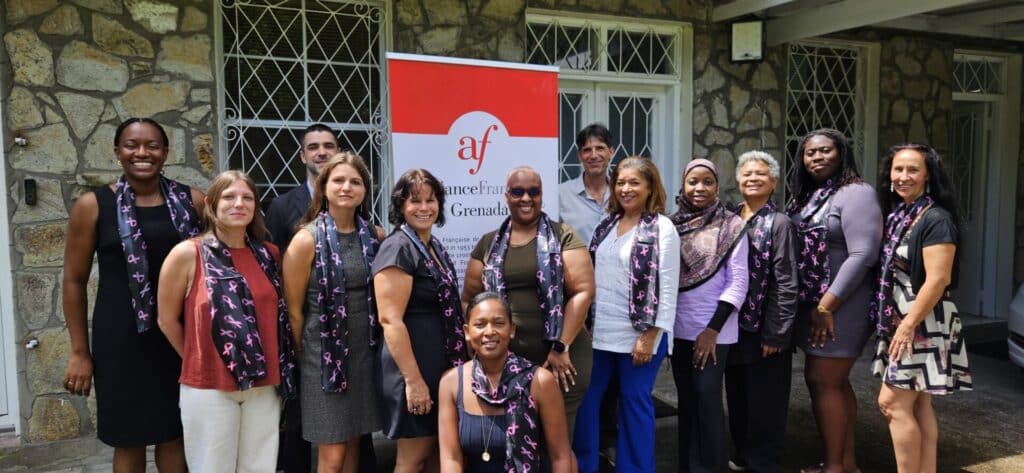
The Rézo 2025 seminar, held in Grenada, brought together the directors of the Alliances Françaises of the English-speaking Caribbean, with the same ambition: to consolidate the links between the territories and reinforce the vitality of the French-speaking world in the region.
Having explored the institutional and strategic vision of this regional cooperation in the previous article, “The Alliances Françaises network at the heart of the Caribbean: cooperating, innovating, sharing”, Richès Karayib now turns the spotlight on those who are at its beating heart.
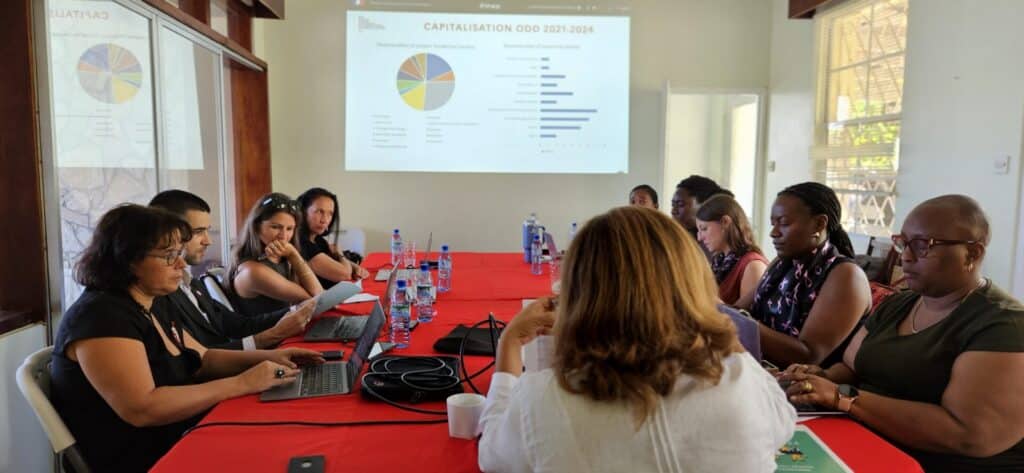
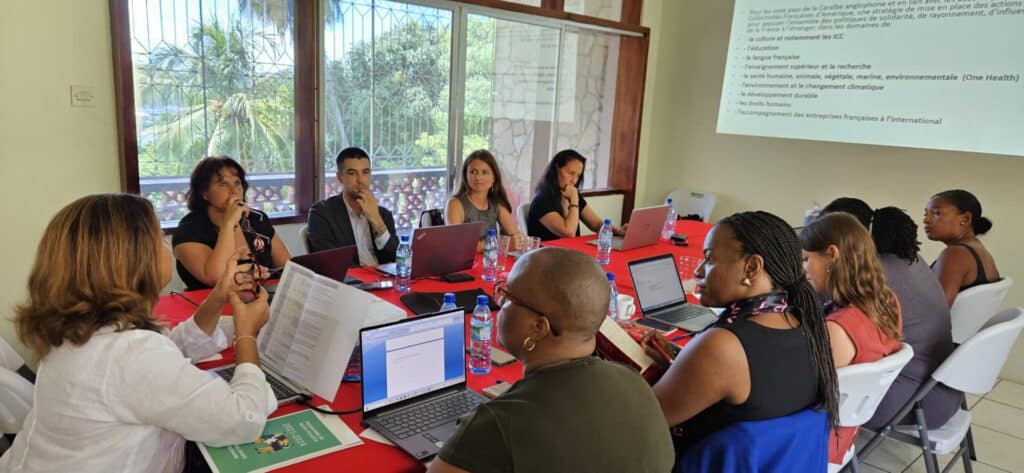
For several days, the participants shared their experiences, challenges and successes, revealing a common conviction: to bring culture and the French-speaking world closer to the people of the Caribbean via the Alliances Françaises.
An essential meeting for a fragmented network
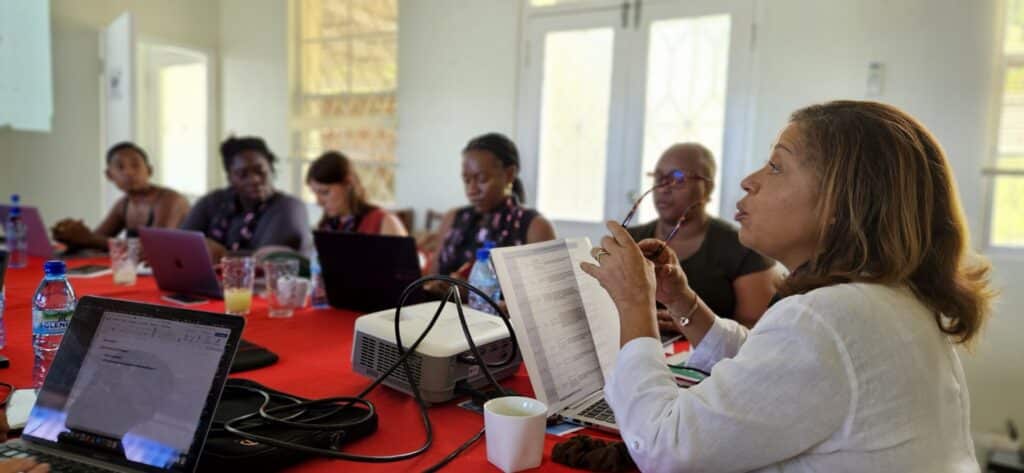
Each Alliance Française operates on an island, often geographically isolated. This seminar, organized with the support of the Service de Coopération et d’Action Culturelle (SCAC) of the French Embassy in Saint Lucia, was a breath of fresh air for the Alliance Française network. The directors emphasized that these meetings are an essential step: they enable them to exchange tools, compare local realities and together find concrete solutions to shared challenges. They all emphasized the strength of the collective, the richness of exchanges in an English-speaking environment and the complementarity of approaches between territories.
These moments offer both a human and a formative dimension: they re-energize, reinforce solidarity and remind us that, despite the diversity of contexts, the Alliances Françaises move forward with the same ambition – to make the French-speaking world live and shine in the Caribbean. From an institutional point of view, Christiane Bourgeois, Cooperation and Cultural Action Advisor, reminded us that this annual seminar is the only time when all the directors can get together to discuss successes, difficulties and common perspectives.
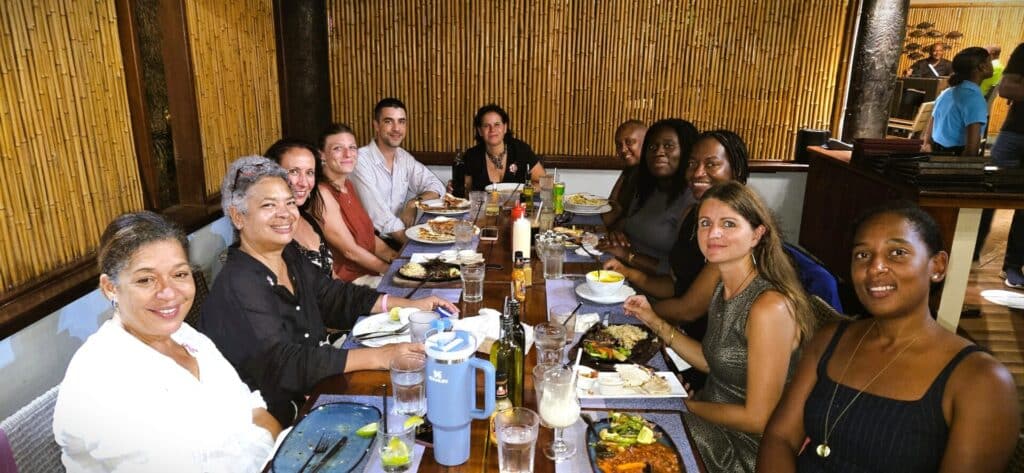
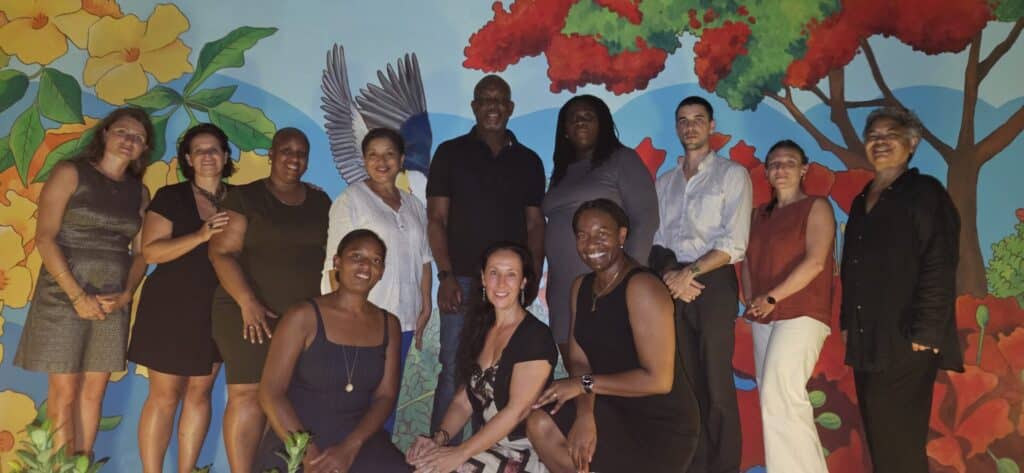
Nine territories, nine realities, but the same conviction: these times of exchange are essential to maintain the network’s momentum and strengthen cooperation in the Caribbean. Beyond these collective exchanges, it is in the field that the vitality of the Alliances Françaises network takes on its full meaning. Each Alliance Française acts in its own way, in line with the realities of its environment and the languages and cultures of its territory.
A deep-rooted network: ten Alliances, one commitment
Although their contexts differ, the Alliances Françaises of the English-speaking Caribbean share the same vocation: to teach, connect and bring the French-speaking world to life on a daily basis. They adapt to local realities with the same conviction: culture and language are levers for social cohesion, openness and the future.
Grenade – Ilona Forte-Gilbert: teaching differently, connecting differently
The Alliance Française de Grenade operates without permanent premises, a situation that Ilona Forte-Gilbert has turned into an asset.
Courses are now offered online, helping to maintain the French language’s presence and reach new audiences. The Alliance is also involved in schools through educational and cultural activities carried out in partnership with teachers. Out-of-home screenings and workshops keep us in touch with the community.
“Our priority is to remain present and useful, even without a building. Digital technology and partnerships enable us to keep the Alliance going.”

Saint Lucia – Aurélie Gbeffa: coordinating and federating
In Saint Lucia, Aurélie Gbeffa runs the local Alliance and is responsible for regional coordination of the ten Alliances Françaises in the Eastern Caribbean. She assists managers with communication, pooling, associative governance, digital transition and cultural revitalization.
It also pilots the Rézo project, an annual seminar supported by the SCAC, which has become a key event for cohesion and collective reflection. In Castries, the Alliance Française de Sainte-Lucie combines language courses, cultural activities and Creole language promotion through exhibitions and workshops.
“Our strength lies in moving forward together while valuing the cultural diversity of our islands.”

Barbados – Océane Gaillard: promoting French in an English-speaking environment
In Barbados, the Alliance Française acts as a linguistic and cultural bridge. Under the leadership of Océane Gaillard, it has consolidated its foothold in a predominantly English-speaking environment. Educational programs have been set up for schools and adults, and the Alliance has trained members of the Regional Security System in French and Haitian Creole.
On the cultural front, it has welcomed the Guianese troupe Ôtepé, and is developing a program open to different French-speaking expressions.
“We represent a plural Francophonie: France, Africa, Canada and the Caribbean. Culture is our best lever for inspiring the desire to learn.”

Trinidad & Tobago – Anyka Batista: an open and inclusive francophonie
In Trinidad & Tobago, Anyka Batista defends an inclusive and creative Francophonie, which values local languages as much as French. Every October, Creole Heritage Month brings together screenings, conferences and concerts, reflecting a strong commitment to cultural diversity.
The Alliance Française also offers courses for children, teenagers and adults, as well as cultural evenings that encourage encounters between communities. Challenges related to visibility and funding persist, but are offset by a collaborative approach with local schools and institutions.
“We want the Francophonie to be seen as part of our culture, not something external.”

Jamaïque – Clovis Lemée: creating living spaces
In Jamaica, Clovis Lemée is revitalizing a historic Alliance Française, transforming it into a place for living and creating. The Language Exchanges, monthly multilingual evenings, bring together a varied public around cultural themes, while the French Library Sessions – mini-concerts filmed in the media library – turn language into a tool for encounters and artistic expression.
“Learning a language is about creating links. That’s what the Alliances Françaises are all about.”
This cultural dynamic is attracting a younger audience and helping to restore the French language to its rightful place in the English-speaking Caribbean.

Saint-Kitts & Nevis – Lucille Caulliez : education and ecology
The Alliance Française de Saint-Kitts & Nevis combines language learning with civic engagement. Her Naturally Learn French project, supported by a grant from the French Embassy to the Eastern Caribbean, Barbados and the OECS, offered six months of free tuition to twelve teenagers from disadvantaged backgrounds, combining French language discovery, ecological workshops and cultural activities. Each month, participants explored local ecosystems, cultivated a garden, created with recycled materials or exchanged online with students from Guadeloupe – a concrete and lively way to learn the language while forging links in the Caribbean.
This project, which earned the Alliance the Green Alliance Award from the Global Environment Facility, illustrates the vitality of an open, sustainable and youth-oriented French-speaking community. She is also developing Francoscop, an audiovisual series produced by young people, dedicated to the French-speaking world.
Director Lucille Caulliez sums up the spirit of the program:
“We want to show that French is a tool for openness and creativity.”

Dominique – Cévinne M’Voula-Henderson: connecting languages and cultures
Established in 1965, the Alliance Française de la Dominique is active in the educational and cultural fields. The Creole & French Spelling Bees, bilingual spelling contests, encourage students to play with the two languages, understand their complementarity and take pride in them. Training workshops and cultural activities support the enhancement of Creole heritage while promoting the French language.
“The aim is to make French and Creole languages of pride and transmission.”

Guyana – Déborah First-Quao: rebuilding and training
In Georgetown, Déborah First-Quao, recently appointed to Guyana, is re-launching a long-standing but low-profile Alliance Française by focusing on training and educational partnerships. She has created a network of French teachers, developed bilingual workshops at the National Library and renewed ties with local institutions. Cultural and educational initiatives aim to put French back into everyday life, despite major logistical constraints.
“We want to restore French to its rightful place in schools, showing that it can be useful, lively and accessible.”

Suriname – Virginie Lemay: building institutional bridges
In Suriname, Virginie Lemay is strengthening links between the Alliance Française and local institutions. Language training is offered to the security forces, the Ministry of Education, businesses and the hotel industry. La Journée Française, organized with the Collectivité Territoriale de Guyane, is a five-day event featuring exhibitions, professional meetings and concerts.
“French becomes a concrete tool for regional cooperation.
This cross-sectoral approach positions the Alliance Française as a key player in the dialogue between Suriname, Guyana and the rest of the Caribbean.

A shared vision: support, connect, promote
For Christiane Bourgeois, Regional Advisor for Cooperation and Cultural Action at the French Embassy in Saint Lucia, this seminar is an essential moment for consolidating the network’s ties. She points out that it’s “the only occasion of the year when we have the opportunity to meet the directors of the Alliances Françaises”, a privileged time to take stock, exchange practices and difficulties, and set up joint projects.
“The Alliances Françaises are an essential tool for embassies, especially in areas like the Caribbean, where there is no Institut Français. They are local organizations, rooted in the territory, with their own board of directors and their own strategy”. She also recalled the key role played by the Alliances in disseminating the French language and promoting dialogue between peoples, stressing that they promote the language, ensure its teaching and maintain the link between the cultural and the educational, between France and the countries of the region.


Aware of the economic fragility of the associative model, Christiane Bourgeois stresses the importance of the support provided by the Service de Coopération et d’Action Culturelle (SCAC) and the French Ministry of Europe and Foreign Affairs.
Last but not least, it pays tribute to Granada, the seminar’s host, and its people:
“It’s an absolutely authentic island, with extremely friendly people. I encourage all French and Caribbean people to come to Grenada, a country that deserves to be known and appreciated.”


Where the French language comes alive
Over and above balance sheets and figures, these meetings are a reminder that the French-speaking world lives and breathes through the people who make it happen. On every island, the Alliances Françaises gather, transmit and inspire. Anchored in their reality, they build bridges between languages, cultures and generations – a living, inclusive and deeply Caribbean Francophonie.
The Alliances Françaises play a central role in French language teaching, cultural dissemination and dialogue between Caribbean territories. Anchored locally, they adapt their actions to the social, linguistic and cultural realities of each island.
The Rézo seminar is the only annual gathering of all the directors of the Alliances Françaises in the Caribbean. It enables them to share practices, strengthen regional cooperation and maintain a collective dynamic in a geographically dispersed network.
The Alliances Françaises develop tailor-made projects: online or face-to-face courses, actions in schools, ecological projects, cultural events, professional training or institutional cooperation. This adaptability is their strength in a predominantly English-speaking environment.
The OECS continues its regional modernization with a landmark initiative in Saint Lucia: the commissioning of automated kiosks at the country’s two main airports. A decisive step towards smoother, more technological and more secure border management in the Caribbean.
A forward-looking regional project
The OECS Commission (Organization of Eastern Caribbean States) has handed over ten self-service kiosks to Saint Lucia: eight at Hewanorra International Airport (HIA) and two at George F. L. Charles International Airport. This state-of-the-art equipment enables travellers to complete entry formalities themselves, reducing waiting times and congestion in arrival halls.
This operation is part of the OECS Border Management Improvement Program, financed by the European Union through the Regional Integration Through Growth Harmonisation and Technology (RIGHT) program. This partnership illustrates the regional organization’s determination to strengthen cooperation between its member states, while relying on technology as a lever for efficiency and security.

Automated kiosks for a better passenger experience
With this installation, Saint Lucia becomes a concrete example of digital transformation at the service of tourism. The new automated kiosks scan passports, capture fingerprints and speed up data verification, while maintaining a high level of security.
The aim is twofold: to facilitate travel for the region’s nationals, particularly those from CARICOM and the OECS, and to strengthen the country’s ability to identify and filter high-risk passengers. This intelligent approach illustrates the balance the region is seeking to strike between opening up tourism and tightening controls.

Strong words from Caribbean leadership
At the official handover ceremony at Hewanorra International Airport, OECS Director General Dr Didacus Jules emphasized the strategic significance of this development:
“As global tourism becomes more competitive, travelers are looking not only for beautiful destinations, but also for an efficient, seamless and secure entry experience.”
Dr Didacus Jules emphasized that modernizing ports of entry is an essential pillar for supporting the economic growth of member states and reinforcing the international perception of an organized, technological and welcoming Caribbean.

For his part, Saint Lucia’s Minister of the Interior, Crime Prevention and Persons with Disabilities, Hon. Jeremiah Norbert, praised the investment:
“To maintain the global competitiveness of our tourism sector and meet security challenges, efficient border management systems are essential. They must deny entry to at-risk passengers while offering smooth passage to legitimate travelers.”
These declarations reflect a shared vision: to make the OECS area a model of harmonized regional management, where technological innovation is integrated with the imperatives of sovereignty and mobility.

A regional program already underway
The handover of ten kiosks in Saint Lucia comes just a few months after a similar initiative in Grenada, where six kiosks were delivered in March 2025. Eventually, the OECS Commission aims to equip all member states: Antigua and Barbuda, Dominica, Saint Kitts and Nevis, Saint Vincent and the Grenadines, Montserrat, as well as associated territories such as Anguilla and the British Virgin Islands.
Beyond infrastructure, the aim is to establish a framework for cooperation and data sharing to harmonize entry procedures, strengthen traceability and ensure better coordination between immigration services.
The initiative is thus aligned with the OECS’ regional priorities, which aim to accelerate digital transformation, boost sustainable tourism and improve regional connectivity. Technology becomes a strategic tool to accompany the mobility of Caribbean citizens while supporting economic competitiveness.


Saint Lucia, showcase of a new Caribbean era
For Saint Lucia, this partnership with the OECS and the European Union symbolizes a major step forward. The island is reinforcing its image as a modern, welcoming destination, with infrastructures that meet international standards. The automation of entry points is set to reduce waiting times, improve visitor satisfaction and optimize the management of tourist flows – a crucial issue for a country where tourism accounts for over 60% of GDP.
But beyond the immediate gain, this initiative reflects the political will to place Saint Lucia on a regional trajectory of digital integration. By relying on the structure and coordination of the OECS, the island benefits from a common framework of expertise, financing and training, while contributing to the construction of an interconnected Eastern Caribbean.

Towards intelligent regional connectivity
OECS is demonstrating its ability to combine vision, financing and execution in projects with a tangible impact. The installation of these terminals is more than just a technological gesture: it symbolizes the growing power of a region that is modernizing its infrastructure, reinforcing safety and making mobility more fluid.
At a time when competition between tourist destinations is intensifying, this modernization positions the Eastern Caribbean in a strategic niche: that of an integrated, safe and technologically advanced area.
By uniting its members around tangible initiatives, the OECS is once again asserting its role as a regional driving force, in the service of a more efficient, more connected and resolutely forward-looking Caribbean.


The Caribbean is facing growing environmental pressure from the massive arrival of sargassum: brown seaweed that washes up on the coast in large numbers, weakening coastal ecosystems and affecting fishing, tourism, public health and the daily lives of island communities. It is against this backdrop that the SARSEA – Sargassum Regional Strategies for Ecosystem-based Actions project was officially launched on October 28, 2025 in Saint Lucia, marking a turning point for regional management of this challenge.
A structuring framework and committed partners
Financed by the Agence Française de Développement (AFD) and implemented by Expertise France in partnership with the Commission of the Organization of Eastern Caribbean States (OECS), the SARSEA project offers the states concerned a framework for cooperation, knowledge and action.
The SARSEA project will focus on a number of key areas:
- – Strengthen regional cooperation on Sargasso planning and management, to improve political coordination and international visibility of the phenomenon.
- – Support small island states – notably Dominica, Grenada, Saint Lucia and Saint Vincent and the Grenadines – in implementing integrated sargassum management and recovery initiatives, adopting a circular and sustainable approach.
- – Support regional scientific cooperation to better understand the phenomenon, anticipate its effects and guide management strategies.
- – Integrate the gender approach into all Sargasso-related policies and actions, to ensure an inclusive and equitable response.

The launch: a key moment for dialogue
The opening ceremony in Saint Lucia was attended by governmental, institutional and scientific representatives from all over the Eastern Caribbean. Among them were the French Ambassador to the Eastern Caribbean, Barbados and the OECS, Marie-Noëlle Duris, and the French Ambassador for regional cooperation in the Atlantic zone, Arnaud Mentré.
Dominica stressed the need for a coordinated, multi-level approach to Sargassum management, citing the role that each island can play in a value chain adapted to its capabilities. Saint Lucia reaffirmed its commitment to playing an active part in this collective response. Grenada, for its part, put forward several priorities: the creation of a regional testing center, the implementation of a grounding monitoring system, a harmonized collection mechanism and a strengthening of sanitary monitoring.
During the event, a partnership protocol was signed between Expertise France and the OECS Commission, reinforcing the institutional framework for regional action. Round tables addressed the national visions of partner countries, followed by the challenges and opportunities of regional cooperation in Sargasso management. The afternoon was devoted to a presentation of the project strategy and a coordination meeting of partners. The following day, participants took part in a collective scientific workshop led by the Institut de Recherche pour le Développement.


Towards a shared Caribbean strategy
The SARSEA project aims to consolidate a network of public, private and scientific players in the region, with a view to pooling skills, data and best practices. The objective of the SARSEA project is clear: to improve preparedness and response to Sargasso groundings, while strengthening the resilience of coastal territories.
Under the SARSEA project, although four states will benefit directly from the project, all twelve OECS member states will be able to take advantage of the lessons, tools and best practices that emerge. This reinforces the regional and inclusive dimension of the action.


Why is this project so important?
Massive sargassum groundings in the Caribbean are not an isolated phenomenon: they disrupt coastlines on a daily basis, affect people’s health (toxic gas emissions during decomposition, respiratory problems), weaken marine ecosystems (seagrass beds, corals, mangroves) and threaten key economic sectors such as fishing and tourism.
In this context, fragmented or national management alone is no longer enough. The phenomenon crosses borders, currents and ecosystems. The SARSEA project proposes a coordinated, sub-regional response based on robust science.
Future milestones
- – Structuring integrated value chains around sargassum: from collection to valorization (possibly into bioproducts, fertilizers, etc.).
- – Set up harmonized monitoring systems for strandings, collection and sanitary analysis.
- – Deployment of concerted scientific actions to fill knowledge gaps and guide better-adapted public policies.
- – Promoting women’s participation and gender mainstreaming in all phases of action.
- Dissemination of project feedback, tools and best practices to all OECS member states.


The launch of the SARSEA project marks an essential step in the regional mobilization against the impact of sargassum in the Eastern Caribbean. By combining political, scientific, technical and inclusive cooperation, the island states now have a structured framework for tackling this complex phenomenon. The SARSEA project does not replace national or local work: it amplifies and structures it, giving it scope and resources. With this new impetus, the prospect of concerted, better-informed and sustainable management of sargassum is taking shape in the region.
From October 20 to 23, 2025, the Roseau Botanical Garden will once again be transformed into a veritable living Creole village. 𝐓𝐢 𝐕𝐢𝐥𝐚𝐣 𝐊𝐰𝐞́𝐲𝐨̀𝐥, organized as part of Creole Heritage Month, returns with a simple motto: “Tout Biten Domnik”, everything that’s thought of, grown, made and played in Dominica.
A major event in Dominican heritage
𝐓𝐢 𝐕𝐢𝐥𝐚𝐣 𝐊𝐰𝐞́𝐲𝐨̀𝐥 has become a mainstay of the Creole season in just a few years. The event takes place from October 20 to 23, 2025, every day from 12 p.m. to 8 p.m., in the largest green space in the Dominican capital.
Admission is set at EC$10 for adults, EC$5 for children, and free for those in school uniform. This symbolic choice is a reminder of the importance of anchoring younger generations in their cultural heritage.
The 2025 theme, “Tout Biten Domnik”, reflects the desire to showcase the best the country has to offer: local music, arts and crafts, Creole gastronomy, innovative crafts and community expression.


𝐓𝐢 𝐕𝐢𝐥𝐚𝐣 𝐊𝐰𝐞́𝐲𝐨̀𝐥 2025: music, crafts and flavors
This year’s event features almost 100 exhibitors from all over the region. Agro-processing stalls, local delicacies, natural cosmetics, textile accessories and decorative objects make up this open-air market.
𝐓𝐢 𝐕𝐢𝐥𝐚𝐣 𝐊𝐰𝐞́𝐲𝐨̀𝐥 is an economic and cultural platform: it supports small businesses, enhances the visibility of artisans and enables visitors to meet directly those who shape the country’s wealth.
On stage, the Midnight Groovers and Ridge & Pudaz open the first day, followed by leading artists such as Asa Bantan, DJ Taffy & Friends and the Swinging Stars. The program alternates concerts, roving entertainment and demonstrations in the aisles. Cadence-lypso music and bouyon, born in Dominica, remain the stars of the show.


The Hive: the new 2025
Big first at 𝐓𝐢 𝐕𝐢𝐥𝐚𝐣 𝐊𝐰𝐞́𝐲𝐨̀𝐥: “The Hive”, a new exchange space at the heart of the site.
The idea: to multiply short formats – mini-concerts, artisan presentations, culinary workshops – to punctuate the day without disrupting the promenade. This arrangement brings the public even closer to the creators and gives the festival an unprecedented sense of participation.


Fashion, language and living traditions
𝐓𝐢 𝐕𝐢𝐥𝐚𝐣 𝐊𝐰𝐞́𝐲𝐨̀𝐥 is not limited to the stage: Creole fashion also has its place there. Parades of traditional outfits, scarves and madras recall the finesse of the Dominican sartorial heritage.
Children dressed in Creole costumes lend a touch of authenticity and emotion to the whole.
Throughout the festival, announcements, songs and exchanges in Kwéyòl contribute to the natural transmission of the language. It resonates in the voices of presenters and visitors alike, like a common thread of Dominican identity.
Culinary demonstrations highlight traditional techniques: from cassava to cassava, from flour to everyday dishes. Each step is recounted and shared, reminding us that cooking remains one of the most powerful vectors of memory.


Continuity with the World Creole Music Festival
𝐓𝐢 𝐕𝐢𝐥𝐚𝐣 𝐊𝐰𝐞́𝐲𝐨̀𝐥 is part of the week leading up to the World Creole Music Festival 2025, scheduled for October 24-26 at the Windsor Park Sports Stadium in Roseau.
The first opens the festivities during the day; the second extends the party into the evening. Together, they form a cultural continuum where the local economy and Creole music feed off each other.

A place for transmission and the future
𝐓𝐢 𝐕𝐢𝐥𝐚𝐣 𝐊𝐰𝐞́𝐲𝐨̀𝐥 2025 illustrates the vitality of an island that relies on the creativity of its people.
By giving a voice to artisans, producers and artists, Dominica is asserting its cultural independence and economic roots.
Every stand, every song, every dish shared at the Roseau Botanical Gardens reminds us that Creole culture is not a memory: it’s a reality lived, transmitted and reinvented in the present.
Essential information
- – Dates October 20 to 23, 2025
- – Opening hours 12 am – 8 pm
- – Location Roseau Botanical Garden
- – Admission 10 for adults | $5 for children | free for school uniforms
- – Theme All Biten Domnik
- – What’s new The Hive
- – Lead bands: Midnight Groovers, Ridge & Pudaz, Asa Bantan, Swinging Stars