
Ne-Yo, Machel Montano, and Capleton will take the stage in Roseau, but Midnight Groovers, Asa Bantan, and Shelly & The Signal Band will also be there. The 2026 World Creole Music Festival poses a simple question for Dominica: What remains of our Creole identity when the festival goes global?
From October 23 to 25, 2026, Windsor Park Stadium in Roseau will host three nights of music. The official lineup features forty acts. The theme of this year’s festival is “Pulsating Rhythms.” But the event is more than just a list of names. Over the course of three nights, it brings together artists from abroad with those native to the island. Here is the program night by night, followed by what this lineup reveals.
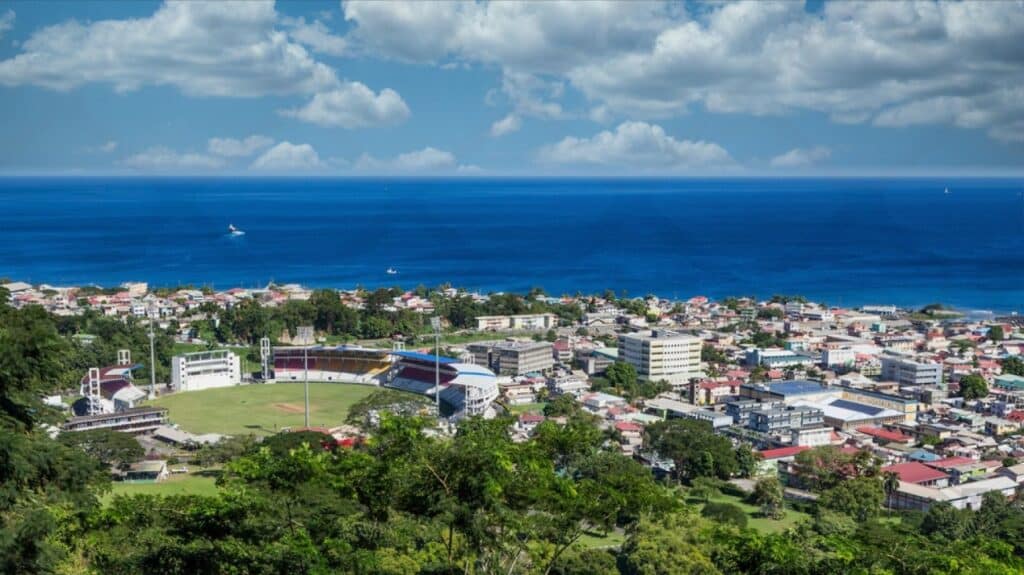

The complete lineup for the 2026 World Creole Music Festival
Friday, October 23
Jamaican artist Capleton will kick things off. He’ll be joined by his compatriot Skillibeng, the Haitian group Klass, Maurane Voyer, TK International, Midnight Groovers, Pudaz, Ridge, the duo DJ MJ & MV on the Keys, ColtonT, and Ezra D’ Fun Machine. Eleven acts will open the festival.
Saturday, October 24
This is the biggest lineup of the festival, with seventeen acts. American R&B singer Ne-Yo will headline the show. He’ll be joined by Alkaline, Tabou Combo, Asa Bantan, V’GHN, Trilla G, Full Blown, Extasy Band, Reo, Edday, DYP, Imran Nerdy, Sedale, Shemmy J, Tally Boy, Hollywood HP, and Andrew. Dancehall, kompa, bouyon, and R&B will all take the stage on the same night.
Sunday, October 25
Machel Montano, a soca icon from Trinidad and Tobago, will close out the festival. He will share the stage with South African DJ Uncle Waffles, Fridayy, Maxi Priest, Congolese guitarist Diblo Dibala, Les Aiglons, Jean Marc Ferdinand, Shelly & The Signal Band, Gwada G, Unstoppable Shax, Nice, and DJ Taffy. Twelve acts will round out the final night.
A new genre has made its way into the lineup. Amapiano, a genre that originated in South Africa, joins bouyon, soca, dancehall, reggae, cadence-lypso, kompa, and soukous. The festival is further expanding its musical repertoire. Musicians from Dominica will perform on each of the three evenings. It’s a simple detail, but it speaks volumes about the place the island reserves for itself at home.

1997: A Festival Celebrating Independence
The 2026 World Creole Music Festival continues a journey that began in October 1997. The festival originally had a specific purpose: to complement Dominica’s Independence Day celebrations. Now approaching its 30th anniversary, it is held each year as part of Creole Heritage Month.

Marva Williams, executive director of the Discover Dominica Authority, sums up the festival’s ambition. For nearly three decades, she says, the festival has provided “a distinctly Dominican platform where our music meets the sounds of the Caribbean and the world.” The statement captures the balance the festival seeks to achieve. The festival opens its doors to the outside world without ever leaving the island.
This trend is nothing new. Our coverage of the 2022 edition already featured Shenseea, Sizzla, Burna Boy, and Jocelyne Béroard, lead singer of Kassav’. Our coverage of the 2024 edition mentioned Damian and Stephen Marley, WizKid, and Kassav’. These choices have already sparked a debate about the place of non-Creole music. Ne-Yo is therefore continuing a tradition rather than breaking with it, but the question remains.
Cadence-lypso and bouyon: what Dominica invented
Bouyon isa genre that originated in Roseau in the late 1980s. It blends jing ping, cadence-lypso, and traditional dances such as bèlè and quadrille. It has a fast tempo and is driven by drums, bass, and chanted vocals. Groups such as Windward Caribbean Kulture, Roots, Stems and Branches, and First Serenade laid the groundwork for the genre. Asa Bantan, performing on Saturday, is among the acts that have brought it to prominence beyond the island.
The cadence-lypso has a more surprising history. It originated in the early 1970s in Guadeloupe. Gordon Henderson, a singer from Dominica who had been living there since 1969, brought together musicians from his home island to form Exile One. They blended Haitian cadence with calypso. The genre then spread to Dominica, Martinique, and Haiti.
This intertwined history is featured on the poster for the 2026 World Creole Music Festival. Les Aiglons, a Guadeloupean group formed in 1970 and associated with the “cadence” era, will perform on Sunday. Creole has never had clear-cut boundaries. It flows between the islands, and Dominica has retained a part of it.
Several local artists return from one edition to the next. Asa Bantan, Signal Band, Midnight Groovers, and First Serenade had already performed in 2022. Asa Bantan, TK International, and Extasy Band performed again in 2024. In 2026, Midnight Groovers and TK International will perform on Friday, Extasy Band and Asa Bantan on Saturday, and Shelly & The Signal Band on Sunday. This loyalty gives the festival a sense of continuity, even amid headliners from Kingston, Port-of-Spain, or Kinshasa.
Tabou Combo and Diblo Dibala, two guests who talk about Creole
Tabou Combo was formed in 1968 in Pétion-Ville, near Port-au-Prince. It is one of the bands that helped bring Haitian kompa to audiences outside Haiti. Diblo Dibala, for his part, founded Loketo in the 1980s and then Matchatcha in 1990. He performs Congolese soukous, a guitar-based style of music that is well known to Creole audiences.
The 2026 World Creole Music Festival brings them together without blurring their identities. Each territory retains its own rhythm, and Dominica retains its own. Jamaica will have a strong showing, with Capleton, Skillibeng, and Alkaline—three big names in reggae and dancehall. Haiti will be represented by two groups, Klass and Tabou Combo. Soca will be represented by Machel Montano, and Guadeloupe by Les Aiglons.
Creole, a week later
According to the official schedule for the 48th anniversary of independence, Jounen Kwéyòl is on Friday, October 30, featuring a parade in traditional dress. International Creole Day, meanwhile, falls on the 28th. The music festival therefore takes place one week before the big day celebrating the language, traditional dress, and cuisine.
Creole Heritage Month isn’t just about the stadium. Creole Fridays take place throughout October on the 2nd, 9th, 16th, and 23rd. Heritage Day is held on the 18th in Paix Bouche. On the 20th and 21st, two pageants—Madam Wob Dwiyet and Miss Wob Dwiyet—will showcase the wob dwiyet, the island’s traditional dress. The 2026 World Creole Music Festival is just one of many highlights.


In Saint Lucia, a neighboring country with a shared Creole heritage, Jounen Kwéyòl is celebrated on October 25 in three host villages. Our article on Mwa éwitaj Kwéyòl 2025 explores this tradition. In Dominica, the stage at Windsor Park will be empty starting on the 26th. On the 30th, the island’s streets and villages will take the floor—in Kwéyòl. Who will speak that day, and in what language will the children respond?
Photo credits: © Dominica Festivals (official poster, cover photo) ·
FAQ
The 2026 World Creole Music Festival will take place from Friday, October 23, to Sunday, October 25, 2026, at Windsor Park Stadium in Roseau, the capital of Dominica. It is held during Creole Heritage Month and Independence Day celebrations. Tickets can be purchased on the official website, dominicafestivals.com.
Capleton on Friday, Ne-Yo on Saturday, and Machel Montano on Sunday are among the headliners on the lineup. Dominican artists such as Midnight Groovers, TK International, Asa Bantan, Extasy Band, and Shelly & The Signal Band round out the lineup.
The World Creole Music Festival is a three-night music festival that began in 1997. Jounen Kwéyòl is a day celebrating the Creole language, traditional dress, and cuisine, scheduled to take place in Dominica on October 30, 2026.
This Monday, September 14, in the Kalinago Territory in Dominica, the calendar marks a special day: Community Appreciation Day. Behind this day lies something much bigger. Kalinago Week 2026 does more than simply celebrate a heritage. It shows how a community passes on its language, knowledge, and memory, while preparing those who will carry them forward in the future.
The Kalinago Week 2026 program comes to life in Dominica
The media launch of Kalinago Week 2026 took place on September 11 at the Kalinago Barana Aute. Anette Sanford, the first female Kalinago Chief; Cozier Frederick, Minister for Kalinago Upliftment; and Alice Charles, Kalinago Development Officer, were among the announced speakers. The program runs from September 13 to 19, under the theme “Honoring Our Past, Celebrating Our Culture, Building Our Future.”
Sunday, September 13, kicked off the week with a religious service and a tribute to a Kalinago elder. Monday, September 14, is dedicated to the communities. From September 14 to 18, a cultural and heritage exhibition will accompany the week. September 15 will put young people in the spotlight with a sports recognition ceremony hosted by the Kalinago Council. September 16 will be dedicated to heritage and history, featuring a traditional naming ceremony.
September 17 will be dedicated to seniors. September 18 will feature a hike to L’Escalier Tête Chien, a market focused on food and health, health screenings, and a road race. On September 19, a commemorative ceremony and a traditional smoke ceremony will bring the week to a close. This schedule blends remembrance, well-being, youth, cultural transmission, and community life.

A culture that doesn't want to be confined to a display case
Kalinago Week 2026 takes on its full meaning when we consider what the Kalinago hope to pass on. Cozier Frederick describes a culture that lives on through language, food, crafts, music, dance, storytelling, traditional knowledge, and ceremonies. The message goes beyond the preservation of objects or mementos. It is about maintaining these practices in everyday life.
This difference matters. A cultural heritage can be admired without being practiced. A living culture depends on people who are able to learn it, transform it, and pass it on. In the Kalinago Territory, the elders carry part of this memory, while children and young people are encouraged to understand why their identity can remain a source of strength in the present.


![{"widgetCode":{"id":"9cea52a","elType":"column","isInner":true,"isLocked":false,"settings":{"_column_size":20,"_title":"","_inline_size":null,"_inline_size_tablet":"","_inline_size_mobile":"","content_position":"","content_position_tablet":"","content_position_mobile":"","align":"","align_tablet":"","align_mobile":"","space_between_widgets":"","space_between_widgets_tablet":"","space_between_widgets_mobile":"","html_tag":"","background_background":"","background_color":"","background_color_stop":{"unit":"%","size":0,"sizes":[]},"background_color_stop_tablet":{"unit":"%"},"background_color_stop_mobile":{"unit":"%"},"background_color_b":"#f2295b","background_color_b_stop":{"unit":"%","size":100,"sizes":[]},"background_color_b_stop_tablet":{"unit":"%"},"background_color_b_stop_mobile":{"unit":"%"},"background_gradient_type":"linear","background_gradient_angle":{"unit":"deg","size":180,"sizes":[]},"background_gradient_angle_tablet":{"unit":"deg"},"background_gradient_angle_mobile":{"unit":"deg"},"background_gradient_position":"center center","background_gradient_position_tablet":"","background_gradient_position_mobile":"","background_image":{"url":"","id":"","size":""},"background_image_tablet":{"url":"","id":"","size":""},"background_image_mobile":{"url":"","id":"","size":""},"background_position":"","background_position_tablet":"","background_position_mobile":"","background_xpos":{"unit":"px","size":0,"sizes":[]},"background_xpos_tablet":{"unit":"px","size":0,"sizes":[]},"background_xpos_mobile":{"unit":"px","size":0,"sizes":[]},"background_ypos":{"unit":"px","size":0,"sizes":[]},"background_ypos_tablet":{"unit":"px","size":0,"sizes":[]},"background_ypos_mobile":{"unit":"px","size":0,"sizes":[]},"background_attachment":"","background_repeat":"","background_repeat_tablet":"","background_repeat_mobile":"","background_size":"","background_size_tablet":"","background_size_mobile":"","background_bg_width":{"unit":"%","size":100,"sizes":[]},"background_bg_width_tablet":{"unit":"px","size":"","sizes":[]},"background_bg_width_mobile":{"unit":"px","size":"","sizes":[]},"background_video_link":"","background_video_start":"","background_video_end":"","background_play_once":"","background_play_on_mobile":"","background_privacy_mode":"","background_video_fallback":{"url":"","id":"","size":""},"background_slideshow_gallery":[],"background_slideshow_loop":"yes","background_slideshow_slide_duration":5000,"background_slideshow_slide_transition":"fade","background_slideshow_transition_duration":500,"background_slideshow_background_size":"","background_slideshow_background_size_tablet":"","background_slideshow_background_size_mobile":"","background_slideshow_background_position":"","background_slideshow_background_position_tablet":"","background_slideshow_background_position_mobile":"","background_slideshow_lazyload":"","background_slideshow_ken_burns":"","background_slideshow_ken_burns_zoom_direction":"in","handle_slideshow_asset_loading":"","background_hover_background":"","background_hover_color":"","background_hover_color_stop":{"unit":"%","size":0,"sizes":[]},"background_hover_color_stop_tablet":{"unit":"%"},"background_hover_color_stop_mobile":{"unit":"%"},"background_hover_color_b":"#f2295b","background_hover_color_b_stop":{"unit":"%","size":100,"sizes":[]},"background_hover_color_b_stop_tablet":{"unit":"%"},"background_hover_color_b_stop_mobile":{"unit":"%"},"background_hover_gradient_type":"linear","background_hover_gradient_angle":{"unit":"deg","size":180,"sizes":[]},"background_hover_gradient_angle_tablet":{"unit":"deg"},"background_hover_gradient_angle_mobile":{"unit":"deg"},"background_hover_gradient_position":"center center","background_hover_gradient_position_tablet":"","background_hover_gradient_position_mobile":"","background_hover_image":{"url":"","id":"","size":""},"background_hover_image_tablet":{"url":"","id":"","size":""},"background_hover_image_mobile":{"url":"","id":"","size":""},"background_hover_position":"","background_hover_position_tablet":"","background_hover_position_mobile":"","background_hover_xpos":{"unit":"px","size":0,"sizes":[]},"background_hover_xpos_tablet":{"unit":"px","size":0,"sizes":[]},"background_hover_xpos_mobile":{"unit":"px","size":0,"sizes":[]},"background_hover_ypos":{"unit":"px","size":0,"sizes":[]},"background_hover_ypos_tablet":{"unit":"px","size":0,"sizes":[]},"background_hover_ypos_mobile":{"unit":"px","size":0,"sizes":[]},"background_hover_attachment":"","background_hover_repeat":"","background_hover_repeat_tablet":"","background_hover_repeat_mobile":"","background_hover_size":"","background_hover_size_tablet":"","background_hover_size_mobile":"","background_hover_bg_width":{"unit":"%","size":100,"sizes":[]},"background_hover_bg_width_tablet":{"unit":"px","size":"","sizes":[]},"background_hover_bg_width_mobile":{"unit":"px","size":"","sizes":[]},"background_hover_video_link":"","background_hover_video_start":"","background_hover_video_end":"","background_hover_play_once":"","background_hover_play_on_mobile":"","background_hover_privacy_mode":"","background_hover_video_fallback":{"url":"","id":"","size":""},"background_hover_slideshow_gallery":[],"background_hover_slideshow_loop":"yes","background_hover_slideshow_slide_duration":5000,"background_hover_slideshow_slide_transition":"fade","background_hover_slideshow_transition_duration":500,"background_hover_slideshow_background_size":"","background_hover_slideshow_background_size_tablet":"","background_hover_slideshow_background_size_mobile":"","background_hover_slideshow_background_position":"","background_hover_slideshow_background_position_tablet":"","background_hover_slideshow_background_position_mobile":"","background_hover_slideshow_lazyload":"","background_hover_slideshow_ken_burns":"","background_hover_slideshow_ken_burns_zoom_direction":"in","background_hover_transition":{"unit":"px","size":0.3,"sizes":[]},"background_motion_fx_motion_fx_scrolling":"","background_motion_fx_translateY_effect":"","background_motion_fx_translateY_direction":"","background_motion_fx_translateY_speed":{"unit":"px","size":4,"sizes":[]},"background_motion_fx_translateY_affectedRange":{"unit":"%","size":"","sizes":{"start":0,"end":100}},"background_motion_fx_translateX_effect":"","background_motion_fx_translateX_direction":"","background_motion_fx_translateX_speed":{"unit":"px","size":4,"sizes":[]},"background_motion_fx_translateX_affectedRange":{"unit":"%","size":"","sizes":{"start":0,"end":100}},"background_motion_fx_opacity_effect":"","background_motion_fx_opacity_direction":"out-in","background_motion_fx_opacity_level":{"unit":"px","size":10,"sizes":[]},"background_motion_fx_opacity_range":{"unit":"%","size":"","sizes":{"start":20,"end":80}},"background_motion_fx_blur_effect":"","background_motion_fx_blur_direction":"out-in","background_motion_fx_blur_level":{"unit":"px","size":7,"sizes":[]},"background_motion_fx_blur_range":{"unit":"%","size":"","sizes":{"start":20,"end":80}},"background_motion_fx_rotateZ_direction":"","background_motion_fx_rotateZ_speed":{"unit":"px","size":1,"sizes":[]},"background_motion_fx_rotateZ_affectedRange":{"unit":"%","size":"","sizes":{"start":0,"end":100}},"background_motion_fx_scale_effect":"","background_motion_fx_scale_direction":"out-in","background_motion_fx_scale_speed":{"unit":"px","size":4,"sizes":[]},"background_motion_fx_scale_range":{"unit":"%","size":"","sizes":{"start":20,"end":80}},"background_motion_fx_devices":["desktop","tablet","mobile"],"background_motion_fx_range":"","background_motion_fx_motion_fx_mouse":"","background_motion_fx_mouseTrack_effect":"","background_motion_fx_mouseTrack_direction":"","background_motion_fx_mouseTrack_speed":{"unit":"px","size":1,"sizes":[]},"background_motion_fx_tilt_direction":"","background_motion_fx_tilt_speed":{"unit":"px","size":4,"sizes":[]},"background_handle_motion_fx_asset_loading":"","background_overlay_background":"","background_overlay_color":"","background_overlay_color_stop":{"unit":"%","size":0,"sizes":[]},"background_overlay_color_stop_tablet":{"unit":"%"},"background_overlay_color_stop_mobile":{"unit":"%"},"background_overlay_color_b":"#f2295b","background_overlay_color_b_stop":{"unit":"%","size":100,"sizes":[]},"background_overlay_color_b_stop_tablet":{"unit":"%"},"background_overlay_color_b_stop_mobile":{"unit":"%"},"background_overlay_gradient_type":"linear","background_overlay_gradient_angle":{"unit":"deg","size":180,"sizes":[]},"background_overlay_gradient_angle_tablet":{"unit":"deg"},"background_overlay_gradient_angle_mobile":{"unit":"deg"},"background_overlay_gradient_position":"center center","background_overlay_gradient_position_tablet":"","background_overlay_gradient_position_mobile":"","background_overlay_image":{"url":"","id":"","size":""},"background_overlay_image_tablet":{"url":"","id":"","size":""},"background_overlay_image_mobile":{"url":"","id":"","size":""},"background_overlay_position":"","background_overlay_position_tablet":"","background_overlay_position_mobile":"","background_overlay_xpos":{"unit":"px","size":0,"sizes":[]},"background_overlay_xpos_tablet":{"unit":"px","size":0,"sizes":[]},"background_overlay_xpos_mobile":{"unit":"px","size":0,"sizes":[]},"background_overlay_ypos":{"unit":"px","size":0,"sizes":[]},"background_overlay_ypos_tablet":{"unit":"px","size":0,"sizes":[]},"background_overlay_ypos_mobile":{"unit":"px","size":0,"sizes":[]},"background_overlay_attachment":"","background_overlay_repeat":"","background_overlay_repeat_tablet":"","background_overlay_repeat_mobile":"","background_overlay_size":"","background_overlay_size_tablet":"","background_overlay_size_mobile":"","background_overlay_bg_width":{"unit":"%","size":100,"sizes":[]},"background_overlay_bg_width_tablet":{"unit":"px","size":"","sizes":[]},"background_overlay_bg_width_mobile":{"unit":"px","size":"","sizes":[]},"background_overlay_video_link":"","background_overlay_video_start":"","background_overlay_video_end":"","background_overlay_play_once":"","background_overlay_play_on_mobile":"","background_overlay_privacy_mode":"","background_overlay_video_fallback":{"url":"","id":"","size":""},"background_overlay_slideshow_gallery":[],"background_overlay_slideshow_loop":"yes","background_overlay_slideshow_slide_duration":5000,"background_overlay_slideshow_slide_transition":"fade","background_overlay_slideshow_transition_duration":500,"background_overlay_slideshow_background_size":"","background_overlay_slideshow_background_size_tablet":"","background_overlay_slideshow_background_size_mobile":"","background_overlay_slideshow_background_position":"","background_overlay_slideshow_background_position_tablet":"","background_overlay_slideshow_background_position_mobile":"","background_overlay_slideshow_lazyload":"","background_overlay_slideshow_ken_burns":"","background_overlay_slideshow_ken_burns_zoom_direction":"in","background_overlay_opacity":{"unit":"px","size":0.5,"sizes":[]},"background_overlay_opacity_tablet":{"unit":"px","size":"","sizes":[]},"background_overlay_opacity_mobile":{"unit":"px","size":"","sizes":[]},"css_filters_css_filter":"","css_filters_blur":{"unit":"px","size":0,"sizes":[]},"css_filters_brightness":{"unit":"px","size":100,"sizes":[]},"css_filters_contrast":{"unit":"px","size":100,"sizes":[]},"css_filters_saturate":{"unit":"px","size":100,"sizes":[]},"css_filters_hue":{"unit":"px","size":0,"sizes":[]},"overlay_blend_mode":"","background_overlay_hover_background":"","background_overlay_hover_color":"","background_overlay_hover_color_stop":{"unit":"%","size":0,"sizes":[]},"background_overlay_hover_color_stop_tablet":{"unit":"%"},"background_overlay_hover_color_stop_mobile":{"unit":"%"},"background_overlay_hover_color_b":"#f2295b","background_overlay_hover_color_b_stop":{"unit":"%","size":100,"sizes":[]},"background_overlay_hover_color_b_stop_tablet":{"unit":"%"},"background_overlay_hover_color_b_stop_mobile":{"unit":"%"},"background_overlay_hover_gradient_type":"linear","background_overlay_hover_gradient_angle":{"unit":"deg","size":180,"sizes":[]},"background_overlay_hover_gradient_angle_tablet":{"unit":"deg"},"background_overlay_hover_gradient_angle_mobile":{"unit":"deg"},"background_overlay_hover_gradient_position":"center center","background_overlay_hover_gradient_position_tablet":"","background_overlay_hover_gradient_position_mobile":"","background_overlay_hover_image":{"url":"","id":"","size":""},"background_overlay_hover_image_tablet":{"url":"","id":"","size":""},"background_overlay_hover_image_mobile":{"url":"","id":"","size":""},"background_overlay_hover_position":"","background_overlay_hover_position_tablet":"","background_overlay_hover_position_mobile":"","background_overlay_hover_xpos":{"unit":"px","size":0,"sizes":[]},"background_overlay_hover_xpos_tablet":{"unit":"px","size":0,"sizes":[]},"background_overlay_hover_xpos_mobile":{"unit":"px","size":0,"sizes":[]},"background_overlay_hover_ypos":{"unit":"px","size":0,"sizes":[]},"background_overlay_hover_ypos_tablet":{"unit":"px","size":0,"sizes":[]},"background_overlay_hover_ypos_mobile":{"unit":"px","size":0,"sizes":[]},"background_overlay_hover_attachment":"","background_overlay_hover_repeat":"","background_overlay_hover_repeat_tablet":"","background_overlay_hover_repeat_mobile":"","background_overlay_hover_size":"","background_overlay_hover_size_tablet":"","background_overlay_hover_size_mobile":"","background_overlay_hover_bg_width":{"unit":"%","size":100,"sizes":[]},"background_overlay_hover_bg_width_tablet":{"unit":"px","size":"","sizes":[]},"background_overlay_hover_bg_width_mobile":{"unit":"px","size":"","sizes":[]},"background_overlay_hover_video_link":"","background_overlay_hover_video_start":"","background_overlay_hover_video_end":"","background_overlay_hover_play_once":"","background_overlay_hover_play_on_mobile":"","background_overlay_hover_privacy_mode":"","background_overlay_hover_video_fallback":{"url":"","id":"","size":""},"background_overlay_hover_slideshow_gallery":[],"background_overlay_hover_slideshow_loop":"yes","background_overlay_hover_slideshow_slide_duration":5000,"background_overlay_hover_slideshow_slide_transition":"fade","background_overlay_hover_slideshow_transition_duration":500,"background_overlay_hover_slideshow_background_size":"","background_overlay_hover_slideshow_background_size_tablet":"","background_overlay_hover_slideshow_background_size_mobile":"","background_overlay_hover_slideshow_background_position":"","background_overlay_hover_slideshow_background_position_tablet":"","background_overlay_hover_slideshow_background_position_mobile":"","background_overlay_hover_slideshow_lazyload":"","background_overlay_hover_slideshow_ken_burns":"","background_overlay_hover_slideshow_ken_burns_zoom_direction":"in","background_overlay_hover_opacity":{"unit":"px","size":0.5,"sizes":[]},"background_overlay_hover_opacity_tablet":{"unit":"px","size":"","sizes":[]},"background_overlay_hover_opacity_mobile":{"unit":"px","size":"","sizes":[]},"css_filters_hover_css_filter":"","css_filters_hover_blur":{"unit":"px","size":0,"sizes":[]},"css_filters_hover_brightness":{"unit":"px","size":100,"sizes":[]},"css_filters_hover_contrast":{"unit":"px","size":100,"sizes":[]},"css_filters_hover_saturate":{"unit":"px","size":100,"sizes":[]},"css_filters_hover_hue":{"unit":"px","size":0,"sizes":[]},"background_overlay_hover_transition":{"unit":"px","size":0.3,"sizes":[]},"border_border":"","border_width":{"unit":"px","top":"","right":"","bottom":"","left":"","isLinked":true},"border_width_tablet":{"unit":"px","top":"","right":"","bottom":"","left":"","isLinked":true},"border_width_mobile":{"unit":"px","top":"","right":"","bottom":"","left":"","isLinked":true},"border_color":"","border_radius":{"unit":"px","top":"","right":"","bottom":"","left":"","isLinked":true},"border_radius_tablet":{"unit":"px","top":"","right":"","bottom":"","left":"","isLinked":true},"border_radius_mobile":{"unit":"px","top":"","right":"","bottom":"","left":"","isLinked":true},"box_shadow_box_shadow_type":"","box_shadow_box_shadow":{"horizontal":0,"vertical":0,"blur":10,"spread":0,"color":"rgba(0,0,0,0.5)"},"box_shadow_box_shadow_position":" ","border_hover_border":"","border_hover_width":{"unit":"px","top":"","right":"","bottom":"","left":"","isLinked":true},"border_hover_width_tablet":{"unit":"px","top":"","right":"","bottom":"","left":"","isLinked":true},"border_hover_width_mobile":{"unit":"px","top":"","right":"","bottom":"","left":"","isLinked":true},"border_hover_color":"","border_radius_hover":{"unit":"px","top":"","right":"","bottom":"","left":"","isLinked":true},"border_radius_hover_tablet":{"unit":"px","top":"","right":"","bottom":"","left":"","isLinked":true},"border_radius_hover_mobile":{"unit":"px","top":"","right":"","bottom":"","left":"","isLinked":true},"box_shadow_hover_box_shadow_type":"","box_shadow_hover_box_shadow":{"horizontal":0,"vertical":0,"blur":10,"spread":0,"color":"rgba(0,0,0,0.5)"},"box_shadow_hover_box_shadow_position":" ","border_hover_transition":{"unit":"px","size":0.3,"sizes":[]},"heading_color":"","color_text":"","color_link":"","color_link_hover":"","text_align":"","text_align_tablet":"","text_align_mobile":"","margin":{"unit":"px","top":"","right":"","bottom":"","left":"","isLinked":true},"margin_tablet":{"unit":"px","top":"","right":"","bottom":"","left":"","isLinked":true},"margin_mobile":{"unit":"px","top":"","right":"","bottom":"","left":"","isLinked":true},"padding":{"unit":"px","top":"","right":"","bottom":"","left":"","isLinked":true},"padding_tablet":{"unit":"px","top":"","right":"","bottom":"","left":"","isLinked":true},"padding_mobile":{"unit":"px","top":"","right":"","bottom":"","left":"","isLinked":true},"z_index":"","z_index_tablet":"","z_index_mobile":"","_element_id":"","css_classes":"","e_display_conditions":"","screen_sm":"","screen_sm_width":"","ra_element_link":{"url":"","is_external":"","nofollow":"","custom_attributes":""},"premium_glass_switcher":"","lq_effect":"glass1","glass_shadow":"shadow1","pa_display_conditions_switcher":"","pa_display_action":"show","pa_display_when":"any","pa_condition_repeater":[],"premium_tooltip_switcher":"","pa_tooltip_target":"","premium_tooltip_type":"text","premium_tooltip_text":"Hi, I'm a global tooltip.","premium_tooltip_icon_switcher":"","premium_tooltip_icon":{"value":"fas fa-star","library":"fa-solid"},"premium_tooltip_lottie_url":"","premium_tooltip_lottie_loop":"true","premium_tooltip_lottie_reverse":"","premium_tooltip_gallery":[],"premium_tooltip_template":"","pa_tooltip_class":"","is_tour_starter":"","hide_tooltip_on":[],"premium_tooltip_text_color":"","premium_tooltip_text_typo_typography":"","premium_tooltip_text_typo_font_family":"","premium_tooltip_text_typo_font_size":{"unit":"px","size":"","sizes":[]},"premium_tooltip_text_typo_font_size_tablet":{"unit":"px","size":"","sizes":[]},"premium_tooltip_text_typo_font_size_mobile":{"unit":"px","size":"","sizes":[]},"premium_tooltip_text_typo_font_weight":"","premium_tooltip_text_typo_text_transform":"","premium_tooltip_text_typo_font_style":"","premium_tooltip_text_typo_text_decoration":"","premium_tooltip_text_typo_line_height":{"unit":"px","size":"","sizes":[]},"premium_tooltip_text_typo_line_height_tablet":{"unit":"em","size":"","sizes":[]},"premium_tooltip_text_typo_line_height_mobile":{"unit":"em","size":"","sizes":[]},"premium_tooltip_text_typo_letter_spacing":{"unit":"px","size":"","sizes":[]},"premium_tooltip_text_typo_letter_spacing_tablet":{"unit":"px","size":"","sizes":[]},"premium_tooltip_text_typo_letter_spacing_mobile":{"unit":"px","size":"","sizes":[]},"premium_tooltip_text_typo_word_spacing":{"unit":"px","size":"","sizes":[]},"premium_tooltip_text_typo_word_spacing_tablet":{"unit":"em","size":"","sizes":[]},"premium_tooltip_text_typo_word_spacing_mobile":{"unit":"em","size":"","sizes":[]},"premium_tooltip_text_shadow_text_shadow_type":"","premium_tooltip_text_shadow_text_shadow":{"horizontal":0,"vertical":0,"blur":10,"color":"rgba(0,0,0,0.3)"},"premium_tooltip_icon_color":"","premium_tooltip_icon_size":{"unit":"px","size":"","sizes":[]},"premium_tooltip_icon_size_tablet":{"unit":"px","size":"","sizes":[]},"premium_tooltip_icon_size_mobile":{"unit":"px","size":"","sizes":[]},"premium_tooltip_icon_shadow_text_shadow_type":"","premium_tooltip_icon_shadow_text_shadow":{"horizontal":0,"vertical":0,"blur":10,"color":"rgba(0,0,0,0.3)"},"premium_tooltip_img_size":{"unit":"px","size":100,"sizes":[]},"premium_tooltip_img_size_tablet":{"unit":"px","size":"","sizes":[]},"premium_tooltip_img_size_mobile":{"unit":"px","size":"","sizes":[]},"premium_tooltip_img_fit":"cover","premium_tooltip_img_fit_tablet":"","premium_tooltip_img_fit_mobile":"","premium_tooltip_container_bg_background":"","premium_tooltip_container_bg_color":"","premium_tooltip_container_bg_color_stop":{"unit":"%","size":0,"sizes":[]},"premium_tooltip_container_bg_color_stop_tablet":{"unit":"%"},"premium_tooltip_container_bg_color_stop_mobile":{"unit":"%"},"premium_tooltip_container_bg_color_b":"#f2295b","premium_tooltip_container_bg_color_b_stop":{"unit":"%","size":100,"sizes":[]},"premium_tooltip_container_bg_color_b_stop_tablet":{"unit":"%"},"premium_tooltip_container_bg_color_b_stop_mobile":{"unit":"%"},"premium_tooltip_container_bg_gradient_type":"linear","premium_tooltip_container_bg_gradient_angle":{"unit":"deg","size":180,"sizes":[]},"premium_tooltip_container_bg_gradient_angle_tablet":{"unit":"deg"},"premium_tooltip_container_bg_gradient_angle_mobile":{"unit":"deg"},"premium_tooltip_container_bg_gradient_position":"center center","premium_tooltip_container_bg_gradient_position_tablet":"","premium_tooltip_container_bg_gradient_position_mobile":"","premium_tooltip_container_bg_image":{"url":"","id":"","size":""},"premium_tooltip_container_bg_image_tablet":{"url":"","id":"","size":""},"premium_tooltip_container_bg_image_mobile":{"url":"","id":"","size":""},"premium_tooltip_container_bg_position":"","premium_tooltip_container_bg_position_tablet":"","premium_tooltip_container_bg_position_mobile":"","premium_tooltip_container_bg_xpos":{"unit":"px","size":0,"sizes":[]},"premium_tooltip_container_bg_xpos_tablet":{"unit":"px","size":0,"sizes":[]},"premium_tooltip_container_bg_xpos_mobile":{"unit":"px","size":0,"sizes":[]},"premium_tooltip_container_bg_ypos":{"unit":"px","size":0,"sizes":[]},"premium_tooltip_container_bg_ypos_tablet":{"unit":"px","size":0,"sizes":[]},"premium_tooltip_container_bg_ypos_mobile":{"unit":"px","size":0,"sizes":[]},"premium_tooltip_container_bg_attachment":"","premium_tooltip_container_bg_repeat":"","premium_tooltip_container_bg_repeat_tablet":"","premium_tooltip_container_bg_repeat_mobile":"","premium_tooltip_container_bg_size":"","premium_tooltip_container_bg_size_tablet":"","premium_tooltip_container_bg_size_mobile":"","premium_tooltip_container_bg_bg_width":{"unit":"%","size":100,"sizes":[]},"premium_tooltip_container_bg_bg_width_tablet":{"unit":"px","size":"","sizes":[]},"premium_tooltip_container_bg_bg_width_mobile":{"unit":"px","size":"","sizes":[]},"premium_tooltip_container_bg_video_link":"","premium_tooltip_container_bg_video_start":"","premium_tooltip_container_bg_video_end":"","premium_tooltip_container_bg_play_once":"","premium_tooltip_container_bg_play_on_mobile":"","premium_tooltip_container_bg_privacy_mode":"","premium_tooltip_container_bg_video_fallback":{"url":"","id":"","size":""},"premium_tooltip_container_bg_slideshow_gallery":[],"premium_tooltip_container_bg_slideshow_loop":"yes","premium_tooltip_container_bg_slideshow_slide_duration":5000,"premium_tooltip_container_bg_slideshow_slide_transition":"fade","premium_tooltip_container_bg_slideshow_transition_duration":500,"premium_tooltip_container_bg_slideshow_background_size":"","premium_tooltip_container_bg_slideshow_background_size_tablet":"","premium_tooltip_container_bg_slideshow_background_size_mobile":"","premium_tooltip_container_bg_slideshow_background_position":"","premium_tooltip_container_bg_slideshow_background_position_tablet":"","premium_tooltip_container_bg_slideshow_background_position_mobile":"","premium_tooltip_container_bg_slideshow_lazyload":"","premium_tooltip_container_bg_slideshow_ken_burns":"","premium_tooltip_container_bg_slideshow_ken_burns_zoom_direction":"in","premium_tooltip_container_border_border":"","premium_tooltip_container_border_width":{"unit":"px","top":"","right":"","bottom":"","left":"","isLinked":true},"premium_tooltip_container_border_width_tablet":{"unit":"px","top":"","right":"","bottom":"","left":"","isLinked":true},"premium_tooltip_container_border_width_mobile":{"unit":"px","top":"","right":"","bottom":"","left":"","isLinked":true},"premium_tooltip_container_border_color":"","premium_tooltip_container_border_radius":{"unit":"px","size":"","sizes":[]},"premium_tooltip_container_box_shadow_box_shadow_type":"","premium_tooltip_container_box_shadow_box_shadow":{"horizontal":0,"vertical":0,"blur":10,"spread":0,"color":"rgba(0,0,0,0.5)"},"premium_tooltip_container_box_shadow_box_shadow_position":" ","premium_tooltip_container_padding":{"unit":"px","top":"","right":"","bottom":"","left":"","isLinked":true},"premium_tooltip_container_padding_tablet":{"unit":"px","top":"","right":"","bottom":"","left":"","isLinked":true},"premium_tooltip_container_padding_mobile":{"unit":"px","top":"","right":"","bottom":"","left":"","isLinked":true},"premium_tooltip_arrow_color":"","premium_tooltip_mouse_follow":"","premium_tooltip_arrow":"","premium_tooltip_trigger":"hover","premium_tooltip_position":"top,bottom","premium_tooltip_distance_position":6,"premium_tooltip_min_width":{"unit":"px","size":"","sizes":[]},"premium_tooltip_min_width_tablet":{"unit":"px","size":"","sizes":[]},"premium_tooltip_min_width_mobile":{"unit":"px","size":"","sizes":[]},"premium_tooltip_max_width":{"unit":"px","size":"","sizes":[]},"premium_tooltip_max_width_tablet":{"unit":"px","size":"","sizes":[]},"premium_tooltip_max_width_mobile":{"unit":"px","size":"","sizes":[]},"premium_tooltip_height":{"unit":"px","size":"","sizes":[]},"premium_tooltip_height_tablet":{"unit":"px","size":"","sizes":[]},"premium_tooltip_height_mobile":{"unit":"px","size":"","sizes":[]},"premium_tooltip_anime":"fade","premium_tooltip_anime_dur":350,"premium_tooltip_delay":10,"pa_tooltip_zindex":"","premium_global_divider_sw":"","premium_shapes_data":{"shape1":{"imagesmall":""},"shape2":{"imagesmall":""},"shape3":{"imagesmall":""},"shape4":{"imagesmall":""},"shape5":{"imagesmall":".premium-sh-cls-2{opacity:.33;}.premium-sh-cls-2,.premium-sh-cls-3{isolation:isolate;}.premium-sh-cls-3{opacity:.66;}"},"shape6":{"imagesmall":""},"shape7":{"imagesmall":""},"shape8":{"imagesmall":""},"shape9":{"imagesmall":"..premium-sh-cls-2{opacity:.2;}.premium-sh-cls-2,.premium-sh-cls-3{isolation:isolate;}.premium-sh-cls-3{opacity:.5;}"},"shape10":{"imagesmall":""},"shape11":{"imagesmall":""},"shape12":{"imagesmall":".premium-sh-cls-1 {stroke-width: 0px;}"},"shape13":{"imagesmall":""},"shape14":{"imagesmall":".premium-sh-cls-1 { opacity: .5;}.premium-sh-cls-1, .premium-sh-cls-2 { isolation: isolate;}.premium-sh-cls-1, .premium-sh-cls-2, .premium-sh-cls-3 { stroke-width: 0px;}.premium-sh-cls-2 { opacity: .25;}"},"shape15":{"imagesmall":".premium-sh-cls-1 { isolation: isolate; opacity: .33;}.premium-sh-cls-1, .premium-sh-cls-2 { stroke-width: 0px;}"},"shape16":{"imagesmall":".premium-sh-cls-1 {stroke-width: 0px;}"},"shape17":{"imagesmall":".premium-sh-cls-1 {stroke-width: 0px; }"},"shape18":{"imagesmall":""},"shape19":{"imagesmall":""},"shape20":{"imagesmall":""},"shape21":{"imagesmall":""},"shape22":{"imagesmall":""},"shape23":{"imagesmall":""},"shape24":{"imagesmall":""},"shape25":{"imagesmall":""},"shape26":{"imagesmall":""},"shape27":{"imagesmall":""},"shape28":{"imagesmall":""},"shape29":{"imagesmall":""},"shape30":{"imagesmall":""},"shape31":{"imagesmall":""},"shape32":{"imagesmall":""},"shape33":{"imagesmall":""},"shape34":{"imagesmall":""},"shape35":{"imagesmall":""},"shape36":{"imagesmall":""},"shape37":{"imagesmall":""},"shape38":{"imagesmall":""},"shape39":{"imagesmall":""},"shape40":{"imagesmall":""},"shape41":{"imagesmall":""},"shape42":{"imagesmall":""},"shape43":{"imagesmall":""},"shape44":{"imagesmall":""},"shape45":{"imagesmall":""},"shape46":{"imagesmall":""},"shape47":{"imagesmall":""},"shape48":{"imagesmall":""},"shape49":{"imagesmall":""},"shape50":{"imagesmall":""},"shape51":{"imagesmall":""}},"premium_gdivider_source":"default","premium_gdivider_defaults":"shape22","premium_gdivider_pos":"bottom","premium_gdivider_pos_tablet":"","premium_gdivider_pos_mobile":"","premium_gdivider_custom":"","premium_gdivider_height":{"unit":"px","size":150,"sizes":[]},"premium_gdivider_height_tablet":{"unit":"px","size":"","sizes":[]},"premium_gdivider_height_mobile":{"unit":"px","size":"","sizes":[]},"premium_gdivider_width":{"unit":"px","size":100,"sizes":[]},"premium_gdivider_width_tablet":{"unit":"px","size":"","sizes":[]},"premium_gdivider_width_mobile":{"unit":"px","size":"","sizes":[]},"premium_gdivider_scale":{"unit":"px","size":4,"sizes":[]},"premium_gdivider_scale_tablet":{"unit":"px","size":"","sizes":[]},"premium_gdivider_scale_mobile":{"unit":"px","size":"","sizes":[]},"premium_gdivider_offset":{"unit":"px","size":"","sizes":[]},"premium_gdivider_offset_tablet":{"unit":"px","size":"","sizes":[]},"premium_gdivider_offset_mobile":{"unit":"px","size":"","sizes":[]},"premium_gdivider_animate":"yes","premium_gdivider_no_stretch":"yes","premium_gdivider_anime_speed":{"unit":"px","size":10,"sizes":[]},"premium_gdivider_anime_speed_tablet":{"unit":"px","size":"","sizes":[]},"premium_gdivider_anime_speed_mobile":{"unit":"px","size":"","sizes":[]},"premium_gdivider_anime_dir":"alternate","premium_gdivider_flip":"","premium_gdivider_flip_x":"","premium_gdivider_hide":[],"premium_gdivider_bg_type":"color","premium_gdivider_fill":"#afafaf","premium_gdivider_image":{"url":"https://richeskarayib.com/wp-content/plugins/elementor/assets/images/placeholder.png","id":"","size":""},"premium_gdivider_grad_firstcolor":"#FF5F6D","premium_gdivider_grad_firstloc":{"unit":"%","size":0,"sizes":[]},"premium_gdivider_grad_secondcolor":"#FFC371","premium_gdivider_grad_secondloc":{"unit":"%","size":100,"sizes":[]},"premium_gdivider_grad_type":"linear","premium_gdivider_grad_angle":{"unit":"deg","size":0,"sizes":[]},"premium_gdivider_grad_xpos":{"unit":"%","size":50,"sizes":[]},"premium_gdivider_grad_ypos":{"unit":"%","size":50,"sizes":[]},"premium_gdivider_stroke_width":{"unit":"px","size":"","sizes":[]},"premium_gdivider_stroke_width_tablet":{"unit":"px","size":"","sizes":[]},"premium_gdivider_stroke_width_mobile":{"unit":"px","size":"","sizes":[]},"premium_gdivider_stroke":"","premium_gdivider_opacity":{"unit":"px","size":0.3,"sizes":[]},"premium_gdivider_opacity_tablet":{"unit":"px","size":"","sizes":[]},"premium_gdivider_opacity_mobile":{"unit":"px","size":"","sizes":[]},"premium_gdivider_zindex":"","premium_wrapper_link_switcher":"","premium_wrapper_link_selection":"url","premium_wrapper_link":{"url":"","is_external":"","nofollow":"","custom_attributes":""},"premium_wrapper_existing_link":"","premium_parallax_switcher":"","premium_parallax_type":"","premium_parallax_auto_type":"left","premium_parallax_speed":{"unit":"px","size":"","sizes":[]},"premium_auto_speed":3,"premium_parallax_android_support":"","premium_parallax_ios_support":"","premium_parallax_layers_list":[],"draw_svgs_sequence":"","draw_svgs_loop":"","frames":5,"svg_yoyo":"","premium_parallax_layers_devices":["desktop","tablet","mobile"],"premium_particles_switcher":"","premium_particles_zindex":0,"premium_particles_custom_style":"","premium_particles_responsive":["desktop","tablet","mobile"],"premium_gradient_switcher":"","premium_gradient_colors_repeater":[],"wave_effect_switcher":"","premium_gradient_speed":"","premium_gradient_angle":-45,"premium_kenburns_switcher":"","premium_kenburns_repeater":[],"premium_kenburns_speed":{"unit":"px","size":"","sizes":[]},"premium_kenburns_effect":"fade","premium_kenburns_fade":{"unit":"px","size":"","sizes":[]},"premium_kenburns_infinite":"","premium_kenburns_overlay":"","premium_global_cursor_switcher":"","pa_cursor_type":"icon","pa_cursor_pulse":"","pa_cursor_buzz":"","pa_cursor_icon":{"value":"fas fa-mouse-pointer","library":"solid"},"pa_cursor_img":{"url":"","id":"","size":""},"pa_cursor_img_fit":"cover","pa_cursor_ftext":"Premium Follow Text","pa_default_cursor":"","pa_cursor_dot":"","pa_dot_color":"","pa_dot_size":{"unit":"px","size":"","sizes":[]},"pa_cursor_xpos":{"unit":"px","size":"","sizes":[]},"pa_cursor_xpos_tablet":{"unit":"px","size":"","sizes":[]},"pa_cursor_xpos_mobile":{"unit":"px","size":"","sizes":[]},"pa_cursor_ypos":{"unit":"px","size":"","sizes":[]},"pa_cursor_ypos_tablet":{"unit":"px","size":"","sizes":[]},"pa_cursor_ypos_mobile":{"unit":"px","size":"","sizes":[]},"pa_cursor_trans":{"unit":"px","size":0.3,"sizes":[]},"pa_cursor_lottie_url":"","pa_cursor_loop":"true","pa_cursor_reverse":"","pa_cursor_color":"","pa_cursor_typo_typography":"","pa_cursor_typo_font_family":"","pa_cursor_typo_font_size":{"unit":"px","size":"","sizes":[]},"pa_cursor_typo_font_size_tablet":{"unit":"px","size":"","sizes":[]},"pa_cursor_typo_font_size_mobile":{"unit":"px","size":"","sizes":[]},"pa_cursor_typo_font_weight":"","pa_cursor_typo_text_transform":"","pa_cursor_typo_font_style":"","pa_cursor_typo_text_decoration":"","pa_cursor_typo_line_height":{"unit":"px","size":"","sizes":[]},"pa_cursor_typo_line_height_tablet":{"unit":"em","size":"","sizes":[]},"pa_cursor_typo_line_height_mobile":{"unit":"em","size":"","sizes":[]},"pa_cursor_typo_letter_spacing":{"unit":"px","size":"","sizes":[]},"pa_cursor_typo_letter_spacing_tablet":{"unit":"px","size":"","sizes":[]},"pa_cursor_typo_letter_spacing_mobile":{"unit":"px","size":"","sizes":[]},"pa_cursor_typo_word_spacing":{"unit":"px","size":"","sizes":[]},"pa_cursor_typo_word_spacing_tablet":{"unit":"em","size":"","sizes":[]},"pa_cursor_typo_word_spacing_mobile":{"unit":"em","size":"","sizes":[]},"pa_text_cursor_margin":{"unit":"px","top":"","right":"","bottom":"","left":"","isLinked":true},"pa_text_cursor_margin_tablet":{"unit":"px","top":"","right":"","bottom":"","left":"","isLinked":true},"pa_text_cursor_margin_mobile":{"unit":"px","top":"","right":"","bottom":"","left":"","isLinked":true},"pa_cursor_size":{"unit":"px","size":20,"sizes":[]},"pa_cursor_size_tablet":{"unit":"px","size":"","sizes":[]},"pa_cursor_size_mobile":{"unit":"px","size":"","sizes":[]},"pa_cursor_shadow_text_shadow_type":"","pa_cursor_shadow_text_shadow":{"horizontal":0,"vertical":0,"blur":10,"color":"rgba(0,0,0,0.3)"},"pa_cursor_bgColor_background":"","pa_cursor_bgColor_color":"","pa_cursor_bgColor_color_stop":{"unit":"%","size":0,"sizes":[]},"pa_cursor_bgColor_color_stop_tablet":{"unit":"%"},"pa_cursor_bgColor_color_stop_mobile":{"unit":"%"},"pa_cursor_bgColor_color_b":"#f2295b","pa_cursor_bgColor_color_b_stop":{"unit":"%","size":100,"sizes":[]},"pa_cursor_bgColor_color_b_stop_tablet":{"unit":"%"},"pa_cursor_bgColor_color_b_stop_mobile":{"unit":"%"},"pa_cursor_bgColor_gradient_type":"linear","pa_cursor_bgColor_gradient_angle":{"unit":"deg","size":180,"sizes":[]},"pa_cursor_bgColor_gradient_angle_tablet":{"unit":"deg"},"pa_cursor_bgColor_gradient_angle_mobile":{"unit":"deg"},"pa_cursor_bgColor_gradient_position":"center center","pa_cursor_bgColor_gradient_position_tablet":"","pa_cursor_bgColor_gradient_position_mobile":"","pa_cursor_bgColor_image":{"url":"","id":"","size":""},"pa_cursor_bgColor_image_tablet":{"url":"","id":"","size":""},"pa_cursor_bgColor_image_mobile":{"url":"","id":"","size":""},"pa_cursor_bgColor_position":"","pa_cursor_bgColor_position_tablet":"","pa_cursor_bgColor_position_mobile":"","pa_cursor_bgColor_xpos":{"unit":"px","size":0,"sizes":[]},"pa_cursor_bgColor_xpos_tablet":{"unit":"px","size":0,"sizes":[]},"pa_cursor_bgColor_xpos_mobile":{"unit":"px","size":0,"sizes":[]},"pa_cursor_bgColor_ypos":{"unit":"px","size":0,"sizes":[]},"pa_cursor_bgColor_ypos_tablet":{"unit":"px","size":0,"sizes":[]},"pa_cursor_bgColor_ypos_mobile":{"unit":"px","size":0,"sizes":[]},"pa_cursor_bgColor_attachment":"","pa_cursor_bgColor_repeat":"","pa_cursor_bgColor_repeat_tablet":"","pa_cursor_bgColor_repeat_mobile":"","pa_cursor_bgColor_size":"","pa_cursor_bgColor_size_tablet":"","pa_cursor_bgColor_size_mobile":"","pa_cursor_bgColor_bg_width":{"unit":"%","size":100,"sizes":[]},"pa_cursor_bgColor_bg_width_tablet":{"unit":"px","size":"","sizes":[]},"pa_cursor_bgColor_bg_width_mobile":{"unit":"px","size":"","sizes":[]},"pa_cursor_bgColor_video_link":"","pa_cursor_bgColor_video_start":"","pa_cursor_bgColor_video_end":"","pa_cursor_bgColor_play_once":"","pa_cursor_bgColor_play_on_mobile":"","pa_cursor_bgColor_privacy_mode":"","pa_cursor_bgColor_video_fallback":{"url":"","id":"","size":""},"pa_cursor_bgColor_slideshow_gallery":[],"pa_cursor_bgColor_slideshow_loop":"yes","pa_cursor_bgColor_slideshow_slide_duration":5000,"pa_cursor_bgColor_slideshow_slide_transition":"fade","pa_cursor_bgColor_slideshow_transition_duration":500,"pa_cursor_bgColor_slideshow_background_size":"","pa_cursor_bgColor_slideshow_background_size_tablet":"","pa_cursor_bgColor_slideshow_background_size_mobile":"","pa_cursor_bgColor_slideshow_background_position":"","pa_cursor_bgColor_slideshow_background_position_tablet":"","pa_cursor_bgColor_slideshow_background_position_mobile":"","pa_cursor_bgColor_slideshow_lazyload":"","pa_cursor_bgColor_slideshow_ken_burns":"","pa_cursor_bgColor_slideshow_ken_burns_zoom_direction":"in","blend_mode":"","pa_cursor_border_border":"","pa_cursor_border_width":{"unit":"px","top":"","right":"","bottom":"","left":"","isLinked":true},"pa_cursor_border_width_tablet":{"unit":"px","top":"","right":"","bottom":"","left":"","isLinked":true},"pa_cursor_border_width_mobile":{"unit":"px","top":"","right":"","bottom":"","left":"","isLinked":true},"pa_cursor_border_color":"","pa_cursor_border_rad":{"unit":"px","size":"","sizes":[]},"pa_cursor_adv_radius":"","pa_cursor_adv_radius_value":"","pa_cursor_zindex":"","pa_cursor_rotate":{"unit":"deg","size":0,"sizes":[]},"pa_cursor_rotate_tablet":{"unit":"px","size":"","sizes":[]},"pa_cursor_rotate_mobile":{"unit":"px","size":"","sizes":[]},"pa_cursor_padding":{"unit":"px","top":"","right":"","bottom":"","left":"","isLinked":true},"pa_cursor_padding_tablet":{"unit":"px","top":"","right":"","bottom":"","left":"","isLinked":true},"pa_cursor_padding_mobile":{"unit":"px","top":"","right":"","bottom":"","left":"","isLinked":true},"pa_disable_cursor":"","pa_magnet":"","pa_magnet_grow":{"unit":"px","size":20,"sizes":[]},"premium_global_badge_switcher":"","pa_badge_text":"New","pa_badge_type":"stripe","pa_badge_icon_enable":"","pa_icon_type":"icon","pa_badge_icon":{"value":"fas fa-mouse-pointer","library":"solid"},"pa_badge_img":{"url":"","id":"","size":""},"pa_badge_lottie_url":"","pa_badge_loop":"true","pa_badge_reverse":"","pa_badge_clip_enabled":"","pa_badge_path":"","pa_badge_svg_enabled":"","pa_badge_svg":"","pa_badge_effects":"","pa_badge_ftranslate":"","pa_badge_ftranslatex":{"unit":"px","size":"","sizes":{"start":-5,"end":5}},"pa_badge_ftranslatey":{"unit":"px","size":"","sizes":{"start":-5,"end":5}},"pa_badge_ftranslate_speed":{"unit":"px","size":1,"sizes":[]},"pa_badge_frotate":"","pa_badge_frotatex":{"unit":"deg","size":"","sizes":{"start":0,"end":45}},"pa_badge_frotatey":{"unit":"deg","size":"","sizes":{"start":0,"end":45}},"pa_badge_frotatez":{"unit":"deg","size":"","sizes":{"start":0,"end":45}},"pa_badge_frotate_speed":{"unit":"px","size":1,"sizes":[]},"pa_badge_fopacity":"","pa_badge_fopacity_value":{"unit":"%","size":"","sizes":{"start":0,"end":50}},"pa_badge_fopacity_speed":{"unit":"px","size":1,"sizes":[]},"pa_badge_fblur":"","pa_badge_fblur_value":{"unit":"px","size":"","sizes":{"start":0,"end":1}},"pa_badge_fblur_speed":{"unit":"px","size":1,"sizes":[]},"pa_badge_fgrayscale":"","pa_badge_fgscale_value":{"unit":"%","size":"","sizes":{"start":0,"end":50}},"pa_badge_fgscale_speed":{"unit":"px","size":1,"sizes":[]},"pa_badge_disable_on_safari":"","pa_badge_display":"row","pa_badge_hor":"right","pa_badge_ver":"top","pa_badge_hor_offset":{"unit":"px","size":"","sizes":[]},"pa_badge_hor_offset_tablet":{"unit":"px","size":"","sizes":[]},"pa_badge_hor_offset_mobile":{"unit":"px","size":"","sizes":[]},"pa_badge_ver_offset":{"unit":"px","size":"","sizes":[]},"pa_badge_ver_offset_tablet":{"unit":"px","size":"","sizes":[]},"pa_badge_ver_offset_mobile":{"unit":"px","size":"","sizes":[]},"pa_badge_spacing":{"unit":"px","size":"","sizes":[]},"pa_badge_spacing_tablet":{"unit":"px","size":"","sizes":[]},"pa_badge_spacing_mobile":{"unit":"px","size":"","sizes":[]},"pa_badge_rotate":{"unit":"deg","size":0,"sizes":[]},"pa_badge_rotate_tablet":{"unit":"px","size":"","sizes":[]},"pa_badge_rotate_mobile":{"unit":"px","size":"","sizes":[]},"pa_badge_size":{"unit":"px","size":"","sizes":[]},"pa_badge_size_tablet":{"unit":"px","size":"","sizes":[]},"pa_badge_size_mobile":{"unit":"px","size":"","sizes":[]},"pa_badge_margin":{"unit":"px","top":"","right":"","bottom":"","left":"","isLinked":true},"pa_badge_margin_tablet":{"unit":"px","top":"","right":"","bottom":"","left":"","isLinked":true},"pa_badge_margin_mobile":{"unit":"px","top":"","right":"","bottom":"","left":"","isLinked":true},"pa_badge_color":"","pa_badge_bg_background":"classic","pa_badge_bg_color":"","pa_badge_bg_color_stop":{"unit":"%","size":0,"sizes":[]},"pa_badge_bg_color_stop_tablet":{"unit":"%"},"pa_badge_bg_color_stop_mobile":{"unit":"%"},"pa_badge_bg_color_b":"#f2295b","pa_badge_bg_color_b_stop":{"unit":"%","size":100,"sizes":[]},"pa_badge_bg_color_b_stop_tablet":{"unit":"%"},"pa_badge_bg_color_b_stop_mobile":{"unit":"%"},"pa_badge_bg_gradient_type":"linear","pa_badge_bg_gradient_angle":{"unit":"deg","size":180,"sizes":[]},"pa_badge_bg_gradient_angle_tablet":{"unit":"deg"},"pa_badge_bg_gradient_angle_mobile":{"unit":"deg"},"pa_badge_bg_gradient_position":"center center","pa_badge_bg_gradient_position_tablet":"","pa_badge_bg_gradient_position_mobile":"","pa_badge_bg_image":{"url":"","id":"","size":""},"pa_badge_bg_image_tablet":{"url":"","id":"","size":""},"pa_badge_bg_image_mobile":{"url":"","id":"","size":""},"pa_badge_bg_position":"","pa_badge_bg_position_tablet":"","pa_badge_bg_position_mobile":"","pa_badge_bg_xpos":{"unit":"px","size":0,"sizes":[]},"pa_badge_bg_xpos_tablet":{"unit":"px","size":0,"sizes":[]},"pa_badge_bg_xpos_mobile":{"unit":"px","size":0,"sizes":[]},"pa_badge_bg_ypos":{"unit":"px","size":0,"sizes":[]},"pa_badge_bg_ypos_tablet":{"unit":"px","size":0,"sizes":[]},"pa_badge_bg_ypos_mobile":{"unit":"px","size":0,"sizes":[]},"pa_badge_bg_attachment":"","pa_badge_bg_repeat":"","pa_badge_bg_repeat_tablet":"","pa_badge_bg_repeat_mobile":"","pa_badge_bg_size":"","pa_badge_bg_size_tablet":"","pa_badge_bg_size_mobile":"","pa_badge_bg_bg_width":{"unit":"%","size":100,"sizes":[]},"pa_badge_bg_bg_width_tablet":{"unit":"px","size":"","sizes":[]},"pa_badge_bg_bg_width_mobile":{"unit":"px","size":"","sizes":[]},"pa_badge_bg_video_link":"","pa_badge_bg_video_start":"","pa_badge_bg_video_end":"","pa_badge_bg_play_once":"","pa_badge_bg_play_on_mobile":"","pa_badge_bg_privacy_mode":"","pa_badge_bg_video_fallback":{"url":"","id":"","size":""},"pa_badge_bg_slideshow_gallery":[],"pa_badge_bg_slideshow_loop":"yes","pa_badge_bg_slideshow_slide_duration":5000,"pa_badge_bg_slideshow_slide_transition":"fade","pa_badge_bg_slideshow_transition_duration":500,"pa_badge_bg_slideshow_background_size":"","pa_badge_bg_slideshow_background_size_tablet":"","pa_badge_bg_slideshow_background_size_mobile":"","pa_badge_bg_slideshow_background_position":"","pa_badge_bg_slideshow_background_position_tablet":"","pa_badge_bg_slideshow_background_position_mobile":"","pa_badge_bg_slideshow_lazyload":"","pa_badge_bg_slideshow_ken_burns":"","pa_badge_bg_slideshow_ken_burns_zoom_direction":"in","pa_badge_bgcolor":"#6EC1E4","pa_badge_text_shadow_text_shadow_type":"","pa_badge_text_shadow_text_shadow":{"horizontal":0,"vertical":0,"blur":10,"color":"rgba(0,0,0,0.3)"},"pa_badge_shadow_box_shadow_type":"","pa_badge_shadow_box_shadow":{"horizontal":0,"vertical":0,"blur":10,"spread":0,"color":"rgba(0,0,0,0.5)"},"pa_badge_shadow_box_shadow_position":" ","pa_badge_typo_typography":"","pa_badge_typo_font_family":"","pa_badge_typo_font_size":{"unit":"px","size":"","sizes":[]},"pa_badge_typo_font_size_tablet":{"unit":"px","size":"","sizes":[]},"pa_badge_typo_font_size_mobile":{"unit":"px","size":"","sizes":[]},"pa_badge_typo_font_weight":"","pa_badge_typo_text_transform":"","pa_badge_typo_font_style":"","pa_badge_typo_text_decoration":"","pa_badge_typo_line_height":{"unit":"px","size":"","sizes":[]},"pa_badge_typo_line_height_tablet":{"unit":"em","size":"","sizes":[]},"pa_badge_typo_line_height_mobile":{"unit":"em","size":"","sizes":[]},"pa_badge_typo_letter_spacing":{"unit":"px","size":"","sizes":[]},"pa_badge_typo_letter_spacing_tablet":{"unit":"px","size":"","sizes":[]},"pa_badge_typo_letter_spacing_mobile":{"unit":"px","size":"","sizes":[]},"pa_badge_typo_word_spacing":{"unit":"px","size":"","sizes":[]},"pa_badge_typo_word_spacing_tablet":{"unit":"em","size":"","sizes":[]},"pa_badge_typo_word_spacing_mobile":{"unit":"em","size":"","sizes":[]},"pa_bookmark_typo_typography":"","pa_bookmark_typo_font_family":"","pa_bookmark_typo_font_size":{"unit":"px","size":"","sizes":[]},"pa_bookmark_typo_font_size_tablet":{"unit":"px","size":"","sizes":[]},"pa_bookmark_typo_font_size_mobile":{"unit":"px","size":"","sizes":[]},"pa_bookmark_typo_font_weight":"","pa_bookmark_typo_text_transform":"","pa_bookmark_typo_font_style":"","pa_bookmark_typo_text_decoration":"","pa_bookmark_typo_line_height":{"unit":"px","size":"32","sizes":[]},"pa_bookmark_typo_line_height_tablet":{"unit":"em","size":"","sizes":[]},"pa_bookmark_typo_line_height_mobile":{"unit":"em","size":"","sizes":[]},"pa_bookmark_typo_letter_spacing":{"unit":"px","size":"","sizes":[]},"pa_bookmark_typo_letter_spacing_tablet":{"unit":"px","size":"","sizes":[]},"pa_bookmark_typo_letter_spacing_mobile":{"unit":"px","size":"","sizes":[]},"pa_bookmark_typo_word_spacing":{"unit":"px","size":"","sizes":[]},"pa_bookmark_typo_word_spacing_tablet":{"unit":"em","size":"","sizes":[]},"pa_bookmark_typo_word_spacing_mobile":{"unit":"em","size":"","sizes":[]},"pa_badge_border_border":"","pa_badge_border_width":{"unit":"px","top":"","right":"","bottom":"","left":"","isLinked":true},"pa_badge_border_width_tablet":{"unit":"px","top":"","right":"","bottom":"","left":"","isLinked":true},"pa_badge_border_width_mobile":{"unit":"px","top":"","right":"","bottom":"","left":"","isLinked":true},"pa_badge_border_color":"","pa_badge_border_rad":{"unit":"px","size":"","sizes":[]},"pa_badge_adv_radius":"","pa_badge_adv_radius_val":"","pa_badge_zindex":"","pa_badge_padding":{"unit":"px","top":"","right":"","bottom":"","left":"","isLinked":true},"pa_badge_padding_tablet":{"unit":"px","top":"","right":"","bottom":"","left":"","isLinked":true},"pa_badge_padding_mobile":{"unit":"px","top":"","right":"","bottom":"","left":"","isLinked":true},"pa_badge_padding_bookmark":{"unit":"px","top":"","right":"","bottom":"","left":"","isLinked":true},"pa_badge_padding_bookmark_tablet":{"unit":"px","top":"","right":"","bottom":"","left":"","isLinked":true},"pa_badge_padding_bookmark_mobile":{"unit":"px","top":"","right":"","bottom":"","left":"","isLinked":true},"pa_badge_icon_color":"","pa_badge_icon_size":{"unit":"px","size":"","sizes":[]},"pa_badge_icon_size_tablet":{"unit":"px","size":"","sizes":[]},"pa_badge_icon_size_mobile":{"unit":"px","size":"","sizes":[]},"pa_badge_icon_rad":{"unit":"px","size":"","sizes":[]},"pa_badge_svg_size":{"unit":"px","size":"","sizes":[]},"pa_badge_svg_size_tablet":{"unit":"px","size":"","sizes":[]},"pa_badge_svg_size_mobile":{"unit":"px","size":"","sizes":[]},"pa_badge_svg_hor":{"unit":"px","size":"","sizes":[]},"pa_badge_svg_hor_tablet":{"unit":"px","size":"","sizes":[]},"pa_badge_svg_hor_mobile":{"unit":"px","size":"","sizes":[]},"pa_badge_svg_ver":{"unit":"px","size":"","sizes":[]},"pa_badge_svg_ver_tablet":{"unit":"px","size":"","sizes":[]},"pa_badge_svg_ver_mobile":{"unit":"px","size":"","sizes":[]},"pa_badge_svg_zindex":"","premium_mscroll_switcher":"","premium_mscroll_repeater":[],"premium_mscroll_perspective":{"unit":"px","size":"","sizes":[]},"premium_mscroll_all_sync":"","premium_mscroll_loop":0,"premium_mscroll_anim_trigger":"play","premium_mscroll_anim_dur":{"unit":"px","size":3,"sizes":[]},"premium_mscroll_anim_del":{"unit":"px","size":"","sizes":[]},"premium_mscroll_auto_trigger":"top","premium_mscroll_auto_offset":{"unit":"px","size":"","sizes":[]},"premium_mscroll_anim_rev":"","premium_mscroll_order":1,"premium_mscroll_order_tablet":"","premium_mscroll_order_mobile":"","premium_mscroll_lock_delay":{"unit":"px","size":"","sizes":[]},"premium_mscroll_sticky_target":"scope","premium_mscroll_sticky_target_css":"","premium_mscroll_sticky_element":"","premium_mscroll_sticky_start":"absolute","premium_mscroll_play_ref":"section","premium_mscroll_play_offset":{"unit":"%","size":50,"sizes":[]},"premium_mscroll_scene_speed":{"unit":"px","size":1,"sizes":[]},"premium_mscroll_scene_speed_tablet":{"unit":"px","size":"","sizes":[]},"premium_mscroll_scene_speed_mobile":{"unit":"px","size":"","sizes":[]},"premium_mscroll_scrub":{"unit":"px","size":"","sizes":[]},"premium_mscroll_scrub_tablet":{"unit":"px","size":"","sizes":[]},"premium_mscroll_scrub_mobile":{"unit":"px","size":"","sizes":[]},"premium_mscroll_sticky_end":"before","premium_mscroll_disable_sticky":"","mscroll_desktop_action":"none","mscroll_desktop_lock":"window","mscroll_desktop_lock_height":500,"mscroll_tablet_action":"none","mscroll_tablet_lock":"window","mscroll_tablet_lock_height":500,"mscroll_mobile_action":"none","mscroll_mobile_lock":"window","mscroll_mobile_lock_height":500,"motion_fx_motion_fx_scrolling":"","motion_fx_translateY_effect":"","motion_fx_translateY_direction":"","motion_fx_translateY_speed":{"unit":"px","size":4,"sizes":[]},"motion_fx_translateY_affectedRange":{"unit":"%","size":"","sizes":{"start":0,"end":100}},"motion_fx_translateX_effect":"","motion_fx_translateX_direction":"","motion_fx_translateX_speed":{"unit":"px","size":4,"sizes":[]},"motion_fx_translateX_affectedRange":{"unit":"%","size":"","sizes":{"start":0,"end":100}},"motion_fx_opacity_effect":"","motion_fx_opacity_direction":"out-in","motion_fx_opacity_level":{"unit":"px","size":10,"sizes":[]},"motion_fx_opacity_range":{"unit":"%","size":"","sizes":{"start":20,"end":80}},"motion_fx_blur_effect":"","motion_fx_blur_direction":"out-in","motion_fx_blur_level":{"unit":"px","size":7,"sizes":[]},"motion_fx_blur_range":{"unit":"%","size":"","sizes":{"start":20,"end":80}},"motion_fx_rotateZ_effect":"","motion_fx_rotateZ_direction":"","motion_fx_rotateZ_speed":{"unit":"px","size":1,"sizes":[]},"motion_fx_rotateZ_affectedRange":{"unit":"%","size":"","sizes":{"start":0,"end":100}},"motion_fx_scale_effect":"","motion_fx_scale_direction":"out-in","motion_fx_scale_speed":{"unit":"px","size":4,"sizes":[]},"motion_fx_scale_range":{"unit":"%","size":"","sizes":{"start":20,"end":80}},"motion_fx_transform_origin_x":"center","motion_fx_transform_origin_y":"center","motion_fx_devices":["desktop","tablet","mobile"],"motion_fx_range":"","motion_fx_motion_fx_mouse":"","motion_fx_mouseTrack_effect":"","motion_fx_mouseTrack_direction":"","motion_fx_mouseTrack_speed":{"unit":"px","size":1,"sizes":[]},"motion_fx_tilt_effect":"","motion_fx_tilt_direction":"","motion_fx_tilt_speed":{"unit":"px","size":4,"sizes":[]},"handle_motion_fx_asset_loading":"","animation":"","animation_tablet":"","animation_mobile":"","animation_duration":"","animation_delay":"","hide_desktop":"","hide_tablet":"","hide_mobile":"","_attributes":"","custom_css":""},"defaultEditSettings":{"defaultEditRoute":"content"},"elements":[],"editSettings":{"defaultEditRoute":"layout","panel":{"activeTab":"layout","activeSection":"layout"}}}}](https://richeskarayib.com/wp-content/uploads/2026/09/Kalinago-Barana-Aute-3-Modifie-1320x880.jpg-1024x683.webp)
From the Elderly to the Young: A Very Practical Way of Passing on Knowledge
The Kalinago Week 2026 program embodies this idea day after day. Elders are not merely honored for what they represent; they are presented as custodians of knowledge. Young people are not merely spectators. Athletic recognition, cultural activities, and opportunities for knowledge transmission give them a place in the collective narrative.
Anette Sanford embodies a visible evolution in this contemporary history. Elected in 2024, she became the first woman to serve as Kalinago Chief. Her presence at the launch of the 2026 edition serves as a reminder that passing on traditions does not mean replicating the past exactly. A community can preserve its core values while allowing its representatives to evolve.

Why does September 19 remain central to Kalinago memory?
Kalinago Week is linked to a specific event in the history of Dominica. On September 19, 1930, a confrontation between local residents and the colonial police—who had come to search for goods believed to be contraband—resulted in the deaths of two Kalinago people. The Division of Culture of Dominica notes that this date is commemorated each year with a week of activities.
Since 1981, this commemoration has become a place of gathering, remembrance, and pride. In 2026, the September 19 ceremony adds depth to the week. It does not simply bring a cultural program to a close. It connects today’s activities to a history of resistance, dignity, and continuity.


Kalinago Week 2026 Looks Above All to the Future
The strength of Kalinago Week 2026 lies in this tension between memory and the future. Honoring the ancestors is not enough if knowledge is no longer passed down. Celebrating a culture is not enough if young people cannot make it their own. In Dominica, the week serves as a reminder that passing on a legacy also means creating the conditions for it to continue.
The final say, therefore, lies less with the past than with the next generation. In a few years, the children here today may be the ones who, in turn, will tell stories, cook, create, teach, or lead. The real question posed by Kalinago Week 2026 is simple: What will they choose to carry forward?
Kalinago Week 2026 will take place from September 13 to 19, 2026, in the Kalinago Territory, Dominica. The week features activities focused on culture, heritage, youth, elders, health, and the transmission of Kalinago traditions.
The Kalinago Week 2026 program combines remembrance, culture, and community life. Highlights include Community Appreciation Day, Heritage and History Day, a traditional naming ceremony, Senior Citizens Day, health-related activities, a hike, a market, and commemorative ceremonies on September 19.
Kalinago Week 2026 allows the Kalinago to pass on their culture to future generations. The week showcases the language, crafts, cuisine, music, dance, storytelling, traditional knowledge, and collective memory. Above all, it serves as a reminder that Kalinago culture remains alive in contemporary Dominica.
“Women of Dominica” brings together ten women from different generations around a shared narrative: the Creole heritage of Dominica. The documentary, directed by environmental scientist-turned-filmmaker Farrah La Ronde-Hutchison, will have its U.S. premiere on September 5 in Miami, ahead of a wider release scheduled for 2027. Among the voices featured is that of Ophelia Marie, a historic figure in Dominican music.
A story of passing down traditions, between a mother and her daughter
The Women of Dominica project has its roots in a family story. In 2019, Farrah La Ronde-Hutchison’s mother received the Golden Drum, a Dominican award dedicated to the preservation of traditional Creole attire. She had carried this responsibility for more than thirty-five years, passing down to her daughter the techniques and fabrics of a garment that few in younger generations still know how to tie today.
It was this tradition passed down from mother to daughter that gave Farrah La Ronde-Hutchison the idea for a film about the women of her island. She wanted to tell the story—through the experiences of others rather than her own—of what Dominica owes to its keepers of memory: those who teach a dance, a song, or a way of sewing, even though these traditions are never mentioned in any official history book.
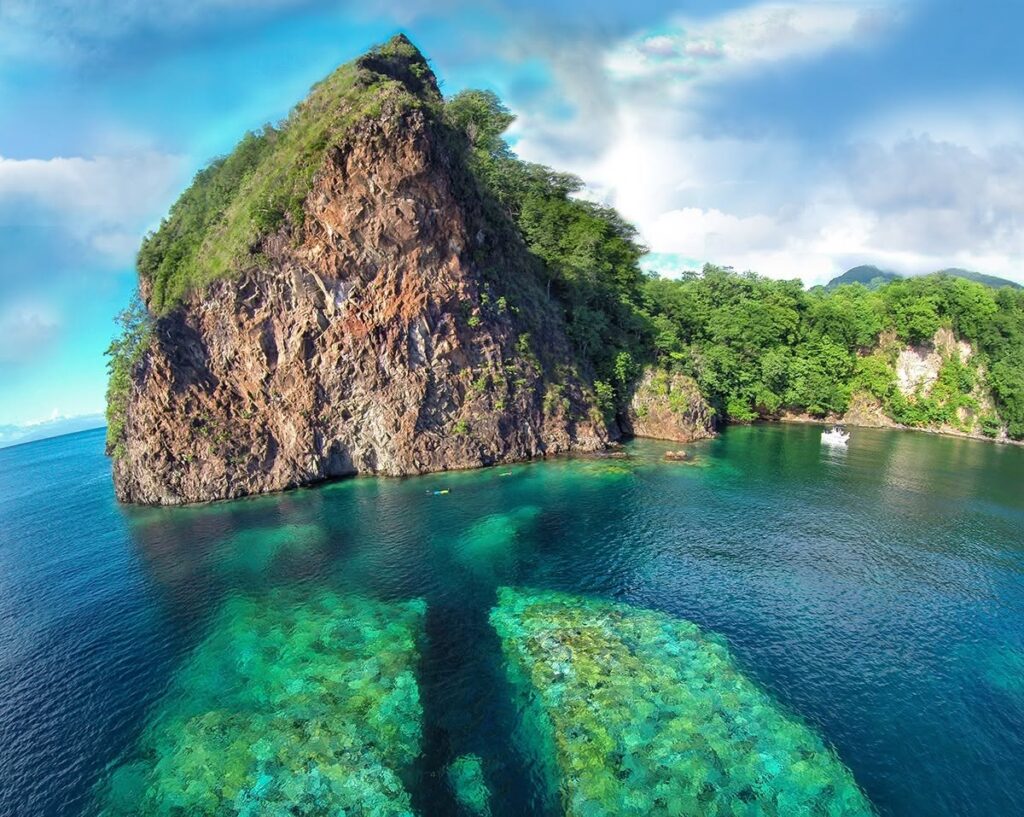
Six years of filming for *Women of Dominica*
An environmental scientist by training and founder of the NGO Wild Dominica Conservancy, Farrah La Ronde-Hutchison spent six years filming *Women of Dominica*. The documentary brings together ten women from different generations—singers, educators, environmentalists, and cultural ambassadors—who describe Dominica in their own words rather than through the voice of an outside narrator.
The premise of the film is based on a simple idea: letting these women talk about femininity, mentorship, and sisterhood without reducing them to a single role. The project was initially funded through a crowdfunding campaign on Kickstarter, driven by a community that followed the filming for six years before finally getting to see *Women of Dominica* on the big screen.
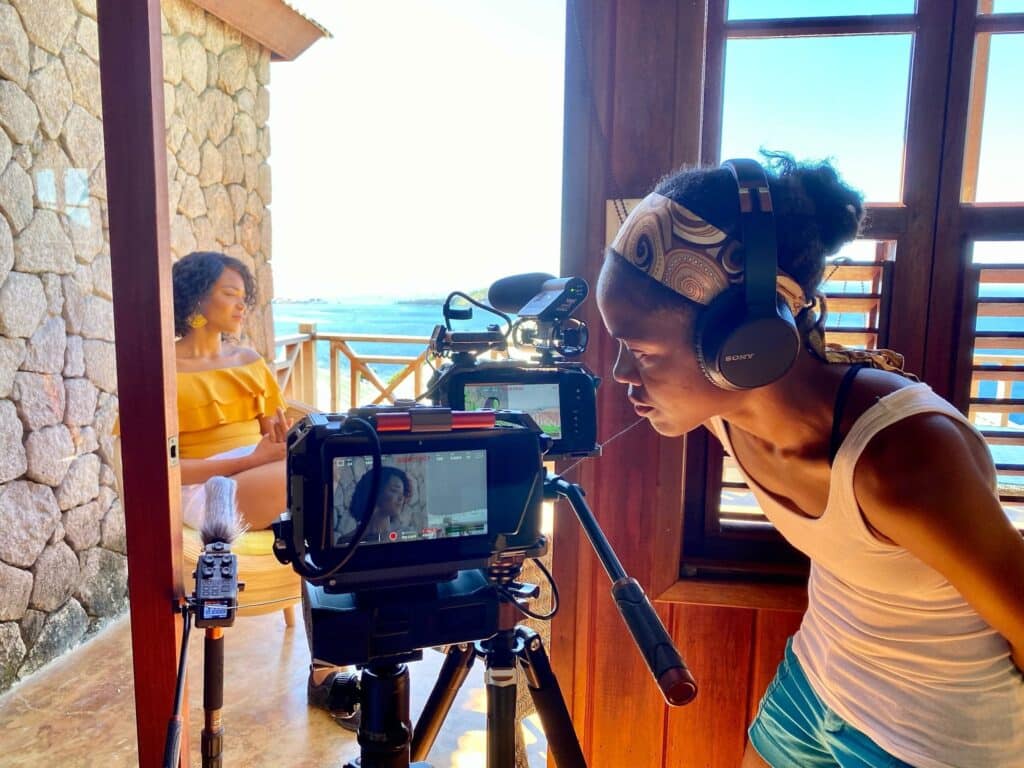
Ophelia Marie and Nine Other Voices from Dominica
Among the ten women featured in *Women of Dominica* is Ophelia Marie, known as the “godmother of cadence-lypso,” a musical genre that originated in Dominica and which she helped popularize far beyond the French-speaking Caribbean in the 1970s. The film also features conservationist Jeanelle Brisbane, Kalinago cultural ambassador Miranda Langlais, artist and fashion designer Marvlyn La Ronde, and calypso singer Tasha Peltier.
The six other voices from *Women of Dominica* further enrich this portrait: singer-songwriter Michele Henderson, music educator and cultural leader Pearle Christian, educator Leandra Lander, environmental activist Shannon St. Hillaire, and natural resources specialist Marie Jose Edwards. These ten stories are brought together without any apparent hierarchy between national fame and more discreet activism. The common thread running through *Women of Dominica* is less each woman’s individual fame than what they pass on: textile craftsmanship, song, and a way to stand tall in the wake of a hurricane.

Kwéyòl and Resilience at the Heart of the Story
This final theme runs throughout the film. Dominica, like much of the Caribbean, lives with the memory of recurring natural disasters, and *Women of Dominica* chooses to tell the story of community resilience through the lens of women rather than through statistics.
The documentary also focuses on Kwayol, the French-based Creole language still spoken on the island despite its official status as an English-speaking territory, as well as on the cuisine and landscapes featured in the film, including the trail through the Morne Diablotin Nature Reserve. This linguistic aspect serves as a reminder that Dominica, often classified as part of the English-speaking Caribbean, remains a Creole-speaking land—a trait it shares with its French-speaking neighbors, Martinique and Guadeloupe.
Where can you see *Women of Dominica*? The premiere is in Miami on September 5
“Women of Dominica ” is scheduled to screen on Saturday, September 5, in Miami at the Silverspot Cinema as part of the Urban Film Festival. This year, the festival celebrates its 11th edition over Labor Day weekend, with nearly 200 independent films screened throughout the historic Overtown neighborhood and downtown Miami.
This will be the first public screening of *Women of Dominica* in the United States, ahead of its wider release scheduled for 2027. Historic Overtown—a neighborhood long nicknamed the “Harlem of the South” for its central role in Miami’s African American cultural life before being weakened by decades of urban renewal—is not merely a backdrop for the festival. It is in this very neighborhood that the festival’s program kicks off each year, before screenings continue downtown.
An island that has rarely been featured on screen
As we await its release, scheduled for 2027, *Women of Dominica* poses a simple question to anyone who grew up far from their island—or even on it—about what we choose to pass on when we ourselves have received a garment, a song, or a lesson in resistance. Few documentaries to date have given Dominican women themselves a voice to speak about what their island means to them, which makes this film a first step toward, perhaps, other stories of this kind.
“Women of Dominica” is a documentary directed by Farrah La Ronde-Hutchison that brings together ten Dominican women from different generations to explore the themes of cultural transmission, Creole heritage, and resilience in the face of natural disasters. Filming took place over a period of six years.
“Women of Dominica” will be screened on Saturday, September 5, 2026, in Miami at the Silverspot Cinema as part of the Urban Film Festival. This will be its first public screening in the United States, ahead of a wider release scheduled for 2027.
Among the ten women are singer Ophelia Marie, known as the godmother of cadence-lypso; conservationist Jeanelle Brisbane; Kalinago cultural ambassador Miranda Langlais, artist and fashion designer Marvlyn La Ronde, and calypso singer Tasha Peltier.
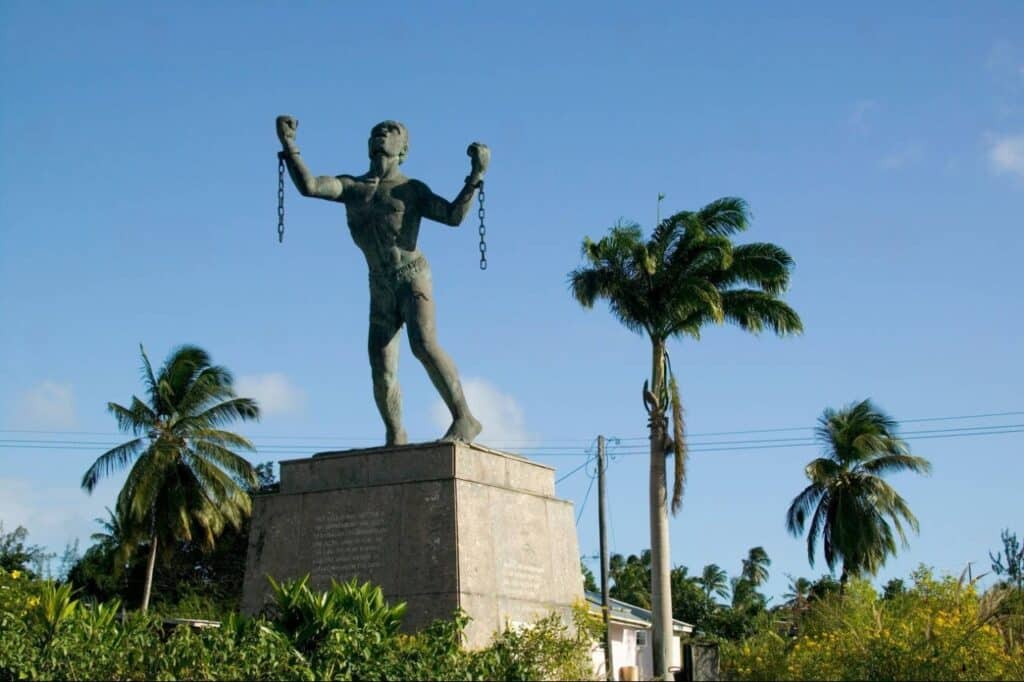
In Barbados, two bronze arms rise up, their wrists still encircled by broken chains. Sculptor Karl Broodhagen imbued this figure with a power that is immediately apparent: that of a body that now refuses enslavement. Often referred to as the Bussa statue, the work has become one of the most visible symbols of emancipation on the island. As August 1 approaches, this image serves as a reminder that Emancipation Day is more than just a holiday. In several former British colonies in the Caribbean, the date provides an opportunity for reflection. It invites us to consider the struggles, the suffering, and the freedoms won, but also what today’s societies choose to pass on.
Emancipation Day: What Does August 1 Actually Commemorate?
The Slavery Abolition Act was passed by the British Parliament in 1833 and took effect on August 1, 1834. However, that date did not mark complete freedom for everyone. A large proportion of formerly enslaved people were subjected to an “indentured servitude” system, which kept them working for their former masters.
This system came to an end in 1838 in the relevant British colonies. This timeline is crucial. It serves as a reminder that legal abolition and the actual exercise of freedom do not always coincide. Emancipation Day, therefore, has a more complex history than simply a break between slavery and freedom.

In Barbados, Bussa embodies resistance
The statue known as the Bussa Statue commemorates the revolt that broke out in Barbados in April 1816. The British National Archives describe it as an insurrection organized by enslaved women and men. Bussa, himself a slave, became one of its leading figures.
In Barbados, Emancipation Day also highlights the resistance movements that preceded abolition. The monument, therefore, does not merely recount a decision made in London; it places Caribbean action at the center of the narrative. The broken chains serve as a reminder that enslaved people were not merely beneficiaries of an imperial decision. They challenged the system, organized revolts, and defended their own vision of freedom.
In Jamaica, freedom looks up to the sky
In Kingston, Emancipation Park is hosting “Redemption Song”, a sculpture by Laura Facey unveiled in 2003. Two black bronze figures—a woman and a man—stand naked, gazing toward the sky. The artist sought to depict a sense of elevation following the violence of slavery. In Jamaica, Emancipation Day thus finds a contemporary expression in the public sphere. The work does not seek to recreate a historical scene. Rather, it offers a symbolic language composed of bodies, water, and gazes. In a popular park in the heart of the capital, emancipation is no longer just a chapter in a textbook: it becomes an everyday presence.

In Dominica, Neg Mawon commemorates the freedom that was won
In Roseau, the Neg Mawon monument pays tribute to the Maroons and those who resisted the slave system. The Dominican government has presented it as a place intended to commemorate their role in the struggle for freedom. In Dominica, Emancipation Day recalls that the history of freedom was also shaped by marronage and resistance. The symbol affirms that emancipation began before 1834. It was also forged through escapes to the mountains, maroon communities, acts of defiance, and confrontations. This memory engages with sites associated with the history of slavery, such as the former market in Roseau.

One Date, Many Caribbean Memories
Barbados, Jamaica, and Dominica all commemorate a history tied to the British Empire, but they do not tell that story in the same way. One highlights a revolt and its heroes. Another turns to contemporary art to express liberation. The third emphasizes the Maroon legacy and sites of resistance. This diversity prevents the Caribbean from being reduced to a single narrative. Emancipation Day thus becomes a meeting point for distinct regional histories. Monuments, ceremonies, conferences, music, and community gatherings extend this memory beyond the archives.
The real challenge, however, remains the transmission of this history. Emancipation Day retains its power only if the commemoration helps us understand what was abolished, what has survived, and what continues to influence Caribbean societies. When the August 1 ceremonies come to an end, what place does this history hold in the lives and concerns of the younger generations?
Emancipation Day commemorates the abolition of slavery in several former British colonies. It is primarily celebrated on August 1 in various Caribbean territories.
August 1 marks the effective date of the Slavery Abolition Act in 1834. However, the “indentured servitude” system kept many formerly enslaved people in a form of forced labor until 1838.
Emancipation Day is celebrated with ceremonies, cultural activities, lectures, and community gatherings. Monuments such as the statue of Bussa in Barbados or “Redemption Song” in Jamaica also help to preserve this memory.
In Saint Lucia, during the 51st meeting of CARICOM heads of government, Dr. Hyginus “Gene ” Leon, executive director of DBRP/The Nature Bank, presented an ambitious idea during a side event on reparations: using restorative justice to rethink Caribbean development. Here, the term does not refer solely to financial compensation. It aims to acknowledge the consequences of slavery and colonization, to redress the harm caused, and to transform the mechanisms that continue to perpetuate them.
Four Measures of Development
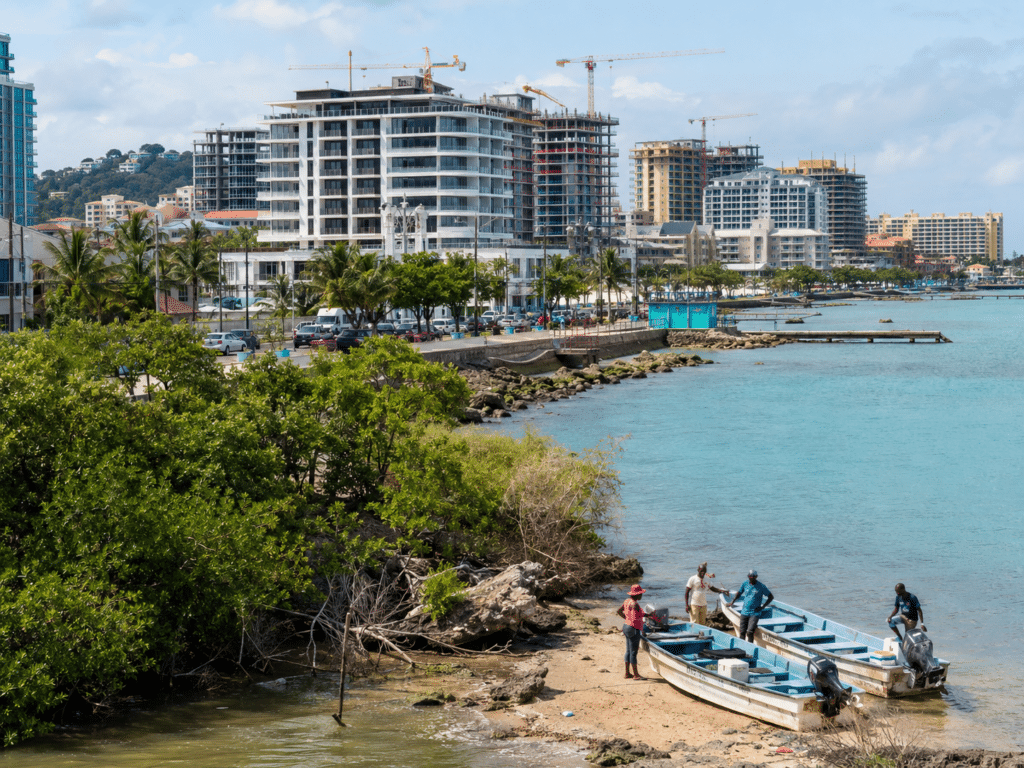
Development is often measured in terms of growth, investment, and infrastructure. This perspective is incomplete. An economy can build roads, ports, or hotels while at the same time undermining its natural resources, its population, or its institutions. This discussion is based on four forms of wealth. Productive capital includes infrastructure, businesses, and financial resources. Natural capital encompasses soil, forests, water, reefs, and the climate. Human capital encompasses health, education, skills, and dignity. Finally, societal capital relates to institutions, social cohesion, and trust.
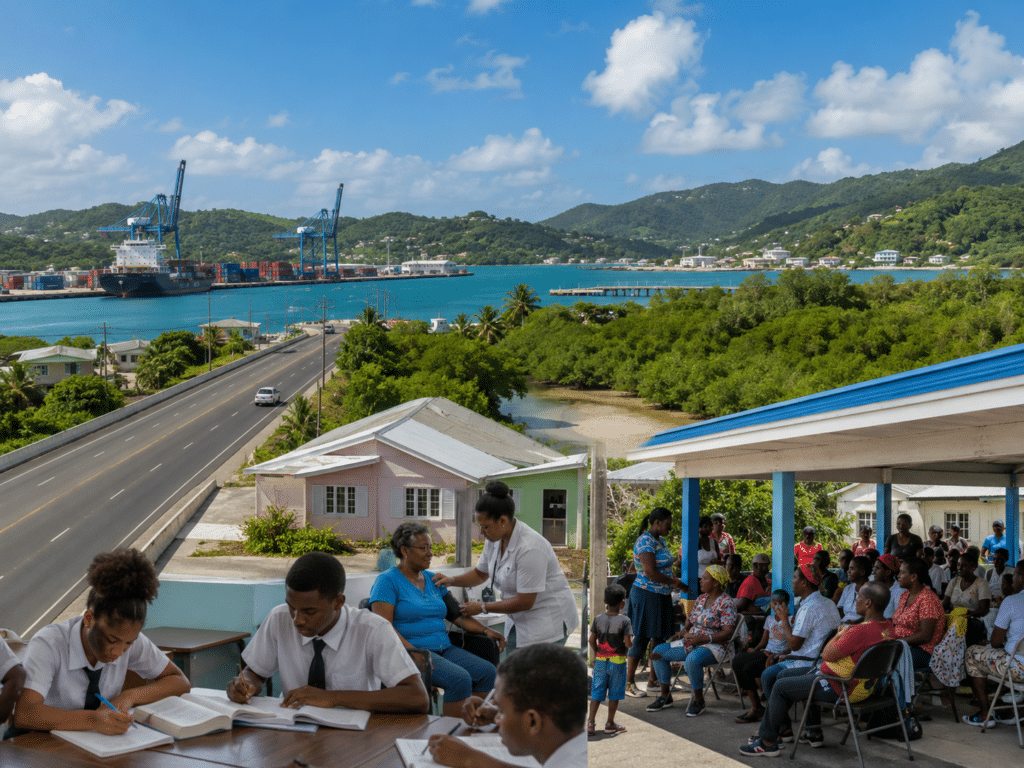
Progress requires that these four forms of wealth advance together. When one form of capital develops at the expense of the others, growth becomes fragile. A region can achieve strong economic performance while simultaneously depleting the very foundations that make that prosperity possible.
A Five-Century-Old Economic Error
Restorative justice takes on a broader dimension here. It stems from a historical observation: for centuries, the economic system has assigned a price to produced goods while reducing people and nature to mere resources. The British Emancipation Act of 1833 illustrates this logic. More than 800,000 enslaved people were freed. Yet the 20 million pounds allocated compensated the slaveowners, while the freed people received no compensation. The financial value of property was recognized; the value of human life remained absent from the balance sheet.

This extractive model has not entirely disappeared. Cocoa produced in Ghana and Côte d’Ivoire fuels a global industry, while producers and the regions of origin retain only a small share of the value created. Incomes remain low, forests are shrinking, and the bulk of the profits are concentrated elsewhere.

Reparations, Climate, and Inequality: A Common Root
Reparations for slavery, climate-related losses and damages, and the fight against inequality are often addressed separately. Yet these issues stem from the same mistake: counting only part of the actual wealth. In the Caribbean, this contradiction is evident. A mangrove forest may be destroyed to make a project profitable in the short term. Its ability to protect coastlines, limit storm damage, or support fisheries is not always factored into the initial calculations. When disaster strikes, the region must finance reconstruction, often through debt. The value of nature is ignored at the outset, and then its absence becomes a collective burden.

Restorative justice thus links memory, the economy, and the environment. It raises a concrete question: How can we redress a historical injustice without reproducing the same imbalances in current decisions?

Rescue, Rebuild, and Transform
Restorative justice is structured around three stages: relief, reconstruction, and repositioning. The first addresses immediate emergencies. The second restores what has been lost. The third transforms the rules so that the harm is not repeated. This final stage is crucial. Rebuilding a house on the same fault line is tantamount to setting the stage for its next collapse. Similarly, compensation scattered across isolated projects may produce temporary results without addressing the root causes of vulnerability.

Restorative justice could therefore fund additional investments: education, health care, ecosystem protection, resilient infrastructure, strong institutions, and economies capable of retaining more value within the Caribbean region. The goal would be to compensate for a loss while making its recurrence less likely.

Three Possible Changes for CARICOM
Restorative justice offers three avenues for the region. First, every major public or financial decision could assess what it creates and what it destroys in terms of the four forms of wealth. Second, reparations could be organized as a coherent portfolio of reconstruction and transformation. Finally, human and environmental costs could be incorporated into the evaluation of projects, loans, and investments.
Restorative justice would thus shift the focus of the debate. For the Caribbean, making amends for the past could become a way to protect the future, by finally treating people, nature, institutions, and infrastructure as equally valuable.
In this context, restorative justice refers to an approach aimed at acknowledging and addressing the lasting consequences of slavery and colonization. It is not limited to the payment of financial compensation; it also seeks to invest in communities, institutions, the environment, and the economy to ensure that the same inequalities do not continue to be perpetuated.
The four forms of capital are productive capital, which includes infrastructure and businesses; natural capital, such as forests, reefs, and water; human capital, which encompasses health, education, and skills; and societal capital, based on institutions, trust, and social cohesion. Sustainable development requires advancing these four forms of capital together, without enriching one at the expense of the others.
It could help fund a coherent set of initiatives in education, health, ecosystem protection, climate resilience, and infrastructure. It also involves factoring human and environmental costs into financial decisions and assessing what each project creates or destroys. These guidelines were presented to CARICOM as proposals, not as decisions that have already been adopted.
On the future EC$5 bill, the face of Grenadian Olympic champion Kirani James will appear alongside that of former Saint Vincent and the Grenadines Prime Minister Robert Milton Cato. This pairing encapsulates the ambition of the new series: to bring to life, through everyday gestures, the stories of those who have left their mark on the Eastern Caribbean.
On July 9, 2026, the Eastern Caribbean Central Bank (ECCB) unveiled the new designs for the five main denominations of the regional currency. For the first time, the 5, 10, 20, 50, and 100 EC dollar bills will no longer feature the portrait of Queen Elizabeth II. Ten figures from member countries will take her place.
A common currency for eight territories
The EC dollar is the official currency of Anguilla, Antigua and Barbuda, Dominica, Grenada, Montserrat, Saint Kitts and Nevis, Saint Lucia, and Saint Vincent and the Grenadines. These eight member states share a central bank and a currency, but each retains its own national history. The new design specifically seeks to bring these narratives together without blurring them. In the Eastern Caribbean, the banknote thus becomes more than just a means of payment; it becomes a symbol of regional recognition.

Five cuts for ten courses
The $100 bill will feature Saint Lucian economist Sir William Arthur Lewis and Sir John Compton. In 1979, Arthur Lewis received the Bank of Sweden Prize in Economic Sciences for his pioneering work on development. The $50 bill will feature Sir K. Dwight Venner, governor of the ECCB from 1989 to 2015, and Sir Robert Llewellyn Bradshaw. The $20 bill will feature Sir Vere Cornwall Bird Sr. and Dame Mary Eugenia Charles, the first woman elected prime minister in the Caribbean region.
The $10 bill will feature William Henry Bramble and James Ronald Webster. Finally, the $5 bill will feature Robert Milton Cato and Kirani James. As the 2012 Olympic 400-meter champion in London, Kirani James earned Grenada its first-ever Olympic medal.

A decision that has been in the works since 2023
The decision to make this change was not reached in a matter of weeks. On July 21, 2023, the ECCB’s Monetary Council approved the replacement of the image of Elizabeth II. The Central Bank then held public consultations between July and December 2023. According to the ECCB, these discussions revealed strong support for national heroes and the region’s founding figures. The 2026 unveiling thus reflects not only an institutional decision but also the expectations expressed in the countries concerned.
What memory do the tickets choose?
The collection tells a certain story of the Eastern Caribbean . It primarily highlights political leaders, an economist, a pioneer of monetary integration, and an athlete. These figures evoke the region’s path to independence, the building of its institutions, and the determination to establish the region’s presence on the international stage. But the list also sparks debate. Among the ten figures selected, only one is a woman: Dame Eugenia Charles. The arts, literature, and music are not directly represented. This observation does not diminish the significance of the change, but it does show that a currency alone cannot encapsulate the full richness of a region.
By replacing the monarch’s portrait with those of local figures, the Eastern Caribbean is shifting the symbolic center of its currency. They are not merely changing images: they are choosing the faces that will henceforth accompany purchases, wages, and trade. A new question then begins to circulate along with these bills: what other women, artists, thinkers, or builders might one day become part of the shared narrative of the Eastern Caribbean?
📸 @ECCB
The Eastern Caribbean Central Bank is replacing the portrait of Queen Elizabeth II with those of ten prominent figures from the region. This new series aims to better represent the history, achievements, and shared identity of the eight member countries that use the EC dollar.
The five banknotes will feature, among others, economist Sir Arthur Lewis, former Prime Minister Dame Eugenia Charles, former ECCB Governor Sir K. Dwight Venner, and Grenadian Olympic champion Kirani James. Each banknote will feature two regional figures.
The EC dollar is used by eight members of the Eastern Caribbean Monetary Union: Anguilla, Antigua and Barbuda, Dominica, Grenada, Montserrat, Saint Kitts and Nevis, Saint Lucia, and Saint Vincent and the Grenadines.
In the Caribbean, a high energy bill can slow down a business. A storm can cut off a road, block a port, or jeopardize a harvest. A security crisis can also extend beyond the borders of a single country. It is against this daily reality that the Canada-CARICOM dialogue is taking on a new dimension today.
Meeting in Panama City on the sidelines of the 2026 General Assembly of the Organization of American States, the foreign ministers of Canada and CARICOM sought to reinvigorate their strategic partnership. At the heart of their discussions was an action plan focused on three major priorities for the region: security, climate, and the economy.
Cooperation Aimed at Achieving Concrete Results
The Canada-CARICOM partnership builds on the strategic agreement launched in 2023. But the 2026 meeting marks an important milestone: both parties now want to move forward with a plan that is more specific, clearer, and more measurable.
The goal is not merely to demonstrate diplomatic closeness. It is to establish priorities, timelines, and funding mechanisms capable of producing results. For Caribbean countries, this clarity matters. The region faces a range of interrelated challenges: energy costs, climate-related disasters, maritime security, financial vulnerability, and the crisis in Haiti. The Caribbean is not merely asking for aid. It is seeking partners capable of understanding its realities and working alongside it for the long term.
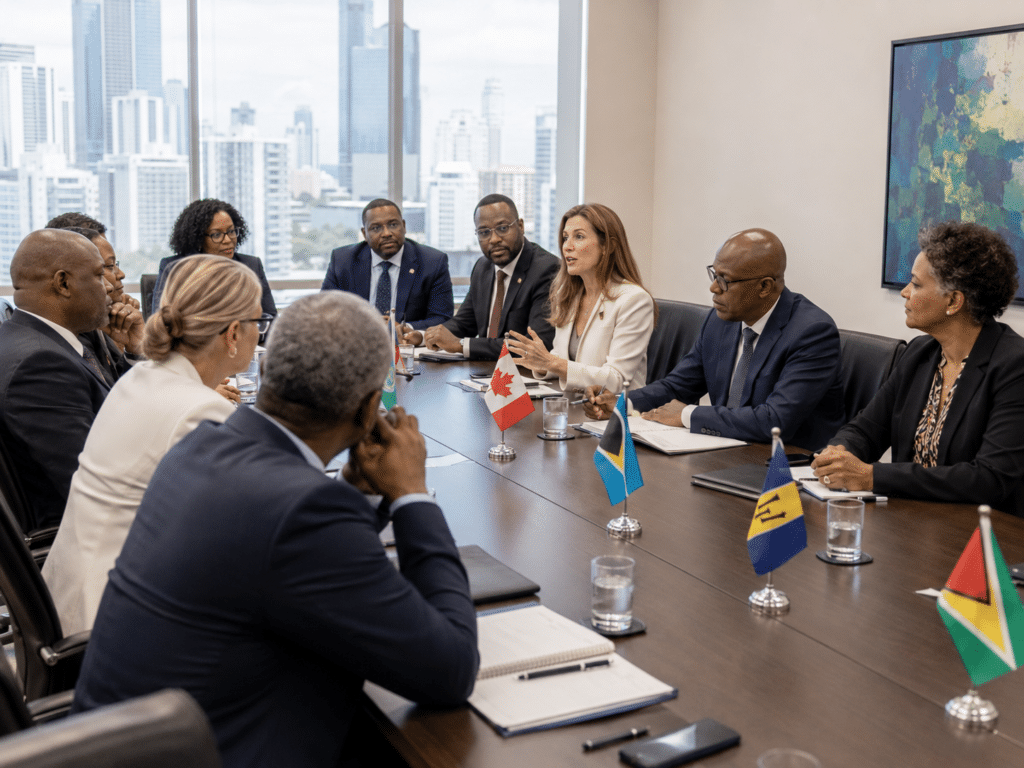
Security: A Regional Emergency
Security is central to this new Canada-CARICOM plan. The ministers discussed transnational crime, gangs, irregular migration, maritime security, and illicit flows. For the region, these issues are not isolated. The sea serves as a link, but it is also an area of vulnerability. Trafficking, criminal networks, cyberthreats, and political crises sometimes spread faster than institutional responses can keep up.
Canada already supports certain regional initiatives through capacity building, targeted interventions, and operational partnerships. The new challenge is to move toward a more coordinated response: better protecting maritime areas, strengthening institutions, sharing relevant information, and limiting the influence of criminal networks.

Haiti: A Crisis That Affects the Entire Caribbean
Haiti is a major focus of the discussions. The political, security, and humanitarian crisis the country is facing has direct consequences for the region. In particular, the ministers highlighted the risks associated with drug and arms trafficking. Support for the Gang Suppression Force was among the topics discussed. This force is intended to help restore security on the ground, with a mandate set to be renewed by the United Nations Security Council.
But the response cannot be limited to security measures alone. The ministers also reaffirmed the right of Haitians to choose their own government. They support the holding of credible elections as soon as conditions permit, as well as efforts to combat corruption and impunity. Haiti serves as a powerful reminder: no lasting stability in the Caribbean can be achieved by leaving a country to face such a profound crisis on its own.

Climate and the Economy: Two Sides of the Same Challenge
The new Canada-CARICOM plan also clearly links climate and the economy. In the Caribbean, a natural disaster is never just a weather event. It affects families, businesses, roads, schools, ports, and public finances. Access to reliable and affordable energy is once again a priority. Overly expensive energy stifles innovation and puts a strain on households. A more stable energy supply can support industry, services, investment, and the transition to more sustainable models.
Trade is also part of the equation. The CARIBCAN program, which grants duty-free access to the Canadian market for most products originating in 18 Caribbean Commonwealth countries and territories, remains an important tool. It serves as a reminder that the Canada-CARICOM partnership is not just about diplomacy. It also encompasses economic opportunities, supply chains, and the ability of Caribbean businesses to expand beyond their local markets.

Greater Attention to the Caribbean's Vulnerability
Another key aspect of the Canada-CARICOM partnership concerns financing. Several Caribbean states are considered middle-income countries. Yet their vulnerability to climate-related disasters, economic shocks, and supply disruptions remains very high. This is one of the region’s major paradoxes. On paper, some countries appear too “advanced” to easily access concessional financing. In reality, a single crisis can undermine years of progress.
The ministers therefore emphasized the need to reform the international financial architecture. The idea is simple: the actual vulnerability of small states must be taken into account more fully—not just their average income.

A plan to follow closely
The coming months will be crucial. Officials still need to finalize the details of the action plan, identify priority initiatives, develop an implementation schedule, and strengthen monitoring efforts. A dialogue among senior officials is scheduled for the fall to advance this work.
The Canada-CARICOM partnership alone will not solve the Caribbean’s challenges. But it says something about the current moment: the region wants to be heard as a strategic area, not just as a vulnerable one. Now the real question remains: Will this new plan bring about visible changes for Caribbean people, businesses, and territories?
The new Canada-CARICOM plan is a roadmap designed to strengthen cooperation between Canada and the Caribbean Community. It is based on three priorities: more resilient economies, climate action, and regional security. The goal is to move from a diplomatic partnership to more concrete actions, with timelines, measurable results, and sustainable financing mechanisms.
Haiti is a key focus because its political, security, and humanitarian crises have repercussions for the entire region. The ministers discussed drug and arms trafficking, support for the Gang Suppression Force, and the right of Haitians to choose their own government. For CARICOM, Haiti’s stability therefore remains a regional issue, not just a national one.
The Canada-CARICOM Partnership directly links climate and the economy. It emphasizes access to reliable and affordable energy, the development of trade, the strengthening of supply chains, and access to financing tailored to the vulnerabilities of small Caribbean states. The goal is to enable the region to better withstand natural disasters, economic shocks, and international crises.
Organized by the Caribbean Chamber of Commerce in Europe (CCCE), the second edition of Caribbean Days brought together various expressions of Caribbean culture at UNESCO headquarters in Paris. Over the course of four days, the event provided a forum for dialogue on regional cooperation, sustainable tourism, and economic relations between the Caribbean and Europe.
A Caribbean-style restaurant with a view of Paris
On the roof of UNESCO, Caribbean chefs from the association Les Toques françaises are preparing a three-course Caribbean menu. From the restaurant, guests can see the Eiffel Tower, Les Invalides, and the Left Bank. This scene captures the spirit of the Caribbean Days : to showcase the Caribbean through its creative works and craftsmanship, and then use this cultural presence to foster broader exchanges.
The Caribbean Chamber of Commerce in Europe (CCCE) organized this second edition as part of Latin American and Caribbean Week. Under the theme “Peace, Diversity, and Sustainability,” the event brought together representatives from the cultural, institutional, diplomatic, and economic sectors.
Over the course of four days, the program featured the visual arts, gastronomy, fashion, film, literature, poetry, music, and dance. These disciplines showcased various facets of Caribbean creativity in a venue dedicated to education, science, culture, and heritage.
Creative Industries Take Center Stage
The Caribbean Days highlighted the creative industries as one of the region’s strengths. Cuisine, fashion, film, storytelling, music, and dance served as points of connection between different regions and sectors.
This diversity brought together Caribbean ambassadors, other diplomats, representatives from the public sector, and private-sector stakeholders. Culture thus provided a common framework for discussions on development, investment, and partnerships.
Founded in November 2019, the CCCE’s mission is to facilitate exchanges between the Greater Caribbean and Europe. It also seeks to encourage European investment in the region’s sustainable economic development. In Paris, this mission has taken the form of meetings between institutions, businesses, and Caribbean representatives.
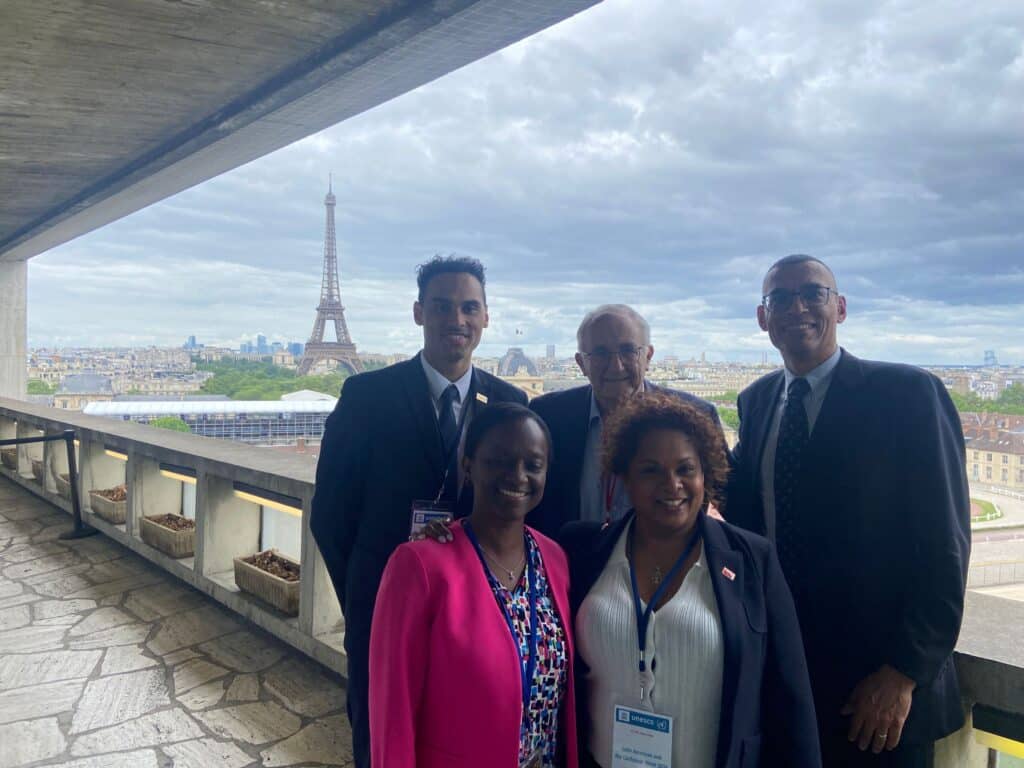
Regional Cooperation Over Lunch
A luncheon discussion focused on cooperation between France’s overseas territories in the Caribbean and CARIFORUM member states. Representatives from the Bank of France, Expertise France, and the OECD gave presentations.
The remarks by French Senator Micheline Jacques, who supports an economic partnership between France’s overseas territories and Haiti, refocused the debate on a concrete question: How can we strengthen ties among the various parts of the Caribbean region?
Through this event, the Caribbean Days brought culture, diplomacy, and the economy closer together. Gastronomy was not merely a backdrop; it served as a framework for dialogue on potential areas of cooperation and on the Caribbean’s role in its relations with Europe.
Sustainable Tourism in the Face of Climate Change
A roundtable discussion was held on sustainable tourism. Geoffrey Lipman, former president of the World Travel and Tourism Council and former deputy secretary-general of the World Tourism Organization, participated alongside Florian Valmy-Desvillers, director of business development for the Caribbean Tourism Organization in the United Kingdom and Europe.
Jo Spalburg, Secretary General of the CCCE, summarized the main message of these discussions. According to him, the acceleration of climate change makes it necessary to develop tourism that is more sustainable and more beneficial to local communities. These communities play a direct role in protecting the region’s natural and cultural heritage for future generations.
This reflection gives the Caribbean Days a specific scope. It links the promotion of Caribbean destinations to the responsibility of preserving what attracts visitors: landscapes, cultural heritage, cultural practices, and local knowledge.

From Cultural Visibility to Partnerships
As this second edition comes to a close, the CCCE is highlighting a collective goal: to transform cultural visibility into collaborations, innovation, and sustainable growth for the region.
The Caribbean Days have shown that culture can foster dialogue among diplomats, institutions, businesses, and creative professionals. What happens next will depend on the ability of the partners gathered in Paris to turn these exchanges into concrete partnerships that benefit Caribbean regions and communities.
Caribbean Days, also known as Journées des Caraïbes, is an event organized by the Caribbean Chamber of Commerce in Europe at UNESCO headquarters in Paris. Over the course of four days, the second edition of the event showcased the visual arts, gastronomy, fashion, film, literature, poetry, music, and dance. The event took place under the theme “Peace, Diversity, and Sustainability,” as part of Latin American and Caribbean Week.
Caribbean Days is organized by the Caribbean Chamber of Commerce in Europe (CCCE). Founded in November 2019, this organization seeks to facilitate exchanges between the Greater Caribbean and Europe, while encouraging European investment in the region’s sustainable economic development. In Paris, the CCCE brought together representatives from the cultural, diplomatic, institutional, and economic sectors to discuss Caribbean culture and challenges.
Caribbean Days combined the promotion of creative industries with discussions on regional cooperation and sustainable tourism. A luncheon forum focused on relations between France’s overseas territories in the Caribbean and CARIFORUM member states. A roundtable discussion also addressed the effects of climate change and the need to develop more sustainable tourism that better benefits local communities working to protect the region’s natural and cultural heritage.
A constraint that can become a value
The Caribbean is experiencing climate change directly, brutally and continuously. More intense cyclonic seasons, accelerated coastal erosion, fragile coral ecosystems, energy vulnerability: no island in the region has been totally spared. For a long time, this reality has been presented as a constraint for public budgets, for tourism operators and for economic models based on the classic spa industry.
The Travel Dreams 2026 report by Amadeus, however, suggests a possible turnaround. What was once perceived as a fragility can become a value proposition, as long as it is acknowledged and accurately portrayed. This is where the notion of visible sustainability becomes central.
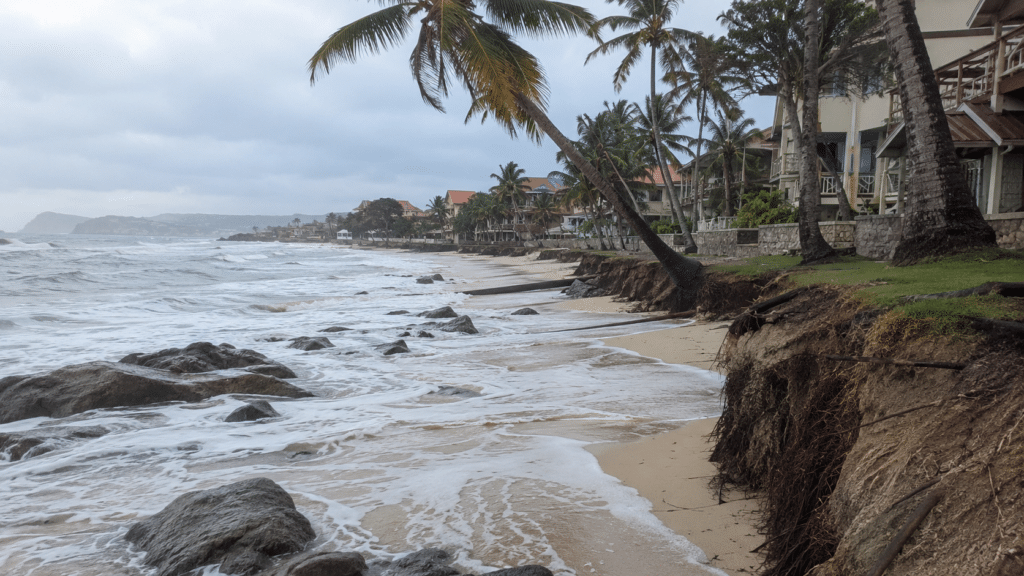
What travellers say
The study first documents the scale of demand. Of the 6,000 travelers surveyed across six major global markets, 75% say that a hotel’s sustainability commitments are important in their booking decision. More than one in three, precisely 35%, consider them “very important”.
And this concern translates into willingness to pay. Travelers who place importance on this criterion say they are willing to spend an average of 11.7% more per night to stay in an establishment with serious sustainable practices. This represents around $29 more on a $250 room. Among Generation Z travelers, this willingness rises to 14.7%, or almost $37 more per night. Visible sustainability starts here: in a hotel’s ability to communicate why these practices are worth more.
One data point deserves particular attention for the Caribbean: sensitivity to sustainability varies greatly according to source markets. It reaches 93% of travelers surveyed in India and 85% in China, compared to 65% in the UK and Germany. For a region seeking to reduce its dependence on traditional markets, these discrepancies open up a strategic avenue to be handled with caution. These travelers won’t be satisfied with a generic discourse on nature. They’ll be looking for evidence, visible features, documented stories. For the Caribbean, visible sustainability can become a way of speaking to these audiences without denying its local roots.

What hotels do
On the supply side, Amadeus data show a widespread commitment among the hoteliers surveyed. Of the 500 general managers or equivalent profiles consulted across nine countries, all say they plan to spend on sustainability initiatives in the coming year. The average anticipated expenditure represents 6.7% of total company expenditure. And 35% of hoteliers identify sustainability as a key differentiating factor from their competitors.
But the study also highlights a revealing discrepancy. Hotels invest primarily in actions that have an internal operational efficiency rationale: water conservation (33%), sustainable catering supply (33%), responsible supply chains (33%), waste reduction (32%), staff training (32%).

On the other hand, practices that are more visible to the customer, such as renewable energies (28%), biodiversity and community initiatives (27%), and the link between sustainability and loyalty programs (21%), remain less developed. It is this tension that makes visible sustainability strategic: it forces us to move from internal effort to an experience understood by the traveler.
Closing the gap
Joerg Schuler, Head of Global Hospitality Sales at Amadeus, sums up this discrepancy by talking about sustainability as being more “visible, experiential and integrated into the stay”. The formula is important, because it changes the subject. It’s no longer just a question of saying that a hotel consumes less water or reduces its waste. It’s about making these choices understandable, concrete and experienced by the traveler. Visible sustainability therefore requires not only proof, but also an accurate narrative.

This gap is precisely what the Caribbean can bridge. Visible Caribbean sustainability is not an abstract technical program. It can be embodied in visible, relatable, situated practices. Restoring mangroves. Coral reef protection. Local solar energy. Short-distance sourcing from small island producers. Saving water in contexts where the resource is precious. Passing on traditional knowledge of how to use the environment sparingly.

Each of these practices can be both a serious environmental commitment and a story that travelers can experience during their stay. It is this articulation that transforms visible sustainability into perceived value, and thus into pricing leverage.
A value to be documented
A Caribbean hotel that can document, with figures, identified partners and measurable results, its role in restoring a local ecosystem is no longer just selling a room. It’s selling participation in a broader regional project. Travelers surveyed by Amadeus have already indicated their willingness to pay for this. Visible sustainability therefore requires showing what is being done, by whom, with what effects.

This logic goes beyond the individual hotel business. It also concerns destination management bodies, tourism authorities and regional economic players. A region’s ability to credibly communicate its ecological commitment is becoming a competitive variable in the face of other tropical destinations. At destination level, visible sustainability can become a common language for hotels, producers, associations, communities and travellers.

The Caribbean challenge
For the Caribbean, the challenge is not to become sustainable in the sense that other regions understand it. It is to make legible a sustainability that, in many cases, is already practiced at the level of communities, small businesses, local cooperatives and inherited know-how. The global market is willing to pay for it. The question is whether the region will be able to present this reality with the appropriate rigor, coherence and pride.

This series of articles, in its three parts, has attempted to defend the same thesis. The expectations of travelers in 2026 – disconnection, connection to place, visible sustainability – are not constraints that Caribbean players have to endure. They are expectations that the region structurally bears, by virtue of its geography, cultures and history. What remains, as always, is the patient task of putting them into words. This is the editorial mission that Richès Karayib will continue to carry out, alongside the region’s economic, institutional and creative players.
Visible sustainability refers to the set of sustainable commitments that a traveler can actually see, understand or experience during their stay. It’s not just about internal measures, such as reducing water costs or limiting waste behind the scenes. In the Caribbean, this can take the form of solar power clearly integrated into the hotel, a mangrove restoration program, coral reef protection, sourcing from local producers or community actions presented with concrete results. This approach makes the ecological commitment more legible and credible for the traveler.
Visible sustainability can become a competitive advantage as travelers increasingly value hotels’ environmental commitments. According to the data used in the article, a majority of travelers consider these commitments to be important when choosing an establishment, and a proportion are even willing to pay more for serious practices. For Caribbean hotels, the challenge is not only to act, but also to document and tell the story of these actions with precision. An establishment capable of demonstrating its local impact is no longer just selling a room: it is proposing participation in a local project.
Caribbean destinations can better promote their visible sustainability by linking the actions of hotels, producers, associations, local authorities and communities into a coherent narrative. This requires proof: figures, identified partners, measurable results, actions monitored over time. A destination that explains how it protects its reefs, saves water, supports short circuits or restores its ecosystems builds a stronger promise than a simple discourse on nature. For the Caribbean, this storytelling is strategic, as it transforms real climate vulnerability into a cultural, ecological and economic value proposition.
On June 2 and 3, 2026, public and economic players from Guadeloupe, Antigua and Barbuda, Dominica and St. Kitts and Nevis sat around the same table in Guadeloupe to work on a very concrete question: how can we better connect nearby islands, whose exchanges are still hampered by transport breaks? The first KARULINK steering committee is not yet launching new lines. It is setting up a method, partners and a timetable to examine the feasibility of regular maritime passenger services.
A first COPIL to move from principle to method
This meeting marks an important milestone for KARULINK, a European territorial cooperation project co-financed by the European Union as part of the INTERREG Caribbean 2021-2027 program. Discussions focused on three areas: feasibility studies for future maritime services, the development of more environmentally-friendly transport solutions, and prospects for economic and tourism cooperation between the partner territories.
This framing is essential. There’s more to a sea link than simply putting a ship out to sea. We need to study the possible flows, the ports involved, land connections, operating costs, standards, security, timetables, ticketing and passenger reception. The entire travel chain needs to be considered. This is one of the challenges of the project’s intermodal approach: to make it easier for passengers to switch from one mode of transport to another.


A Guadeloupean project with a Caribbean scope
KARULINK is led by the STEP Group in Guadeloupe, with several economic and institutional partners: the Antigua and Barbuda Chamber of Commerce, the Dominica Association of Industry and Commerce, the St. Kitts and Nevis Chamber of Industry and Commerce, the Communauté d’Agglomération La Riviera du Levant and the Ville de Bouillante. The project is scheduled to run until December 31, 2027.
Data published by INTERREG Caraïbes indicate a period running from January 4, 2025 to December 31, 2027, with a total cost of 1,868,743 euros, including 1,143,896 euros from the ERDF and 444,535 euros from the EDF. These amounts place KARULINK within a structured, financed and European framework, with measurable objectives.
The sea as a space for cooperation
The appeal of KARULINK lies in its starting point: the sea can once again become a space for traffic, work and cooperation between nearby islands. The project aims to strengthen connectivity within the Guadeloupe archipelago, while exploring new routes to Dominica, Antigua and St. Kitts. It also combines broader objectives: stimulating the tourism economy, promoting low-carbon transport, creating local jobs and developing training in maritime and land transport professions.
This is an important dimension for the Eastern Caribbean. The territories concerned share geographical proximity, commercial exchanges, family ties, tourist traffic and economic needs. Yet regional mobility remains a sensitive issue, as it depends on public decisions, private operators, technical constraints and fragile economic balances. KARULINK should therefore prove that cooperation can produce concrete solutions.


A response to the challenge of regional integration
The project is part of the “A more connected Caribbean” priority of the INTERREG Caribbean program. This priority includes a specific objective dedicated to sustainable, intelligent and cross-border mobility. It corresponds to the stated ambition of reducing obstacles to inter-island mobility and promoting economic, tourist and human exchanges.
For Guadeloupe, the stakes are also strategic. As one of Europe’s outermost regions in the Caribbean, it is seeking to better integrate into its regional environment. KARULINK gives it a pivotal role, not to speak on behalf of other territories, but to build useful, realistic and sustainable links with them.


The next stage will be decisive
At this stage, the available information points to feasibility studies, coordination between partners and preparation of the next steps. Future routes have yet to be defined: routes, frequency, fares, ships, ports and operating partners.
This is where KARULINK will be needed. If successful, the project could provide the Eastern Caribbean with a concrete example of maritime cooperation, at the service of inhabitants, visitors, businesses and territories. June 2 and 3, 2026 have not yet changed the transport map. But they did lay a foundation stone: that of Caribbean mobility conceived from within the region, with its constraints, needs and ambitions.
KARULINK is a European territorial cooperation project designed to strengthen maritime connectivity between several territories in the Eastern Caribbean. It brings together Guadeloupe, Antigua and Barbuda, Dominica and St. Kitts and Nevis, with a concrete objective: to study the establishment of regular maritime passenger links, improve transport intermodality and facilitate economic, tourist and human exchanges between the islands.
The KARULINK project mainly concerns Guadeloupe, Antigua and Barbuda, Dominica and Saint Kitts and Nevis. On the Guadeloupe side, it involves Groupe STEP, the Communauté d’Agglomération La Riviera du Levant and the Ville de Bouillante. The project is in line with a regional approach: to better link geographically close territories, which are still hampered by transport, coordination and organization constraints for maritime flows.
KARULINK is important because it addresses a central issue in the Caribbean: the difficulty of moving easily between islands that are nevertheless neighbors. By working on maritime services, more sustainable transport solutions and better cooperation between public and private players, the project can help strengthen regional integration. It can also support tourism, economic exchanges, family ties and the movement of people in the Eastern Caribbean.
