La Brea Pitch Lake is a natural asphalt lake located in La Brea, southwest of Trinidad (Trinidad and Tobago). It covers approximately 41 hectares and is reported to reach a depth of 76 meters at its center, according to the country’s submission to UNESCO. Walter Raleigh visited it in 1595, and the site has been on the World Heritage Tentative List since 2011, though it has not yet been inscribed.
In January 2020, certified guide Garvin Charles, who was born and raised in La Brea, described his visit to La Brea’s Pitch Lake to the daily newspaper Newsday. At the time, he had eighteen years of experience leading tours of the approximately forty-five-minute hike. In this account, the surface is described using two guide terms. “Elephant skin” refers to the solid, wrinkled crust. “Mother of the Lake” refers to the spot where molten asphalt still oozes. In some places, the asphalt is soft enough for visitors to walk on it barefoot.
The key facts about this site can be summed up in a few figures. According to the dossier submitted by Trinidad and Tobago to UNESCO, La Brea Pitch Lake covers approximately 41 hectares. Its depth is estimated at 76 meters (250 feet) at the center, and it is believed to contain approximately 10 million metric tons of bitumen. Measurements vary by source, ranging from 40 to 47 hectares in area.
The black surface of La Brea Pitch Lake, in La Brea (Trinidad).
La Brea Pitch Lake, an asphalt lake formed by intersecting faults
La Brea Pitch Lake is located in La Brea, in southwestern Trinidad. The name is Spanish and means “pitch.” According to the UNESCO dossier, the asphalt rose up along major intersecting faults during geological movements in the Pliocene epoch. The dossier describes the lake as an emulsion of water, gas, bitumen, and mineral matter, containing a mixture of methane, carbon dioxide, and hydrogen sulfide.
The lake moves slowly, with visible flow lines. The report notes that prehistoric trees and other objects have already appeared, disappeared, and then reappeared there. Trinidad and Tobago presents La Brea Pitch Lake as the world’s largest and most significant asphalt lake, a claim made by the government.
Water and asphalt crust on La Brea Asphalt Lake in Trinidad.
From Raleigh Pitch to a State-Owned Enterprise
Native Americans were the first to use this asphalt, according to the official history of the company that operates the site today. In 1595, Walter Raleigh visited La Brea Pitch Lake. In his account published in 1596, he wrote that he had tried this pitch to maintain his ships. He described it as “most excellent good” and stated that it “melteth not with the sun as the pitch of Norway,” meaning that it does not melt in the sun like Norwegian pitch.
Commercial operations began in 1888, with a concession granted to A.L. Barber. Lake Asphalt of Trinidad and Tobago (1978) Limited, a state-owned company based in Brighton, La Brea, was established in 1978. It has just over 200 employees, 90% of whom live nearby. According to its own figures, approximately 90% of its lake asphalt sales are for export.
La Brea Tar Pits, viewed from the surrounding area.
Wood carvings and sacred hummingbirds: what La Brea's Pitch Lake holds
In 2017, researchers including Ostapkowicz, Brock, and Wiedenhoeft published a study of ten wood carvings and a skull found in the asphalt of La Brea’s Pitch Lake. Radiocarbon dates range from approximately 3200 BCE to approximately 700 CE. The authors describe them as the oldest known wood carvings from the Caribbean.
These objects were recovered during commercial mining operations, without any archaeological context, which limits the conclusions that can be drawn from them. However, one weaving tool bears a strontium signature that is unlikely to have originated in Trinidad, suggesting connections to the South American continent. The artifacts are housed primarily at the National Museum and Art Gallery of Trinidad and Tobago. The UNESCO dossier also recounts a Native American legend. A village is said to have cooked sacred hummingbirds, which were believed to carry the souls of ancestors. The earth opened up, and a lake of pitch engulfed the village.
Thick, viscous asphalt at La Brea Pitch Lake.
Reddish water at La Brea's Pitch Lake in Trinidad.
La Brea Tar Pits and the Wait for UNESCO Since 2011
On August 17, 2011, Trinidad and Tobago submitted La Brea’s Pitch Lake to the indicative list World Heritage sites, including Banwari Trace and the Tobago Main Ridge Forest Reserve. This list is a preliminary step, not an inscription. As of October 2, 2026, the country has no inscribed properties. The nomination cites two natural criteria, (vii) and (viii). On the ground, Newsday reported in 2020 that there were seven certified guides and five tours per day during peak season, compared to twenty when Garvin Charles first started. If inscription ever happens, what will we want to protect about a lake that spits out what it swallows?
On the ground, Newsday reported in 2020 that there were seven certified guides and five tours per day during peak season, compared to twenty when Garvin Charles first started. If the site is ever listed, what exactly will we want to protect about a lake that spits out what it swallows?
A black vulture on the asphalt of La Brea's Pitch Lake.
La Brea Pitch Lake is located in La Brea, in the southwestern part of the island of Trinidad, in Trinidad and Tobago. According to the dossier submitted to UNESCO, it is located about 1.1 kilometers from the sea.
According to Trinidad and Tobago’s submission to UNESCO, La Brea’s Pitch Lake covers approximately 41 hectares, with an estimated depth of 76 meters at its center and approximately 10 million metric tons of bitumen. Other sources estimate its surface area to be between 40 and 47 hectares.
No. La Brea Pitch Lake has been on Trinidad and Tobago’s Tentative List since August 17, 2011, which is a preliminary step. As of October 2, 2026, the country has no properties inscribed on the World Heritage List.
Born in Grenada in 1935, he moved to Trinidad as a young child and died in New York on September 27, 2026. Mighty Sparrow leaves behind eight Calypso Monarch titles and eight Road March victories. He also leaves behind songs that held up a mirror to everyday life.
In 1956, the stands at the Calypso King finals began to rumble from the very first verse. At least that’s how Mighty Sparrow described it years later, referring to “Jean and Dinah.” The young singer was in his twenties. His song was about the departure of American soldiers from Trinidad and its impact on the women living around the Chaguaramas base. It earned him two titles that same year—Calypso King and Road March—but only $40.
This meager earnings inspired his next song, “Carnival Boycott,” a protest against the low pay given to calypsonians. From the very beginning, Mighty Sparrow demanded fair pay for those who made a living from singing. He himself boycotted the Carnival contests for three years. “Jean and Dinah” would later be covered by Harry Belafonte and Robert Mitchum.
Slinger Francisco was born on July 9, 1935, in Grand Roy, in the parish of St. John, in Grenada. He was still a very young child, around 1937, when his family moved to Trinidad, where his father, a carpenter, had found work. He grew up in Laventille, near Port of Spain. At school, he sang in a choir. At age 14, he joined a steel band—those percussion ensembles playing steel drums that bring Carnival to life. His high-energy performances earned him his first stage name, Little Sparrow, which was later changed to Mighty Sparrow.
Mighty Sparrow, Eight Crowns, and a Global Audience
Mighty Sparrow won the Calypso Monarch title eight times and the Road March title eight times—the song most frequently played by street bands during Carnival. His Road March songs have become classics, from “Jean and Dinah” in 1956 to “Pay As You Earn” in 1958, “Mae Mae” in 1960, “Obeah Wedding” in 1966, “Sa Sa Yea” in 1969, “Drunk and Disorderly” in 1972, and “Doh Back Back” in 1984. He also won the Calypso King of Kings title twice.
Mighty Sparrow’s career spanned more than seven decades, with over 500 compositions. In 1969, he recorded “Only A Fool Breaks His Own Heart” with Byron Lee. He then toured the United States, performing at venues ranging from Madison Square Garden to Lincoln Center, well into his 80s. In 1990, he performed for Nelson Mandela at Yankee Stadium.
Honors followed. The University of the West Indies awarded him an honorary doctorate in 1987. Trinidad and Tobago presented him with the Gold Chaconia Medal in 1993, followed by the Order of the Republic in 2014. He was also appointed an Officer of the Order of the British Empire. Mighty Sparrow recorded in Yoruba, Creole, French, Spanish, and Dutch. In Nigeria, he received the honorary Yoruba title of Chief Omo Wale of Ikoyi. Bob Dylan, in the liner notes of his 1985 *Biograph* box set, wrote that Mighty Sparrow was—and likely remained—the king.
His songs are about love and rivalries, politics and superstitions, money and morality. Their titles range from “Mr. Walker” to “Capitalism Gone Mad” (1983). For the president of Trinidad and Tobago, Christine Kangaloo, he has, for more than seven decades, set “our joys, our contradictions, our humor, and our conscience” to music and words. Not everything was universally acclaimed. “Congo Man,” released in 1965, was criticized for its lyrics about women and Africans and was subsequently banned from broadcast for a long time. This dark chapter is part of his legacy, just as much as his outspoken style.
Mighty Sparrow died on September 27, 2026, in New York, at the age of 91, following a brief illness, his family said. They noted that he was also a husband, a father, a grandfather, and a great-grandfather. Trinidad and Tobago is organizing a state funeral for him, as announced on September 30 by Minister of Culture Michelle Benjamin. The date has not yet been set. Condolence books will be open from October 1 through 14, and Calypso History Month, which begins on October 1, will be observed in his memory.
The minister summed up the artist in two ideas. He sang the truth when others remained silent, she said, and his songs allowed ordinary people to recognize their own lives. Grenadian Prime Minister Dickon Mitchell found the phrase that unites his two islands. “Grenada gave him birth. Trinidad and Tobago nurtured his talent.”
It remains to be seen where and when the country will bid him farewell. The condolence books are open, and Calypso Month has begun. Perhaps all it takes is a listen to “Jean and Dinah” to hear what Trinidad recognized in him as early as 1956.
Mighty Sparrow, whose real name was Slinger Francisco, was a calypso singer born in Grenada and raised in Trinidad. He died on September 27, 2026, in New York at the age of 91, after winning eight Calypso Monarch titles and eight Road March titles.
He was born on July 9, 1935, in Grand Roy, in the parish of St. John, Grenada. He arrived in Trinidad as a small child, where his father, a carpenter, had found work.
The date has not been set. On September 30, 2026, Culture Minister Michelle Benjamin announced that a state-sponsored funeral would be held, and condolence books will be open from October 1 to 14.
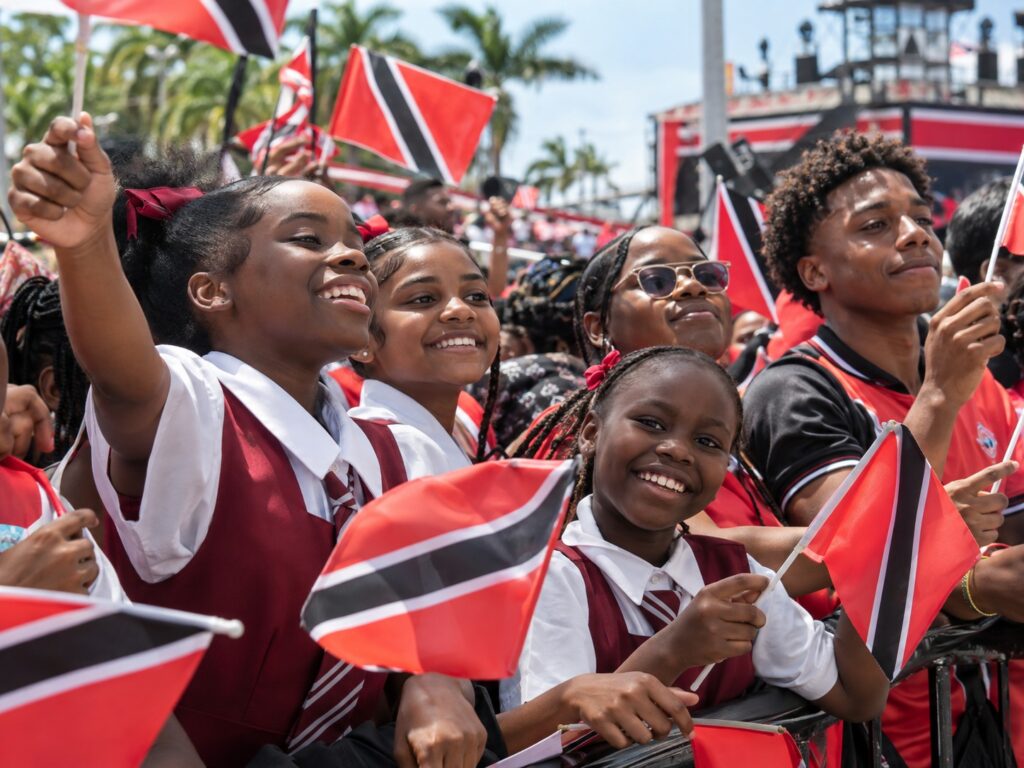
On September 24, Trinidad and Tobago celebrates its 50th anniversary as a republic. In 1976, fourteen years after gaining independence, the country replaced the British crown with a fully national presidency. Fifty years later, this day tells the story of a nation that has chosen to govern itself and that continues to grapple with what that autonomy truly means.
On September 24, 1976, inside the Parliament building in Port of Spain, Sir Ellis Clarke took the oath of office. He no longer swore allegiance to a distant monarch, but to Trinidad and Tobago itself. He was no stranger to the public eye. A native of Port of Spain, he had won a scholarship to study mathematics at Saint Mary’s College before studying law in London and being called to the bar at Gray’s Inn.
Returning to the country in 1941, he rose through the ranks of the colonial administration, eventually becoming Attorney General on the eve of independence, then Governor General in 1972. On that day, he became the first president of the newly formed Republic, elected unanimously by an electoral college comprising both houses of Parliament.
An oath that changes its recipient
The Republic has existed, in law, since August 1, 1976, the date the new Constitution took effect. But it is September 24 the day the first Parliament convened under this new Constitution that the country celebrates each year as Republic Day. The Constitution is the culmination of a process that began in 1971, when a constitutional commission chaired by former Chief Justice Sir Hugh Wooding.
Including, among others, Philip Telford Georges, Mitra Sinanan, and Michael de la Bastide, was tasked under the government of Eric Williams with rethinking the Constitution inherited from independence. Its report, submitted in 1974, proposed a unicameral assembly an idea that Parliament rejected in order to retain its two chambers.
The changes that took place in 1976 had less to do with the institutions themselves than with their source. The governor general, who represented the Queen, was replaced by a president of the Republic head of state and commander-in-chief, chosen by the people of Trinidad and Tobago. The Prime Minister remains at the head of the government, and Parliament retains its two chambers, but the allegiance sworn by public officials is no longer that of a colony to its mother country.
Sir Ellis Clarke had made it a matter of civic duty as much as of constitutional law, emphasizing what the new oath meant for every citizen. He served two terms until 1987, before declining a third term when the government changed. Seven presidents have succeeded him since then.
The 50th Anniversary of the Republic of Trinidad and Tobago, Still a Work in Progress
Fifty years later, this story is more than just a memory from the archives. The current president, Christine Kangaloo, who has been in office since 2023, joined First Gentleman Kerwyn Garcia this summer to inaugurate an exhibition tracing the major milestones of the presidency, titled “50 Years, One Republic: Moments that Shaped a Nation,” which is open to the public at the President’s House.
She described the attainment of republican status as the final step toward full national autonomy, noting that this autonomy must give every citizen a seat at the national table. On September 27, a few days after the national holiday, a steelpan concert featuring the Republic Bank Exodus Orchestra is set to close out the jubilee celebrations on the lawns of the President’s House, with the country’s iconic instrument taking center stage as a tribute to the Republic it has helped make known around the world.
Republic Day, incidentally, has not always been a fixed date on the national calendar. Removed from the list of public holidays between 1999 and 2001 to make way for Spiritual Baptist Liberation Day, it was not reinstated until 2002, proof that this celebration of the Republic has, too, been a subject of debate. On the evening of September 24, as she does every year, the president presents the nation’s highest honors, including the Order of the Republic of Trinidad and Tobago.
But the 50th anniversary also raises a less formal question—one that Prime Minister Kamla Persad-Bissessar recently posed before the United Nations: How does a small, sovereign country hold its own in a world of power dynamics without giving up on cooperating with its neighbors to address threats that know no borders? Fifty years after Sir Ellis Clarke’s oath of office, the Republic of Trinidad and Tobago still sees itself as a work in progress.
The Republican Constitution took effect on August 1, 1976, but the country celebrates Republic Day every September 24, the date on which the first Parliament convened under the new constitution.
Sir Ellis Clarke, a former governor-general and attorney general, became the first president of the Republic on September 24, 1976, after being unanimously elected by the parliamentary electoral college.
President Christine Kangaloo opened the exhibition “50 Years, One Republic” at the President’s House, followed on September 27 by a steelpan concert featuring the Republic Bank Exodus Orchestra.
On July 16, 1941, Peter Minshall was born in Georgetown, British Guyana, and grew up in Port of Spain, Trinidad and Tobago, where he became the greatest carnival costume designer of his time. In 1996, for the Atlanta Olympics, he collaborated with Israeli artist Doron Gazit to create an inflatable figure that sways in the wind—a design now visible in front of thousands of gas stations around the world, though almost no one knows it originated on the streets of Trinidad’s carnival.
This Thursday, September 24, 2026—the day Trinidad and Tobago celebrates Republic Day—we profile an artist who has taken the “mas” far beyond his island.
Peter Minshall, the boy who brings a fabric hummingbird to life in Port of Spain
yIn 1974, in Port of Spain, Peter Minshall made a hummingbird costume for his adoptive sister, Sherry-Ann Guy, to be worn at the Trinidad and Tobago Carnival. Twelve people work for five weeks to assemble this costume, titled From the Land of the Hummingbird, covered with hand-crafted feathers. This costume marked a turning point for him; until then, he had been known for winning—at the age of thirteen—first prize for originality at a children’s carnival with a costume of an African witch made from cardboard, Christmas decorations, and dried herbs. He would later say that his work had always had a single goal: to marry structure with the dancing human body, to make the fabric dance, and, through that dance, to speak.
A Guyanese Man Who Became a Legend of the Trinidadian Carnival
Peter Minshall was born on July 16, 1941, in Georgetown, British Guyana, and arrived in Trinidad and Tobago at the age of twelve, when his father took a job there as a draftsman. He attended Queen’s Royal College in Port of Spain before moving to London at the age of twenty-one, where he studied theater set design at the Central School of Art and Design. His dual heritage remains an integral part of his identity.
In an interview published in February 2026 by the Guyanese newspaper *Stabroek News*, Peter Minshall describes himself as a rare hybrid, a multifaceted creature as precious as a pearl. This dual identity—born in Guyana and shaped by a lifetime of creative work in Trinidad and Tobago—explains why some people, even today, call for him to receive official recognition from Guyana. NIHERST, the Trinidadian Institute for Scientific and Cultural Heritage, now counts him among its great national figures.
Peter Minshall Invents the "Total Carnival," from *Paradise Lost* to the *River* trilogy
In 1976, Peter Minshall presented *Paradise Lost* in Trinidad and Tobago, his first large-scale band, featuring five hundred masqueraders divided into four sections. Photographer Roy Boyke would write that no other artist’s work had made such an immediate and powerful impact.
He then went on, in the 1980s, to create a trilogy centered on the river, featuring characters who became famous, such as Mancrab, a half-man, half-mechanical-crab creature that threatens the river. To give these costumes movement, he introduced materials previously unseen in Trinidadian mas—fiberglass rods, fishing rods, acrylic tubes, and reflective polyester film. He would one day sum up his vision of Carnival in a single sentence: “The masman depends on a family and a tribe, and the family and the tribe depend on the masman.”
On the Road to the Olympics: From the Trinidad and Tobago Carnival to the World Stage
Barcelona 1992: The Mediterranean Takes Center Stage
In 1992, Peter Minshall spent a year in Spain working with the Catalan artist Miralda to design the segment dedicated to the Mediterranean Sea for the opening ceremony of the Barcelona Olympic Games—his first international project of such magnitude as an artistic director.
Atlanta 1996: The Unexpected Birth of the Tube Man
In 1996, for the opening ceremony of the Atlanta Olympic Games, Peter Minshall collaborated with Israeli artist Doron Gazit to design an inflatable figure initially named “Tall Boy.” This invention, born of decades of research on fabric and movement in Trinidadian mask dance, would become the Tube Man that can be found today in front of stores around the world.
Salt Lake City 2002: An Emmy Award for Peter Minshall
In 2002, Peter Minshall served as artistic director for the opening ceremony of the Salt Lake City Winter Olympics, a role that earned him an Emmy Award. Throughout his career, he also received a Guggenheim Fellowship in 1982, the Silver Chaconia Medal in 1987, an honorary doctorate from the University of the West Indies in 1991, the Trinity Cross in 1996—then the highest national honor in Trinidad and Tobago—the Prince Claus Award from the Netherlands in 2001, and a Republic Day Award in 2005, an honor presented annually on the occasion of the Trinidad and Tobago Republic Day, celebrated on September 24.
In 2020, in Trinidad and Tobago, Peter Minshall returned to present Mas Pieta, a band dedicated to what he calls the power of love in the face of the love of power, which was awarded the title of Band of the Year. In an interview with the Trinidadian daily Newsday, he explained that the title borne by his king and queen sums up where humanity stands today.
In that same interview, he warns against the risk of Carnival losing its Caribbean identity in the face of globalization and commercialization. In February 2026, the Guyanese newspaper Stabroek News publicly revived the idea of an official tribute from Guyana to this native of Georgetown who, in Port of Spain, became one of the most imitated and most decorated artists in the history of the Caribbean carnival. Will recognition ever come from the country where it all began?
Peter Minshall is an artist and carnival costume designer who was born on July 16, 1941, in Georgetown, British Guyana, and is considered one of the greatest mas designers in the history of the Trinidad and Tobago carnival.
Peter Minshall was born in Georgetown, Guyana, but moved to Trinidad and Tobago at the age of twelve, where he built his entire career as a mas designer. He describes himself as a rare hybrid of these two cultural backgrounds.
In 1996, Peter Minshall co-designed, with artist Doron Gazit, the inflatable “Tall Boy” figure for the opening ceremony of the Atlanta Olympic Games—a design that has since become the “Tube Man,” now used worldwide for advertising purposes.
Living conditions in the Caribbean are evolving under the impact of profound urban, demographic and social transformations. In 2025, several key indicators paint a contrasting picture of the region: between notable advances in public health and persistent structural vulnerabilities. At RichèsKarayib, we have selected six recent figures, sourced from international organizations such as the UN, ILO and FAO, to highlight the complex realities of Caribbean populations.
76.3% - Growing urbanization of the region
By 2025, 76,3 % of the Caribbean population lives in urban areas. This rate, slightly below the Latin American average (82.5%), reflects the growing concentration of inhabitants in cities and peri-urban areas. This dynamic is transforming living conditions in the Caribbean, with major issues surrounding access to housing, water, transport and security. Rapid urbanization often remains poorly controlled in many areas, generating growing inequalities between urban centers and rural areas.
According to the ILO, the projected unemployment rate for Latin America and the Caribbean in 2024 is 6,1 % down on 2023 (6.5%). While this improvement reflects a degree of economic recovery, it remains fragile and masks significant local disparities. In small island economies, the labor market remains tight, highly seasonal and heavily dependent on tourism. This fact directly calls into question living conditions in the Caribbean, where a significant proportion of the working population remains underemployed or confined to precarious jobs.
58.8% - Food insecurity in the Caribbean (2023-2025)
Between 2023 and 2025, 58,8 % of the Caribbean population is moderately or severely food insecure, i.e. nearly 26.3 million people. This alarming figure, based on the latest reports from the FAO and the Global Report on Food Criseshighlights the structural vulnerability of island food systems. In Haiti, almost half the population is in a food crisis or worse. This reality has a profound effect on living conditions in the Caribbean, especially for rural households, single-parent families and children.
32.4 years - Median age; 1.95 children/woman; 44.6 million inhabitants
The Caribbean population has a median age of 32.4 with a fertility rate of 1.95 children per woman. These figures point to demographic stabilization after several decades of rapid growth. With around 44.6 million inhabitants. By 2025, the Caribbean will be experiencing a gradual aging of its population, although youth will remain dominant in certain regions such as Haiti, the Dominican Republic and French Guiana. These demographic trends have a direct impact on public policies and influence living conditions in the Caribbean, particularly in terms of health, education and retirement.
47.2% - Informal employment rate
Nearly 47,2 % of jobs in the region are considered informal, according to the latest ILO figures. Although this rate is slightly lower than the Latin American average (57%), it remains a cause for concern. The informal economy encompasses millions of workers with no contracts, no social security coverage and no income stability. It reflects both the resilience of populations and the fragility of economic structures. On the islands, informality is particularly prevalent in tourism, fishing and street trading. It contributes to accentuating inequalities in living conditions in the Caribbean.
74.1 years - Average life expectancy in 2025
Good news: life expectancy in the Caribbean reaches 74.1 years in 2025, compared with 69.6 years in 1990. This increase of +4.5 years in three decades is due to better health services, lower infant mortality and better access to drinking water. But major disparities remain: women live on average 76.6 years versus71.7 years for men. This gap is linked, among other things, to the prevalence of cardiovascular disease and differential access to healthcare. This relative progress also demonstrates the extent to which public health is a central pillar of living conditions in the Caribbean.
A plural Caribbean between social emergencies and measured progress
Living conditions in the Caribbean in 2025 reflect a dual reality. On the one hand, notable progress in terms of longevity, education and demographic stabilization; on the other, persistent fragilities linked to food insecurity, economic informality and urban concentration. These figures must inform public policy and regional cooperation projects. Because behind each percentage lie concrete lives, families and human trajectories. And it is on the basis of these precise indicators that a more equitable and resilient Caribbean can be built.
Richès Karayib met Jules Sobion, aka Julius Caesar, founder and CEO of Caesar’s Army Limited, at the 43ᵉ edition of the Caribbean Travel Marketplace. Cultural entrepreneur and informal ambassador of the festival-caribbean-lifestyle, Jules Sobion looks back on the evolution of his company and its strategic positioning around festival-tourism, where celebration becomes a lever for enhancing the value of Caribbean territories.
From Trinidad to the cultural capitals of the world
Founded nearly 20 years ago in Trinidad and Tobago, Caesar’s Army first made a name for itself locally, before the region and beyond : Barbados, Jamaica, Miami, New York, London…
“When we had access to the Trinidad Carnival, we were able to export what we do best: immersion, energy, living culture.”
Today, Caesar’s Army is both an event label and an identity movement. It federates a community of Caribbean culture enthusiasts, always on the lookout for new experiences.
A pivot to experiential tourism
Participation in the Caribbean Travel Marketplace 2025 marks a new stage for Jules Sobion: the structuring of Caesar’s Army as an integrated cultural tourism operator.
“We don’t just want to make events. We want to create immersive weekends with flights, accommodation and cultural discovery of the destination.
This repositioning of Jules Sobion aims to anchor events in local communities by working in partnership with tourist offices and local players, and by offering all-in-one packages. More than just a show, each event becomes a territorial experience.
A 2025 calendar under the sign of the Caribbean and the diaspora
The calendar of events for Caesar’s Army in 2025 reflects a clear strategy: combining celebration, culture, diasporic mobility and territorial roots. Each event is conceived as an immersive experience that links the public to a destination and its Caribbean identity.
🌆 Bacchanal Blocko – Miami, USA
🗓️ Saturday, May 24, 2025 from 9 a.m. to 3 p.m. 📍 Historic Virginia Key Beach Park, Miami 🎯 Beach J’Ouvert” block party: paint, powder, water, DJs and daybreak soca, celebrated to mark Memorial Day Weekend.
Mai Tai Manhattan – New York, USA
🗓️ Sunday, June 22, 2025 : 11 a.m. to 6 p.m. 📍 The Ainsworth Midtown, Manhattan 🎯 Urban cocktail party fusion: tropical mixology, soca, dancehall and afrobeats in a rooftop atmosphere for Caribbean diasporas.
Street X Food Festival – Port of Spain, Trinidad and Tobago
🗓️ Early July 2025 📍 Downtown Port of Spain 🎯 Gastronomic street festival: traditional food (doubles, roti, jerk), hip-hop culture, urban performances, artist booths. A tribute to Caribbean street culture.
Blocko – Saint Lucia
🗓️ Saturday, July 19, 2025 from 5 a.m. to 11 a.m. 📍 Beausejour Promenade, Castries 🎯 J’Ouvert de plage: immersive early-morning party, live music, colorful powders and festive seaside communion.
A.M.BUSH – Crop Over, Barbados
🗓️ Saturday, August 2, 2025 from 2 a.m. 📍 Confidential location, Barbados 🎯 Foreday Morning revisited: an event in the heart of nature with DJ sets, painting, mud and breakfast at dawn. A typically Caesar’s Army sensory trance.
IN.DE.PAINT.DANCE – Trinidad and Tobago
🗓️ Sunday, August 31, 2025 from 2 a.m. to 8 a.m. 📍 Port of Spain (location to be confirmed) 🎯 National celebration of independence: painting, patriotic music, dance, urban culture and community brunch. One of the movement’s most emblematic events.
“Every event is a gateway to a place, a community, a culture.” – Jules Sobion
An army to celebrate the Caribbean
With Caesar’s Army, Jules Sobion isn’t just selling admission tickets: he’s selling cultural passages. Each destination becomes a stopover in a larger narrative: that of aplural, mobile and festive Caribbean aware of its strength.
“The Caribbean Travel Marketplace is the ideal platform for connecting culture, tourism and territory. And we’re ready.” – JulesSobion
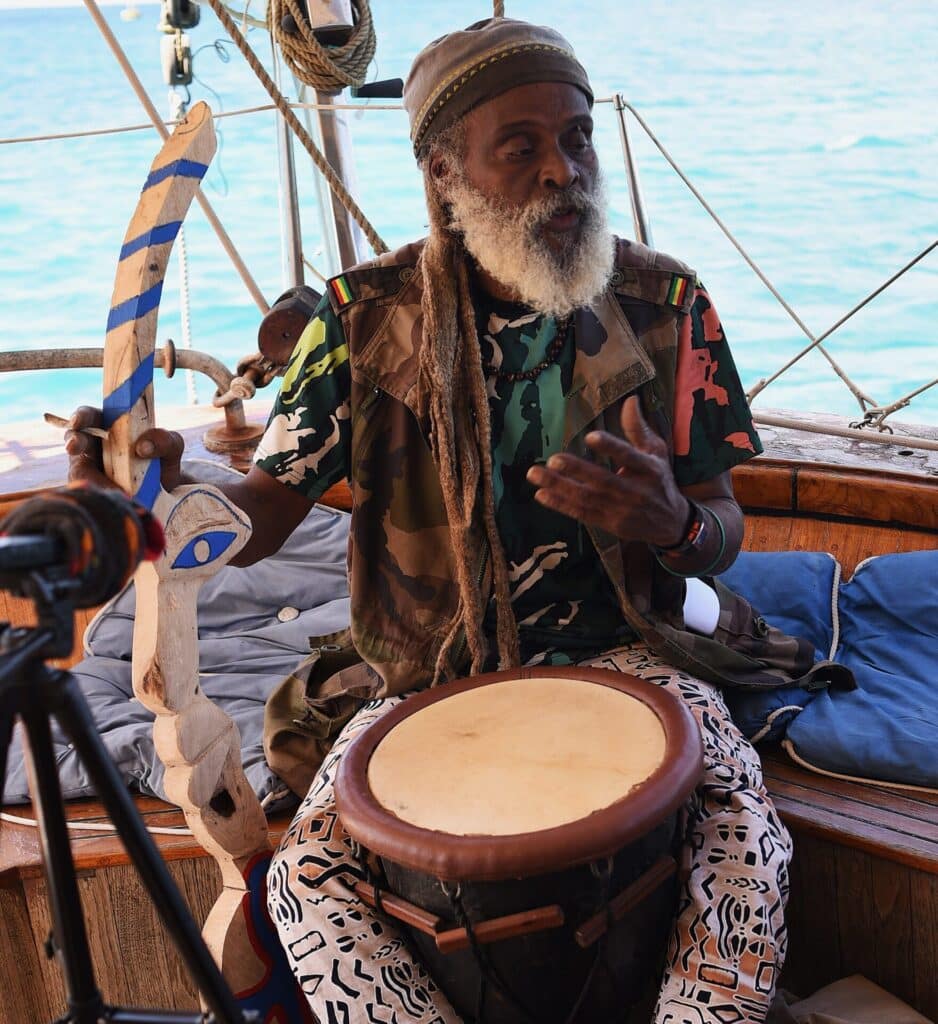
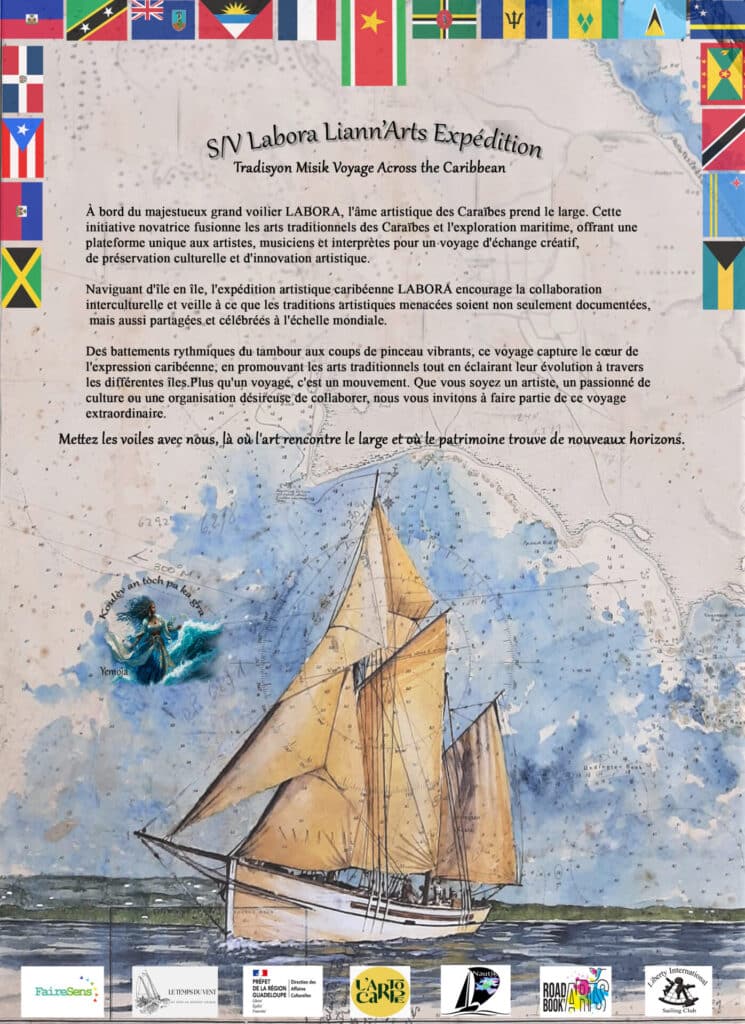
Labora Caribbean Art Expedition is an artistic, maritime and heritage initiative that has taken root in Guadeloupe and is now spreading throughout the Caribbean. Supported by artists, sailors, researchers and institutions, this expedition aboard a traditional sailboat aims to link islands, gather knowledge, promote dialogue between generations and enhance the value of popular cultures that are often marginalized. More than just an artistic program, it is a living process of documentation, transmission and exchange between island communities, with the sea as a link.
A mobile artistic platform born in Guadeloupe around the sailboat Labora
The project takes shape around the S/V Labora, a Danish wooden hajkutter built in 1939, now restored and transformed into a living museum and mobile creative platform. The idea was born in Guadeloupe, particularly during his stopover at the ACTe Memorial during the Rhum Race, where musicians from Grenada came aboard and hundreds of Guadeloupean schoolchildren discovered life on board. This experience gave rise to a collective desire to make the Labora a vehicle for living memory on a Caribbean scale.
Three fundamental axes: traditional arts, navigation and transmission
Labora Caribbean Art Expedition is based on three inseparable pillars:
The traditional Caribbean arts (music, dance, visual arts, oral narratives, craft skills).
The sailing as a means of transport, but also as a historical link between the islands.
The intergenerational transmission through workshops, residencies, documentaries and training courses.
At each port of call, the sailboat becomes both itinerant stage, a place of artistic residence and living archive space.
Responding to island isolation with art and the sea
The project is based on a simple but profound observation: in the Caribbean, many island communities remain isolated isolated by a lack of transport infrastructure which hinders cultural exchanges. The sailboat Labora overcomes these obstacles by creating a creation, documentation and sharing network.. It becomes a tool for dialogue, breaks down prejudice, connects artistsand opens up spaces for collaboration between often distant communities.
Educational, social and scientific objectives
The ambition of Labora Caribbean Art Expedition is to preserve endangered knowledge but also to give them a place in today’s society. The project aims to :
Document vanishing traditions through films, recordings films, recordings, photographs, logbooks.
Creating digital archives returned to communities and schools.
Organize transmission workshops in schools, ports, neighborhoods and villages.
Set up an international internship program (in conjunction with anthropology, musicology, ethnology and audiovisual universities).
Encourage the emergence of educational initiatives integrating Caribbean cultures into curricula.
A collective project: artists, institutions, researchers, sailors
Three main entities coordinate the project:
Road Book’ Arts (Guadeloupe), an association specializing in artistic production and cultural residencies.
Le Temps du Vent, a French collective based in Marie-Galante and owner of the Samsara sailboat, dedicated to promoting traditional sailing.
The Liberty International Sailing Club (LISC), a transnational structure that pilots the sailboat Labora and brings together sailors, anthropologists, video artists and musicians.
They are accompanied by an extended network of Caribbean and international partners, including :
Galerie l’Art s’En Mêle, Artocarpe, United Caribbean Artists, Patoray, Waka Films, FaireSens BeeSiw, La Croisée des Chemins, Pointe-à-Pitre Arts Centre.
Anna Chiara Sabatino, Italian researcher and filmmaker in digital storytelling.
Tara Douglas, documentary filmmaker from the Adivasi Arts Trust.
Mark Lindenberg, anthropologist and filmmaker.
Makeda Martel, artistic facilitator and founder of La Croisée des Chemins.
Guadeloupe's central role in project governance
A local committee supports the development and territorial anchoring of the project:
Martine Fazer, journalist and director of the International Graffiti and Street Art Festival.
Arthur Trouabal, former art expert and trainer.
Raymonde Pater Torin dancer, choreographer and specialist in gwoka.
Their involvement ensures that the project remains connected to local realities without exoticism or folklorization.
Expedition schedule and itinerary
The pilot phase will run from January to May 2025 with stopovers in Guadeloupe, Dominica, Martinique and probably Saint Lucia. It will enable us to test formats, evaluate logistics, refine the documentation method, and solidify partnerships. The aim is then to extend the project into 2026 gradually linking Trinidad to Cuba with two to three sailboats sailing in coordination eventually.
An invitation to Caribbean artists
The Labora team is launching a call for participation Caribbean artists wishing to get involved in this collective creative process. Whether musicians, dancers, craftsmen, storytellers, video artists or teachers, all are invited to come on board to share their vision of living heritage and contribute to a shared Caribbean memory.
Labora Caribbean Art Expedition is more than just a cultural expedition. It’s a project political, social and educational which uses traditional navigation as a lever for cohesion, resilience and inspiration. By linking islands, it also links memories, heritages and generations. It proposes a new way of thinking the Caribbean from the sea by floating the forgotten voices, the threatened gestures, and the music that carries the soul of the island peoples.
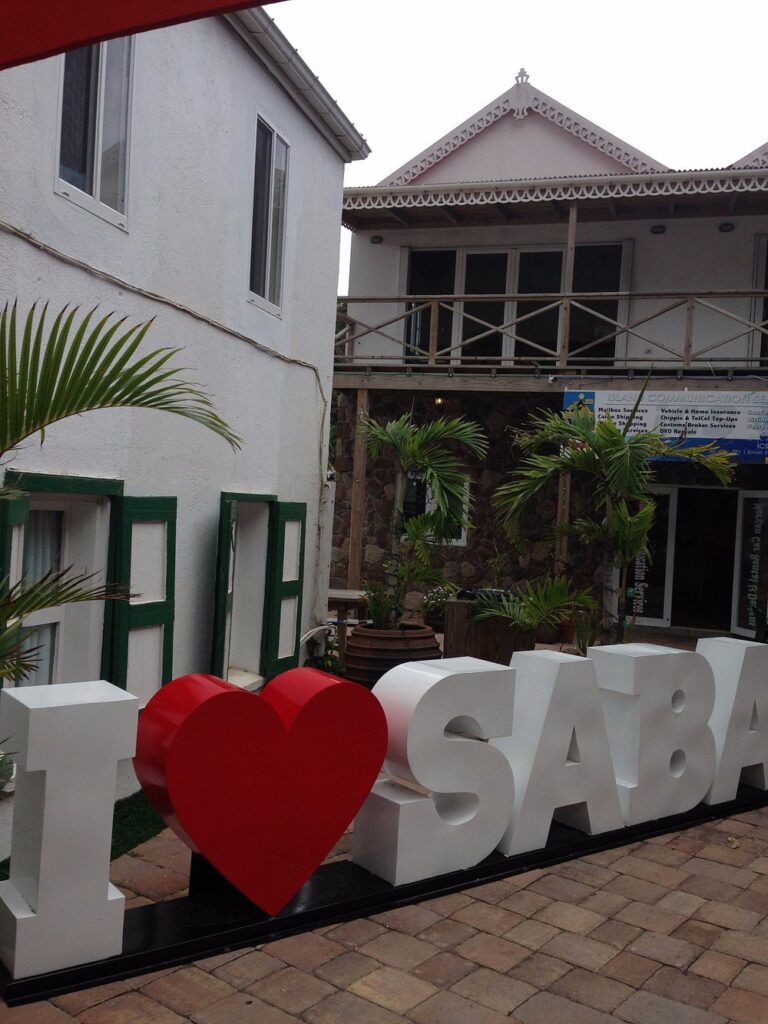
A getaway to Saba, the volcanic pearl of the Lesser Antilles: a promise of adventure and authenticity, just a stone’s throw from Saint Martin. Saba, a little-known volcanic island, fascinates visitors with its unspoilt nature, colorful villages and unique atmosphere, far from the hustle and bustle of tourism. Ready to embark on an unforgettable escape to the heart of the Lesser Antilles?
Discovering Saba: an extraordinary volcanic island
Geography and location
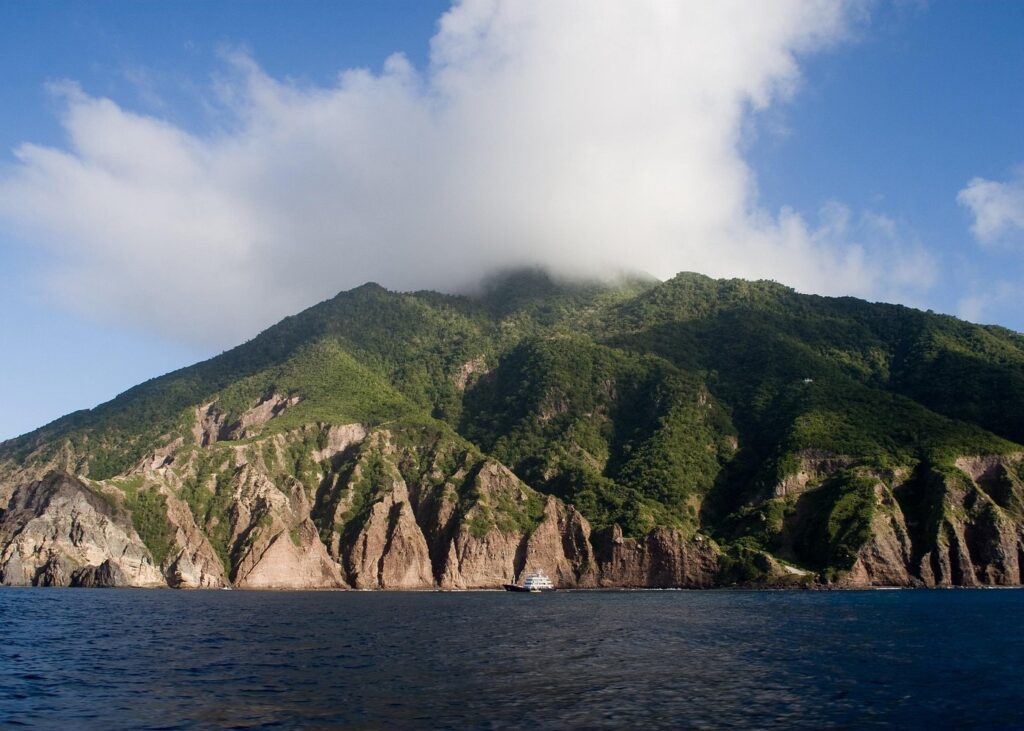
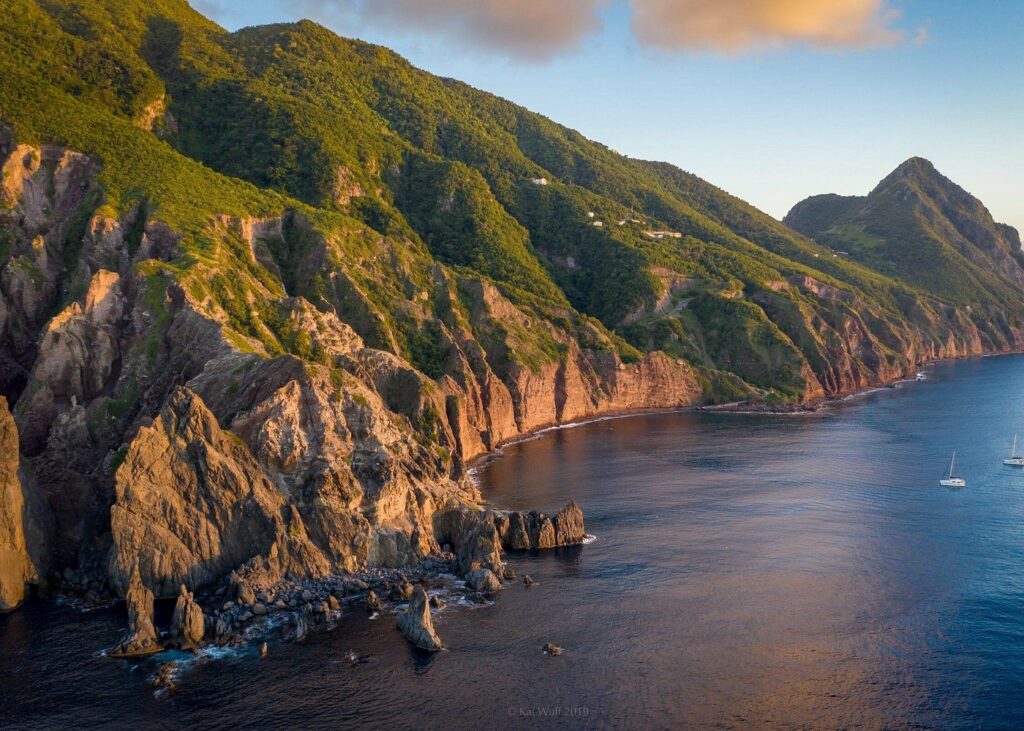
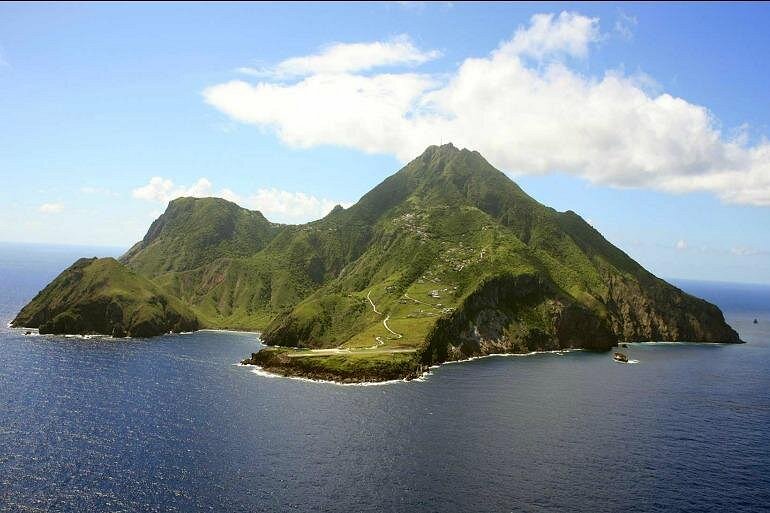
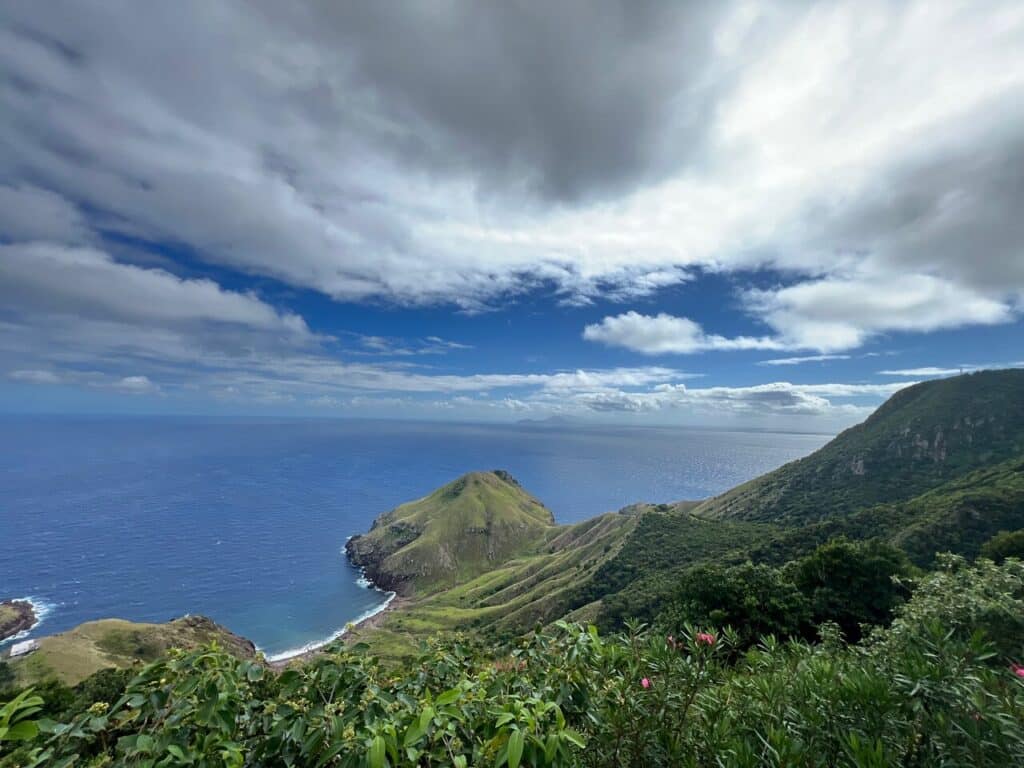
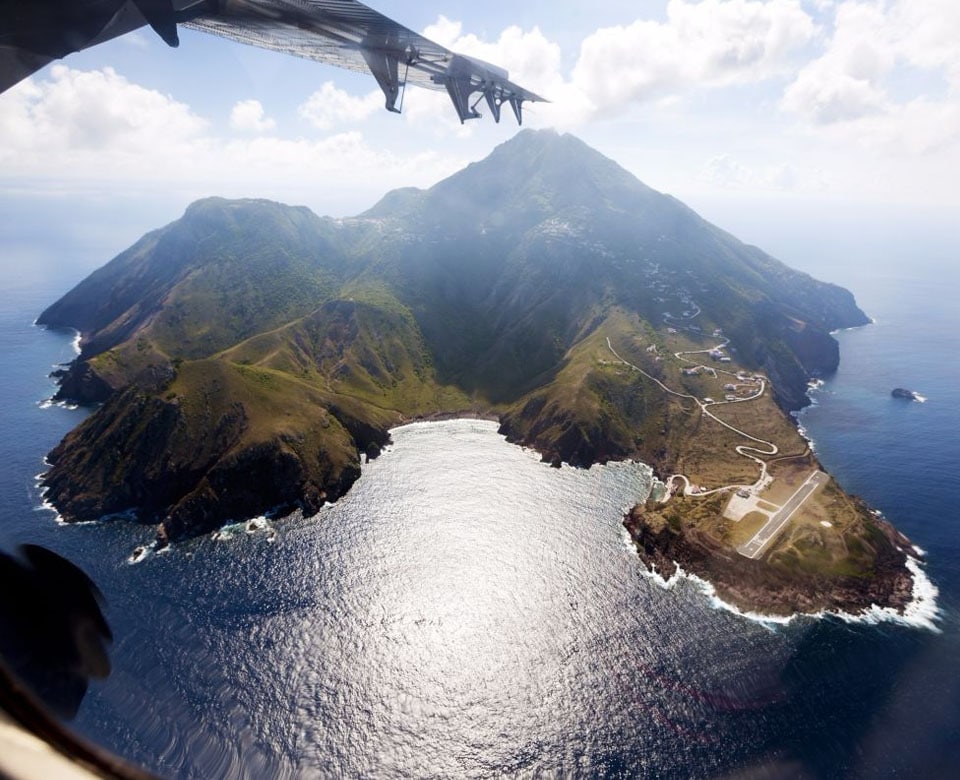
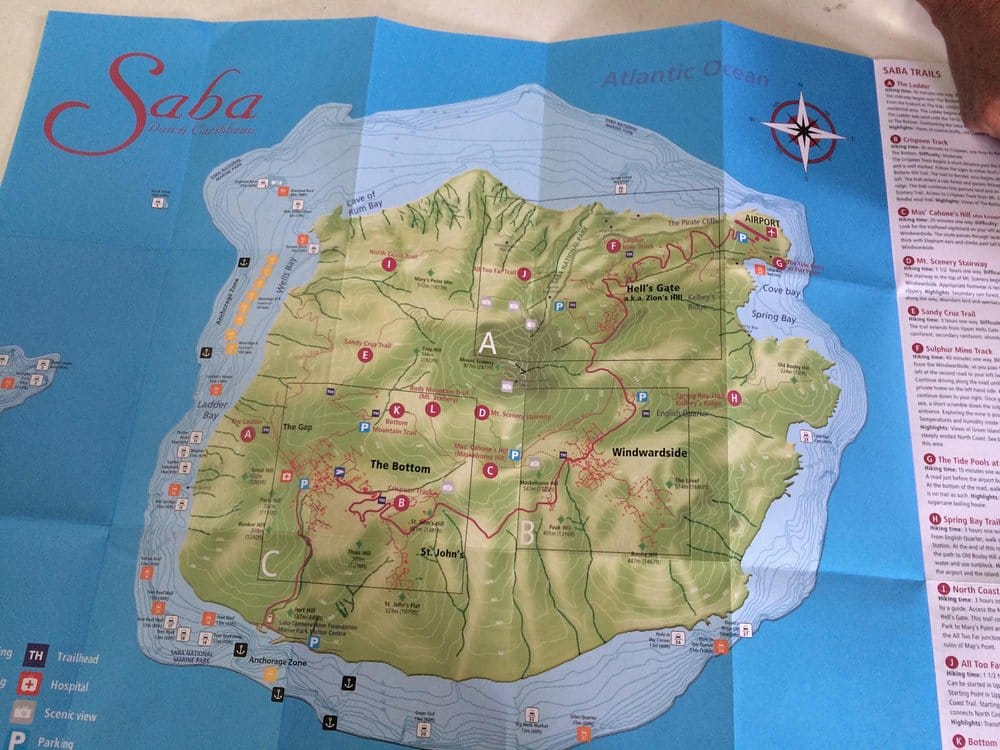
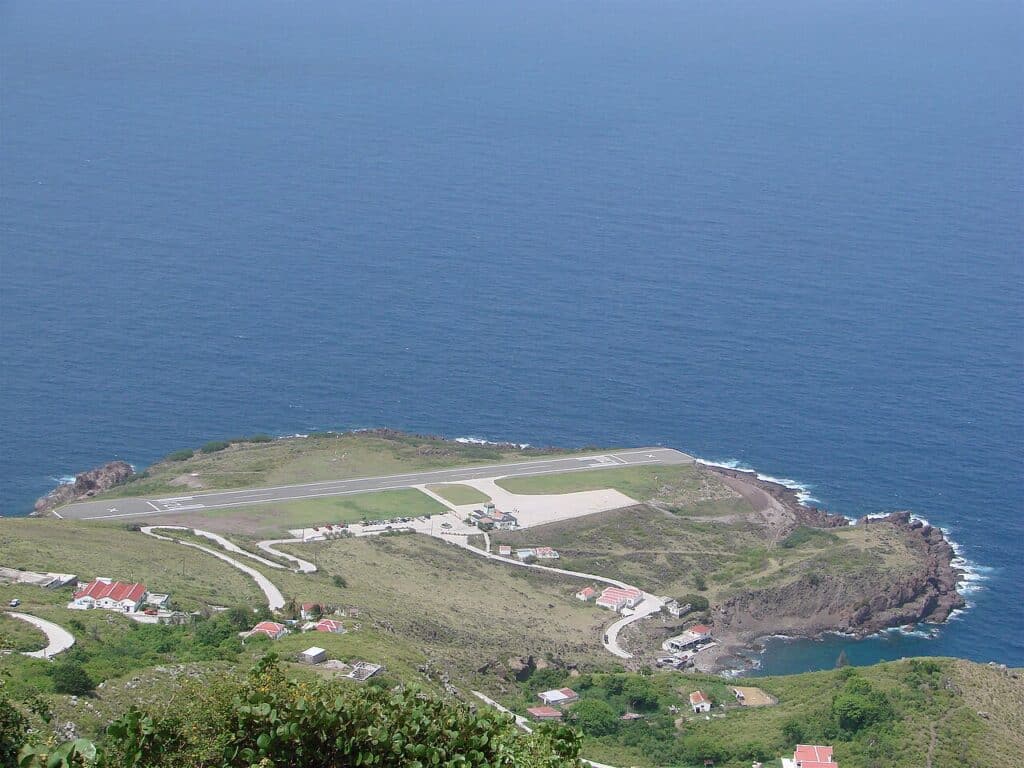
Saba lies just 44 kilometers south-southwest of Saint Martin, in the northern part of the Caribbean arc. This tiny Dutch territory, just 13 km² in size, is distinguished by its rugged terrain, steep cliffs and lack of traditional beaches. Here, the sea laps the craggy rocks, offering a striking natural spectacle.
Dominating the island, Mount Scenery rises to 887 meters, making it the highest point in the Kingdom of the Netherlands. This dormant volcano, covered by dense rainforest, is the beating heart of Saba. Its summit, often shrouded in mist, attracts hikers and lovers of spectacular panoramas. Climbing its trails offers a breathtaking view of the whole of the Lesser Antilles, with the immensity of the Caribbean Sea as a backdrop.
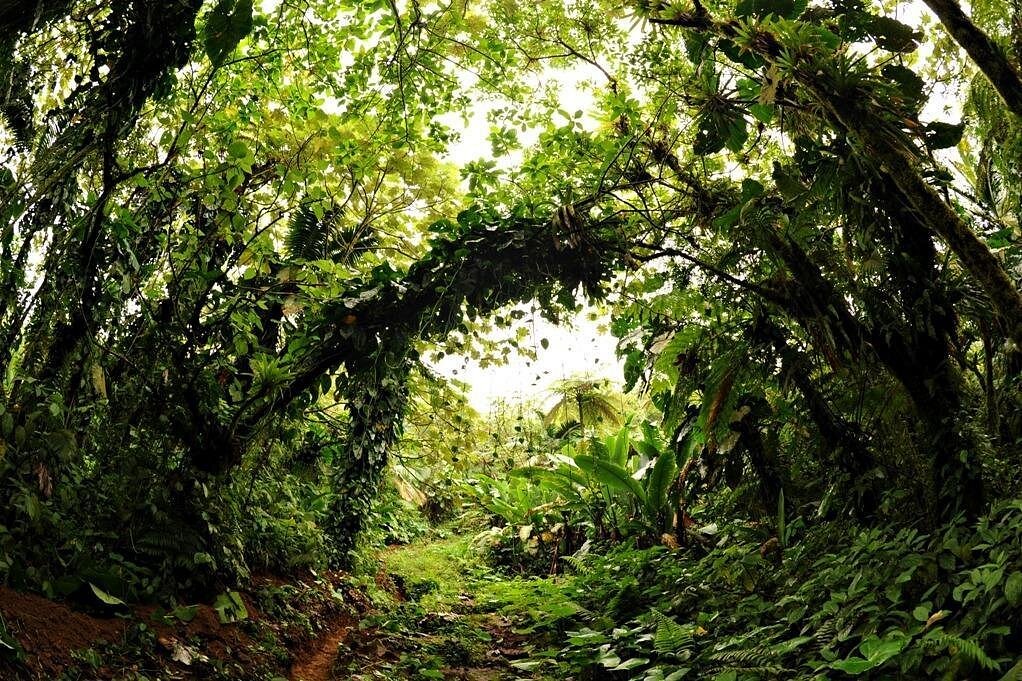
Saba is a veritable ecological sanctuary. The rainforest, nicknamed Elfin Forest Reserveevokes a fairytale world of mosses, ferns and tropical trees. Mahogany trees, once abundant, are now rare, victims of the cyclones of the last century. But the island’s wealth of vegetation remains so impressive that Saba recently applied for inclusion on UNESCO’s World Heritage List.
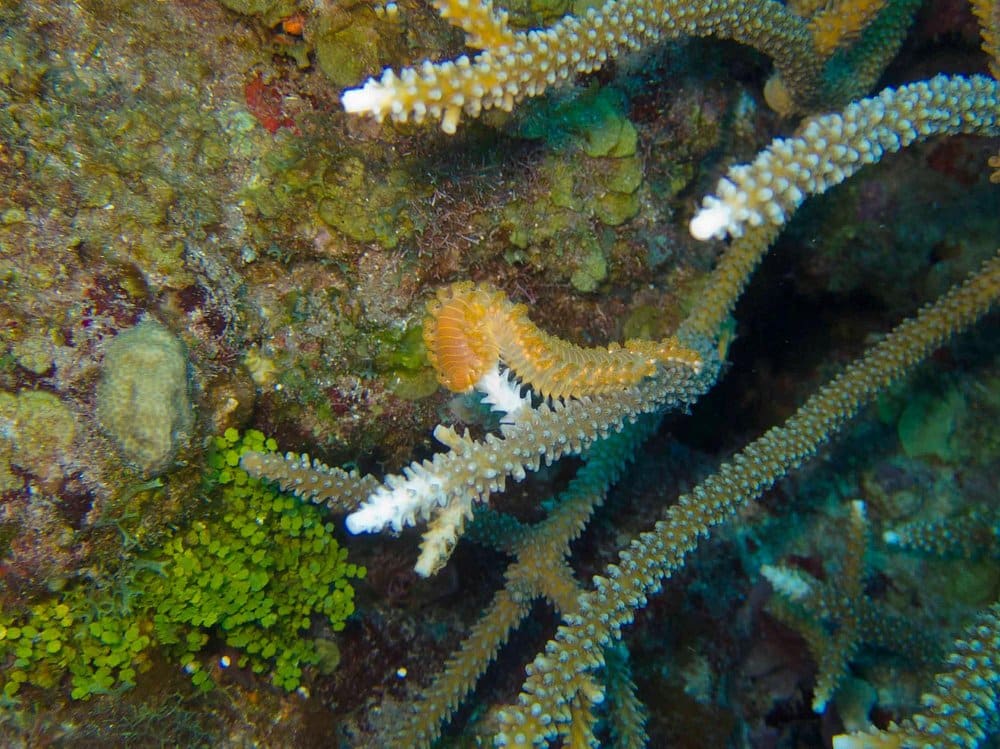
Saba’s isolation has favored the emergence of unique species. The famous Saba black iguana, the red-bellied couresse snake and the funnel-eared bat are all endemic to the island. The seabed is home to a 4.3 km coral reef, part of the Saba Marine Park, a veritable paradise for divers and marine biologists.
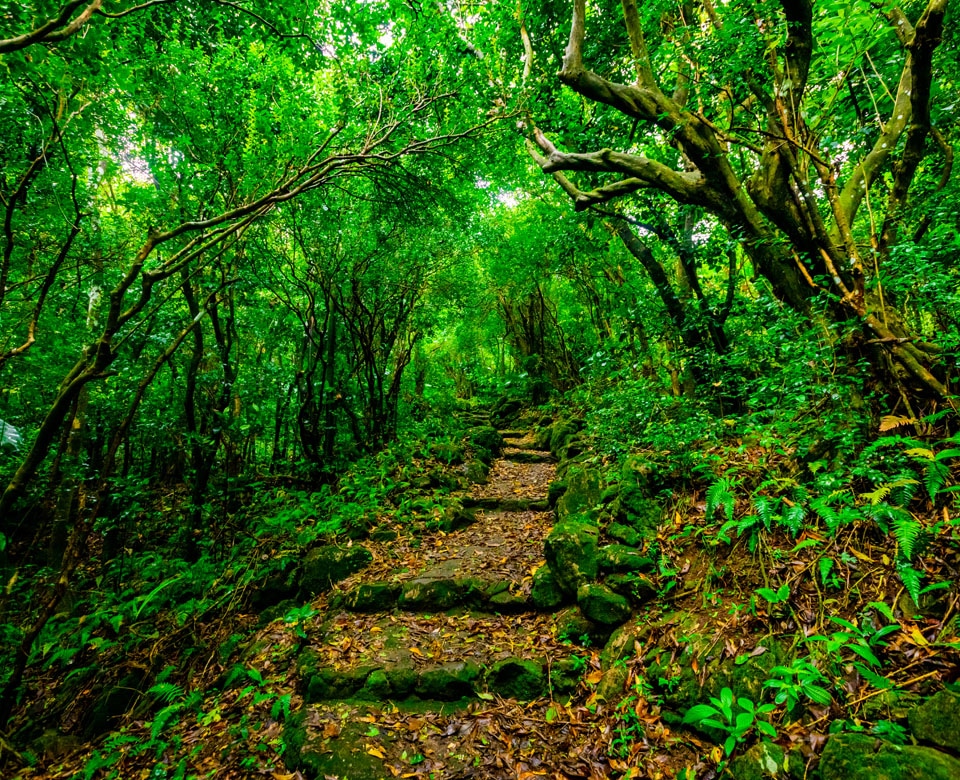
It’s impossible to talk about a Saba getaway without mentioning hiking. The island offers several marked trails, the most famous of which is the ascent of Mount Scenery. This hike, accessible to all with a minimum level of fitness, passes through lush forests and offers unique views of the island and the sea. The Saba Trail Shop, located in Windwardside, offers maps, advice and badges for hikers.
Saba is a world reference for scuba diving. Its crystal-clear waters, protected by a marine park, teem with coral, tropical fish, turtles and sometimes even peaceful sharks. .Spots such as “Tent Reef” and “Ladder Labyrinth” are among the most famous in the Caribbean. Eco-tourism enthusiasts will appreciate the preservation of the environment and the absence of mass tourism, which give Saba a rare authenticity. .
After the effort, it’s time to discover the local flavors. Windwardside’s small restaurants offer a blend of seafood, tropical vegetables and Dutch influences. And there’s no shortage of handicrafts: jewelry, blown glass, works of art and embroidery bear witness to the skills of the Sabanese, who are proud of their heritage.
Local life and culture in Saba
Picturesque villages and traditions
Saba is made up of four main villages: The Bottom, Windwardside, Hell’s Gate and St. John’s. Each has its own character, with whitewashed houses, red roofs and narrow streets. Here, life flows peacefully, punctuated by fishing, farming and welcoming curious visitors. The inhabitants, warm-hearted and proud of their island, love to share their history and traditions.
Festivals and events
Saba’s cultural calendar is punctuated by colorful festivities. The Carnival, or Summer Festival, brings the island to life with parades, costumes and lively music at the end of July. In October, the Sea and Learn Festival raises awareness of ocean conservation through conferences and workshops led by scientists from around the world. In December, Saba Days celebrates local culture, with dances, sports competitions and giant barbecues. All opportunities to immerse yourself in Sabanese life and forge links with the locals.
Practical tips for a Saba getaway from Saint Martin
Access, transport and accommodation
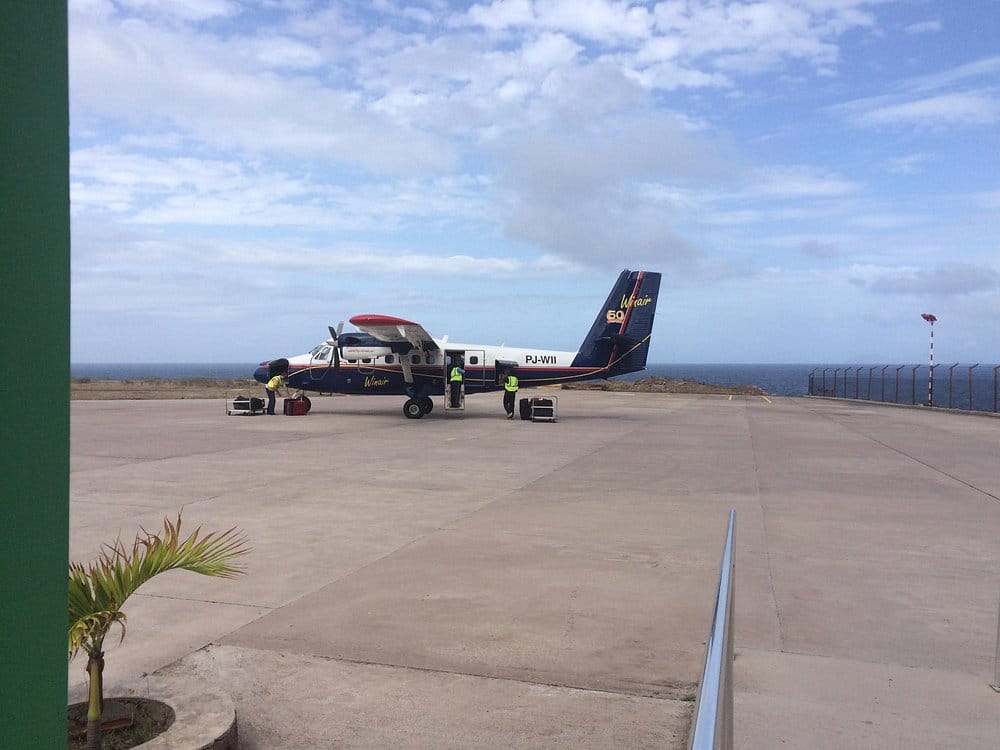
To reach Saba, simply board a ferry or small plane from Saint Martin. The boat journey takes between 75 and 90 minutes, arriving in Fort Bay, the island’s only port. On the island, the main road links the villages and makes it easy to get around, although walking remains the best way to discover Saba. The accommodation on offer, though limited, ranges from small family-run inns to charming hotels, always in a friendly, authentic atmosphere.
Best time to visit
Saba’s climate is pleasant all year round, with temperatures hovering around 27°C. The high season extends from December to April, ideal for enjoying dry, sunny weather. Between June and November, the hurricane season may bring a few showers, but also offers a quieter island, ideal for exploring in peace and quiet.
A getaway to Saba is a timeless interlude between raw nature, living traditions and sincere encounters. Far from the tourist clichés, Saba seduces by its authenticity, its abundant biodiversity and the warmth of its inhabitants. Whether you’re a seasoned hiker, an avid diver or simply curious, the island promises an unforgettable experience that lives up to its reputation as the hidden gem of the Caribbean. A word of advice: plan to stay longer than a day, as Saba is best savored slowly, like a well-kept secret.
Caribbean society : this keyword opens up a prism that is often overlooked in regional analysis. Behind the images of turquoise waters and the tourist economy, the societal reality of the Caribbean is undergoing profound change. Digital connectivity, urbanization, aging, public health and cultural diversity – recent figures paint a much more nuanced picture. Between structural mutations and daily pressures, it’s time to take a closer look at what shapes the lives of 44.8 million inhabitants.
Aruba and the Caribbean digital revolution
The most connected island in the region
With an Internet penetration rate of 97,2 %, Aruba is the most digitized territory in the Caribbean. This impressive figure – derived from statista.com – illustrates the technological turnaround of a small island state that has become a veritable digital laboratory. Caribbean society cannot be thought of today without the massive impact of permanent connection, which is redefining uses, professions, education and social relations.
The island’s digital divide: a major social challenge
But the excellence of the Aruba region should not mask the disparities. The regional average hovers around 65 %, some of the more isolated islands and rural districts still suffer from a glaring lack of equipment. Caribbean society is thus traversed by a digital divide that sometimes exacerbates long-standing inequalities. Today, more than ever, access to administration, healthcare, employment and information depends on the quality of the connection.
Accelerated urbanization: an increasingly urban Caribbean
72% urban dwellers today, 80% in 2050?
According to data from sdg.iisd.org, 72 % of Caribbeans already live in cities. This proportion exceeds the world average and is expected to reach 80% by 2050. Caribbean society of each region has to rethink its urban model: density, transport, pressure on public services, housing, security….
Town versus country: new tensions, new solutions
Urban attractiveness leads to the abandonment of the countryside, where services are declining, schools are closing and jobs are becoming scarce. Yet these rural areas are crucial to food security and ecological balance. Caribbean Society is now faced with a challenge of territorial equity, where reclaiming the countryside could become a strategic priority.
Declining life expectancy: the profound impact of the pandemic
-2.9 years on average: a historic decline
According to CEPAL, the Covid-19 pandemic has caused a sharp drop in life expectancy in Latin America and the Caribbean: from 75.1 years in 2019 to 72.1 years in 2021 i.e. -2.9 years, the biggest decline in the world. This statistic weighs heavily in the analysis of the Caribbean society revealing a structural health vulnerability.
Health response and territorial resilience
Faced with this shock, several territories invested in modernizing their healthcare systems and in local training. Despite limited resources, the best-prepared islands have demonstrated astonishing resilience. However, the return to normalcy remains fragile, particularly in secondary island areas. This reality calls for an in-depth rethink of the health management of the Caribbean society.
44.8 million Caribbeans: a diversity that shapes the regional space
A fragmented but interconnected population
In 2024, the total population of the Caribbean is 44.8 million inhabitants, according to wikipedia.org. This human mosaic, spread over dozens of territories, is one of the key factors in understanding the Caribbean society. This is both a priceless asset and a challenge in terms of cohesion, mobility and regional integration.
Cultural identities and everyday challenges
Haitian Creole speakers, Jamaican Afro-descendants, Indo-Trinidadians, Cuban mestizos… the region’s multiple identities have given rise to a Caribbean Society both abundant and fragmented. This diversity is reflected in cultural practices, educational systems, political preferences and even economic models.
Towards a better understanding of Caribbean social realities
Indicators for action
The figures presented here are not simply abstract data. They are the foundations needed to understand Caribbean society in its real transformations, far from the images of Epinal. They highlight health emergencies, digital priorities, urban tensions and demographic hopes.
What public policies for tomorrow?
Investing in universal connectivity, planning controlled urbanization, strengthening healthcare services and promoting cultural plurality: these are just a few of the ways to make the Caribbean Society a regional model adapted to the challenges of the 21st century. But this requires courageous choices and strengthened regional cooperation.
Between silent pressures and visible mutations
Caribbean society doesn’t mean standing still. Behind the statistics lie fundamental transformations: the rise of digital technology, territorial imbalances, demographic pressures and health resilience. Despite their differences, the Caribbean states share similar trajectories, with social data shaping the challenges of tomorrow. To build a more equitable and stable region, we need to look beyond the numbers – without ever losing sight of them.
Caribbean economy is not just about tourism revenues or the clichés of dependent islands. It reveals a structural complexity and resilience to external shocks, marked by contrasting dynamics. From Guyana’s record growth to the region’s financial vulnerability, from digital innovations to the crucial role of the diaspora, here’s a quantified and sourced overview of the region’s development.
Guyana: +62.3% growth in 2022, a world record
With real GDP growth of 62.3% in 2022, Guyana has recorded the strongest growth in the Caribbean economy and the world that year (IMF). This spectacular leap is explained by the start-up of vast offshore oil fields. A member of CARICOM, this small state of 800,000 inhabitants has seen its trajectory radically transformed by the oil windfall.
But this growth does not guarantee sustainable development. The IMF warns of the risks associated with dependence on hydrocarbons, fiscal management and the absorption of social inequalities. Guyana could multiply its GDP tenfold by 2030 – provided it manages the economic and environmental fallout from this extractive boom, and makes it a structuring driver of the country’s economy.
4.7% average growth for small Caribbean economies in 2022
Excluding the exceptional case of Guyana, the small island economies of the Caribbean economy recorded average growth of 4,7 % in 2022 (IMF). This dynamic recovery, fueled by the return of post-Covid-19 tourism and favorable commodity prices, is outstripping the performance of South and Central America.
However, this rebound masks a highly heterogeneous picture. While some destinations (such as Aruba and Saint Lucia) are recovering their pre-pandemic visitor numbers, others are struggling to revive productive investment. The structural fragility of the Caribbean economy remains a recurring challenge, particularly in the face of climate and geopolitical issues.
70.3% of GDP: a high and binding level of public debt
The average public debt of Caribbean economy reached 70.3% of GDP in 2023, according to the Economic Commission for Latin America and the Caribbean (CEPAL). This ratio is well above the Latin American average and illustrates the region’s high financial exposure.
Servicing this debt weighs heavily on public budgets, limiting investment in infrastructure, education and the energy transition. Strengthening fiscal sustainability has become a sine qua non for stabilizing the economy. Caribbean economy and attract international financing.
Digital currency: the Bahamas pioneers the world with the Sand Dollar
In October 2020, the Bahamas launched the Sand Dollar, the first central bank digital currency (CBDC) fully operational worldwide (sanddollar.bs). The aim is to modernize payments, strengthen financial inclusion and guarantee monetary continuity in the event of natural disasters.
This innovation put the archipelago ahead of the major economic powers, and inspired other regional initiatives such as the DCash in the Eastern Caribbean. The digitization of currency is thus becoming a strategic lever for modernizing the Caribbean economy particularly in territories with a high degree of geographical dispersion.
Diaspora and remittances: a vital engine for Haiti and the region
At Haiti, remittances from the diaspora reached around 3.8 billion USD in 2022, i.e. four times more than the country’s export earnings (Haiti Times). This extreme dependence reflects an economic model centered on remittances from abroad.
On a regional scale migratory remittances represent on average 7% of GDP with peaks of over 20% in Jamaica. They are considered a veritable economic lifeline (The Dialogue). These flows play a crucial role in the balance of the Caribbean economy by supporting consumption, education and private investment within households.
A changing Caribbean economy, between opportunities and vulnerabilities
Caribbean economy evolves between the promise of transformation (oil, digital, tourism) and structural constraints (debt, external dependence, climatic vulnerability). The figures underline both the ingenuity of regional responses and the persistence of deep-seated fragilities.
Supporting sustainable trajectories, strengthening public institutions, and better integrating diasporas and innovations are decisive levers for building a Caribbean economy more inclusive, resilient and sovereign.
To provide the best experiences, we use technologies like cookies to store and/or access device information. Consenting to these technologies will allow us to process data such as browsing behavior or unique IDs on this site. Not consenting or withdrawing consent, may adversely affect certain features and functions.
Functional
Always active
The technical storage or access is strictly necessary for the legitimate purpose of enabling the use of a specific service explicitly requested by the subscriber or user, or for the sole purpose of carrying out the transmission of a communication over an electronic communications network.
Preferences
The technical storage or access is necessary for the legitimate purpose of storing preferences that are not requested by the subscriber or user.
Statistics
The technical storage or access that is used exclusively for statistical purposes.The technical storage or access that is used exclusively for anonymous statistical purposes. Without a subpoena, voluntary compliance on the part of your Internet Service Provider, or additional records from a third party, information stored or retrieved for this purpose alone cannot usually be used to identify you.
Marketing
The technical storage or access is required to create user profiles to send advertising, or to track the user on a website or across several websites for similar marketing purposes.