A neighborhood shaped by history

Located east of Fort Amsterdam, Pietermaai is one of Curaçao‘s oldest districts. It takes its name from Pieter de Meij, a ship’s captain who came from Brazil in 1674 to establish a plantation called “Zeelucht”. As early as 1680, the Dutch West Indies Company began to subdivide the land outside the city walls, creating a suburb that was both strategic and autonomous.

This development was part of a desire to maintain a clear firing range around the Willemstad fortifications, while responding to demographic pressure.

Pietermaai town planning was thus born of a compromise between military security and residential expansion. Colonial villas quickly sprang up in this intermediate zone, marking the beginnings of an original, structured urbanization. The famous “Steenen Padt”, linking the fortified city to Caracas Bay, played a crucial role in trade, particularly during the French attack of 1673.

Pietermaai
©Pietermaai District Curaçao 2
©pietermaaidistrict
©Pietermaai District Curaçao
Pietermaai
©pietermaaidistrict

From strategic suburb to Bohemian enclave

Over the centuries, Pietermaai has seen its ramparts fall and its boundaries evolve. The gradual demolition of the fortifications in the 19th century allowed architecture to express itself fully, with colorful residences, small shops and European-style buildings. Some urban expansion projects never came to fruition, giving the district a distinct personality, untouched by large-scale real estate development.

Today, the town is often compared to a “Caribbean Soho”, not to follow a trend, but for its ability to bring together residents, artists, artisans and visitors in the same space. Far removed from standardized circuits, the district has become a veritable living space where artistic and culinary expression find fertile ground. This revival is no accident: it’s the fruit of careful renovation and constant local involvement.

Pietermaai
©pietermaaidistrict
Pietermaai
©pietermaaidistrict

The beating heart of Nieuwestraat

The Nieuwestraat is Pietermaai’s main thoroughfare. Pietermaai. Lined with houses painted in pastel hues, it comes alive in the early hours of the morning. Restored facades bear witness to an attention to detail and a deep respect for old buildings. At night, the soft lighting of the establishments gives the street a warm, almost cinematic atmosphere.

Restaurants, cafés, jazz bars… there’s no shortage of addresses, each with its own ambience, without excess or uniformity. Here, world cuisines mingle with local traditions, and menus are designed to appeal to palates without artifice. Visitors will find something to satisfy both their appetite and their curiosity.

A neighborhood fueled by creativity

The town is also a place of cultural expression. Art galleries, walls painted by local artists and designer boutiques line the side streets. Each wall seems to bear a trace of the past, while leaving room for contemporary imagination. Far from being static, this collective memory evolves in step with community initiatives.

Some places pay tribute to emblematic figures, such as Wilson “Papa” Godett, a respected trade unionist and politician, whose name adorns one of the neighborhood’s main thoroughfares. These references are not decorative: they recall the social struggles that have shaped the identity of Curaçao and its people.

Pietermaai
©corendon
Pietermaai
©Pietermaai District Curaçao

Sleep in the heart of the neighborhood

Stay in Pietermaai is choosing authenticity without sacrificing comfort. Numerous boutique hotels and charming guesthouses have taken up residence here. Their architecture respects the heritage of the area while incorporating modern amenities. Establishments such as BijBlauw or Scuba Lodge stand out for their attention to detail, ideal location and respectful approach to the local environment.

This type of accommodation offers a real immersion in local life. In the morning, visitors meet local residents, craftsmen and fruit deliverymen; in the evening, they share the terraces with musicians and students. This relaxed rhythm makes Pietermaai is a popular place to stay because of its close proximity to Willemstad’s centers of interest, without the hustle and bustle of crowded areas.

Pietermaai
©mycuracaoguide
Pietermaai
©Pietermaai District Curaçao

A successful heritage renaissance

Renovating Pietermaai was not a quick process. Abandoned for several decades, particularly in the 1970s and 1980s, the district had lost its lustre. It was local players – architects, entrepreneurs, artists – who initiated the revival, with ambitious rehabilitation projects that respected the original setting.

Today, this renaissance is cited as a successful example of urban conservation. Island authorities see it as a model of balance between heritage enhancement and economic dynamism. This success is based on collaborative management, combining private initiatives and institutional support.

Pietermaai
©Pietermaai District Curaçao
Pietermaai
©Pietermaai District Curaçao
Pietermaai
©corendon

Pietermaai is neither an open-air museum nor just another fashionable district. It embodies a way of life, where collective memory meets contemporary creativity. It is precisely this tension between roots and contemporary uses that gives it its unique personality.

While other areas of Curaçao are focusing on more uniform developments, Pietermaai charts a different course, one that is both demanding and faithful to its history. The aim is not to reproduce a decor, but to maintain an atmosphere. An editorial and architectural choice that continues to seduce those in search of authenticity and roots.

At Grandes Cayes beach rises to the top of the list when you think of the wild, authentic beauty of Saint-Martin. This coastline, protected by the National Nature Reserve, offers a setting where nature reigns supreme, far from the crowds and hustle and bustle. Over the years, Grandes Cayes beach has preserved its identity: once a place where families gathered for Sunday barbecues, today a preserved area where white sand stretches as far as the eye can see, under the peaceful gaze of the island of Tintamarre.

Exceptional ecological wealth

A site classified as a National Nature Reserve

It takes more than just a glance to grasp the biodiversity of Grandes Cayes beach. The majority of the site is fully protected. Every season, sea turtles choose this beach to lay their eggs, preserving a precious natural cycle. The coastal vegetation, dominated by majestic cacti and other xerophilous species, shapes a landscape typical of northern Saint-Martin, at the foot of the Red Rock massif.

Remarkable flora and fauna

The terrain surrounding Grandes Cayes beach is home to red gum trees, mapous, pear trees and the rare guaiac tree, all protected by the reserve’s strict regulations. Careful walkers may also spot rare orchids or striped iguanas, an invasive species that has replaced the Lesser Antillean iguana. The area is also home to endemic lizards, such as anolis, skinks and geckos, veritable guardians of this ecological heritage.

Grandes Cayes beach
©wearesxm

Landscapes shaped by sea and rock

A spectacular waterfront

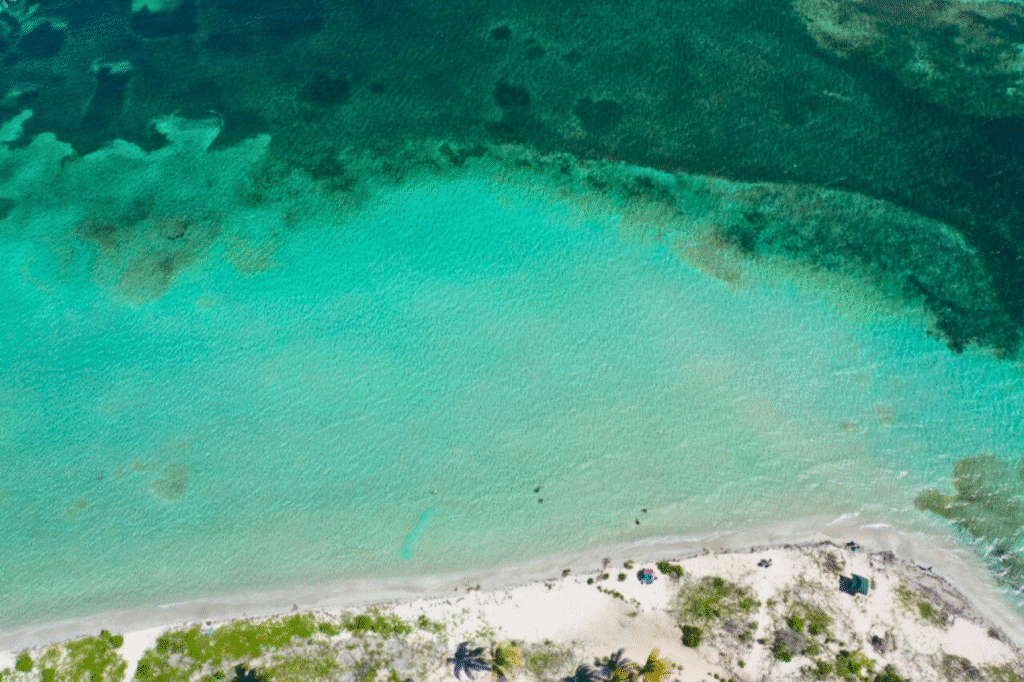
Atlantic rollers lick the northeast-facing of Grandes Cayes beach, but the coral reef protects the bay and Pinel islet from the most powerful assaults. This reef, enclosing a narrow channel, provides shelter for seagrass beds. At depths of between three and seven meters, rays, turtles and sharks frequently come across it: this sanctuary serves as a nursery for a number of aquatic species, as Julien Chalifour, deputy director of the Nature Reserve, explains.

Two trails to immerse yourself in nature

The site is not just a destination for contemplation; it also invites discovery on foot. To the north, the sentier des Froussards guides walkers to Anse Marcel, winding through lush vegetation. To the south, another trail follows the hill along the coastline, offering breathtaking views of îlet Pinel and the sea below.

Grandes Cayes beach
©wearesxm

An authentic place, far removed from tourist development

Absolute serenity and simplicity

The Grandes Cayes beach offers a rare experience in the Caribbean: no facilities, no services, just peace and space to reconnect with the essential. It’s advisable to bring your own food and water, as nature reclaims its rights. The place exudes peace, and you hardly come across other walkers: ideal for those seeking tranquillity away from conventional beaches.

A heritage to protect

Grandes Cayes beach, with its rich biodiversity, is the subject of a restoration project designed to enhance its protection. The project, which is currently underway, reflects the company’s ongoing commitment to the sustainable management of the site, so that everyone, whether expert naturalist or curious visitor, can find something to marvel at and learn from.

Grandes Cayes beach
©wearesxm
Grandes Cayes beach
plage grandes cayes ©st-martin.org

Grandes Cayes, the promise of a return to basics

When you step onto the sands of Grandes Cayes beach, the whole of Saint-Martin is revealed in its rawest, most authentic version. Far from clichés, this unspoilt spot gives the impression of being at the end of the world, where nature reveals itself without artifice. Whether you’re an ecology enthusiast or simply looking for a soothing interlude, all you have to do is let yourself be carried away by the magic of this unique area.

In the north of the Lesser Antilles, the island of Saint-Martin is home to remarkably rich marine ecosystems. Coral reefs, sea grass beds, mangroves, turtles and marine mammals cohabit in an environment that is as fragile as it is essential for the territory.

Exceptional biodiversity under pressure

Saint-Martin’ s marine ecosystems form a natural heritage of rare complexity. The island, divided between France and the Netherlands, concentrates a variety of coastal and underwater habitats: fringing and barrier reefs, seagrass beds and mangroves. The reefs alone cover almost 19.4 km² around the island, mainly around Baie Orientale, Coralita, Le Galion and Grandes Cayes.

The Nature Reserve boasts over 1,040 marine species, including some 30 corals and over 500 molluscs. There is an impressive diversity of reef fish, sea turtles, starfish, sea urchins, anemones and marine mammals – including dolphins, sperm whales and humpback whales.

These marine ecosystems on Saint-Martin provide refuge, nursery and feeding grounds for emblematic species such as the green turtle, hawksbill turtle and leatherback turtle. From March to November, several of the island’s beaches become crucial egg-laying sites for these protected reptiles.

marine ecosystems

Reefs, seagrass beds, mangroves: essential ecological roles

Coral reefs protect coastlines from erosion and mitigate the impact of storms. They are home to a biodiversity that guarantees the balance of marine food chains. Seagrass beds, covering more than 60 km² around the island, and mangroves (24.2 hectares) complete these functions by acting as biological filters, sequestering carbon and ensuring ecological continuity between land and sea.

These marine ecosystems on Saint-Martin act as a natural shield against climate change, playing a central role in climate regulation, local food security and the preservation of endangered species.

marine ecosystems
©st-martin.org
écosystèmes marins
©st-martin.org
écosystèmes marins
©st-martin.org

A major economic lever

Saint-Martin’ s marine ecosystems generate an estimated economic value of 26 million euros per year. Coastal protection alone represents 6 million in potential savings, while nautical and diving activities contribute 20 million to the local economy.

Almost 2,600 jobs and over 400 businesses depend directly or indirectly on these natural environments. Blue” tourism – diving, snorkeling, marine excursions – attracts up to 80% of visitors. With underwater visibility of up to 30 meters, St. Martin’s waters are among the best in the Caribbean for ecological discovery.

Innovative projects such as the “Under SXM” underwater sculpture park in Little Bay create artificial reefs, while diversifying the tourist offer and relieving congestion at the most sensitive natural sites. This type of initiative makes the most of Saint-Martin’s marine ecosystems, while protecting them at the same time.

écosystèmes marins
©st-martin.org

A worrying deterioration

But this ecological treasure is in peril. According to Ifrecor, only 20% of Saint-Martin’s coral reefs are in “good” condition. None are considered to be in “excellent” condition. The rest are showing signs of advanced degradation, directly linked to urbanization, port developments and pollution from untreated wastewater.

Sediments from urban or agricultural runoff asphyxiate corals. Chemicals favor invasive algae to the detriment of constructive species. The overexploitation of marine resources is putting further pressure on Saint-Martin’s already fragile marine ecosystems.

Coral bleaching in 2023, caused by water temperatures in excess of 30°C, affected the entire nature reserve. Despite this, some corals have shown an encouraging capacity for resilience. However, this positive dynamic remains fragile.

Nature reserves and protection strategies

Created in 1998, the Réserve Naturelle Nationale de Saint-Martin covers over 3,000 hectares, of which 2,796 hectares are marine. It is the main conservation tool, protecting reefs, mangroves, seagrass beds, ponds and coastal forests. This protected area alone is home to almost 2,000 species in 44 taxonomic groups.

A five-year management plan provides a framework for actions to preserve the marine ecosystems of Saint-Martin: habitat restoration, control of uses, user awareness, scientific monitoring and regional cooperation.

Marine mammals benefit from the Agoa sanctuary, which covers the entire exclusive economic zone of the French West Indies, while turtles are the subject of coordinated action plans with networks of eco-volunteers monitoring nesting sites.

écosystèmes marins
©Réserve Naturelle Nationale de Saint-Martin
écosystèmes marins
©Réserve Naturelle Nationale de Saint-Martin
écosystèmes marins
©Réserve Naturelle Nationale de Saint-Martin
écosystèmes marins
©Réserve Naturelle Nationale de Saint-Martin

Sustainable tourism and ecological restoration

The Nature Reserve is developing an eco-friendly mooring strategy, with mooring buoys and digital tools to limit destructive anchoring. Diving centers are also trained in eco-responsible practices, helping to protect Saint-Martin’s marine ecosystems while maintaining a high-quality tourist industry.

Reef restoration programs include the creation of coral nurseries and targeted transplants. Research into the thermal resistance of corals is opening up new prospects for strengthening the resilience of Saint-Martin’s marine ecosystems in the face of climate change.

Towards a sustainable blue economy

Saint-Martin’ s future depends on the balanced development of its blue economy, making the most of ecosystem services such as coastal protection, carbon sequestration and tourist appeal. Payment for environmental services schemes could provide new sources of funding for conservation.

Saint-Martin’s participation in regional networks such as the CAMAC project also enables the pooling of knowledge and best practices, reinforcing the protection of Saint-Martin’s marine ecosystems on a Caribbean scale.

American Airlines is introducing new flights from Boscobel and Kingston to Miami, starting December 18. This change, which goes beyond a simple adjustment of the flight schedule, is part of a territorial development strategy that could transform the economic, social and cultural dynamics of several regions of the country over the long term.

An overhead network redesigned to meet demand

For almost fifty years, American Airlines has accompanied the region’s development in terms of connectivity. The addition of two daily flights from Ian Fleming airport in Boscobel, and four daily flights between Kingston and Miami, is a direct response to the increasing flow of travellers – whether from tourism, the diaspora or the business world.

Miami, a major base for Jamaicans living in the United States, is now closer and more accessible. Thanks to American Airlines, passengers will now benefit from optimized routes, with extended schedules and a better distribution of flows. The offer has been designed to adapt to the reality of different uses: family travel, business trips or tourist stays.

American Airlines
©American Airlines

An ambitious winter program

From December 18, the company will operate :

  • ✅ Two daily flights between Boscobel (St Mary) and Miami
  • ✅ Four daily flights between Kingston and Miami

These new routes reinforce an already dense winter schedule, with more than twenty daily departures from Jamaica to seven major U.S. cities: Boston, New York, Dallas-Fort Worth, Charlotte, Chicago, Philadelphia and Miami. The increase in capacity, estimated at 20% over the previous year, illustrates American Airlines’ determination to adapt to new trends and meet the strong growth in international mobility needs.

American Airlines
©American Airlines

Economic leverage for St Mary's and Kingston

The opening of Ian Fleming Airport to direct flights to the USA offers an unprecedented opportunity for the St Mary’s region. This area, long considered secondary on traditional tourist circuits, could now benefit from new visitor numbers, stimulated by the presence of American Airlines. Local restaurateurs, craftsmen, innkeepers and carriers could all benefit immediately from this increased international exposure.

In Kingston, the growing importance of connections with Miami is consolidating the capital as a strategic center for Jamaica. Thanks to American Airlines, local companies, particularly in the trade, services and logistics sectors, benefit from easier access to the North American market, encouraging exchanges, partnerships and the circulation of skills.

American Airlines
©airports authority jamaica
American Airlines
©airports authority jamaica
American Airlines
©airports authority jamaica
American Airlines
©airports authority jamaica

A stronger link with the diaspora

The Jamaican community residing in Florida, particularly in the Miami-Dade and Broward areas, maintains intense family, cultural and economic ties with the country of origin. The new connections offered by American Airlines facilitate these interactions by reducing physical and symbolic distances.

Homecomings are becoming more frequent and simpler, and are often accompanied by transfers of skills, investments or community projects. By enabling more families to reunite more easily, this initiative supports social cohesion on a transnational scale.

A new dynamic for regional tourism

The integration of Boscobel into the international network represents a significant step forward in the company’s tourism diversification strategy. While Montego Bay and Ocho Rios have historically concentrated the majority of traffic, American Airlines is redirecting attention to the as yet under-exploited northeast coast.

This territorial rebalancing not only relieves pressure on certain infrastructures, but also enhances Jamaica’s other natural, heritage and human assets. The local authorities, in coordination with the air transport industry, ensure that this development is sustainable and respects local communities.

Measurable effects on daily life

Several direct impacts can be observed in the short term:

  • ✅ Greater accessibility: Residents of St Mary’s and Kingston can now travel more easily, with more flexible timetables and smoother connections.
  • ✅ Job creation: Increased air traffic generates new needs in the hotel, security, ground transportation and catering sectors.
  • ✅Enhanced appeal: By partnering with American Airlines, the destination gains greater visibility in the North American market, without sacrificing its authenticity.
American Airlines
©American Airlines

A shared vision for the future

The arrival of these new flights reflects the shared ambition of the Jamaican authorities and American Airlines to build a long-term partnership. This partnership is based on mutual commitments to sustainable growth, local value creation and community support.

The company is already planning to keep a close eye on traffic trends, adjusting frequencies and destinations if necessary. The aim: to position Jamaica as a modern, connected and forward-looking Caribbean hub.

With these new routes between Boscobel, Kingston and Miami, American Airlines is establishing itself as a key player in the transformation of mobility and regional development. By improving connectivity, generating tangible economic benefits and enhancing the value of previously less exposed regions, this initiative creates the conditions for a more balanced and inclusive development of Jamaica.

Antigua Carnival 2025 doesn’t just occupy a place on Antigua and Barbuda ‘s cultural calendar: it embodies a collective memory, a moving heritage and a powerful showcase for Caribbean realities. From July 25 to August 5, this year’s Itz A Vibe combines artistic excellence, historical significance and popular intensity. Twelve days in which an entire island takes center stage, carried by the echo of emancipation and the vitality of a creation that refuses to be erased.

A carnival born of freedom

The origins of Antigua Carnival 2025 go back to a founding moment: August 1, 1834, the date of the abolition of slavery in the British colonies. In Antigua, freedmen spontaneously went out to celebrate their freedom. This popular outburst, rooted in the streets and music, is the foundation of Carnival as it is organized today.

In 1957, Carnival became an official event, replacing the Old Time Christmas Festival. This marked a move towards modern tourism, while retaining traditional elements such as steel bands, satirical characters like John Bull, and Scottish-influenced Highland Fling dancing. This hybridization of cultural resistance and festive reinvention remains the festival’s DNA.

Antigua Carnival 2025
©antiguaobserver

A 2025 program structured around key milestones

Antigua Carnival 2025 opens with a series of pre-events on July 13, including Aunty Claudette’s Kiddies Party, in tribute to Claudette “CP” Peters’ 25-year career. The Calypso Monarch and Party Monarch semi-finals on July 17 and 18, and the Queen of Carnival election on July 20, will set the tone for a highly anticipated edition.

The official Antigua Carnival 2025 week kicks off on July 25 with Face Off, a musical clash between Asa Banton and Tian Winter in Carnival City. On July 26, the popular T-Shirt Mas will transform the streets of St. John’s into a huge parade of textile creativity.

Antigua Carnival 2025

July 30 marks the 40th anniversary of the legendary group Burning Flames, whose influence extends beyond Antigua’s borders. The following day, three major events will take place simultaneously: the Drink Till Ya Weak Boat Cruise, the Caribbean Melting Pot and Watch Night, a cultural vigil organized at the Botanical Gardens.

August 1, Emancipation Day, will be marked by the Calypso Monarch final. On August 2, three events will take place: RISE at Sir Vivian Richards Cricket Stadium, Carnival Dreamz in Hodges Bay, and Panorama, the great steel band meeting. On August 3, D’Breakfast Fete at Splash Antigua and Party Monarch will bring the musical intensity to a close.

Finally, August 4 and 5 are the climax of the festival. J’ouvert kicks off at dawn on Monday, followed by the Monday Mas Parade. The following day, the Parade of Bands parade will offer a final flamboyance in costume, before the traditional Last Lap through the streets of the capital.

Antigua Carnival 2025

Three important cultural anniversaries

This year, Antigua Carnival 2025 celebrates three major figures in its musical heritage. The 80th anniversary of Hell’s Gate Steel Orchestra, founded in 1945, will be honored. Antigua’s oldest steel band was recently hailed as Steelband of the Year at the National Music Awards 2024. In February 2025, the orchestra gave a remarkable performance in Parham Town, blending gospel and classical music.

Burning Flames, a veritable soca monument, celebrates its 40th anniversary. Founded in 1984 by the Edwards brothers, they have made a name for themselves with iconic tracks such as Workey Workey and Stiley Tight, which have marked past editions of the carnival.

Finally, singer Claudette “CP” Peters celebrates 25 years on stage. Renowned for her vocal power and longevity, she embodies the evolution of soca in Antigua, between roots and audacity.

Antigua Carnival 2025
Antigua and Barbuda Tourism Live2
Antigua Carnival 2025
©Antigua and Barbuda Tourism Live
Antigua Carnival 2025
©Antigua and Barbuda Tourism Live

A strong economic impact

For the authorities, Antigua Carnival 2025 is not just a cultural event. It’s also a major economic driver. According to the Minister of Creative Industries, Daryll Matthew, Carnival generates a massive influx of tourists, with hotel occupancy exceeding 90% during the period.

Government investments, estimated at over 5 million US dollars, cover logistics, communications, artistic fees and support for local service providers. From the catering sector to the fashion industry and artisans, the spin-offs are palpable at every level.

Antigua Carnival 2025 also acts as an indirect economic catalyst. Agriculture, transport and related services benefit from the multiplier effect of Carnival tourism. Tourism Minister Charles Fernandez insists that visitors come not only for the official events, but also for the quality of the welcome and the human encounters.

Antigua Carnival 2025
©Antigua and Barbuda Tourism Live

A reinforced transportation and accessibility strategy

Faced with increased demand, several airlines have adapted their offer. American Airlines has added special flights from Miami between July 25 and 28. Caribbean Airlines will operate a dedicated route from Toronto on July 31. Regional carrier LIAT 20 is offering a 25% discount on its fares to Antigua between July 13 and August 12, provided the code VIBE25 is used.

In addition, Frontier Airlines has reopened its weekly service between San Juan (Puerto Rico) and Antigua’s V.C. Bird International Airport since February 2025, strengthening access from the continental USA.

Ahead of Antigua Carnival 2025, a promotional campaign was carried out in Trinidad and Tobago, Antigua’s main Caribbean market. This initiative, led jointly by the Tourism Authority and LIAT 20, aimed to stimulate last-minute bookings through a series of media events and travel agency presentations.

Antigua Carnival 2025
©Antigua and Barbuda Tourism Live

A deep-rooted event, constantly renewed

Antigua Carnival 2025 combines historical roots with ongoing reinvention. While it draws its inspiration from the history of emancipation, it never ceases to redefine itself to the rhythm of generations, musical movements and economic stakes.

With its dense program, the richness of its heritages and the logistical resources deployed to welcome visitors, this edition is a key event in the Caribbean cultural calendar. Every year, this event is much more than just a celebration: it’s an affirmation of identity, a local economy on the move, and a collective memory written in music and dance steps.

The name Barahona sounds like a promise of adventure and authenticity. Nestled in the south-west of the Dominican Republic, this province, nicknamed “The Pearl of the South”, offers a unique face of the country, far from the beaten track and mass tourism. Here, every turn reveals a living postcard of mountains plunging into the Caribbean Sea, pristine beaches and lush forests. Ready to embark on a journey where nature, culture and people intertwine?

A land of sea, mountains and rivers

Barahona’s unique landscapes

Barahona is first and foremost a mosaic of breathtaking landscapes. Imagine towering cliffs overlooking turquoise waters, fishing villages where colorful pirogues await the return of the tides, and mountains that seem to touch the sky before plunging into the ocean. The Barahona-Enriquillo coastal road offers breathtaking panoramas worthy of the greatest adventure films.

Barahona
©Ministry of Tourism of the Dominican Republic
Barahona
©Ministry of Tourism of the Dominican Republic

Unspoiled beaches and crystal-clear rivers

Here, pebble or white sand beaches such as La Saladilla, San Rafael or Los Patos invite you to relax, away from the crowds. In Los Patos, you can swim at the mouth of one of the world’s shortest rivers, where fresh waters mingle with waves. Rivers such as the Yaque del Sur and the Nizaito meander between the mountains, offering natural pools perfect for a refreshing swim. Barahona is the promise of an unspoilt paradise on earth.

Barahona
©Ministry of Tourism of the Dominican Republic
Barahona
©Ministry of Tourism of the Dominican Republic1

Exceptional biodiversity

National parks and nature reserves

Barahona is a sanctuary for nature lovers. Sierra de Bahoruco National Park, a UNESCO World Heritage Site, is home to an impressive diversity of ecosystems: dry forests, cloud forests, cliffs, caves and lagoons. This park, the heart of the Jaragua-Bahoruco-Enriquillo Biosphere Reserve, rises to an altitude of over 2,300 metres and is the kingdom of orchids, rhinoceros iguanas and over 100 species of birds.

Endemic species and natural treasures

Along the trails, you may come across one of the 32 endemic orchid species, or hear the rare song of the palmchat bird. Wildlife enthusiasts will be delighted by the presence of pink flamingos in the Oviedo lagoon or American crocodiles in Lake Enriquillo, the lowest point in the Caribbean at 44 metres below sea level. Barahona is also home to the famous larimar, a unique blue stone extracted from local mines.

Barahona
©Ministry of Tourism of the Dominican Republic
Barahona
©Ministry of Tourism of the Dominican Republic
Barahona
©Ministry of Tourism of the Dominican Republic

Authentic, vibrant local culture

Traditions, crafts and gastronomy

Barahona is an immersion in a mixed culture, heir to the Tainos, Africans and Europeans. Here, traditional dances such as the “Palos” tell the story of resistance and local pride. Markets abound with tropical fruit, renowned coffee and larimar jewelry, while the generous local cuisine invites discovery: try grilled fish in coconut milk, yuca empanadas or casabe, a pre-Columbian culinary heritage.

A warm welcome from the locals

Far from the usual tourist circuits, Barahona is seduced by the simplicity and generosity of its inhabitants. Take part in a village festival, chat with craftsmen or share a meal with the family: here, authenticity is not a slogan, it’s a way of life.

Adventures and ecotourism experiences

Hiking, swimming and exploring

Barahona is a life-size playground for adventurers. Hike the Sierra de Bahoruco, discover hidden waterfalls such as San Rafael, or explore the region’s mysterious caves. Thrill-seekers can try their hand at surfing on the wild beaches or go mountain biking on the mountain trails.

Barahona
©Dominican Republic
Barahona
©Dominican Republic

Larimar, Barahona’s precious stone

It’s impossible to talk about Barahona without mentioning larimar. This semi-precious stone, with its blue reflections reminiscent of the sea, is a local treasure. Visit the mines or jewellers’ workshops to discover the unique skills of the craftsmen and take home an authentic souvenir.

Barahona
©Dominican Republic
Barahona
©Dominican Republic

Why choose Barahona, Dominican Republic for your next trip?

Barahona is the guarantee of an extraordinary stay, where wild nature, cultural richness and a sincere welcome combine to offer an unforgettable experience. Whether you’re an ecotourism enthusiast, a lover of secret beaches or curious about traditions, this province opens its arms to you. Let yourself be surprised by the raw beauty of Barahona and leave with memories that will last a lifetime.

Barahona

The Côte des Arcadins,Haiti’s true treasure trove, boasts a coastline as sumptuous as it is unspoilt. Just an hour’s drive from Port-au-Prince, this 19-kilometre stretch of coastline, bathed by the Gulf of Gonâve, offers a picture-postcard setting where the indigo sea embraces the white sand beaches, under the caress of the trade winds. It’s an invitation to slow down, to savor the moment, to rediscover a Caribbean on a human scale, far from the beaten track.

A natural paradise between land and sea

Imagine your feet in the sand, facing a turquoise sea that stretches as far as the eye can see. The Côte des Arcadins is a permanent spectacle of nature at its most beautiful. The beaches, lined with coconut palms and palm trees, invite you to relax, swim or contemplate the flamboyant sunsets. The tropical climate, mild all year round, makes this region an ideal refuge for escaping stress and getting back to basics.

And thrill-seekers won’t be left out: scuba diving, kayaking, sailing, fishing and boat trips let you explore the richness of the coastline and its seabed. Here, every day is a promise of adventure and discovery.

Côte des Arcadins
Côte des Arcadins
Côte des Arcadins
Côte des Arcadins

Exceptional biodiversity on the Arcadian coast

Beyond its beaches, the Côte des Arcadins boasts remarkable biodiversity. Mangrove forests, veritable natural nurseries, are home to a multitude of species: lobsters, shrimps, colorful fish, as well as dolphins and whales that cruise offshore during their seasonal migration. These fragile ecosystems play an essential role in preserving coral reefs, threatened by climate change, and ensuring the sustainability of local marine fauna.

Haiti, the Caribbean’s second-largest center of biodiversity, boasts a unique flora and fauna, with 75% of its animal species endemic. The Côte des Arcadins is part of this dynamic, offering visitors a rare opportunity to observe a preserved and abundant natural environment.

Côte des Arcadins
©KARIBIODIV
Côte des Arcadins
©KARIBIODIV
Côte des Arcadins
©KARIBIODIV

Unforgettable accommodations and experiences

Staying on the Côte des Arcadins means choosing from a range of accommodations that combine comfort, authenticity and breathtaking sea views. Legendary hotels such as Royal Decameron Beach Resort, Kaliko Beach, Moulin Sur Mer and Wahoo Bay Beach Club welcome travelers in search of relaxation or adventure. These establishments offer refined rooms, spas, gourmet restaurants and activities for all ages.

Want to wake up to the sound of the waves? Many hotels offer private beaches, infinity pools and family-friendly areas. The more adventurous can opt for villas or inns nestled in the vegetation, ideal for total immersion in nature.

When it comes to leisure activities, the Côte des Arcadins abounds: mini-golf, hiking, boat trips to the islets, snorkeling, birdwatching and seabed observation. There’s something for everyone, whether you’re traveling solo, as a couple, with family or friends.

Côte des Arcadins
Kaliko Beach
Côte des Arcadins
Royal Decameron Beach Resort
Côte des Arcadins
Wahoo Bay Beach Club
Côte des Arcadins
Moulin Sur Mer

Culture, Gastronomy and authentic encounters

A visit to the Côte des Arcadins is also a plunge into the heart of Haitian culture. Here, gastronomy is savored with your feet in the sand: smoked Creole fish, grilled seafood, djon-djon rice, accras and other local specialties delight the taste buds of gourmets. Every meal becomes a sensory voyage, carried away by the flavors and spices of the land.

Music and dance set the pace for local life. It’s impossible to resist the call of kompa or rara, the emblematic musical styles that make evenings on the beach so vibrant. The warm and welcoming locals are happy to share their history, traditions and love of the country with curious visitors.

Ecotourism and sustainable adventures

The Côte des Arcadins is one of Haiti’s leading ecotourism destinations. Hiking trails wind between sea and mountains, offering breathtaking panoramas and the chance to observe a variety of fauna: iguanas, tropical birds, multicolored butterflies. Local environmental protection initiatives, such as mangrove replanting and coral preservation awareness-raising, make for responsible and committed travel.

For nature lovers, discovering the offshore islets or exploring the coastal forests is an unforgettable experience. Local guides, true ambassadors of the Côte des Arcadins, share their knowledge and reveal the secrets of this unique region.

Côte des Arcadins
Côte des Arcadins
Côte des Arcadins
Côte des Arcadins

The Côte des Arcadins is much more than just a seaside destination. It’s an invitation to discover, to marvel and to meet. Whether you’re a nature lover, a lounger, an explorer or an epicurean, this corner of Haiti will seduce you and leave you with lasting memories. Let yourself be tempted by adventure, come and vibrate to the rhythm of the Côte des Arcadins, and leave with an irrepressible desire to return.

Côte des Arcadins
Côte des Arcadins
Côte des Arcadins
Côte des Arcadins
Côte des Arcadins

On July 1, the Saint James distillery in Martinique was transformed into an international mixology stage for the grand finale of The Bartenders Society 2025. The competition, which celebrated its tenth anniversary this year, was not just a showcase for talent from fourteen countries – it also embodied the intersecting ambitions of the spirits industry, experience tourism and regional development. In an exceptional setting, between sugar cane and rum-making traditions, the event combined technical excellence, creative daring and intercultural openness.

A contest with a cult following

Bartenders Society
Bartenders Society
Bartenders Society

In just ten years, The Bartenders Society has established itself as one of the world’s most respected competitions in the world of spirits. Created in 2015 by the La Martiniquaise-Bardinet group, this competition pushes bartenders to excel by combining technique, storytelling, innovation and the art of taste. For this anniversary edition, 14 countries were represented. From the United States to Greece, Brazil to Denmark, each came with a story to tell, a world to taste.

La Martiniquaise-Bardinet is also a family story. In the beginning, it was the Cayard family, now represented by the third generation, who owned the brands. A family that has been producing wine and spirits since 1934. Many products are represented in their portfolio. And today, they are present in Martinique to promote their rums in particular.

Bartenders Society
Bartenders Society
Bartenders Society

When rum tells a story

The Bartenders Society concept is as simple as it is daunting: in eight minutes, each finalist must create two cocktails – one without alcohol, the other with, while captivating an international jury with a personal, cultural or emotional story. It’s a sensory theater, where spicy notes meet childhood memories, where the acidity of a citrus fruit responds to the wounds of a past or the dreams of a future.

Bartenders Society celebrated not only the tenth anniversary of the competition, but also the anniversaries of two French icons: 260 years of Saint James rum and 270 years of Marie Brizard. A symbolic setting for a competition steeped in heritage.

Bartenders Society

Faces, voices, nations

In this arena where shakers tinkle like jazz instruments, the names of the finalists resound like a planetary symphony: Bartosz Jankuniec (Poland), Jonathan Shuber Garcia Montesdeoca (Spain), Joe Clapham (UK), Benoît Guérin (France), Renan Lopes de Oliveira (Brazil), Nuno Carreira (Portugal), Gloria Grassi (Italy), Jules Verlinden (Belgium), Maximilien Jean (Canada), Lionel Birota (Martinique), Augosto Valentinp Calandruccio (Germany), Alexandra Tsatsouli (Greece), Dan Lynch (USA), Caspar Mönniche (Denmark).

Among the participants, two women stood out, a sign that this long male-dominated profession is slowly but surely becoming more feminine.

Three talents on the podium

Bartenders Society
Alexandra Tsatsouli

The verdict fell in a warm and intense atmosphere. The podium of The Bartenders Society 2025 crowned three promising figures of international mixology:

🥇 Alexandra Tsatsouli (Greece) – 1st place
🥈 Caspar Mönniche (Denmark) – 2nd place
🥉 Jonathan Shuber Garcia Montesdeoca (Spain) – 3rd place

Their creations impressed the jury with their balance, inventiveness and coherent storytelling.

Bartenders Society
Alexandra Tsatsouli
Bartenders Society
Jonathan Shuber Garcia Montesdeoca 3rd place

A jury of excellence

Bartenders Society
Ian Burrell
Bartenders Society
Daniele dalla Pola
Bartenders Society
Ned Ratcliffe

The final selection was made by a panel of world-renowned experts:

  • ⭐ Ian Burrell, Global Rum Ambassador (London)
  • ⭐ Daniele Dalla Pola, owner of Miami Cocktail Club
  • ⭐ Matthias Giroud, head mixologist and founder of L’Alchimiste (Paris)
  • ⭐ Kate Boushel, Beverage Director, Barocco (Canada)
  • ⭐ Javier de las Muelas, mythical figure of the Dry Martini bar (Barcelona)
  • ⭐ Nathalie Hobe, founder of Nomads Spirit and Marie Brizard ambassador
  • ⭐ Ned Ratcliffe, winner TBS 2024 (United Kingdom)

These professionals evaluated the cocktails according to rigorous criteria: technicality, taste, creativity, storytelling, gestures and time management.

Bartenders Society

The art of the cocktail as a vector of identity

The Bartenders Society 2025 has shown that cocktails can become a universal language. It speaks of terroirs, memories and crossbreeding. It brings people together, provokes emotion, and tells what words alone cannot say.

For Donatien Ferrari, Communications Director at La Martiniquaise-Bardinet, this dimension is essential:
“The aim of this event is to promote cocktail culture, but also responsible consumption. We’re celebrating taste, but above all Martinique’s savoir-faire. We’re in a real paradise here, in Sainte-Marie, on the Atlantic coast. This event allows us to promote our products internationally.

Its presence is not insignificant. For behind the Bartenders Society lies an industrial and cultural vision: to make Martinique a strategic player in experiential tourism, while consolidating its place in the global spirits industry.

Bartenders Society
Bartenders Society
Bartenders Society
Benoit Guérin (France)

A showcase for Martinique

Hosting The Bartenders Society 2025 means highlighting the quality of local production and Creole hospitality, spirit tourism, the wealth of landscapes and knowledge. It’s also an economic lever: developing wine tourism, upgrading products, creating content (videos, recipes, interviews), and networking producers, mixologists and distributors.

It’s also a strong political and identity message: the Caribbean, often perceived only as a producer, is asserting its ability to set trends, innovate and impose its signature in the highly codified world of luxury and gastronomy.

Bartenders Society
Lionel Birota (Martinique) en situation

Rum as ambassador

In this context, AOC Martinique rum, carried by the Saint James brand, acts as a cultural ambassador. It’s not just drunk, it’s told, staged and stylized. Each cocktail becomes a work of art, each finalist a storyteller.

The spin-offs are many: enhanced brand image, boosted exports, increased curiosity about local products (Caraïbos juices, Marie Brizard syrups), the creation of satellite events and the possibility of training a new generation of Caribbean mixologists.

Bartenders Society

The Bartenders Society 2025: a lesson for the future

This anniversary edition of the Bartenders Society not only marked the tenth anniversary of the competition. It outlined a vision for the future, in which Martinique becomes more than just a production region: it becomes a center of creative excellence, a place where high standards, passion, transmission and celebration come together.

🎥 Exclusive videos of interviews and highlights will soon be available on RichèsKarayib to relive this unique experience at the heart of The Bartenders Society 2025.

Ladies Break Festival 2025 returns to the Appaloos’Arena this Sunday, July 6, with its ambition intact: to offer women a space of freedom, sisterhood and breathing space. Much more than a simple musical event, this Martinican festival has established itself in just a few years as a societal highlight, a concrete response to needs that are often unspoken, but deeply felt.

A response to women's mental workload

Ladies Break Festival 2025

Created in 2017 by Karline Guillaume, the concept was born of a simple but powerful observation: women need time for themselves, to themselves. Away from injunctions, multiple roles and constant expectations. From an intimate get-together to a weekly rendez-vous, the event has grown without betraying its essence. Today, the Ladies Break Festival 2025 embodies the safe place where relaxation, listening and well-being are no longer a luxury, but a necessity.

The presence of partners such as ARS testifies to the health and social dimension of the project. Here, the festival is not devoid of meaning: it becomes an awareness-raising tool, a gentle but firm political act, and above all a moment of joyful sisterhood. One festival-goer sums it up: “It’s not just a break. It’s a place where I can breathe.”

A stage for the new Caribbean generation

Ladies Break Festival 2025 doesn’t just create a cocoon: it also gives a voice to a new wave of young, daring Caribbean artists with powerful stories to tell. Comedian Rodman, who came to prominence alongside Bobi and Jamel Debbouze, will bring his benevolent touch and sharp eye to the world. He embodies the male revival that understands and supports, without taking up space.

At her side, Mylène, a magnetic dancer trained in France and seen on television, takes over from Ludivine Retory as host with grace and repartee. In the showroom, Shanel Hill, singer, actress and voice-over artist, will lend her voice to the exhibitors, transforming the shopping experience into a human adventure. Finally, musical revelation Lyä M, just 17, will rock the Appaloos’Arena with her voice at the crossroads of zouk, R&B and urban pop.

By highlighting these talents, the Ladies Break Festival 2025 assumes its commitment to transmission, empowerment and visibility for new generations of female artists from the West Indies.

Ladies Break Festival 2025

A rich program, from opening to closing

Ladies Break Festival 2025 will offer a dense, festive and rhythmic day. Here is the full program for this 4ᵉ edition, as revealed:

  • 🕒 10am: Opening of the Trends Showroom (entertainment, shopping, games, photocalls)
  • 🕒 1pm: Launch of DJS Sessions
  • 🕒 2pm: Showtime with Mylène & Rodman
  • 🕒 2:45pm: Talk “Body Positive” by Womanizer
  • 🕒 3pm: Mental Health Awareness by ARS Martinique
  • 🕒 3:30 pm: Showtime with Mylène & Rodman
  • 🕒 4pm: Young Talent Show with Lyä M
  • 🕒4:30 p.m.: Outfit contest hosted by K and E
  • 🕒 4:45pm: Showtime with Mylène & Rodman
  • 🕒 5pm: Dance show by Whuman
  • 🕒 6 p.m.: Showroom closes
  • 🕒 6pm: Saïk musical show
  • 🕒 6.45pm: DJ Show with D’Dream & Amigo
  • 🕒 7:30 p.m.: Princess Lover show
  • 🕒 9pm: Mister Vegas show
  • 🕒 10pm: Ending

DJs on the decks for the day will be Amigo & D’Dream, Whyne, Tug, Klyne.

Ladies Break Festival 2025

The Lady d'Or: a moment of public recognition

A strong symbol of the festival, the Lady d’Or returns this year to recognize a woman with a remarkable career path, as was the case in 2024 with Ludivine Retory. The name of the 2025 winner remains a secret, but the emotion is already palpable. This solemn, symbolic moment has become a pillar of the Ladies Break Festival 2025, a vibrant tribute to those who, often behind the scenes, make things happen with courage, creativity and commitment.

Ladies Break Festival 2025

An organization designed for serenity

New this year: the cashless mode. Thanks to a contactless wristband, each participant will be able to pay for her purchases quickly and securely. This system, commonplace at major European festivals, avoids queues, improves the flow of services, and guarantees a smooth and serene experience. Ladies Break Festival 2025 is once again innovating to meet the expectations of its audience.

A €5 bonus is even offered for all online top-ups of at least €25 made before July 5. Wristbands can be collected on July 3 and 4 from the Billetterie Nord at Stade Pierre Aliker. Once again, the emphasis is on accessibility, security and comfort.

Ladies Break Festival 2025

With its 4ᵉ edition, Ladies Break Festival 2025 confirms that it is no longer a simple summer event, but a cultural and social pillar of Martinique. By asserting its 100% feminine character, the festival does not retreat: it opens a breach, a place for expression, relaxation, audacity and reconnection. Here, women are not invited: they are at the center.

Karline Guillaume had dreamed it, and the women of Martinique adopted it. The Ladies Break Festival 2025 has not only won hearts, it has won legitimacy.

Ladies Break Festival 2025

Air Transat is set to transform connectivity between Quebec and Guadeloupe with the opening, in February 2026, of a weekly direct flight between Quebec City and Pointe-à-Pitre.

A strategic advance between two worlds

February 18, 2026, Air Transat will launch a direct service between Quebec City’s Jean-Lesage airport and Guadeloupe, operated by Airbus A321LR. This six-hour weekly flight will mark a major step in the development of tourism between these two French-speaking territories. Until now, travellers from the Quebec City region had to pass through Montreal or other air hubs. This new flight eliminates these stopovers, simplifying the journey and opening up Guadeloupe to a public that has hitherto been less represented.

Behind this decision lies a clear desire: to reposition Air Transat as an innovative player, capable of anticipating the expectations of travellers in search of authenticity, accessibility and meaning.

Air Transat
Air Transat
Air Transat
Air Transat
Air Transat
Air Transat

A direct response to a concrete request

Over the past few seasons, booking data have shown growing interest in Guadeloupe from Quebec City. The bitter cold of the Canadian winter, the desire to get away from it all, and the appeal of Creole culture have created a market potential that, until now, has been under-exploited. In response to this dynamic, Air Transat offers direct access to the archipelago, reducing both logistical constraints and costs.

This new link comes at just the right time: it will redistribute tourist flows within Canada, relieving congestion on departures from Montreal and broadening the Caribbean offer to a wider clientele.

Guadeloupe from a bird's eye view

Air Transat
Air Transat

Guadeloupe is a destination with character, seduced by its natural contrasts – beaches, volcanoes, tropical forests – and its cultural richness. Thanks to this new link, Quebecers will now have direct access to a territory where spectacular nature, living traditions, tasty cuisine and sincere hospitality come together.

For tourism professionals, this opening represents a unique opportunity to strengthen exchanges. Guadeloupe doesn’t just welcome tourists: it invites them to a genuine human, cultural and sensory encounter.

Air Transat
Air Transat

Expected economic benefits

The impact of this new route will not be limited to air travel. By broadening the pool of potential visitors, Air Transat will make a direct contribution to boosting the local economy: hotels, restaurants, crafts, tourist services… every link in the chain will be affected. Jobs will be created, offers redesigned, and tours adapted to this new audience developed.

This strategy also benefits local producers: by promoting Guadeloupe’s terroir to a curious clientele, it encourages the consumption of artisanal products, the discovery of typical flavors, and a better distribution of the benefits of tourism.

Air Transat

A vision consistent with environmental issues

At a time when aviation is regularly criticized for its carbon footprint, Air Transat is focusing on rationalizing its routes. By eliminating connecting flights, this route reduces overall travel emissions. It’s a step towards more responsible tourism, in line with the expectations of travellers conscious of their ecological footprint.

This approach is in line with a desire shared with local authorities to promote longer, more immersive stays, and to encourage tourism that respects the environment and host communities.

Air Transat

An ambitious strategy for Air Transat

With this new Québec-Guadeloupe flight, Air Transat confirms its diversification strategy. After consolidating its presence on the Montreal-Pointe-à-Pitre route, the company is now expanding its network to secondary cities, capitalizing on their untapped potential. This choice demonstrates a keen understanding of market needs and a capacity for innovation.

Unlike other carriers that focus on standardized destinations, Air Transat bets on originality, Francophonie and cultural added value. This orientation strengthens its brand with travelers eager to get off the beaten track.

Air Transat

Close cooperation with local players

The success of this link also relies on solid collaboration with local institutions, notably the Comité du Tourisme des Îles de Guadeloupe (CTIG) and Pôle Caraïbes airport. Together, they are developing targeted campaigns for the Quebec market, showcasing the region’s riches, and preparing a welcome adapted to this new clientele.

More than a promotional operation, this cooperation aims to build a lasting bridge between Guadeloupe and Quebec. The benefits will extend far beyond tourism: cultural exchanges, heritage enhancement, cross-fertilization of artistic creations… the prospects are numerous.

Air Transat

An opening that brings cultures closer together

French-speaking and attached to their roots, Quebec and Guadeloupe share much more than language. They share a certain vision of the world, a strong relationship with the land, and a creativity rooted in memory and everyday life. Thanks to Air Transat, these affinities can now materialize more easily.

This flight is also an opportunity to strengthen bridges between artists, entrepreneurs and educational institutions. New projects can be born from this new-found proximity. The sky is no longer a border, but a link.

By creating this direct service, Air Transat is not just adding a new route to its catalog. It is part of a sustainable transformation of regional tourism. It responds to a need, creates a desire, and redraws the map of possibilities.

February 2026: a date that will mark the beginning of a new era between Quebec and Guadeloupe.