While the energy transition is often discussed from an economic perspective, it also raises major challenges for Caribbean territories, their natural heritage, and the future of their appeal to tourists.
Caribbean Energy Week 2026 marks a major turning point for the Caribbean economy. Long perceived as a region essentially dependent on tourism and services, the Caribbean is now establishing itself as a strategic territory in the global energy sector. The event, scheduled from March 30 to April 1, 2026 in Paramaribo, Suriname, brings together governments, investors, energy companies and financial institutions around a common goal: to transform the region’s energy potential into a sustainable economic driver.
This new edition takes place against a backdrop of profound transformation. Oil discoveries in Guyana and Suriname, the consolidation of Trinidad and Tobago’s energy role and the boom in renewable energy projects on several islands are repositioning the Caribbean on the global economic map. Caribbean Energy Week 2026 is thus a strategic platform for understanding how energy is redefining regional economic balances.
A regional platform for energy investments
Caribbean Energy Week 2026 is more than just an industry conference. The event is positioned as a genuine platform for investment and economic cooperation. Held at the Royal Torarica Hotel in Paramaribo, it will bring together heads of state, ministers, international investors, development banks and energy companies around concrete projects aimed at accelerating the region’s energy transformation.
The objective is clear: to connect Caribbean projects with international capital. The organizers hope to facilitate partnerships between states and investors, accelerate the implementation of energy infrastructures, and present projects deemed “bankable” and likely to attract international financing. This economic dimension makes Caribbean Energy Week 2026 a pivotal event for the region’s financial future.
Beyond technical discussions, the event aims to transform exchanges into real agreements and investments. Round tables will bring together governments and investors to identify concrete development opportunities, while networking sessions will help forge long-term strategic partnerships.

A new economic geography for the Caribbean
Caribbean Energy Week 2026 comes at a time when the economic geography of the Caribbean is being redrawn. Oil discoveries in Guyana and Suriname have already begun to transform financial flows and investment priorities in the region. Guyana, which has become one of the world’s fastest-growing countries thanks to offshore oil, is now attracting capital, business and skilled labor. Suriname, host of the 2026 edition, is preparing to follow a similar trajectory.
This trend is not limited to hydrocarbon-producing countries. It is influencing the entire region. Caribbean states are seeking to diversify their economies, strengthen their infrastructures and develop local skills in order to reap the economic benefits of this energy boom. Caribbean Energy Week 2026 provides an ideal opportunity to coordinate these regional strategies.
The Caribbean is no longer just a tourist destination. It is gradually asserting itself as an energy and industrial investment zone, capable of attracting international capital and developing regional value chains. This economic transformation is at the heart of the discussions scheduled for the event.

Energy diversity and economic opportunities
The official theme of Caribbean Energy Week 2026, “Leveraging Energy Diversity Across the Caribbean”, highlights the diversity of the region’s energy resources. The Caribbean boasts a range of energy sources, from offshore oil to renewable energies, natural gas and carbon credits. This diversity represents a strategic lever for regional economic growth.
Hydrocarbons remain an important pillar. Oil and gas continue to attract massive investment, notably in Guyana, Suriname and Trinidad & Tobago. However, the event also focuses on renewable energies, such as solar, wind and geothermal power. Several island territories are seeking to reduce their dependence on imported fuels by developing local energy infrastructures.
Caribbean Energy Week 2026 will also address carbon markets, energy storage and the critical minerals needed for the global energy transition. These sectors represent new economic opportunities for Caribbean countries, which can position themselves as resource suppliers or energy innovation hubs.


Impact on employment and training
One of the major consequences of regional energy transformation concerns employment. Energy projects require specialized skills in engineering, logistics, maintenance and project management. Caribbean Energy Week 2026 will highlight the need to strengthen training and local skills development to enable Caribbean populations to benefit directly from these new opportunities.
Several sessions will be devoted to local capacity building and workforce training. The aim is to reduce dependence on foreign labor and promote the integration of Caribbean talent into energy projects. This social and economic dimension is essential to ensure that energy growth truly benefits local populations.
The rise of the energy sector could also stimulate other sectors, including construction, financial services, logistics and digital technologies. Caribbean Energy Week 2026 will highlight these multiplier effects on the regional economy.
Infrastructure and regional connectivity
Energy development also entails investment in infrastructure. Ports, power grids, pipelines and storage facilities are among the projects planned in several countries. These infrastructures are essential to support economic growth and improve regional connectivity.
Caribbean Energy Week 2026 will showcase a number of infrastructure projects aimed at strengthening the region’s energy integration. Cooperation between Caribbean states is seen as a key factor in optimizing resources and reducing costs. Discussions will focus on electricity interconnections, natural gas transport and the creation of regional logistics hubs.
These investments could transform the mobility of goods and services in the Caribbean, facilitating trade and strengthening regional competitiveness. Energy thus becomes a vector for economic integration.


International attractiveness and financial flows
One of the major challenges facing Caribbean Energy Week 2026 is its ability to attract international capital. The region is seeking to position itself as a reliable and stable investment destination. Development banks, investment funds and international financial institutions will be present to assess the opportunities offered by the Caribbean’s energy transformation.
The participation of international players strengthens the credibility of regional projects and facilitates access to financing. Caribbean Energy Week 2026 will serve as a showcase to present investment opportunities and demonstrate the economic viability of Caribbean energy projects. This international visibility is essential to attract the capital needed for infrastructure development.
The influx of financing could also help to diversify Caribbean economies and reduce their dependence on certain traditional sectors. Energy is becoming a lever for economic stability and long-term growth.
A transition to a more diversified economy
Caribbean Energy Week 2026 illustrates a broader transition towards a diversified Caribbean economy. While tourism remains an important pillar, energy is opening up new prospects. Countries in the region are looking to develop complementary industries, strengthen their technological capabilities and improve their economic resilience.
This diversification is essential to cope with external shocks, whether economic or climatic. By investing in energy and infrastructure, the Caribbean can reduce its vulnerability and strengthen its economic sovereignty. Caribbean Energy Week 2026 is part of this structural transformation process.

A new era for the Caribbean economy
Caribbean Energy Week 2026 is more than just a gathering of experts and decision-makers. It symbolizes the Caribbean’s entry into a new economic era. The region, long dependent on traditional sectors, is now positioning itself as a strategic player in the global energy landscape.
The discussions and partnerships that emerge from this event could have a lasting impact on Caribbean economies. Investment, jobs, infrastructure and regional cooperation are at the heart of this transformation. Caribbean Energy Week 2026 thus offers a concrete vision of the region’s economic future.
At a time when the Caribbean is redefining itself on the international stage, this event appears to be a pivotal moment. It enables us to anticipate future economic developments and measure the scale of the transformations underway. For the region’s decision-makers, investors and populations, Caribbean Energy Week 2026 represents much more than a conference: it marks the emergence of a new Caribbean economic dynamic.
It will be held from March 30 to April 1, 2026 in Paramaribo, Suriname, bringing together public and private players in the energy sector.
This event brings together governments, investors and businesses to accelerate energy projects, attract international capital and strengthen the regional economy.
It covers oil, gas, renewables, power infrastructure, carbon credits and critical minerals linked to the energy transition.
The Anthony N Sabga Excellence Awards 2026, this year’s awards recognize five leading figures from the Caribbean whose work, undertakings and commitments are having a measurable impact on a regional scale. Climate science, biotechnology, civic action, visual arts and industrial entrepreneurship: the 2026 edition confirms the vocation of this award – to support concrete solutions, conceived by and for the Caribbean, and to give them the means to accelerate.
A Caribbean prize designed for regional impact
Created in 2005, the Anthony N Sabga Caribbean Awards for Excellence were born of a simple idea: to recognize excellence when it directly benefits the region’s human, economic and cultural development. Initiated by philanthropist and entrepreneur Anthony N. Sabga, the program has established itself as a benchmark thanks to a rigorous selection process, supported by national committees and an independent regional jury.
Unlike purely honorary awards, each winner receives substantial financial support (the local equivalent of $500,000) to extend the work already underway. This philosophy explains the credibility of the prize: it rewards proven trajectories and invests in their immediate future.

Laureates 2026, at the heart of Caribbean challenges
Science & Technology – Climate and health, two regional priorities
Tannecia Stephenson a Jamaican climatologist and co-director of the Climate Studies Group at Mona, was honored for her work in linking research, data and public decision-making. Her digital tools and platforms strengthen the ability of Caribbean governments to anticipate climate risks and adapt sectoral policies. In a region prone to extreme shocks, this approach transforms science into a tool for action.

Niven R. Naraina U.S.-based biotech innovator of Guyanese origin, also receives an award in Science & Technology. Co-founder and president of a biotech company in Boston, he has developed a drug discovery platform powered by artificial intelligence, resulting in some 650 patents and over 100 scientific publications. His career illustrates the contribution of the Caribbean diaspora to global advances, while maintaining active links with the region.

Public & Civic Contributions – Structured social action
Shamelle Rice founder and director of Jabez House in Barbados, is honored for sustainable civic action. Since 2012, her organization has supported women involved in sex work through training programs, professional integration, psychological support and access to housing. More than 1,000 women, often mothers, have benefited from this support in the Caribbean. The approach is pragmatic: stabilize career paths, restore autonomy and create real job opportunities.

Arts & Letters – A contemporary scene without caricature
Sheena Rose a visual artist from Barbados, has been honored for a body of work that moves between painting, performance, frescoes and mixed media. Presented in London, New York, Taiwan and throughout the Caribbean, her practice refuses folkloric assignment and asserts an assumed Caribbean contemporaneity. A Fulbright laureate in 2014 and mentor to young artists, she contributes to the structuring of a demanding regional creative ecosystem.

Entrepreneurship – Building strong regional businesses
Dean Nevers, Jamaican engineer and founder and CEO of Konnex Services Ltd. is rewarded for an entrepreneurial trajectory rooted in industry. His company deploys telecommunications, renewable energy and industrial network solutions in ten Caribbean territories, employs hundreds of people and has surpassed USD 20 million in annual sales after a loss-making start. This success, recognized by Jamaica’s Order of Distinction, illustrates controlled regional growth.

What the Anthony N Sabga Excellence Awards 2026 bring to the Caribbean
The Anthony N Sabga Excellence Awards 2026 provide leverage on several levels:
- – Project acceleration Funding is allocated to existing programs, reducing the time between recognition and impact.
- – Institutional credibility Distinction facilitates access to partnerships, data and markets.
- – Regional networking Regional networking: prizewinners operate in different fields but share common challenges (resilience, innovation, inclusion).
- – Masterful storytelling The prize documents a Caribbean capable of producing exportable responses, without depending on external narratives.
- – Transmission Mentoring, training and the dissemination of knowledge extend the effect of the award beyond the individual.
An edition that confirms a vision of excellence
Anthony N Sabga Excellence Awards 2026 shows that Caribbean excellence is neither abstract nor symbolic. It is measured by the ability to transform research into public policy, innovation into patents and partnerships, social action into stabilized trajectories, artistic creation into structured stages and entrepreneurship into sustainable employment. In this respect Anthony N Sabga Excellence Awards 2026 are a strategic tool for the region: they identify proven solutions and invest in their deployment.
The Anthony N Sabga Excellence Awards 2026 are a major regional award recognizing Caribbean personalities whose work has made a tangible impact in science, the arts, entrepreneurship and civic engagement, with financial support to extend their actions.
The 2026 honorees are Tannecia Stephenson, Niven R. Narain, Shamelle Rice, Sheena Rose and Dean Nevers, recognized for their respective contributions to scientific research, innovation, social action, artistic creation and regional economic development.
The Anthony N Sabga Excellence Awards 2026 support projects that are already up and running, boosting the international credibility of Caribbean players and promoting growth based on knowledge, innovation and sustainable social impact in the region.
In a global landscape marked by food crises, one Caribbean country is making a name for itself where none was expected: Guyana. A recent study published in the journal Nature Food reveals that this territory is the first country in the world capable of feeding its entire population from domestic production alone, while guaranteeing a varied and balanced diet. A distinction that reconfigures the Caribbean’s approach to food security.
Study puts Guyana at the top of an unexpected world ranking


Researchers analyzed the production of 186 countries, comparing it with the essential requirements of a healthy diet based on seven food groups: fruit, vegetables, starchy foods, vegetable proteins, dairy products, meat and fish. The majority of nations cover only part of these categories. Some countries remain highly dependent on imports.
Guyana meets all seven criteria. Rice, tropical fruits, vegetables, roots, sugar cane, seafood and livestock: all nutritional requirements can be covered by local production. The country still imports certain products to diversify dietary habits, but in theory could be self-sufficient in the event of a breakdown in international trade.
In a world where price volatility, conflicts and climatic hazards are making access to food more fragile, this ability places the region in a unique category.

Why has Guyana achieved such food self-sufficiency?

Guyana’s self-sufficiency is based on several complementary factors. The coastline, developed since colonial times with dykes and canals, offers fertile land capable of supporting abundant production. The country grows rice on a massive scale, produces large volumes of sugar, is developing a diversified livestock industry and has fishery resources that complement its protein supply.
Added to this is a clear political commitment. Despite the boom in the oil sector, agriculture is still seen as a pillar of national development. Modernization of rural infrastructures, support for farmers, local purchases for school canteens: the authorities have chosen to strengthen domestic production rather than move away from it.

A strategic role for the Caribbean, between needs and opportunities


In a region where the majority of territories import most of what they consume, Guyana’s situation sends out a strong signal. CARICOM aims to significantly reduce its food import bill, and Guyana is central to this vision. The country already exports rice, flour, meat, fish and many other agricultural products to its neighbors.
With better logistics tools, increased processing capacity and stronger intra-regional trade links, the region can contribute to improving food security throughout the Caribbean. For import-dependent regions, this represents an opportunity to access regional products that are more stable and less vulnerable to international fluctuations.

A success story to be preserved in the face of climate challenges
This enviable position does not erase the risks. Guyana is one of the countries most exposed to the effects of climate change. Most of its population and agricultural land is concentrated on a coastal plain below sea level. Recent floods have shown just how fragile this model can be, with crop losses, submerged rice fields and interrupted farming operations.
The country’s future will depend on its ability to strengthen its infrastructure, protect its mangroves, modernize drainage and accelerate the transition to more resilient agriculture.


An inspiration for the region
The example of Guyana brings a new perspective to the Caribbean. It shows that a country can build robust food autonomy by focusing on agricultural diversity, support for producers and a coherent vision of the territory. It also reminds us that access to healthy food depends as much on production as on climate resilience and social equity.
Without presenting itself as a perfect model, Guyana demonstrates that another trajectory is possible for the region. A trajectory where feeding the population becomes a strategic strength, a political choice and a lever for the future of the entire Caribbean.
FAQ
According to the Nature Food study, Guyana is the only country that produces enough fruit, vegetables, starchy foods, vegetable proteins, meat, fish and dairy products to fully cover the nutritional needs of its population, without depending on essential imports.
Yes, the country continues to import certain products to diversify its food supply, but it could theoretically feed its entire population with local production alone in the event of a crisis or logistical breakdown.
The main challenge is climatic. Much of the country’s agricultural land lies below sea level, making it vulnerable to flooding, erosion and salinization. Maintaining self-sufficiency will therefore depend on substantial investment in coastal adaptation and protection.
COP30: this name refers to the 30ᵉ Conference of the Parties to the United Nations Framework Convention on Climate Change, to be held from November 10 to 21, 2025 in Belém, Brazil. Held for the first time in the heart of the Amazon, this international conference will bring together more than 190 national delegations, heads of state, NGOs, scientists and representatives of civil society to negotiate urgent measures to deal with worsening climate disruption.
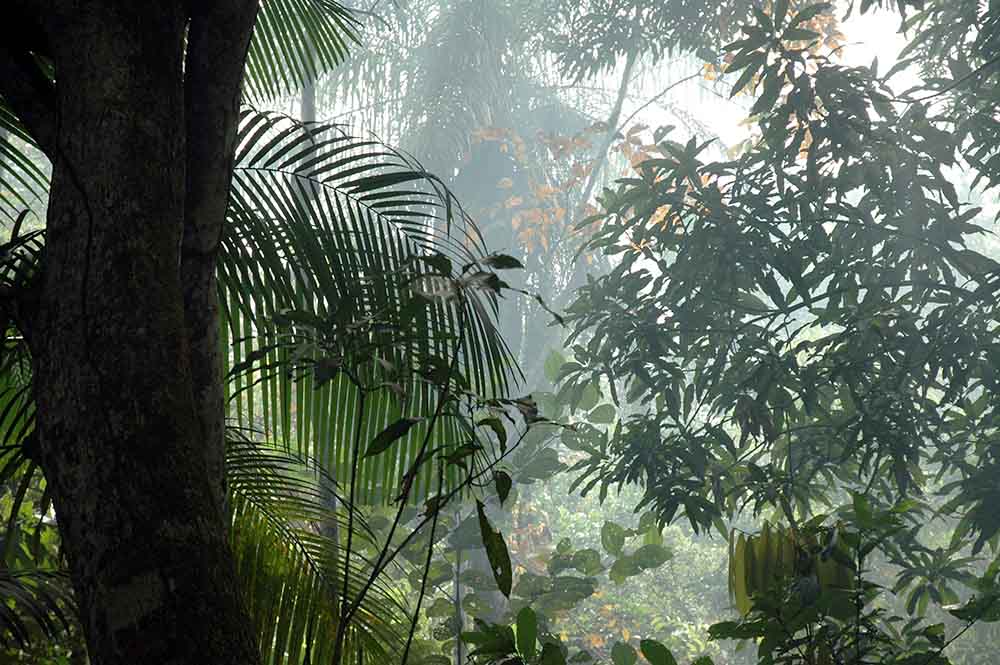
This geographic choice marks a turning point: the world’s largest tropical forest becomes both the backdrop and the focus of discussions. Faced with record levels of deforestation, loss of biodiversity and growing pressure from the extractive industries, COP30 aims to redefine the priorities in the fight against climate change by placing the protection of ecosystems at the heart of international commitments.

Curupira: an ancient spirit for the challenges of the future
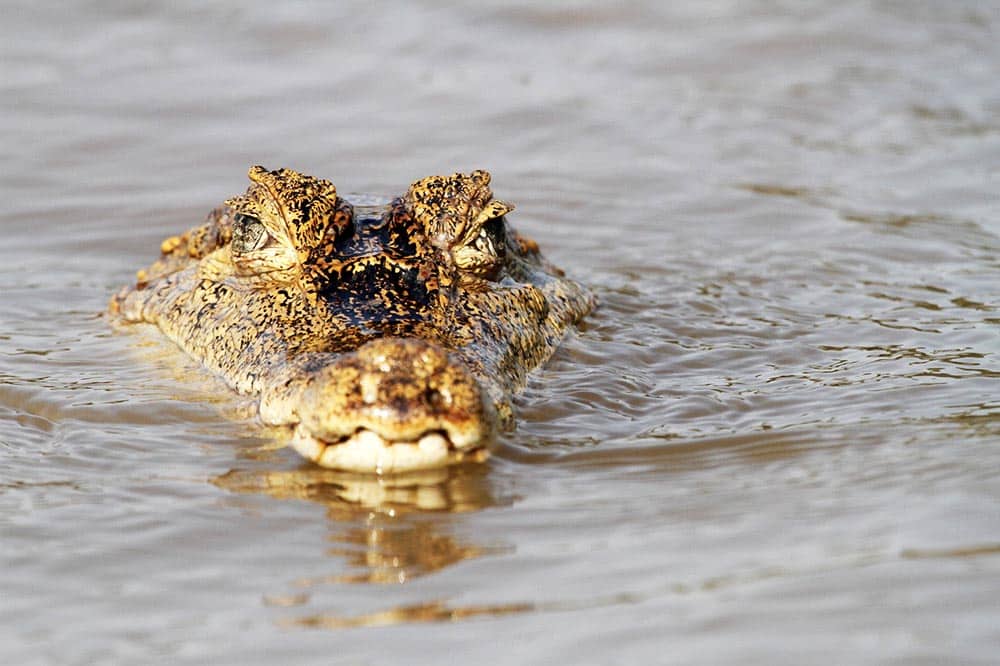
To embody this decisive edition, Brazil has chosen a figure from indigenous legends: Curupira the mythical guardian of the Amazon rainforest. Far from being a consensual symbol, this character embodies a form of resistance. In Tupi-Guarani tradition, he is depicted as a small man with red hair and upturned feet, capable of outwitting intruders and fiercely defending his territory.
His name, formed from the words “curumin” (boy) and “pira” (body), evokes both childhood and vitality. Curupira is no mere folkloric character: he is deeply rooted in the collective memory of the forest peoples, and his influence extends beyond Brazil’s borders.
In French Guiana, it takes the name Makilili. In Colombia, it becomes Madre Monte. In Ecuador, it’s known as Sachamama, the mother of trees. In the Peruvian Amazon, it is known as Chullachaqui. In Suriname and Guyana, he is referred to as Winti-boskopu or Watramama. All these avatars fulfill the same mission: to protect the forest from predators.
A shared territory, a common emergency
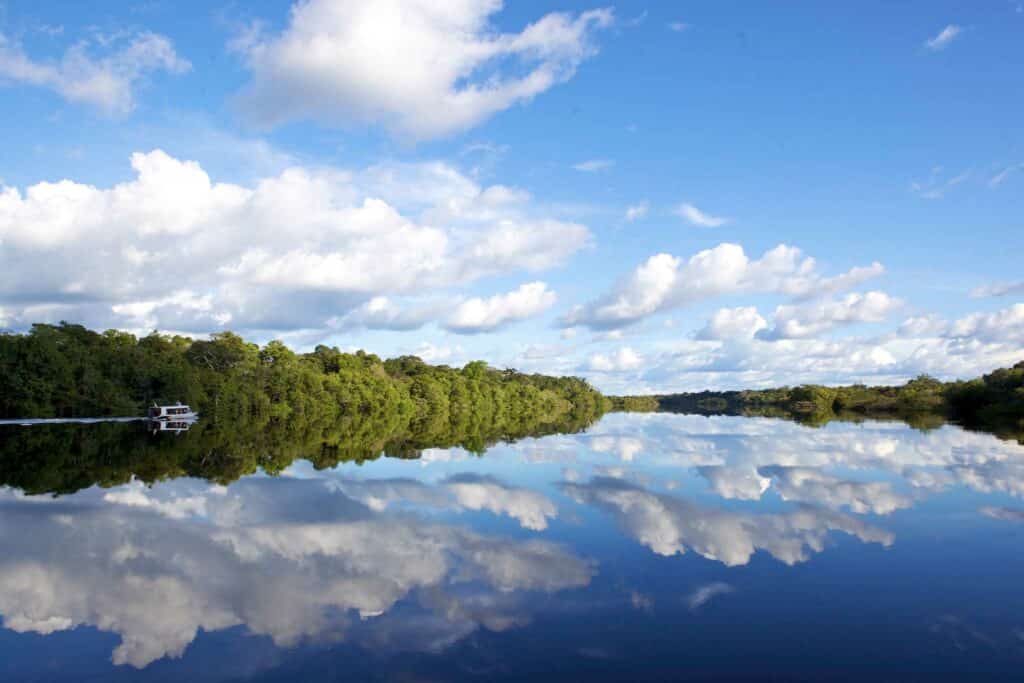
The Amazon covers more than five million square kilometers and crosses nine countries: Brazil, Colombia, Peru, Bolivia, Ecuador, Venezuela, Suriname, Guyana and French Guiana. This vast territory is home to some 34 million inhabitants, including hundreds of indigenous peoples, often on the front line of the effects of extractivist policies and the climate crisis.
By choosing Curupira as its official mascot, COP30 is sending out a strong signal: the recognition of ancestral knowledge and local struggles, and the full involvement of Amazonian populations in global debates.


COP30: objectives, tensions and expectations
COP30 promises to be a strategic moment in international climate governance. Several crucial issues will be addressed in Belém:
- ✔️ Implementing a fair energy transition, with concrete support for the most vulnerable populations.
- ✔️ The creation of a global fund to preserve tropical forests, with announced support from China.
- ✔️ The aim is to mobilize $1,300 billion a year by 2035 to finance adaptation to climate change.
- ✔️ Sensitive negotiations around the reduction of fossil fuels, in a country like Brazil, a major oil producer.
These challenges are compounded by strong popular pressure. Brazilian civil society, researchers and indigenous organizations expect ambitious decisions. In this context, Curupira is not just a symbol: it has become the voice of an Amazon that is demanding its place at the negotiating table.
And what about the Caribbean?
The Caribbean territories are participating fully in COP30, as members of the Framework Convention and representatives of the Small Island Developing States. They include Barbados, Trinidad and Tobago, Haiti, Saint Lucia, Jamaica, Cuba, Antigua and Barbuda, Dominica, Saint Kitts and Nevis, Grenada and Saint Vincent and the Grenadines.
Why is their presence essential? Because these countries, although low emitters of greenhouse gases, are bearing the full brunt of climate change: increasingly violent cyclones, rising sea levels, water stress, coastal erosion and the collapse of marine biodiversity.
For the Caribbean, COP30 is an opportunity to advocate specific financing mechanisms tailored to their vulnerability, as well as to showcase their often innovative local initiatives in resilience, sustainable agriculture and risk management.
An educational and symbolic device around Curupira
Not every climate conference has had a mascot, but Curupira marks a breakthrough. At COP28, a sea turtle symbolized the fragility of marine ecosystems. But until now, no figure had embodied a protective force rooted in popular belief.
Curupira is to be presented in the form of educational and symbolic objects: posters, educational games, school events and workshops in the “citizens’ villages” running parallel to the official conference. This choice aims to raise awareness of global climate issues among a wider public, especially young people, through a figure from the collective imagination.

Curupira, the Amazon's red alert to the world
Through Curupira, COP30 is reminding us that the answers to ecological crises will not only come from laboratories or ministries. They will also require listening to local communities, recognizing local knowledge and redefining our relationship with living things.
By setting up its debates in the Amazon, COP30 is opening a new chapter. For the Caribbean, as for the Amazonian countries, it’s a question of transforming a long-marginalized voice into a lever for global decision-making. And perhaps by looking Curupira in the eye, leaders will understand that the forest is not asking for charity. It demands respect.
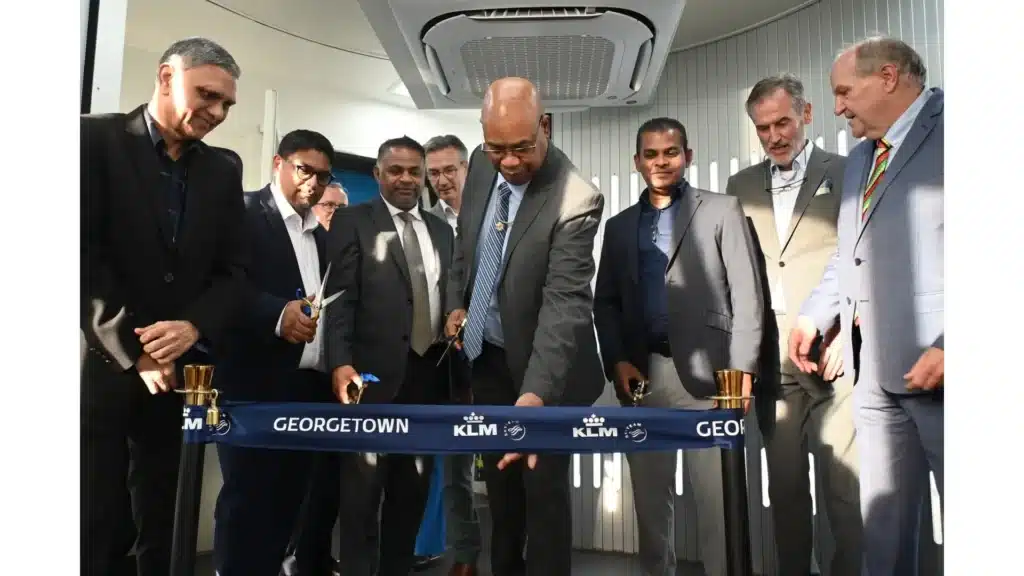
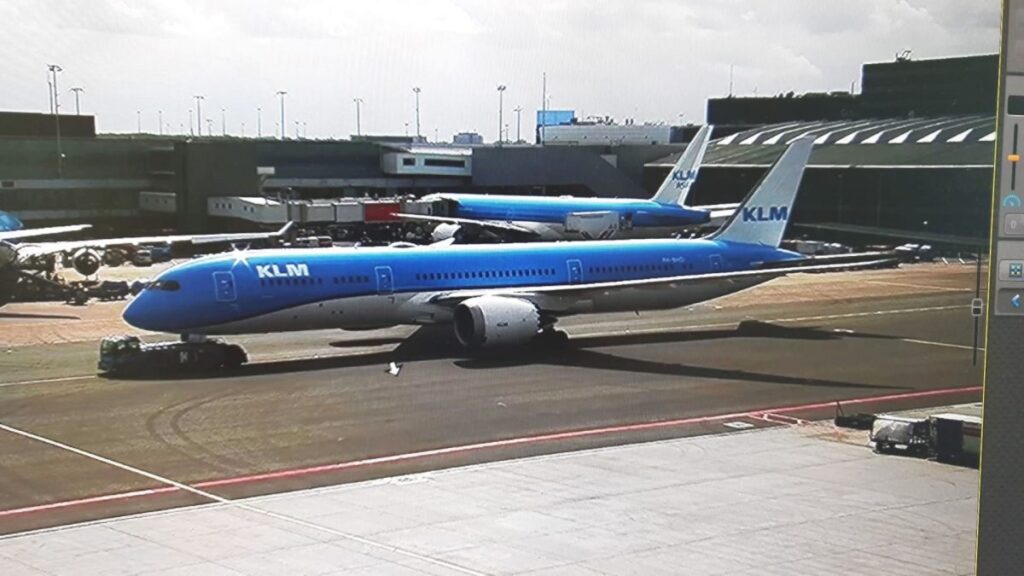
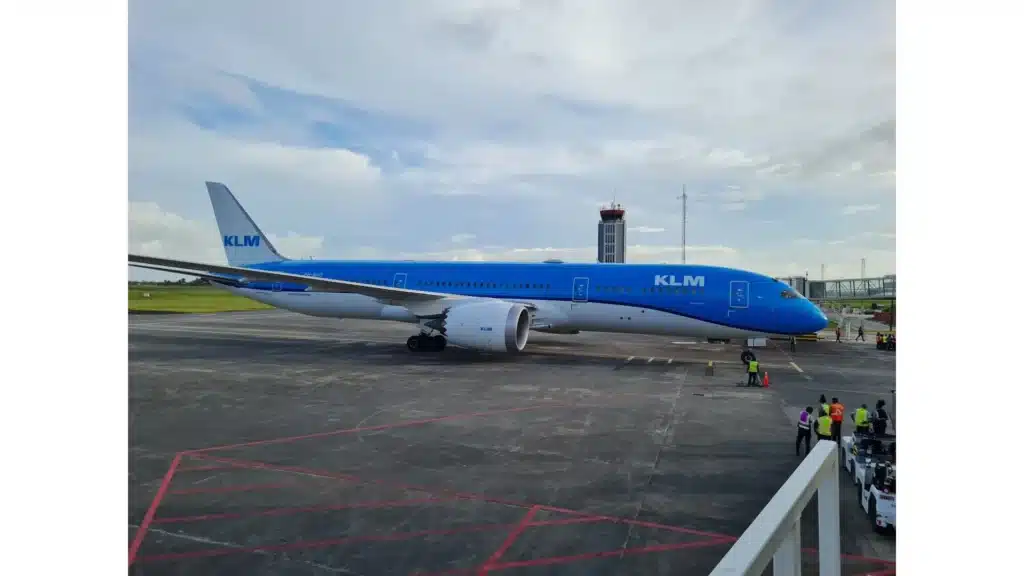
KLM Royal Dutch Airlines inaugurates a new route between Europe and Guyana, marking a decisive step forward in the air integration of this South American country. Thanks to this direct flight from Amsterdam, with a stopover in Sint Maarten, Georgetown is now more accessible, both for travelers and for the business community.
Accelerated growth in air travel since 2020
In recent years Guyana is undergoing a significant transformation in its air transport sector. Several international airlines, including KLM Royal Dutch Airlines. This new dynamic has made it possible to expand the range of flights on offer, while lowering costs for customers. This new dynamic is helping to expand the range of flights on offer, while lowering costs for customers.
A necessary distinction with French Guiana
Often confused with French Guiana. Guyana is a sovereign state with a history marked by British and Dutch influences. Its English-speaking capital, Georgetown, reflects this singularity within the South American continent. The flight operated by KLM Royal Dutch Airlines therefore responds to a specific logic, distinct from the issues specific to the neighboring French territory.
Route details Amsterdam - Georgetown
The service offered by KLM Royal Dutch Airlines plans two weekly rotations, on Wednesdays and Saturdays. Flight KL789 leaves Schiphol at 9:45 a.m., making a stopover in Sint Maarten, before continuing on to Georgetown, where it lands at 4:25 p.m. The return flight is by direct overnight flight. The return flight is a direct overnight flight, considerably reducing the journey time between Europe and Guyana to less than ten hours.
The Airbus A330-200 used on this route offers 18 seats in Business class and 246 in Economy class. This choice guarantees passengers a level of comfort in line with international standards and seamless access to the intercontinental network of KLM Royal Dutch Airlines.
Major economic and tourism benefits
The launch of this route by KLM Royal Dutch Airlines is part of a wider national strategy. President Irfaan Ali hailed a step forward that goes beyond simple passenger transport: it also involves developing trade, freight and diplomatic connections.
Guyana’s aviation sector already generates over $116 million for the country’s GDP and supports around 5,000 jobs. The presence of KLM Royal Dutch Airlines in this context further strengthens the country’s position as an up-and-coming player in the region.
One ambition: to reach 3 million passengers
By 2030, the Guyanese government is forecasting a spectacular increase in traffic, with a target of three million passengers a year. This ambition is accompanied by a vast program to modernize airport infrastructures and open up new routes. KLM Royal Dutch Airlines plays a key role in this shift towards greater international connectivity.
Guyana, the new regional crossroads?
With eleven airlines now serving its territory – compared with just six four years ago – Guyana is positioning itself as a potential regional hub. Linking South America to Europe, KLM Royal Dutch Airlines is directly involved in this geostrategic vision.
This opening also represents an opportunity for local companies, who can now consider exporting to the European market, while benefiting from improved logistics times. For travelers, the gains in accessibility and flexibility are obvious.
Cooperation welcomed by both sides
The inauguration of the flight by KLM Royal Dutch Airlines was enthusiastically welcomed by local and Dutch authorities. The Minister of Public Works, Juan Edghill, saw it as a validation of the efforts being made to modernize the aviation sector. For his part, the Dutch ambassador, Walter Oostelbos, emphasized the importance of the diplomatic and economic rapprochement that such an initiative enables.
Dirk Buitelaar, regional representative of Air France KLM, underlined the human importance of this new link, capable of bringing communities together across continents. The inaugural flight gave rise to a symbolic reception, marked by warm exchanges and high local visibility.
Looking to the future
With this route, KLM Royal Dutch Airlines confirms its commitment to connecting strategic growth regions. Thanks to this strengthened position on the air transport map, Guyana is opening up new prospects for tourism, trade and international cooperation.
Offering direct and regular access to Europe, KLM Royal Dutch Airlines is not just adding a new route to its network: it is actively participating in Guyana’s integration into the world’s major air flows. An initiative that could well reshape the region’s air traffic balance.
Strengthening sea turtle protection through regional ocean governance was one of the key issues at the 2025 annual meeting of the WIDECAST network, held in Saint Kitts and Nevis. Marine experts and conservationists from the Greater Caribbean, Australia and the Netherlands joined forces to deepen regional cooperation on marine turtle protection, with Suriname and the Guianas playing a central role.

A shared commitment to the Caribbean's sea turtles
Held in March at the St. Kitts Marriott Resort, WIDECAST’s AGM 2025 brought together over 80 participants committed to marine conservation. The event provided an opportunity to share update on national actions, share scientific data and make collective progress on flagship projects such as Blue Corridors for Sea Turtles, focused on preserving sea turtle migration routes and the Northwest Atlantic (NWA) Leatherback Regional Action Plan (RAP) for the Wider Caribbean, focused on protecting the leatherback in this region.
The workshops addressed fundamental themes: the fight against illegal trade, sea turtle autopsies, marine health, and the use of the EarthRanger platform for species monitoring. These exchanges illustrated WIDECAST’s key role as a network linking local actions and regional strategies.
Suriname and the Guianas in action

As Oceans Coordinator for WWF-Guianas and WIDECAST Country Coordinator in Suriname, the speaker presented a presentation entitled “Transforming regional ocean governance by combating IUU fishing and protecting marine turtles in the Guianas”.
Her presentation highlighted the one of the main challenges towards the decline of the leatherback which is illegal, unreported and unregulated (IUU) fishing, as well as the efforts undertaken to address them, including:
Strengthening fisheries governance frameworks ;
Enhanced surveillance and information sharing in the field;
Protecting spawning beaches and migration corridors;
Adapting to the impacts of climate change;
Updating Suriname’s Sea Turtle Recovery Plan (STRAP).
The Guianas are thus positioning themselves as a driving force for sustainable, concerted ocean governance on a Caribbean scale.

Local action for regional impact
Suriname’s contribution underlined the extent to which threats to marine biodiversity transcend national borders. The conservation of marine turtles, a migratory species par excellence, calls for coordinated, cross-functional responses.
This dynamic is illustrated by the Northwest Atlantic (NWA) Leatherback Regional Action Plan (RAP) for the Wider Caribbean and the Blue Corridors project and the commitments made collectively. Against a backdrop of increasing pressure on marine ecosystems, the future of conservation will require greater cooperation, science-based decisions and a genuine sense of the common good.
Nice Time Riddim is the motto of a musical upheaval underway in Guyana. Since April 3, 2025, this collaborative album has brought together 14 artists around an original project, at the crossroads of tradition and modernity. Led by artist and producer Gucci Boss, with the support of Donlink Juzwun Entertainment, the album offers more than just a series of catchy tracks. It introduces a new genre rooted in Guyanese culture: the sporting music.
Gucci Boss, a key figure in Guyana's music scene
Real name Ryan Royston Linton, Gucci Boss is an artist renowned for his role in the development of Guyana‘s music scene. He has decades of experience as a songwriter, performer and producer. With Nice Time Riddim, his project transcends the local music industry. By bringing together 14 voices with complementary styles, he builds a bridge between generations, between traditional rhythms and contemporary sounds.


A new musical identity: sporting music
Nice Time Riddim marks the birth of a genre that Gucci Boss calls sporting music. This name refers directly to a very specific way of partying in Guyana. Unlike other countries, here people don’t go out to party, they go out to “sport” – a local term synonymous with relaxation, sharing and joy.
Sporting music is based on a rhythmic foundation inherited from Kwe Kwe – an ancestral musical form – to which chutney, soca and dancehall influences are added. The result is a coherent, culturally rooted yet innovative sound universe. With Nice Time Riddim, Guyana is asserting a distinct musical identity that could appeal to a regional and diasporic audience.
A rich and structured collaboration
Nice Time Riddim features fourteen Guyanese artists, each contributing their own voice, style and energy. The album stands out for its coherence and diversity:
- Juno Primo – Shanto offers an immersion into the world of Kwe Kwe.
- Gucci Boss – Thick & Buff embodies sporting music in its most direct form.
- Gaddie G. – Gimmi Waistline seduces with a danceable tempo.
- Ballys – Competition illustrates conviviality and festive rivalry.
- DJ Energy – Slim Gyal Anthem pays homage to free female youth.
- Granny Ivy – Big Onan assumes a tone that is both humorous and rooted in folklore.
Warchild – Ruff Ruff, iqchosen1 – Nice Time, Dappa Roots – Wife Material, Artist Dukes – Wap Wap, Mattick Queen – Play Wid It, Kunchi – Dina, Lil Million – Bend Fad De Camera. These are just some of the tracks that demonstrate the wide range of sporting music.
All the tracks are built on the same basic rhythm, giving the whole a formal unity that reinforces the project’s identity.
A project rooted in Guyana, but with an international outlook
Gucci Boss and his team have structured Nice Time Riddim to guarantee a production quality worthy of their ambitions. The recording was split between several professional studios: Platinum 101 Studios in New York, Ruff Kutt Studios in Guyana, and i2Recordings. The whole was mixed and finalized by Code Red Records, a structure renowned throughout the Caribbean for its technical mastery.
This attention to detail gives Nice Time Riddim a reach that extends beyond Guyana’s borders. The project could well become a benchmark in the region, and even a model for other artists in terms of musical structuring.
Strong cultural and social resonance
With Nice Time Riddim, Gucci Boss wants to show that Guyana’s music can be exported without becoming distorted. It’s not a question of following a trend, but of creating its own path. The sporting music genre has the potential to structure a genuine local cultural movement.
Ian I. Johnson, music producer and founder of Dynamix Studio, sees this project as a solid foundation:
“It’s not just about entertainment. What we offer Nice Time Riddim is a way of saying who we are, as Guyanese.
Sporting music thus appears to be a vector of pride and unity. It could also play a role in cultural tourism, by drawing attention to a scene that still receives little media coverage on a regional scale.
Nice Time Riddim, a milestone for Guyanese music
Since its release, Nice Time Riddim is available on all streaming platforms. Initial feedback suggests a strong response, both from local fans and from the diaspora. In seven key tracks, and through fourteen artists, the album lays the foundations for a new reading of Caribbean music from Guyana.
Sporting music, as embodied by Gucci Boss, is set to evolve. It could inspire other countries to develop their musical heritage in contemporary forms. In this sense, Nice Time Riddim is a successful laboratory, but above all a strong statement of identity.
Guyana is increasingly positioning itself as an important voice in the international trade debate. Through its participation in the 55th General Assembly and Global Business Forum of the World Trade Centers Association (WTCA), the country is asserting its ambition to play an active role in shaping the future rules of world trade. This event, which takes place from April 6 to 9 in Marseille, brings together over 300 participants from 50 countries to reflect on changes in international trade and strategies for adapting economies large and small.
A major diplomatic and economic opportunity
Guyana is taking part in this high-level event through the World Trade Centre Georgetown (WTCG). The theme of this year’s annual forum is: “Gateway to the Mediterranean. For Guyana, this is a unique opportunity to strengthen its alliances, promote its economic interests and draw inspiration from the successful models of other countries.
“The forum comes at a time when many nations are reassessing their trade policies in the face of tariffs imposed by major economies like the United States,” said Komal Samaroo, Executive Chairman of the WTCG. In his view, the future global trading system must integrate the interests of small nations if it is to be truly inclusive and sustainable.

A rapidly changing international context
The WTCA Global Business Forum takes place at a time when geopolitical tensions, weakened supply chains and the rise of protectionist policies are making international trade more complex. Countries such as China, Brazil, India, Canada and the United States are represented in Marseille, testifying to the event’s global reach.
Highlights of the forum included a talk by Angela Ellard, Deputy Director-General of the World Trade Organization (WTO). Her speech focuses on the challenges that will shape international trade in 2025. In particular, she addressed :
- The risks of commercial fragmentation,
- The impact of tariff barriers on exports,
- Growth opportunities thanks to digital transformation and new technologies,
- And the need to strengthen multilateral cooperation for a fairer trading system.
These themes resonate particularly well with Guyana’s concerns, as it seeks to integrate itself more effectively into global value chains while diversifying its economy.
Guyana, the voice of small economies
Historically under-represented in major trade negotiations, small states like Guyana take advantage of this type of forum to make their voices heard. The country doesn’t just attend: it actively contributes to the discussions, sharing its experience and advocating a more balanced development model.
In particular, WTC Georgetown is committed to defending the interests of the Caribbean region, highlighting the need for fair access to markets, technical support for SMEs, and investment in logistics infrastructure. Komal Samaroo’s speech is in line with this logic, calling for “international trade to serve all, not just the great powers”.

Setting course for the blue economy: a sustainable vision
Another major topic featured at this 55th edition: the blue economy. A round table, organized in partnership with the United Nations Industrial Development Organization (UNIDO), examined the role of the private sector in building sustainable industrial value chains linked to oceans and coastal zones.
Guyana, with its vast maritime resources and richly biodiverse Atlantic coastline, is keenly interested in this dynamic. The blue economy represents a viable growth avenue for the country, reconciling environmental protection and economic development. The priority sectors identified are
- Environmentally-friendly coastal tourism,
- Integrated marine planning,
- The development of modern port infrastructures,
- Sustainable shipbuilding and maritime logistics.
The aim is to build a resilient maritime industry capable of generating added value while preserving marine ecosystems.
An international presence that counts
Guyana’s participation in such an event testifies to its desire to establish a foothold in international economic discussions and to forge structuring partnerships. By working closely with bodies such as the WTO and UNIDO, the country not only enhances its visibility, but also its ability to influence global decisions in favor of small economies.
It also sends a strong signal to the Guyanese diaspora and to foreign investors: Guyana is transforming itself, opening up, and wants to be a dynamic and responsible player in tomorrow’s global trade.
Guyana on the road to active economic diplomacy
By taking part in Marseille alongside the major trading powers, Guyana is proving that it is no longer just an observer, but a committed partner in redefining the rules of world trade. Its participation in the Global Business Forum 2025 is a milestone in its ambition to become a regional economic hub capable of influencing major international trends. Through Guyana, the Caribbean is asserting its role in a world in transition, where every voice counts in building a fairer, more sustainable common future.
Caribbean women shape history, spanning the centuries as guardians of time and tradition, but also as visionary architects of the future.
This phrase is a perfect illustration of the crucial role that Caribbean women have played, and continue to play, throughout history. From the slave plantations of the 18th century to the UN podiums of the 21st century, Caribbean women have been both guardians of collective memory and builders of better futures. Whether they hail from French-, English- or Spanish-speaking islands, whether they are active in politics, culture, science or social struggles, their impact is profound and multifaceted. From Queen Nanny, Jamaica’s maroon heroine, to Mia Mottley, Barbados’ visionary Prime Minister, not to mention renowned artists and activists, the women of the Caribbean deserve a heartfelt tribute on this International Women’s Rights Day.
Pioneers in Caribbean politics
When it comes to politics, Caribbean women have broken many glass ceilings. Dame Eugenia Charles (Dominica) was a trailblazer: in 1980 she became the Caribbean’s first female Prime Minister, earning the nickname of the region’s “Iron Lady”. For 15 years, she steadfastly governed Dominica, paving the way for other female leaders.
She is credited with this famous observation: “Men have the grand vision… women, on the other hand, follow the details to make sure it becomes reality”.
This quote reflects the pragmatic and determined touch that women have brought to the exercise of power.
Since then, several islands have been led by women. Portia Simpson-Miller (Jamaica), for example, has twice been Prime Minister of Jamaica (2006-2007, 2012-2016), embodying the hopes of the working classes. Ertha Pascal-Trouillot (Haiti), a lawyer by training, broke a taboo by becoming her country’s first female president in 1990. More recently, in 2018, Barbados elected Mia Mottley as Prime Minister – the first woman to lead this young island state since its independence.
Mia Mottley quickly established herself as a strong voice far beyond her island. Under her leadership, Barbados even became a republic in 2021, turning the page on the British monarchy, and named singer Rihanna as its national heroine during this historic transition. Today, Mia Mottley is recognized as “the leading voice of Caribbean peoples and developing nations on the international stage”, thanks to her intelligence, eloquence and passion for social justice. Since January 1ᵉʳ 2025, Mia Mottley, Prime Minister of Barbados, has assumed the presidency of the Caribbean Community (CARICOM). Richès Karayib also devoted an article to her. To find out more about her background and impact, read our article on Mia Mottley.
These political figures – be they heads of government, ministers or local elected representatives – often share the same struggle: to make the interests of small island nations and marginalized populations heard. Their journeys, strewn with pitfalls in worlds long dominated by men, make them models of audacity and resilience for new generations.


Cultural icons and guardians of memory
Maryse Condé (Guadeloupe ) is one of the most admired Caribbean writers. A novelist of genius, her works highlight the richness of West Indian culture, the memory of slavery and the strength of women. A multiple award-winner, Maryse Condé has traveled the world while remaining a proud voice of her native Guadeloupe. Through novels such as Ségou and Moi, Tituba sorcière…, she has shown how Caribbean women are the guardians of time – the bearers of stories handed down from generation to generation – as well as the agents of change. Her work has inspired many women writers and intellectuals in the region and beyond.
When it comes to music, it’s impossible not to mention Celia Cruz (Cuba), the “Queen of Salsa”. With her powerful voice and legendary cry of “¡Azúcar!”, Celia Cruz has been setting stages on fire around the world for over five decades, becoming the quintessential ambassador of Caribbean music. Born in Havana, she conquered a global audience and won multiple Grammy Awards, while remaining proud of her Afro-Cuban roots. Her success paved the way for other Latin artists and brought Caribbean culture to the forefront of the international scene.
Similarly, Jocelyne Béroard, a singer from Martinique and member of the group Kassav, played a central role in the popularization of zouk, contributing to the musical identity of the French-speaking Caribbean.
The new generation continues in this vein. Rihanna (Barbados), global pop superstar and accomplished businesswoman, fully embraces and promotes her Caribbean heritage, whether in her music, her inclusive cosmetics brand or her philanthropic commitment. In 2021, Barbados elevated her to the rank of National Heroine, symbolizing the extent to which culture can be a vector of national pride and unity. Other figures, such as director Euzhan Palcy (Martinique ) – the first black director to be produced by Hollywood – or poet Louise Bennett-Coverley (Jamaica) – an icon of Jamaican Creole – have also contributed to preserving and magnifying Caribbean identity. Through the arts, these women are the true architects of tomorrow: they shape the collective imagination and pass on to future generations a living heritage, self-confidence and openness to the world.


Brilliant minds in Caribbean science
Less talked about, Caribbean women also excel in science and innovation. Dr. Camille Wardrop Alleyne (Trinidad & Tobago) is a prime example. As an aerospace engineer, she worked her way up through the ranks at NASA to take a senior position in the International Space Station program.
As such, Dr. Camille Wardrop Alleyne is the only woman from the Caribbean to hold a senior position in the U.S. Space Agency – a remarkable achievement in a field that is still very male-dominated. Aware of the lack of Caribbean women in STEM, she founded the Brightest Stars organization to encourage girls and women from the Caribbean, Africa and Latin America to pursue careers in science. Her trajectory illustrates the audacity and talent of Caribbean female brains, often obliged to go abroad to deploy their full potential, but deeply committed to making their region shine.
Caribbean women also contribute to global medical progress. Dr. Deborah Persaud (Guyana) a virologist, made headlines in 2013 by contributing to the first functional remission of a baby born with HIV. Born in Georgetown and emigrated to the United States, this pediatric HIV specialist – hailed as one of the top researchers in her field – led the team that administered very early antiretroviral treatment to a newborn, enabling the child to live without detectable virus. This major scientific breakthrough gave new hope in the fight against childhood AIDS. Dr. Persaud’s journey, from his childhood in Guyana to the laboratories of Johns-Hopkins University, testifies to the invaluable contribution of the Caribbean diaspora to science.
Whether it’s innovations in tropical agronomy, climate research or technological entrepreneurship, many other Caribbean women are leading pioneering projects. Climatologist Courtnae Bailey (St. Vincent), for example, is committed to island resilience to volcanoes and hurricanes.
Though often in the shadows, these “guardians of knowledge” are paving the way for today’s girls to become tomorrow’s innovators.


Fighters for rights and social justice
Caribbean women have also been at the forefront of social struggles and fights for equality. As early as the 18th century, Queen Nanny – also known as Nanny of the Maroons – led a community of Maroon slaves in the hills of Jamaica, waging a guerrilla war against the British colonizers. A renowned military strategist and spiritual leader (she is said to have been an Obeah priestess), Queen Nanny helped establish homes of freedom for runaway slaves. Her name became so legendary that she was named Jamaica’s national heroine. A guardian of time, she embodies age-old resistance to oppression, and her militant legacy lives on in modern Jamaica.
Another strong symbol comes from the Dominican Republic with the Mirabal sisters – Patria, Minerva and María Teresa. In the 1950s, these three Caribbean women dared to challenge the bloody dictatorship of Rafael Trujillo. Their commitment to freedom and justice cost them their lives: they were brutally murdered on November 25, 1960, on the orders of the regime. But their martyrdom was not in vain. The “Mariposas” (their code name in the underground) have become emblems of the fight against violence against women. In tribute to their struggle, the UN chose the anniversary of their murder, November 25, as the International Day for the Elimination of Violence against Women. Even today, the memory of the Mirabal sisters inspires feminist movements throughout Latin America and the world.
In the French-speaking West Indies, Gerty Archimède (Guadeloupe) is a pioneer of civil rights. Born in 1909, in 1939 she became the first Caribbean woman to become a Guadeloupean lawyer, and in 1946 the first Guadeloupean deputy to sit in the French National Assembly. Gerty Archimède devoted her life to defending the oppressed and promoting women’s rights. A communist activist, she created the Union des Femmes Guadeloupéennes to structure the local feminist struggle. She also supported international causes, organizing support committees for Angela Davis in the 1970s. Until her death in 1980, this “exceptional woman” remained faithful to her convictions. ” Gerty Archimède is a true symbol of West Indian women and a role model for all women,” sums up a portrait of her by a memorial foundation. The legacy of this Caribbean woman can be found in every elected official and activist in Guadeloupe today.
In the same way, all over the Caribbean, countless anonymous or less publicized heroines have risen up to defend human rights, education, the environment or gender equality.


Caribbean Wonder Woman
From presidential palaces to research laboratories, from concert stages to street barricades, the women of the Caribbean have proved that they are both guardians of time and architects of tomorrow. Guardians of time, because they preserve the culture, memory and traditions of their islands. Architects of tomorrow, because they imagine and build a fairer, more prosperous and freer future for their communities. On this International Women’s Rights Day, Richès Karayib ‘s tribute to them reminds us just how valuable their influence is. This overview highlights just a few of these Caribbean Wonder Women – and there are many more, often in the shadows, all of whom deserve to be mentioned. May their stories inspire future generations to continue their work, so that the legacy of Caribbean women continues to shine throughout the world.
In a significant boost for Caribbean cinemaThe 18th edition of the prestigious film laboratory, Nuevas Miradas, ended with eight Caribbean film projects receiving awards and support, thanks to the UNESCO-EU Transcultura program. This initiative, funded by the European Union, has played a key role in bringing Cuba, the Caribbean and the European Union closer together through culture and creativity.
The transcultura program: a catalyst for Caribbean cinema
The Transcultura program is a key element in the development of Caribbean cinemaoffering emerging filmmakers the opportunity to participate in major laboratories and events. This program is essential not only for developing local cinema, but also for connecting Caribbean countries, as they share similar histories and contexts.
Nuevas Miradas: a platform for young filmmakers
Organized by the Production Chair of the International Film and Television School in San Antonio de los Baños, Nuevas Miradas is one of the oldest and most prestigious laboratories in Latin America and the Caribbean. The event takes advantage of the presence of film industry representatives at the Havana International Film Festival to connect them with emerging filmmakers from the region, thus supporting the diversity of voices and stories in the
Caribbean cinema.



Award-winning projects: an overview of Caribbean storytelling
1. Escúchame – a documentary by Kevin Argudin (Cuba)
Escúchamedirected by Cuban filmmaker Kevin Argudin, is a documentary that explores the lives of individuals in Cuba, highlighting their struggles, hopes and daily realities. The project received direct access to the DocMx festival and support from Zafiro Cinema, recognizing its artistic quality and potential on the international scene, and contributing to the development of the Cuban film industry. Caribbean cinema.
2. El amor en tiempo de Bacanerías (Love in the Time of Bacanerías) – By Iván de Lara and Cristian Mujica (Dominican Republic)
Directed by Iván de Lara and produced by Cristian Mujica, El amor en tiempo de Bacanerías is a film that explores the complexities of love and relationships in the context of traditional Dominican festivals. The project received an invitation to the Cali Film Festival’s Producers and Film Projects Fair in Colombia, and an audience design consultation from the World Cinema Fund, reinforcing the project’s potential in the Dominican Republic. Caribbean cinema.
3. Non, je n’ai pas trouvé l’Eldorado – By Séphora Monteau and Wendy Desert (Haiti)
This Haitian film, directed by Séphora Monteau and produced by Wendy Desert, entitled No, I haven’t found El Doradois a poignant exploration of the quest for a better life and the disappointments that often follow. The project received coaching from Fonds Suisse Sud Est and advice on production and financing strategies from French documentary filmmaker Tancrède Ramonet, supporting the development of the Caribbean cinema.
4. La Isla de los Cangrejos (Island of the Crabs) – By Juan Carlos Guzmán and María José Martínez (Dominican Republic)
La Isla de los Cangrejosdirected by Juan Carlos Guzmán and produced by María José Martínez, is a fiction film that tells the story of a small island community struggling against environmental change and the impact of tourism. The project received script development support and was recognized for its unique storytelling, enriching the Caribbean cinema.
5. El Último Baile (The Last Dance) – By Carlos Pérez and Ana García (Cuba)
Directed by Carlos Pérez and produced by Ana García, El Último Baile is a documentary that captures the final days of a traditional dance troupe in Cuba. The project received funding for post-production and has been praised for its emotional depth and cultural significance, contributing to the richness of the Caribbean cinema.
6. La Lluvia de los Dioses (Rain of the Gods) – By David Fernández and Yamilé Alfonso (Guyana)
La Lluvia de los Diosesdirected by David Fernández and produced by Yamilé Alfonso, is a fiction film that combines mythology and reality in a Guyanese village. The project received a location scouting and pre-production grant, highlighting its innovative storytelling and enriching the Caribbean cinema.
7. El Silencio de las Olas (The Silence of the Waves) – By Rafael Ramírez and Lucía Hernández (Saint Kitts and Nevis)
Directed by Rafael Ramírez and produced by Lucía Hernández, El Silencio de las Olas is a documentary that explores the lives of fishermen in St. Kitts and Nevis, focusing on the challenges they face and their connection to the sea. The project received sound design support and was recognized for its cinematic beauty, contributing to the diversity of the Caribbean cinema.
8. La Casa de los Abuelos (The House of the Grandparents) – By José Luis Morales and Elena Rodríguez (Dominican Republic)
La Casa de los Abuelosdirected by José Luis Morales and produced by Elena Rodríguez, is a fiction film that tells the story of a family reunion in a traditional Dominican home. The project received funding for editing and was praised for its family-centric storytelling, enriching the Caribbean cinema.
Professionalizing young filmmakers
The Nuevas Miradas event not only contributes to the advancement of projects, but also serves as a platform to boost the cinematic careers of participants, in line with the objectives of the Transcultura program, which aims to support the diversity of voices and stories in Caribbean cinema.
Impact on the Caribbean film industry
Spaces like Nuevas Miradas are essential for presenting and internationalizing projects in their early stages of development. According to Yamila Marrero, General Coordinator of Nuevas Miradas, “A program like Transcultura, which enables emerging filmmakers to take part in major laboratories and events like Nuevas Miradas, is essential for developing our industry. Caribbean cinemabut also to connect with other Caribbean countries, as we share similar histories and contexts”.
Wendy Desert, Haitian director and producer, emphasized that “the event not only contributes to the advancement of projects, but also serves as a platform to boost the cinematographic careers of participants, in line with the objectives of the Transcultura program”.
The UNESCO-EU Transcultura programme has once again demonstrated its commitment to fostering the growth and international recognition of Caribbean cinema. En soutenant ces huit projets de film, le programme garantit que les histoires et les perspectives uniques de la région des Caraïbes soient entendues sur la scène mondiale. Alors que l’industrie cinématographique caribéenne continue d’évoluer, des initiatives comme Nuevas Miradas et le programme Transcultura restent cruciales pour nourrir les talents et promouvoir la diversité culturelle du Caribbean cinema.