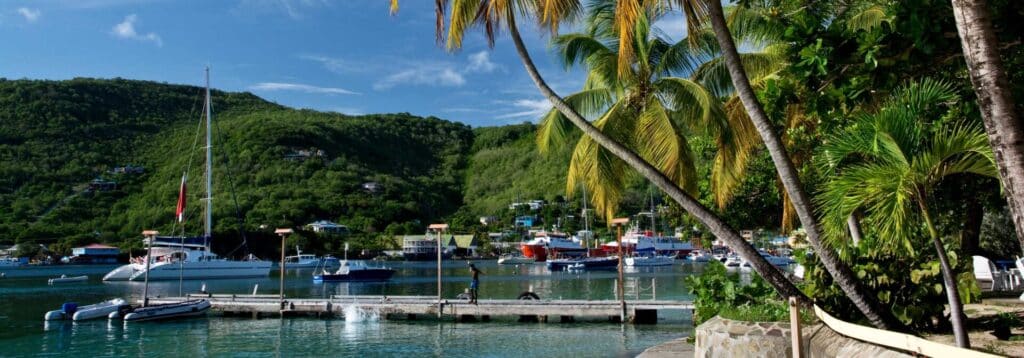
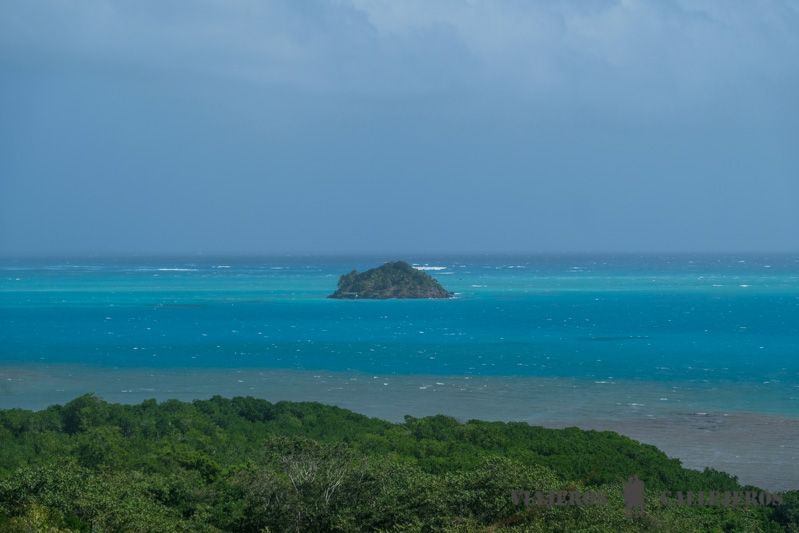
Les Anses d’Arlet is much more than just a Martinique village: it’s an authentic setting where nature, history and people come together to offer an unforgettable experience. From the moment you set foot on this land bathed in light, a sense of belonging and peace comes over you. Situated on Martinique’s south-west coast, Les Anses d’Arlet stretches between lush green hills and crystal-clear waters, offering breathtaking panoramic views.
Here, every sunrise seems to awaken a new promise, and every sunset invites contemplation. This land, both preserved and vibrant, seduces with its harmony between tradition and the gentle way of life, and it’s this rare alchemy that touches the hearts of all who discover it.
At the roots of name and history: a living heritage.
Caribbean legends and collective memory
The name Les Anses d’Arlet is rooted in a history as deep as the waters that line its shores. It evokes Arlet, an Amerindian chief and emblematic figure who is said to have left his mark on the region. This land, once trodden by the first inhabitants of the Caribbean, has survived the centuries by preserving the memory of its ancestors.
Archaeological digs at Anse Bellay have revealed some poignant remains: Amerindian cemeteries dating back to the 5th century and 18th-century slave burials, bearing witness to a history that is sometimes painful but always conveys a message of resilience and dignity. Here, memory is never far away, inhabiting the wind, the trees, the songs, and reminding us that Les Anses d’Arlet is a place of reconciliation between past and present.
A village that has preserved its soul
Over the centuries, Les Anses d’Arlet has seen the waves of history pass by: from missionaries to fishermen, from farmers to craftsmen.
Every stone, every alleyway, every Creole house tells the story of a people who have preserved their identity while opening up to the world.
Saint-Henri church, a jewel of local heritage, stands proudly facing the sea, a symbol of faith and perseverance that have stood the test of time.
The village and its inhabitants: sharing the Creole soul
A colorful Bourg, mirror of authentic Martinique
The heart of Anses d’Arlet beats in the village, a maze of steep streets lined with colorful Creole houses.
Here, the eye wanders between red roofs, blue shutters and flowering gardens.
The listed Saint-Henri church stands majestically opposite the famous pontoon, offering a unique perspective where the sacred meets the infinite of the sea.
Every detail, from the fragrant market stalls to the fishermen returning to port, exudes authenticity and simplicity.
Arlesians: guardians of tradition and hospitality
The people of Anses d’Arlet, the Arlésiens, are the real treasure of this village.
Their hospitality, their smiles and their attachment to the land create a rare atmosphere of conviviality.
Here, we greet each other, we share, we pass on. Traditions are perpetuated through local festivals, music, dance and cuisine.
Visitors are never mere spectators: for the duration of their stay, they become members of a large Creole family, invited to sample the gentle Martiniquan way of life.
Anses d'Arlet, a natural paradise to explore
An exceptional marine ecosystem
Les Anses d’Arlet is a sanctuary for biodiversity. The seabed is one of the most beautiful on the island, teeming with multicolored fish, sponges, coral and shells. Two underwater trails, LaKaY in the village and Cap Salomon in Grande Anse, offer educational buoys to help visitors discover the richness of this unique ecosystem.
To dive here is to enter a veritable natural aquarium, where every immersion is an encounter with wildlife. Green and hawksbill turtles, rays and sometimes even dolphins share this territory with disarming grace.
Dream beaches, between gold and volcanoes
Les Anses d’Arlet is made up of three jewels: Grande Anse, le bourg and Petite Anse. Each offers a unique experience. Grande Anse, with its long golden sandy beach, invites you to relax under coconut palms, swim in crystal-clear water and enjoy grilled fish with your feet in the sand.
Petite Anse, wilder, seduces with its authenticity and fishing village atmosphere. And then there’s Anse Noire, a rare wonder of Martinique, where the volcanic sand contrasts with the deep blue of the sea. If you’re lucky, it’s here that you can swim with the sea turtles in the calm, clear water, a privilege that leaves lasting memories.
Five must-see experiences in Anses d'Arlet
Swimming with turtles in their natural habitat
At Grande Anse or Anse Dufour, encountering sea turtles is a deeply moving experience. To observe these majestic creatures evolve freely is to experience the magic of life itself, and to feel humility in the face of nature.
Strolling along the Ponton du Bourg at dusk
The town’s pontoon, lined up opposite the church of Saint-Henri, is the scene of suspended moments. At sunset, the golden light envelops the landscape in an enchanting aura, and you find yourself dreaming, carried away by the beauty of the place.
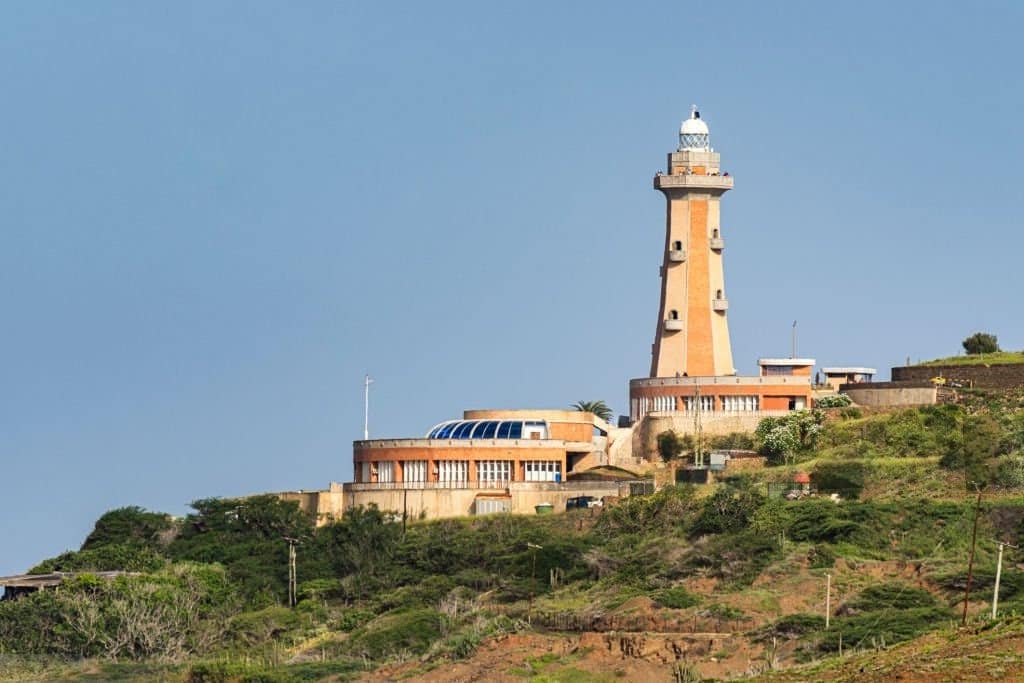
Explore the Bat Cave by Boat
Accessible on sea excursions, the Grotte aux Chauves-Souris unveils a mysterious universe inhabited by thousands of tiny creatures. This natural site fascinates as much as it amazes, offering a timeless interlude.
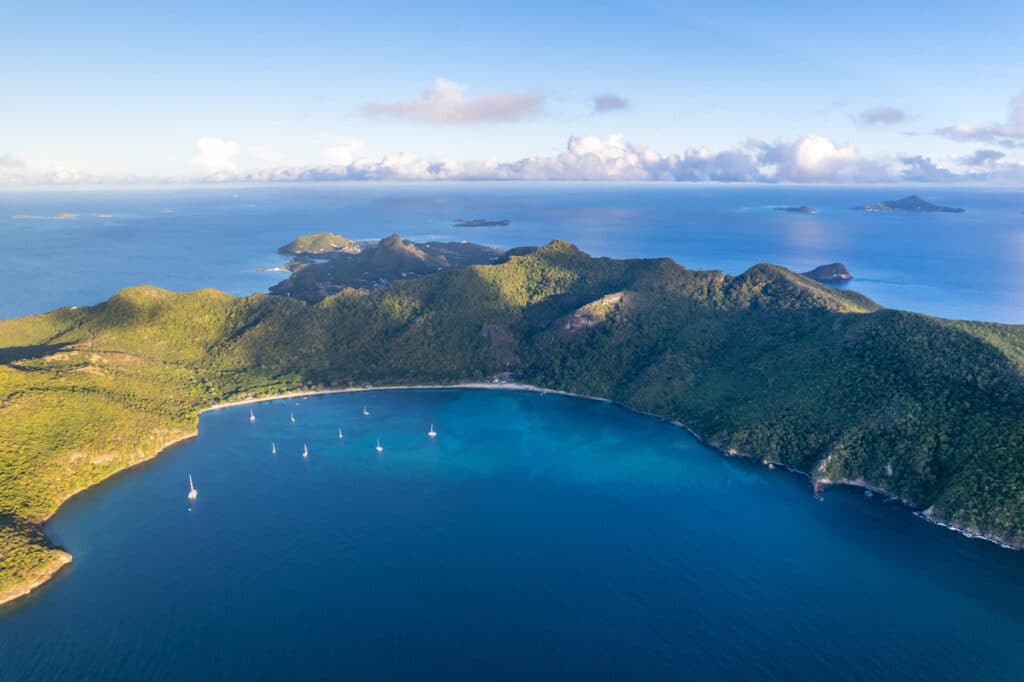
Enjoy a Creole dish with your feet in the water
Beach restaurants offer generous cuisine in a relaxed atmosphere. Taste freshly caught fish accompanied by local vegetables and soak up the art of living in Martinique.
Admire the sunset over Grande Anse
When the sun sets the sky ablaze with its flamboyant colors, Grande Anse becomes the stage for an unforgettable natural spectacle. To sit on the sand, listen to the surf and let your emotions flow is to live the moment to the full.
Anses d'Arlet, a journey to the heart of the essential
Les Anses d’Arlet leaves no one indifferent. This land, both fragile and powerful, is an ode to beauty, memory and conviviality. Here, every encounter, every landscape, every taste becomes an emotion in its own right. Whether you come in search of a change of scenery, adventure or rejuvenation, Les Anses d’Arlet offers much more than a holiday: it’s a profound, human experience that leaves its mark on the heart and soul. Come, let yourself be touched, and leave with the certainty of having found a little piece of paradise.
Traditour 2025 in Guadeloupe promises to be a pivotal moment for traditional sailing and Caribbean identity. For the first time, this great maritime adventure will set sail from Portsmouth, Dominica, before skirting the Guadeloupe coast over 14 segments spread over 11 days of racing, from July 3 to 13, 2025.
This edition, co-organized with La Dominique, embodies much more than just a regatta: it symbolizes the union, audacity and transmission of a living heritage, serving the influence of the entire region.
An unprecedented departure from Dominica: symbol of a bridge between the islands
A spirit of openness and regional cooperation
The opening of Traditour 2025 from Dominica marks a historic turning point. This choice, the result of a joint desire on the part of the organizers, reflects a profound desire to bring the peoples of the Caribbean closer together. In the words of ambassador Benoit Bardouille, the aim is to “promote tourism, strengthen cultural exchanges and stimulate economic growth” between the islands.
This departure is more than just a symbolic gesture: it embodies the ability of the territories to transcend borders and turn the sea, once a barrier, into a veritable hyphen. Dominica, long perceived as a distant neighbor, becomes the starting point of a common narrative, woven of solidarity, ambition and shared cultural roots.
A springboard for Dominica’s economy and image
Hosting the prologue and start of the Traditour 2025 gives Dominica unprecedented visibility. Hotels, restaurants, craftsmen, tourism service providers and local guides all benefited from the event, generating tangible economic spin-offs. More than 400 participants (crews, organizers, guides and technicians) were mobilized for the event, according to Discover Dominica.
The island’s image is also enhanced: Dominica is positioned as a benchmark maritime destination, capable of hosting an international event while respecting its natural and cultural assets.
An exceptional course: 14 segments, 11 days, 39 canoes entered
The major stages, between tradition and innovation
The Traditour 2025 route highlights the diversity of Guadeloupe’s landscapes and heritage. After setting sail from Portsmouth, the Saint canoeists will head for Terre-de-Haut (Les Saintes), before calling at Gourbeyre, Capesterre-Belle-Eau, Petit-Bourg, Pointe-à-Pitre, Baie-Mahault, Sainte-Rose, Port-Louis, Le Moule, La Désirade, Saint-François and Sainte-Anne.
The inclusion of La Désirade, which is often absent from major races, is a first, giving this edition an unprecedented scope. Each stage of the race highlights local characteristics and encourages encounters between locals, visitors and sailors.
The technical and human challenges of an extraordinary race
Taking part in the Traditour 2025 is a physical, technical and human challenge. Sailing conditions vary from stage to stage: unstable winds, unpredictable currents, reefs around Pointe des Châteaux or La Désirade, all require a thorough knowledge of the elements and absolute mastery of the canoe.
39 crews took part: 22 men, 7 women, 7 mixed and 3 juniors. This diversity is rare in sailing competitions, and illustrates the growing openness of traditional sailing to all generations and genders.
Saint-Sauveur canoes: masterpieces of know-how and innovation
Manufacturing secrets, noble materials and old-fashioned gestures
The canot saintois, at the heart of Traditour 2025, is much more than a boat: it’s a symbol of identity. Handcrafted using traditional methods, it is made from noble woods such as pear, gum, mahogany and mahogany. Every element – hull, sail, mast, ballast and helm – is designed to guarantee performance and safety. The mast and boom are often made of bamboo, and the sails of resistant fabric, adapted to the specific features of each canoe. Careful attention to decoration makes each boat a unique work of art, reflecting the tradition of its home port.
The transmission of knowledge, a living heritage
Building and sailing a Saint-Sauveur canoe is a real school of life. Old-timers share their knowledge during collective workcamps, evening gatherings, or on board during training outings. The“Traditour A Timoun” program makes the most of this intergenerational transmission: it introduces young people aged 8 to 15 to traditional sailing in an educational setting. This lively process, enriched with each new edition, perpetuates the skills of the past while opening up to innovation (safety, composite materials) in keeping with the charter of the Classe Canot Saintois.
Traditour 2025, a lever for development in Guadeloupe and the Caribbean
Cultural influence and tangible economic benefits
Each segment of the Traditour 2025 represents an opportunity to showcase local know-how: music, dance, maritime crafts, gastronomy, sea-related professions (carpenters, sailmakers, fishermen, guides). The economic impact is real: accommodation, transport, catering and handicrafts all benefit from the excitement surrounding the race. The media coverage positions Guadeloupe as a leading player in maritime and cultural tourism in the Caribbean, attracting local, regional and international audiences in search of authenticity.
A driving force for regional pride, identity and cohesion
Far beyond the numbers, Traditour 2025 plays an essential role in building a shared Caribbean identity. It reactivates memories, promotes local stories, languages and customs. The event brings together institutions (Region, ANASA, communes), private partners, volunteers and artists. The slogan “One ocean. One culture. One celebration” becomes a rallying cry for those who share the idea of a Caribbean connected by the sea and united by its traditions.
Caribbean spirit blows over traditional sailing
Players’ views, ambitions and future prospects
As the Traditour 2025 approaches, the enthusiasm is palpable. Seasoned sailors like Hugo Thélier meet up with the next generation of sailors from sailing clubs. Marine carpenters are finding recognition and orders. As for the organizers, they see in this race a laboratory for the future of sustainable nautical tourism: job creation, tourist routes around shipyards, promotion of tangible and intangible heritage, development of short circuits around ports of call. Traditour 2025 is part of a sustainable approach, combining memory, innovation and cooperation.
Traditour 2025 in Guadeloupe is a key event for the entire region. By bringing Dominica and Guadeloupe together in a project to promote their maritime heritage, this edition paves the way for new forms of regional cooperation. More than just a race, Traditour 2025 is an adventure in human identity, a link between generations, islands and cultures. It invites everyone to consider the sea no longer as a frontier, but as a shared, fertile space of both memory and modernity.
Cayman Airways is taking a new step in the history of regional air travel by introducing Sir Turtle’s Sky Brew, the first signature craft beer served on board a Caribbean airline. The launch, made official on May 22, 2025, marks a turning point for international passengers looking for an authentic experience from the moment they board.
Cayman Airways has teamed up with Caybrew, the Cayman Islands “iconic brewer, to offer a drink that reflects the soul of the territory. This initiative illustrates Cayman Airways” ability to innovate while valorizing local talent, thus reinforcing its position as a leader in the region.
Sir Turtle's Sky Brew: a signature beer adapted to altitude
The development of Sir Turtle’s Sky Brew required a meticulous approach and in-depth expertise. The Cayman Airways and Caybrew teams worked closely together to design an India Pale Ale capable of retaining all its taste qualities at an altitude of 10,000 metres.
Dry air and reduced cabin pressure alter the perception of flavors, so every step of the brewing process has been designed to ensure an optimal in-flight sensory experience. Sir Turtle’s Sky Brew stands out for its freshness, roundness and balanced notes, offering passengers a taste of Cayman Islands brewing expertise from the very first service on board.
Cayman Airways: standard-bearer of Caymanian excellence
Since its creation, the company has established itself as a true ambassador for the region, highlighting the richness and uniqueness of the Cayman Islands. The introduction of Sir Turtle’s Sky Brew is part of this approach, offering an exclusive product that embodies local quality and authenticity.
Caybrew, renowned for its high standards and commitment to tradition, is contributing its expertise to this project, enabling Cayman Airways to distinguish itself with international customers. This partnership testifies to a shared desire to promote Caymanian excellence at every stage of the journey.
A strategic asset for the image and economy of the Cayman Islands
The integration of Sir Turtle’s Sky Brew into the onboard Cayman Airways offer goes beyond the simple gastronomic dimension. It plays an active role in enhancing the local heritage and promoting local artisans. This approach reinforces the identity of the Cayman Islands for travellers, who benefit from a cultural immersion from the moment they board the plane.
In this way, the company plays a key role in the country’s international outreach strategy, while generating positive economic spin-offs for the entire brewing and tourism industry. This initiative contributes to positioning the Cayman Islands as a destination where authenticity and quality come first.
Cayman Airways redefines the passenger experience
On board international flights, every major passenger receives a complimentary can of Sir Turtle’s Sky Brew, an attention to detail that sets Cayman Airways apart from its competitors. This exclusivity joins the emblematic offer of Seven Fathoms rum punch, another signature of the airline. Together, these products embody Cayman Airways’ signature hospitality and refinement, creating a singular and memorable atmosphere.
Passenger satisfaction is enhanced, and the on-board experience becomes a true extension of a stay in the Cayman Islands. The company thus demonstrates its ability to anticipate the expectations of a demanding clientele, while remaining true to its roots.
Innovations and prospects for Caribbean airlines
The decision to introduce Sir Turtle’s Sky Brew on board its aircraft is a model of innovation for the entire regional airline sector. This approach, based on local collaboration and heritage enhancement, is inspiring other airlines to rethink their service offering.
The company proves that it is possible to combine tradition and modernity to offer a differentiating experience, while generating benefits for the local economy. The initiative opens the way to new prospects for Caribbean air transport, where the promotion of local know-how becomes a lever for development and attractiveness.
Cayman Airways, Forerunner of a New Generation of Services
With Sir Turtle’s Sky Brew, Cayman Airways has established itself as a key player in regional air transport, capable of combining excellence, authenticity and innovation. This partnership with Caybrew illustrates the company’s desire to offer an enriched passenger experience, true to the identity of the Cayman Islands. By showcasing local talent and offering exclusive products on board, the company is helping to strengthen the region’s image on the international scene.
Born in Sainte-Rose, Guadeloupe, and based in Antigua for almost 25 years, Michael Eutrope embodies a vision of Caribbean luxury rooted in transmission, refinement and authenticity. With an international career in the prestige hotel industry, he combines experience, rigor and creativity to reinvent upscale tourism in the Caribbean. Here’s a look back at the career and convictions of a man who makes service an art and the territory a place of expression.
A Caribbean journey in the service of hotel excellence
Trained as a chef in Guadeloupe, then in France and England, Michael Eutrope climbed the restaurant ladder to become a manager in the luxury hotel business. After a spell in the French army as maître d’hôtel to generals, he forged a rigorous protocol that has stayed with him ever since. But it was in Antigua that he found his professional equilibrium, becoming a reference in the discreet luxury sector. Today, at the head of MDE Luxury Hospitality Consultant wich accompanies villas and prestigious homes, offering a tailor-made service worthy of the finest hotels.
Caribbean luxury: authenticity, service and customization
For Michael Eutrope, luxury isn’t about gilding the lily, it’s about getting it right. “True luxury is a clean beach, a good meal, a shower that works and human service,” he sums up. His vision is rooted in local culture: he values traditions, local products and Caribbean hospitality, without ever compromising on quality. Tailor-made is his signature: organizing an experience around sugar cane or the mango festival becomes a pretext for cultural immersion. For him, it’s only by restoring meaning and roots to luxury that the Caribbean will be able to make a lasting impact.
A sustainable hotel industry and talent to discover
Michael Eutrope advocates a human-scale hotel model, based on ecology, the experiential and quality of life. He believes in the potential of farmhouse boutique-hotels, which grow what they serve to their guests in a short circuit. We don’t want 300-room hotels anymore,“he says,” but unique places that are tailored to each customer. He invites Caribbean youth to dream big and embark on careers of service with pride, and appeals to the diaspora: come back to pass on and inspire new generations.
Rekindling the spirit of welcome
“We were very well brought up in the 60s and 70s. We need to rediscover our savoir-être, pass it on and serve with pride,” he insists. Michael Eutrope embodies a Caribbean that dares to distinguish itself through excellence, while remaining true to its DNA. A source of inspiration for all those involved in Caribbean tourism.
Luxury with roots, looking to the future
Through his journey, Michael Eutrope reminds us that the Caribbean doesn’t need to copy external models to shine. By focusing on people, service quality, cultural heritage and sincere hospitality, it can offer the world a unique vision of luxury, warm and sustainable. An invitation to reinvest our territories with boldness and authenticity.
Richès Karayib met Charmaine Spencer, Regional Director for the Caribbean and Latin America at the Antigua and Barbuda Tourism Authority, at the 43ᵉ edition of the Caribbean Travel Marketplace. At a time when the archipelago is increasingly assuming its role as a regional hub, Charmaine Spencer looks back at the differentiated assets of the two islands, their MICE potential, and ambitions for the months ahead, particularly with the French-speaking Caribbean.
Caribbean Travel Marketplace 2025: a showcase for MICE and regional cooperation
Host the Caribbean Travel Marketplace in 2025 was not insignificant for Antigua and Barbuda. It is a proof of confidence but also a showcase of the island’s capacity to organize large-scale events..
“We want to further penetrate the MICE – Meetings, Incentives, Conferences and Events – market,” explains Charmaine Spencer. “We have the infrastructure, the accommodation and above all the political and private will to make Antigua a benchmark.”
This edition also enabled Caribbean delegations, sometimes absent when the event is held in more costly or remote territories, to get together with less logistical effort.
“We were delighted to welcome our neighbors. This reflects our commitment to strengthening regional cooperation.”
Two islands, two complementary experiences
Charmaine Spencer is keen to point out: Antigua and Barbuda are two worlds in one country..
- ★ Antigua, the liveliest island, stands out for its upscale hotel infrastructure, nightlife, gourmet scene, festivals and bustling marina.
- ★ Barbuda, more secretive, offers a rare face of the Caribbean: immaculate beaches of white and pink sand, absolute tranquility, immersion in a still wild nature.
“Barbuda is the preserved Caribbean. Antigua is the living, connected Caribbean.”
Charmaine Spencer adds that Barbuda is home to the only only Nobu restaurant in the Eastern Caribbean, proof that luxury can be combined with exclusivity.
A destination for all market segments
Between leisure, romantic, family, cultural and business tourism, Antigua and Barbuda wants to assert its versatility.
“We have beaches for every day of the year… even in a leap year, we’ll find one for you!”
The range also includes :
- ★ the gastronomy (culinary month),
- ★ l’sporting and cultural events (Sailing Week, Carnival, Art Week),
- ★ well-being well-being (hiking, spas, yoga retreats),
- ★ and regional connectivity, in full development.
Objective: strengthen ties with the French West Indies
Charmaine Spencer concludes with a clear message: she wants to develop the presence of visitors from Guadeloupe and Martinique in Antigua.
“I want more direct flights. More accessible events for the French West Indies. I want to see you here, experiencing our Carnival, our Art Week, our cuisine, our culture.”
Antigua wants to build air, human and cultural bridges with the French-speaking Caribbean in order to promote inclusive, intra-Caribbean and solidarity tourism. inclusive, intra-Caribbean tourism.
Richès Karayib met Geraine Georges, Public Relations Manager at the Saint Lucia Tourist Board, and Dexter Percil, Director of Global Marketing, at the 43ᵉ edition of the Caribbean Travel Marketplace held this year in Antigua. For these two strategic representatives of Saint Lucia tourism, the event is an opportunity to showcase the destination’s strengths, strengthen relations with their international partners, and also to launch their summer calendar and open their arms to the French-speaking Caribbean.
A strategic presence for Saint Lucia
For Geraine Georges, participating in the CHTA Marketplace is essential for promote the Saint Lucia brand and to maintain ties with existing partners while forging new ones.
“This event allows us to ensure the continuity of our relationships, but also to position ourselves in the global tourism space.”
On his side, Dexter Percil, Global Marketing Director, stresses the importance of market intelligence data, trends and insights into travel behavior. These are all elements that will guide Saint Lucia’s destination strategy.
“CHTA also gives us the opportunity to position our accommodation offering, and above all, to launch our summer campaign. “
A strong delegation and an assertive summer campaign
Saint Lucia came out in force. More than 20 hotel partners were present: Bay Gardens, The Landings, Ladera, Sugar Beach, Ti Kaye, Coconut Bay, Jade Mountain… to name but a few. All with the logistical support from Sunrise Airways providing transfers from Saint Lucia.
This massive presence was also an opportunity to officially launch the “Summer Saint Lucia Style” campaign in Antigua. “Summer Saint Lucia Style a new marketing offensive for summer 2025.
Flagship events 2025: between local traditions and regional bridges
Saint Lucia relies on a strong attractive summer calendar articulated around three highlights:
🎭 Lucian Carnival – Saint Lucia Carnival
🗓️ 01 – July 23rd, 2025
🎯 Parade, Calypso, Panorama, private parties
📍 Castries and festive areas of the island
A mainstay of the Saint Lucian summer, the Lucian Carnival takes place over several weeks, culminating in a two-day parade. Musical ambience, flamboyant costumes, sound systems and calypso competitions transform the island into a Caribbean party capital.
“We invite the whole Caribbean, and Martinique in particular, to come and enjoy this unforgettable experience.”
🎶 Martinique in Gros Islet – Franco-Creole street party
🗓️ Last weekend of July to early August 2025
🎯 Guest DJs from Martinique (DJ Payo & co), local gastronomy
📍 Gros Islet Street Party, north of Saint Lucia
Original initiative launched in 2024, Martinique in Gros Islet is back again this year. The concept: invite DJs and artists from Martinique to perform in the legendary setting of Saint Lucian street parties.
“The idea is to strengthen ties between French and English-speaking cultures around music, rum and good food.”
🌴 Creole Heritage Month & other highlights
🗓️ From October 2025
🎯 Creole culture, heritage events
📍 All over the island
In addition to summer, Sainte Lucie is preparing rich cultural season in autumn including Creole Heritage Month, the arrival of the Atlantic Rally for Cruisers (ARC) and other events focusing on Creole crafts, language and traditions.
A clear opening to the French-speaking Caribbean
Dexter Percil puts it bluntly: Martinique is a priority. And the objective is clear: to welcome more French-speaking visitors to Saint Lucia by capitalizing on geographic proximity, short flights and intense programming.
“Come for a weekend, a carnival or a concert… We guarantee labis, conchs, and unparalleled hospitality.”
A festive invitation to Caribbean unity
Through the dynamic presence of Geraine Georges and Dexter Percil, Saint Lucia has a dual ambition: to strengthen its international business connections while strengthening its regional links. This is a region where culture, festivities and gastronomy unite. Culture, festivities and gastronomy serve as a link here.
Richès Karayib met Jules Sobion, aka Julius Caesar, founder and CEO of Caesar’s Army Limited, at the 43ᵉ edition of the Caribbean Travel Marketplace. Cultural entrepreneur and informal ambassador of the festival-caribbean-lifestyle, Jules Sobion looks back on the evolution of his company and its strategic positioning around festival-tourism, where celebration becomes a lever for enhancing the value of Caribbean territories.
From Trinidad to the cultural capitals of the world
Founded nearly 20 years ago in Trinidad and Tobago, Caesar’s Army first made a name for itself locally, before the region and beyond : Barbados, Jamaica, Miami, New York, London…
“When we had access to the Trinidad Carnival, we were able to export what we do best: immersion, energy, living culture.”
Today, Caesar’s Army is both an event label and an identity movement. It federates a community of Caribbean culture enthusiasts, always on the lookout for new experiences.
A pivot to experiential tourism
Participation in the Caribbean Travel Marketplace 2025 marks a new stage for Jules Sobion: the structuring of Caesar’s Army as an integrated cultural tourism operator.
“We don’t just want to make events. We want to create immersive weekends with flights, accommodation and cultural discovery of the destination.
This repositioning of Jules Sobion aims to anchor events in local communities by working in partnership with tourist offices and local players, and by offering all-in-one packages. More than just a show, each event becomes a territorial experience.
A 2025 calendar under the sign of the Caribbean and the diaspora
The calendar of events for Caesar’s Army in 2025 reflects a clear strategy: combining celebration, culture, diasporic mobility and territorial roots. Each event is conceived as an immersive experience that links the public to a destination and its Caribbean identity.
🌆 Bacchanal Blocko – Miami, USA
🗓️ Saturday, May 24, 2025 from 9 a.m. to 3 p.m.
📍 Historic Virginia Key Beach Park, Miami
🎯 Beach J’Ouvert” block party: paint, powder, water, DJs and daybreak soca, celebrated to mark Memorial Day Weekend.
Mai Tai Manhattan – New York, USA
🗓️ Sunday, June 22, 2025 : 11 a.m. to 6 p.m.
📍 The Ainsworth Midtown, Manhattan
🎯 Urban cocktail party fusion: tropical mixology, soca, dancehall and afrobeats in a rooftop atmosphere for Caribbean diasporas.
Street X Food Festival – Port of Spain, Trinidad and Tobago
🗓️ Early July 2025
📍 Downtown Port of Spain
🎯 Gastronomic street festival: traditional food (doubles, roti, jerk), hip-hop culture, urban performances, artist booths. A tribute to Caribbean street culture.
Blocko – Saint Lucia
🗓️ Saturday, July 19, 2025 from 5 a.m. to 11 a.m.
📍 Beausejour Promenade, Castries
🎯 J’Ouvert de plage: immersive early-morning party, live music, colorful powders and festive seaside communion.
A.M.BUSH – Crop Over, Barbados
🗓️ Saturday, August 2, 2025 from 2 a.m.
📍 Confidential location, Barbados
🎯 Foreday Morning revisited: an event in the heart of nature with DJ sets, painting, mud and breakfast at dawn. A typically Caesar’s Army sensory trance.
IN.DE.PAINT.DANCE – Trinidad and Tobago
🗓️ Sunday, August 31, 2025 from 2 a.m. to 8 a.m.
📍 Port of Spain (location to be confirmed)
🎯 National celebration of independence: painting, patriotic music, dance, urban culture and community brunch. One of the movement’s most emblematic events.
“Every event is a gateway to a place, a community, a culture.” – Jules Sobion
An army to celebrate the Caribbean
With Caesar’s Army, Jules Sobion isn’t just selling admission tickets: he’s selling cultural passages. Each destination becomes a stopover in a larger narrative: that of a plural, mobile and festive Caribbean aware of its strength.
“The Caribbean Travel Marketplace is the ideal platform for connecting culture, tourism and territory. And we’re ready.” – Jules Sobion
Inter-island air connectivity today represents one of the greatest challenges to the development of sustainable tourism in the Caribbean region. Getting around between the islands of the Caribbean remains a complex task, despite the region’s considerable tourism potential. This is as true for international travelers as it is for local residents, for whom getting from one island to the next can be an obstacle course.
The current state of air connectivity in the Caribbean
The Caribbean airline industry has undergone profound upheaval in recent years. Historic players such as Air Antilles and LIAT have gone through major crises, with the latter even liquidated in June 2020. This situation has created a considerable gap in inter-island services, particularly felt between the region’s French-, English- and Spanish-speaking territories.
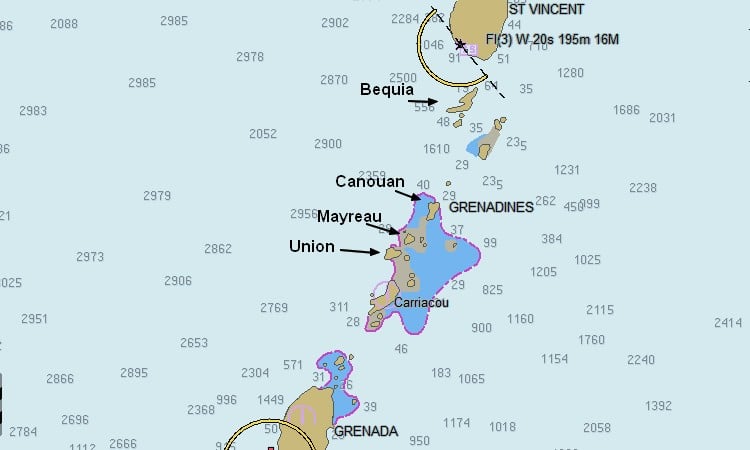
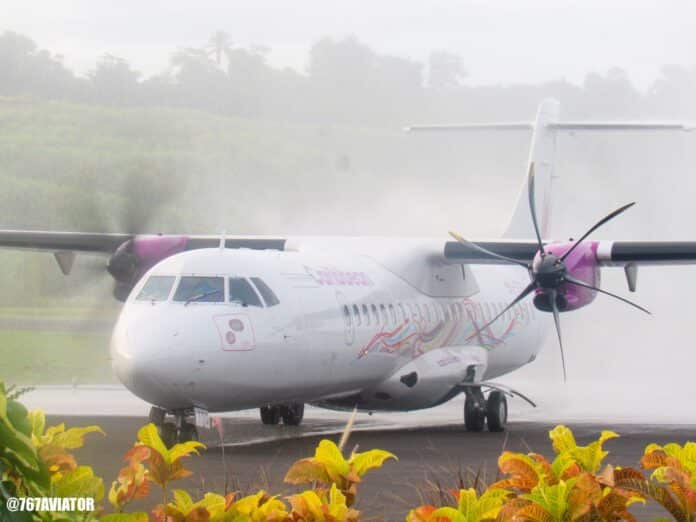
Air Caraïbes now operates a number of routes, notably between Guadeloupe, Martinique and Saint-Martin, but the overall offer remains insufficient to meet demand. New initiatives are emerging, however, such as Air Adelphi, which recently inaugurated a regular service linking Martinique with Saint Lucia and Saint Vincent and the Grenadines, filling a gap left since 2019.
Structural barriers to inter-island connectivity
Several factors explain the difficulty of establishing a coherent air network in the Caribbean. Firstly, the political and linguistic fragmentation of the region, with territories under different jurisdictions (French departments, British territories, independent states), complicates the harmonization of aviation regulations.
Secondly, the modest size of island markets makes it difficult to make air routes profitable. This fragile economic reality, based essentially on tourism and turned towards the outside world rather than intra-regional trade, is a major obstacle to efficient inter-island air connectivity.
The economic challenges of inter-island air connectivity
Inter-island air connectivity plays a crucial role in the economic development of the Caribbean. Every direct flight between two islands represents an open door to new tourism and business opportunities. Improved connectivity would make it possible to capitalize on the specific characteristics of each territory, and promote the gastronomic and cultural riches specific to each island.
The potential economic impact is considerable: the air sector currently accounts for 3.6% of regional GDP, supports 8.3 million direct and indirect jobs and generates $240 billion. Improving inter-island air connectivity could significantly boost these figures by facilitating the movement of tourists and professionals throughout the region.
The untapped potential of multi-destination tourism
One of the great untapped potentials of the Caribbean lies in multi-destination tourism. At present, most visitors limit their stay to a single island, due to the lack of convenient and affordable air links between the territories. Yet the archipelago’s cultural, natural and historical diversity is a major asset that could be better exploited through multi-island tours.
Initiatives such as the CARIBSKY alliance, formerly grouping Air Antilles, Winair and LIAT, aimed to facilitate this type of tourism by offering a “one-way ticket to the Caribbean”. Although this specific project was compromised by the difficulties of the participating airlines, the idea remains relevant.
Towards sustainable aviation in the Caribbean
Faced with environmental challenges, Caribbean aviation is gradually making the transition to more sustainable practices. The region’s airlines have reduced their fuel consumption per passenger kilometer by 28% since 2011, thanks to fleet renewal and improved operational efficiency.
Initiatives such as Green Pilot® certification recognize the efforts of airlines developing robust carbon reduction programs in their operations. This transition to greener aviation is essential to ensure that improved inter-island air connectivity does not come at the expense of the fragile environment of the Caribbean islands.
The challenge of operating costs and profitability
One of the main obstacles to inter-island air connectivity remains the weakness of the business model. Regional airlines face high fixed costs (salaries, maintenance, airport taxes), which are not sensitive to passenger volume. Flight fares vary from 50 to 150 euros one way, which represents a a real obstacle for residents, especially in areas with low purchasing power.
A round trip between two islands can be equivalent to several days’ wages for a local worker. Conversely, some very short sea crossings are still affordable, costing around 8 to 15 euros. But these connections are limited. This situation makes intra-regional mobility difficult, and hinders the development of sustainable, multi-destination tourism in the Caribbean.
Initiatives and partnerships to improve regional connectivity
In the face of economic and logistical challenges, airline alliances are emerging as a promising solution. New collaborations are emerging, such as the partnership between Winair and Air Caraïbes, or the expansion of networks like InterCaribbean Airways. These initiatives aim to improve inter-island air connectivity by pooling resources.
Governments and regional organizations have a crucial role to play. The World Bank is contributing to this effort with projects such as the “Caribbean Regional Air Transport Connectivity Project”, which has awarded $159 million to several countries to enhance air transport safety and airport infrastructure resilience.
Future prospects for inter-island air connectivity
The future of inter-island air connectivity in the Caribbean will necessarily involve innovative solutions. Companies like Air Inter Îles are developing new premium shuttle services with aircraft adapted to short distances, such as the TECNAM P2012 STOL.
Digital technologies also offer interesting prospects, with integrated booking platforms making it easier to combine different flight segments between partner airlines.
Inter-island air connectivity represents both a major challenge and a tremendous opportunity for the development of sustainable tourism in the Caribbean. The obstacles are many: political fragmentation, economic difficulties for airlines, high operating costs and environmental challenges.
The stakes are high: the aim is not only to facilitate travel for tourists and local residents, but also to create the conditions for more balanced, environmentally-friendly economic development throughout the region. By strengthening air links between the islands, a more inclusive and sustainable tourism model can emerge, enhancing the richness and diversity of each territory while promoting greater regional cohesion.
Richès Karayib met with Marva Williams, Managing Director of the Discover Dominica Authority and Director of Tourism, at the Caribbean Travel Marketplace 2025. Through her strategic and committed eyes, Marva Williams sets out the vision of a Dominica that is repositioning itself on the global tourism stage thanks to a skilful blend of sustainability, investment and vibrant culture.
Dominica, a natural island yet to be discovered
For Marva Williams, taking part in a show like the Caribbean Travel Marketplace is an indispensable lever for Dominica, a destination that is still relatively unknown on the international circuit.
“We’re an amazing island, sustainable, culturally rich… but yet to be discovered. To change that, we need to multiply our digital, traditional and trade show distribution channels.”
The objective is clear: to increase Dominique’s visibility with tour operators, travel agencies, specialized media and all the influencers who make travelers’ choices.
Air accessibility and strategic development
Beyond communication, Dominica is working on a structured structured air access planin two stages:
- On the one hand, the modernization of the existing airportalready enlarged and reinforced.
On the other, the construction of an international airport 40% complete, scheduled to open in 2027.
“We launched a flight with United Airlines in February. American Airlines also continues to play a key role. And we are actively working on direct connections with Europe, Canada and Latin America,” she adds.
These efforts are aimed at welcome more visitorsboost the local economy through community-based tourism, and consolidate Dominica as a model of sustainability in the Caribbean.
A cultural autumn to the rhythm of Creole
Dominica offers more than just unspoilt scenery. It also cultivates a intense cultural scenerooted in her Creole identity. Marva Williams highlights three key events between October and November 2025:
Dominica's World Creole Music Festival
📅 From October 24 to 26, 2025
📍 Windsor Park Stadium, Roseau
Celebrating its 25ᵉ editionthis festival is, according to Marva Williams, “the biggest cultural event in the Caribbean, if not the world”.
Three nights of concerts, a pan-Caribbean and international program, with a focus on bouyon music and new collaborations.
“This year, we’re inviting the public to stay two to three weeks on the island, to fully immerse themselves in our culture, our gastronomy, our nature.” – Marva Williams
Ti Vilaj Kweyol
📅 Late October, before the festival (generally between October 21 and 24)
📍 Roseau Botanical Gardens
Family event par excellence, Ti Vilaj Kweyol is an afternoon rendezvous with a folk festival feel. It brings together young and old to enjoy traditional cuisine, music and cultural dances.
“It’s also an opportunity to wear our national dress, to showcase our traditions in an atmosphere accessible to all.”
Creole Day
📅 Friday, October 24, 2025
📍 Downtown Roseau
Today marks the official launch of the festivalBut it’s also a time of strong cultural expression. The capital comes alive with the sounds and colors of Creole: parades, traditional performances, crafts and local cuisine.
“The Kalinago people, our indigenous communities, will also be in the spotlight,” Williams points out. “It will be a day to celebrate our heritage.”
An island ready to welcome, a vision supported by culture
In the words of Marva Williams, we’re talking about a coherent coherent tourism strategy to strengthen access, build a strong image, invest in living culture and promote sustainable tourism, rooted in local communities.
Dominica is not content to be “natural”: it is ambitious, structured and resolutely focused on tourism for the future, where every event, every project, every welcome is an invitation to rediscover the Caribbean in a different way.
Climate resilience: between urgency and action
The Caribbean lives to the rhythm of hurricanes, droughts, coastal erosion and endangered biodiversity. Faced with these threats, the islands are stepping up their efforts to build a local climate resilience. And while the challenges are immense, the solutions are often concrete, quantified and rooted in the local area.
At Richès Karayib with this in mind, we have selected five recent, verified and significant data points that provide a straightforward overview of ecology and sustainability in the region. These figures illustrate the reality of Caribbean climate resilience on a territorial scale.
1ʳᵉ - Dominica, a pioneer in climate resilience
Dominica didn’t just rebuild after the devastating passage of Hurricane Maria in 2017. It took a radical turn by officially pledging to become the first ” climate-resilient nation” in the world.
This green reconstruction program, piloted by the Climate Resilience Execution Agency for Dominica, includes reinforced infrastructure, rethought urban planning and integrated renewable energies. A pioneering initiative on a global scale, it makes Dominica a showcase for sustainable development.
93% - Exceptional forest cover in Suriname
With 93% of its territory covered by forests Suriname is one of the most forested countries on the planet. This impressive figure, confirmed by the United Nations Environment Programme (UNEP), places this small South American state – culturally and historically Caribbean – at the heart of global climate issues.
Its dense forest acts as a carbon sink essential for regulating the regional climate. Preserving this resource is therefore a vital issue, both for Suriname and for the entire Caribbean region. It is also a central pillar of the Caribbean climate resilience as a whole.
0.58 kg/day - The reality of waste in Haiti
Each Haitian produces an average of 0.58 kg of waste per day or more than 212 kg per year. This may not seem like much, but the problem lies in the collection rate, which has reached a ceiling of 12% only according to the World Bank.
As a result, a large proportion of this waste, often plastic, ends up in the streets, in rivers or on the coast. This situation weakens ecosystems, aggravates health risks and underscores the urgent need for action particularly in high-density areas. These issues are closely linked to the challenges of climate resilience in the Caribbean, particularly in an urban context.
10,000+ corals replanted around the Bahamas
Faced with the rapid degradation of coral reefs, the Bahamas National Trust launched the Reef Rescue program, which has over 10,000 coral reefs in the waters in the archipelago’s waters since 2019.
Reefs play a crucial role in coastal protection, marine biodiversity and the tourism economy. This program is one of the most dynamic in the Caribbean, mobilizing scientists, volunteer divers and local communities to restore these natural barriers weakened by global warming and ocean acidification. This is a concrete lever for Caribbean climate resilience on an ecological scale.
-38% - Alarming fish losses in the region
Between 1984 and 2017, the West Central Atlantic zone which includes the Lesser Antilles, recorded a 38% drop in fish catches according to the FAO and WECAFC.
This dramatic fall is the combined result of overfishing and marine pollution and warming waters. It poses a direct threat to food security and local economies dependent on fishery resources. Climate resilience in the Caribbean therefore also requires sustainable management of marine resources.
A Caribbean of natural riches and exposed vulnerabilities
This panorama of figures shows a Caribbean that is both vulnerable and combative. The environmental challenges are many: global warming, over exploitation of resources, coastal pollution. But the answers are there: they are rooted in the forests of French Guiana, the bold policies of Dominica, the restored coral reefs of the Bahamas, or the daily gestures to reduce waste in Haiti.
Sustainability in the Caribbean cannot be reduced to slogans: it must be measured, analyzed and discussed. These figures, which are sometimes worrying, are also action points. They show that Caribbean climate resilience is built on local realities, community know-how and visionary policies.