Tourism pressure on Caribbean heritage sites is no longer a marginal or one-off phenomenon. In many areas, the steady rise in visitor numbers, the increased vulnerability of ecosystems and local economic expectations are testing management models that have reached saturation point.
It is not so much the principles of World Heritage that are at stake, but rather the ability of territories to manage them over the long term. It was against this backdrop that UNESCO brought together World Heritage site managers from Latin America and the Caribbean in Santo Domingo. It was a discreet meeting, but one that revealed a shift in thinking: world heritage is now seen as a governance issue, rather than a lever for attractiveness.
Why is UNESCO intervening now?
For several years now, UNESCO has been observing a rapid evolution in uses around listed sites. In the Caribbean, this dynamic is particularly noticeable. Tourist flows are growing faster than the capacity to regulate them, while climate change is accentuating the fragility of natural environments and urban structures. This pressure is compounded by a still largely economic interpretation of heritage, which is often mobilized as a vector of visibility before being thought of as a common good to be preserved.
UNESCO ‘s intervention is part of a process of clarification. The aim is not to call the label into question, but to point out that classification entails lasting responsibilities. The meeting organized in Santo Domingo, from November 24 to 26, 2025, brought together management authorities and experts from nine countries in the region. Organized with the Ministry of Culture and the municipality of the National District, the workshop was part of the “Communities for Heritage – Latin America and the Caribbean” program, funded by the Ministry of Culture of the Kingdom of Saudi Arabia. Discussions focused on very concrete issues such as planning, monitoring flows, site governance and the ability of territories to arbitrate between visitor numbers, conservation and local uses.
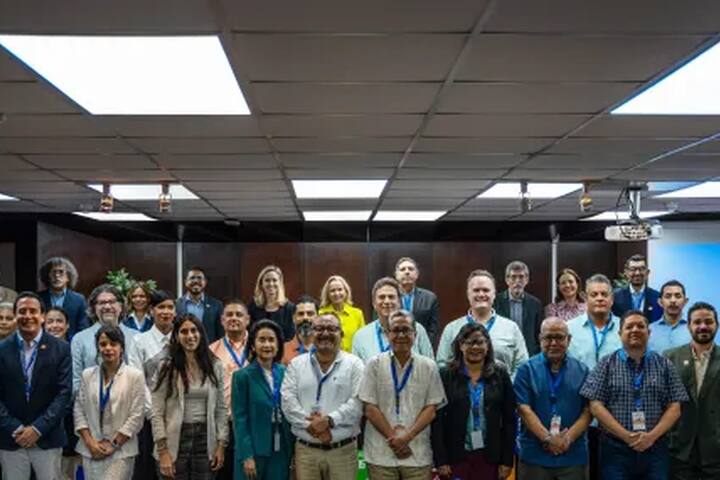
UNESCO's "new lines": what's really changing?
Behind the discussions, a number of basic lines emerge.
- – The first concerns the shift from a promotion approach to a management approach. The World Heritage is no longer seen as a tourist showcase, but as a space to be regulated.. Controlling traffic flows has become a central challenge, supported by tools for monitoring, assessing and anticipating visitor numbers.
- – The second major change is the emphasis placed on local communities. UNESCO insists on their effective integration into site governance and economic spin-offs. Heritage cannot be sustainable if it is perceived as a resource captured from the outside, with no tangible benefit for the territories that bear it. This approach goes beyond the principle of inclusion to become a criterion for the credibility of management systems.
- – Third structuring orientation: the operational integration of sustainability. Protecting ecosystems, adapting to climate change and managing tourism infrastructures are no longer declarations of intent. They are now part of concrete requirements, calling for clear, documented arbitration.
UNESCO also emphasizes local capacity-building, through training, heritage engineering and regional cooperation, in order to reduce the gaps between well-endowed sites and more fragile territories.

What these lines mean for Caribbean territories
For sites that have already been classified, these guidelines translate into higher standards. Conservation can no longer be dissociated from tourism management, and management authorities are called upon to demonstrate their ability to reconcile visitor numbers, site protection and social acceptability.
The message is just as clear for territories applying for or registered on the tentative lists: future registrations will have to be based on sound management projects, integrating social, environmental and economic dimensions from the outset.
This development can be a real challenge. It highlights the complex trade-offs between immediate economic needs and long-term preservation, between tourist appeal and quality of life for local residents. But it also opens up the prospect of heritage tourism models that are better adapted to island realities, less dependent on growth in visitor numbers alone, and more based on the control of usage.
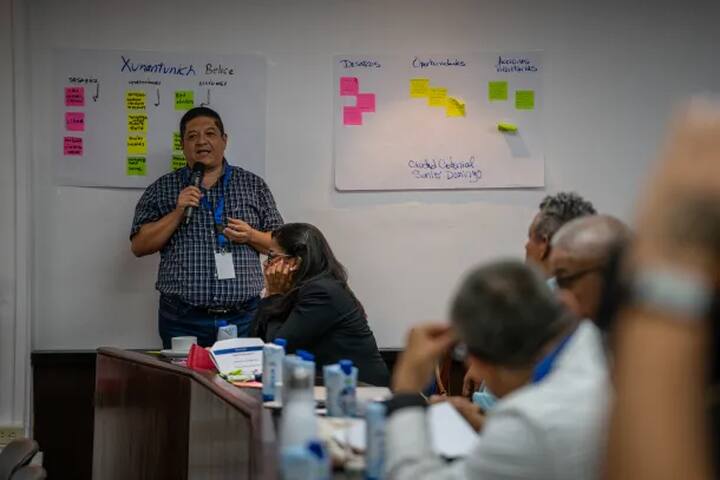
Figures that reinforce the urgency
The data presented at the workshop underline the scale of the challenges. Tourism accounts for almost 10% of the gross domestic product of Latin America and the Caribbean and supports more than 35 million jobs in the region. However, this rapid growth is not without consequences: around 40% of World Heritage sites now report pressure from tourism.
In Santo Domingo, for example, the number of international visitors to the historic center in 2024 was 30% up on the previous year. This trend is a concrete illustration of the tensions faced by heritage site managers, who are called upon to maintain the balance between attractiveness, conservation and urban functioning.

Towards a heritage conceived as a governance tool
The UNESCO-sponsored initiative also calls into question a tourism model that has long dominated the region. An over-exploited heritage, reduced to its image value, tends to be rapidly exhausted, to the detriment of the territories and their inhabitants. The guidelines discussed in Santo Domingo sketch out another path, that of a heritage conceived as a shared resource, to be managed and passed on rather than consumed.
The Santo Domingo meeting does not redefine world heritage; it redefines the responsibilities that go with it. For the Caribbean, these more demanding lines represent both a constraint and an opportunity.
They impose higher standards, but also offer a framework for reinforcing site governance, better controlling use and integrating heritage into sustainable territorial strategies. In the long term, World Heritage could thus become more than just a label of excellence in the Caribbean, but a veritable steering tool at the service of territories.
She observes a rapid intensification of tourist flows in the region, combined with increased vulnerability of ecosystems and historic centers. These developments are putting existing management models under strain. By reinforcing its guidelines, UNESCO seeks to remind us that World Heritage status implies lasting responsibilities in terms of governance, conservation and territorial balance.
It marks a clear shift from a promotional approach to a management approach. Controlling flows, integrating local communities and adapting to climate change become central criteria. Heritage is no longer seen simply as a lever for attractiveness, but as a space to be regulated and managed over the long term.
For sites already listed, these guidelines imply a higher level of requirement in terms of planning and governance. For candidate territories, they make future registrations conditional on the existence of solid, credible management projects. Ultimately, these guidelines may encourage tourism models that are better adapted to island realities and more respectful of local populations.