
We’ve reached the halfway point of the series “Stories of Caribbean Cinema.” The first four episodes have spanned nearly three decades of cinema, from Cuba in the 1960s to productions from Martinique and Curaçao in the 1980s. This fifth installment moves into the 1990s with two films set in very different worlds. Euzhan Palcy’s *Siméon* delves into a Caribbean imagination where music, ghosts, and magical realism converge. Raoul Peck’s *The Man on the Quay* revisits François Duvalier’s dictatorship in Haiti through the eyes of a child.
You are now reading the fifth episode in a series of ten. Four episodes have already been published on Richès Karayib, and five more will follow in this series through 2025.
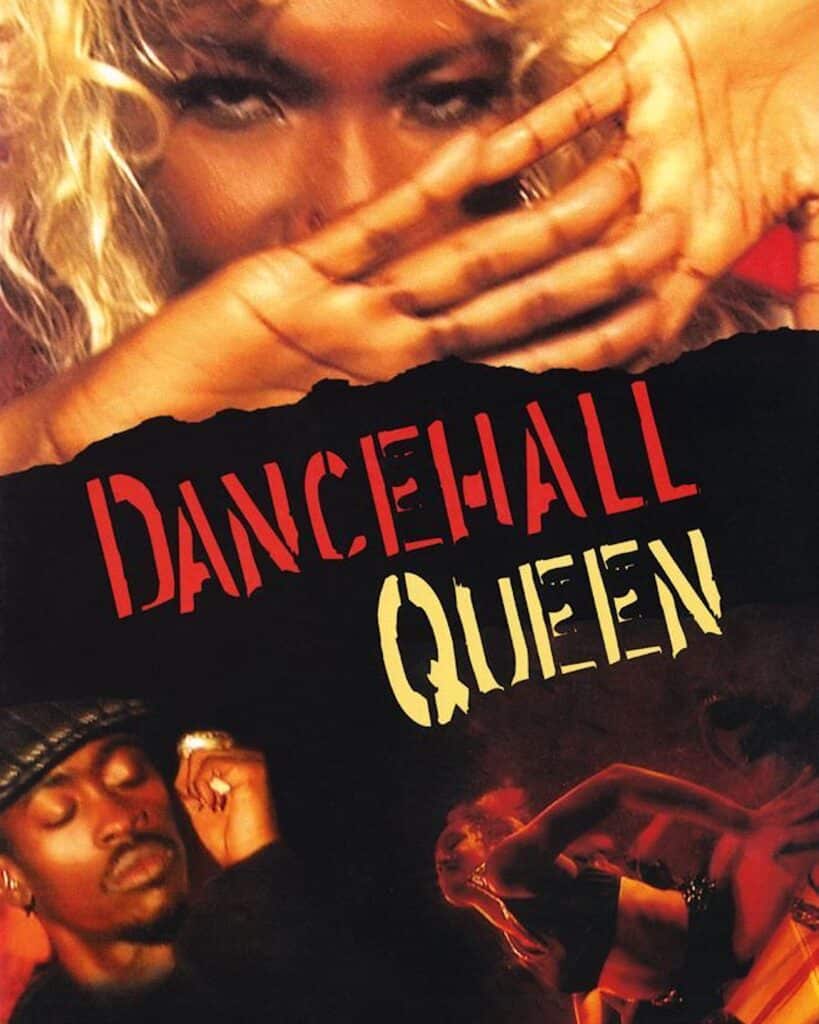
1997: JAMAICA - "DANCEHALL QUEEN" BY RICK ELGOOD & DON LETTS
Dancehall Queen is one of many Jamaican films that follow the formula established by *The Harder They Come* (Perry Henzell, 1972): Jamaican music (reggae or dancehall), known internationally; sexualized dance (as seen in the closing credits of Henzell’s film, with a close-up of a woman’s hips as she dances, like an invitation to what comes next); violence in the ghetto, and sporadic police interventions.
This is true of some major films in this genre, including *Rockers* (1978) by Greek director Theodoros Bafaloukos, considered by some to be the film that best captured the rebellious spirit of reggae and Rastafarian philosophy (a community presence that plays a central role in *Countryman* by Dickie Jobson in 1982), and which sparked a riot during its screening at the Cannes Film Festival in 1979; or, more recently, *Better Mus’Come* by Storm Saulter (2011), which takes on a more overtly political dimension by drawing inspiration from actual riots that occurred during an election period.
So, *Dancehall Queen* opens with a “music video”-style sequence featuring the famous Beenie Man, who plays a supporting role, singing—just as in the film’s final act, several performances take place on stage during a dance competition. However, one major difference stands out: the main character is a woman. Marcia is a street vendor who decides to enter a dance competition as a way to break free.
At the same time, one of his daughters is being hit on by her uncle Larry, who provides financial support to the family. When she tells her mother about this, her mother downplays her own brother’s behavior and points to her financial difficulties. As she gradually realizes the true nature of her brother Larry—who, in the meantime, has slept with his own niece—she manipulates one of his henchmen to turn against him.
The issue of violence against women is a recurring theme in English-language Caribbean cinema, particularly in the semi-professional productions of Mathurine Emmanuel (St. Lucia) and Anderson Quarless (Grenada), whereas this subject remains taboo in Guadeloupean and Martinican cinema, with a few rare exceptions. The directness with which the issue of rape—and, more specifically, incest—is addressed sets *Dancehall Queen*.
2000: MARTINIQUE - "PASSAGE DU MILIEU" BY GUY DESLAURIERS
To mark the turn of the 21st century, director Guy Deslauriers and his screenwriter Patrick Chamoiseau (winner of the 1992 Prix Goncourt for his famous novel Texaco) invite us to relive the Atlantic crossing aboard a slave ship, which during the era of slavery was known as the “ Middle Passage ” (meaning the “Middle Passage”), as a necessary act of remembrance.
Three-quarters of the film takes place in the hold, among the slaves torn from Africa. Several flashbacks “take us back” to that continent—to the villages, rivers, and vast plains—all accompanied by the voice-over of an anonymous slave whose face constantly changes (often looking directly at the camera) throughout the film, as if he were representing each and every one of them.
This lost Africa is, quite clearly, embodied by a woman who stares directly into our eyes—the eyes of the audience—while the voice-over says: “Woman, you are the earth, violated twice. You are the mother from whom her children are snatched. Of all our Africas, you are the most real. ” In the first feature film directed by Deslauriers and Chamoiseau, *The Exile of King Béhanzin* (1996), the film depicted the imprisonment (a historically verified event) of King Ahydjéré of the Kingdom of Dahomey (present-day Benin), in Martinique, following his defeat at the hands of Alfred Dodds’ French troops: a way for Caribbean cinema to reestablish a connection with the “Pays d’avant” (the “Land of Before”), to borrow an expression from the poet and philosopher Édouard Glissant.
A few years after *Amistad* by Steven Spielberg (1997), *Passage du milieu* was widely acclaimed for its meticulous portrayal of this chapter of colonial history. As a result, it won an award at the renowned Sundance Film Festival and was broadcast and later released on DVD by HBO in the United States.

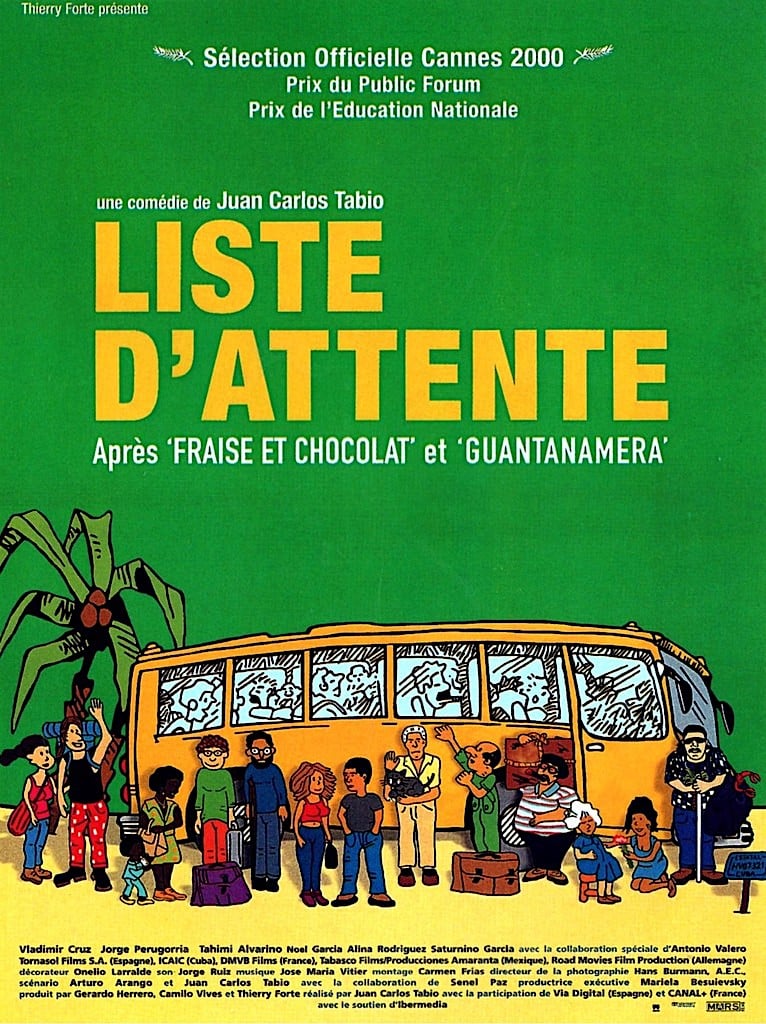
2000: CUBA – WAITING LIST (LISTA DE ESPERA), BY JUAN CARLOS TABÍO
A close friend of Tomás Gutiérrez Alea, Juan Carlos Tabío co-directed with him the last two films by the famous director, known in Cuba as “El Titón” (“The Titan”), namely Strawberry and Chocolate / Fresa y Chocolate (1993) and Guantanamera (1995). The first is a comedy about the lives of gay people and the state’s control over them in Cuba, based on a screenplay co–written by Senel Paz, an author who has frequently addressed the place of homosexuality in Cuban society in his various writings, and who was honored with an Oscar nomination for Best Foreign Language Film—a first for a Cuban film.
The second is a fast-paced, offbeat road movie that, like *Strawberry and Chocolate*, does not shy away from casting a critical eye on the Cuban regime and stands as Alea’s true cinematic testament. As for Juan Carlos Tabío, this is by no means his first attempt, since his debut feature film, *Se permuta*, dates back to 1985. In the satirical vein of Alea’s films, Waiting List follows the journey of a group of characters waiting for a bus—sometimes bound for Havana, sometimes for Santiago—at an isolated bus stop.
Between the buses that never show up and those that are so worn out they break down, the station manager repairs a battered bus himself in the absence of spare parts—parts that cannot come from either the communist regime of the former USSR, which has collapsed, nor from the United States, which has imposed an economic embargo on the island—waiting passengers will have to learn to live together and overcome all the current difficulties, including finding food…
In addition to being a film that offers a critical view of Cuba, this bittersweet comedy with multiple plot twists, carried by an exceptional cast that highlights the immense professionalism of Cuban cinema, is a subtle reflection on the difficulty of overcoming individualism and coming together as one—that is, of functioning in a communist manner. The final section, blurring the lines between dream and reality, establishes a beautiful political utopia with infectious cheerfulness. A pinnacle of Cuban cultural refinement.
About the Author
Guillaume Robillard holds a Ph.D. in film studies; he is a professor and researcher, a documentary filmmaker, and a specialist in Caribbean cinema and artistic production. He is the author of two books: *Conquest of Space and Time: Caribbean Cinema (Éditions Jannink, “Hypothèses d’Art,” 2023) and Decolonial Cinema: Characters in Caribbean Cinema (Presses Universitaires des Antilles, “Arts et Esthétique,” 2024).
The release of *Magma*, a film by French director Cyprien Vial heavily inspired by the 1976 eruption of La Soufrière, which raised fears that the capital city of Basse-Terre (Guadeloupe) would be destroyed, followed by two films directed by Guadeloupeans: *Fanon* (Jean-Claude Barny), about the famous anti-colonialist intellectual during his time in Algeria, and *Zion*, in less than a month, succeeded in drawing the attention of the French media (Le Monde, Libération, etc.) to the potential of Caribbean cinema and, more broadly, of films dealing with the French overseas territories.
"Stories of Caribbean Cinema" series. Episode 5/10 is already available on Richès Karayib. Stay tuned for Episode 7/10 coming soon.
Founded on April 22, 1819, on the southern coast of Cuba, Cienfuegos was established as part of a Spanish project by settlers from France and Louisiana. Its downtown area, laid out in 25 regular blocks, has been a UNESCO World Heritage Site since 2005. This is the story of a city laid out with a ruler, and of a founder who took more than a century to come home.
Louis de Clouet died in Spain in 1848. His remains arrived in Cienfuegos on August 3, 1958. They were not finally laid to rest until April 22, 2009, the anniversary of the city’s founding, at the Tomás Acea Cemetery, according to the local heritage blog Cienfuegos Patrimonio. Even his place of birth remains a matter of debate.ICOMOS, the organization responsible for evaluating the site on behalf of UNESCO, states that he was born in Louisiana. The same blog claims he was born in Bordeaux. This uncertainty between the two sides of the Atlantic sums up the city: a Spanish settlement populated in part by French people.

Fernandina de Jagua: A Royal Gamble on the Bay
It all began with a policy. According to the Cienfuegos archives, a royal decree dated October 21, 1817, aimed to increase the island’s white population. In the Bordeaux Gazette, journalist Bernard Lamarque refers to a royal desire to “whiten” the population of the Spanish territories in the Caribbean.
Clouet seized the opportunity. In January 1819, he presented his plan to the Captain General of Cuba, José Cienfuegos, who supported and financed it. The plan was formalized on March 8. Clouet arrived at the bay with 46 settlers from Bordeaux and New Orleans, who initially took shelter in tents and indigenous huts near the Saladito River. ICOMOS adds that there were also settlers from Philadelphia and Guarico.

On April 22, 1819, Clouet chose the Majagua Peninsula as the site for the city. Promoted to brigadier, he later entrusted the governance of the colony to his son. The colony was named Fernandina de Jagua, in honor of King Ferdinand VII. “Jagua” takes its name from the indigenous name of the region. In 1823, Clouet proposed naming the city after the general. The king declared it the “villa de Cienfuegos” on May 20, 1829.
A 25-block grid in the heart of Cienfuegos
The plan is the city’s true signature. According to this blog, Clouet entrusted the design to a naval officer, Félix Bouyón. Twenty-five blocks make up the original city center, laid out in a grid of “absolute geometric regularity,” writes UNESCO, which sees the influence of the Spanish Enlightenment in this design.

Four streets mark its boundaries: Santa Elena to the north, Santa Clara to the south, Velazco to the west, and Hourruitiner to the east. In 1830, the Plaza de Armas expanded by one block to the west, reaching two hectares, and was reserved for public and administrative activities. ICOMOS also mentions the Governor’s Palace, the San Lorenzo School, the Bishop’s Residence, and the Ferrer Palace. For UNESCO, this grid layout is an early example of the urban planning concepts applied in Latin America during the 19th century. It embodies modernity, hygiene, and order.

Sugar, Tobacco, and Coffee: The City of Trade
The grid layout attracts trade, and the port does the rest. ICOMOS describes the city as a trading center for sugarcane, tobacco, and coffee. In the 1860s, it was the third-largest city in the country. Money also transformed the city’s architecture. The downtown area features 6 buildings from the first half of the 19th century and 327 from the second half. The city was thus built primarily after its wealth arrived, following a plan established from the very beginning.

Why UNESCO designated Cienfuegos as a World Heritage Site in 2005
The Historic Urban Center was inscribed in 2005 under criteria (ii) and (iv). It covers 70 hectares, with a 105-hectare buffer zone along the harbor. UNESCO highlights the Cathedral of the Purísima Concepción, the Tomás Terry Theater, the Spanish Casino, the Casa de los Leones, and the Customs House. The city was thus added to Cuba’s World Heritage List for its overall urban design rather than for any single monument.

The French legacy is still evident in the names. The Senior Reporters of the city of Bordeaux note surnames such as Lafitte, Rey, Salaberry, Lagrave, Rives, and Pujol. In Bordeaux, a Bordeaux-Cienfuegos association has existed since 2017, and a promenade named after the Cuban city was inaugurated in November 2024.

One question remains that the sources do not resolve, and which gives this story a sense of incompleteness. How many settlers arrived in 1819, and where exactly did they come from? The figures vary from one source to another, and the archives still have more to reveal.

Frequently Asked Questions About Cienfuegos
Cienfuegos was founded on April 22, 1819, by Louis de Clouet, a colonel in the service of Spain, along with settlers of French origin. According to ICOMOS, he was a native of Louisiana. The colony was then called Fernandina de Jagua.
Because its historic center, inscribed in 2005 under criteria (ii) and (iv), is an early example of Enlightenment urban planning in Latin America. Its layout consists of 25 blocks of absolute geometric regularity and, according to UNESCO, embodies modernity, hygiene, and order.
It is named after General José Cienfuegos, Cuba’s captain general, who supported colonization. Clouet proposed the name in 1823, and the king declared Cienfuegos a town on May 20, 1829.
Cuban ajiaco is a stew made with meat and root vegetables (malanga, yuca, boniato, plátano, corn), whose name comes from “ají,” the Taíno word for chili pepper. It originally referred to a sauce, before becoming a dish, and then the image that anthropologist Fernando Ortiz used to describe Cuba in 1939. This article explores its history, ingredients, and significance.
In 1939, at the University of Havana, anthropologist Fernando Ortiz compared Cuba to a pot of ajiaco. The phrase has remained famous. But the history of Cuban ajiaco begins long before him, and the word itself did not always refer to a stew.
It all started with a chili sauce
The word “ajiaco” is derived from “ají,” meaning chili pepper, a term of Taíno origin. Before the arrival of the Spanish, the Taínos of Cuba would dip their casabe—a cassava bread—into water flavored with chili peppers. The dictionary of the Real Academia Española still reflects this etymology, as “ajiaco” is still defined there as a chili pepper sauce. Fernando Ortiz considered this ajiaco to be one of the Taíno people’s staple dishes, prepared with local roots.
At the Chorro de Maíta site in Holguín Province, archaeologists have uncovered the remains of mollusks, crabs, and jutías, a rodent native to the island. The Taíno diet consisted of malanga, yuca, boniato, corn, and these small animals.

When Spanish cocido meets the island
The Spaniards brought cattle, pigs, and salted meat to Cuba. In the Taíno stew, they found a dish that resembled their own. Food historian Maricel Presilla believes they would have recognized it as their own olla podrida, a stew of meat and vegetables, despite the very different ingredients.
This fusion gave rise to Cuban ajiaco, a blend of Spanish cocido—the peninsula’s traditional stew—and the island’s meats and root vegetables. In the nineteenth century, the pot still contained chickpeas, an ingredient brought over from Spain.

What goes into a Cuban ajiaco
There is no set recipe for Cuban ajiaco. It includes meats such as pork, chicken, beef, and tasajo, which is salted and dried beef. It also includes “viandas”—the roots and bananas that Cubans call by this name, such as malanga, ñame, yuca (cassava), boniato (sweet potato), and plátano (plantain)—not to mention calabaza (squash) and corn. Garlic, onion, and ají provide the flavor.
The stew simmers for a long time in a wide-mouthed earthenware pot. Some tubers break down and thicken the broth, while others retain their shape. The recipe varies from region to region, as evidenced by the ajiaco santiaguero, which is unique to Santiago de Cuba. Tasajo and viandas also have a history of their own. They were among the staple foods imposed on enslaved people in Cuba, who also grew their own vegetables in small gardens called conucos. A single pot thus brings together what the Cuban land provided, what Spain brought, and what the plantation distributed.

The Day the Chickpeas Came Out of the Ajiaco
According to a saying attributed to Nitza Villapol, the famous host of the show *Cocina al Minuto*, Cuban cuisine began when chickpeas were removed from ajiaco. The exact date of this change remains unknown. Yet the gesture speaks volumes. A Spanish ingredient is removed from the pot, and ajiaco becomes a stew made with local root vegetables, meats, and corn.
1939: Fernando Ortiz Turns a Pot into a Country
In his essay “Los factores humanos de la cubanidad,” published in 1940 in the *Revista Bimestre Cubana*, Fernando Ortiz (1881–1969) describes ajiaco as Cuba’s most typical and complex stew. This is the origin of the phrase “Cuba es un ajiaco.” For him, Cuban culture is a blend of very diverse origins, constantly simmering, intermingling, and transforming. What matters, he says in essence, is not so much the result as the process that creates it. In Cuba, no one has roots in the strict sense, he adds, since everyone has been displaced or transplanted, including the island’s original inhabitants.
This image is part of his reflection on transculturation, the concept he proposes as a replacement for acculturation. In 1912, a column in the *Diario de la Marina* saw *arroz con frijoles*—rice and beans made with “blancos” and “negros,” a very typical Cuban dish—as a symbol of this process. Yet it was Ortiz’s ajiaco that prevailed. The image has its limitations, as it can obscure differences. Ortiz was aware of this and noted that newcomers are constantly adding their own ingredients.
A word that also means "mess"
In everyday Cuban speech, “ajiaco” also refers to confusion or disorder. The expression “estar en el ajiaco” means to be in the thick of things. The word is used elsewhere in Latin America as well. Colombian ajiaco, for example, is a thick soup made with potatoes, chicken, and tender corn, flavored with guasca—a dish distinct from Cuban ajiaco.


In Miami, the Story of Grandpa Julián
Cuban ajiaco travels with the diaspora. Writer Ana Sofía Peláez recounts that her grandfather Julián, in Miami, would ask at every Cuban restaurant if they were serving ajiaco that day. In 2026, eighty-seven years after Fernando Ortiz’s lecture, the question still arises around the pot. What goes into today’s Cuban ajiaco, in Havana as well as in Miami, and who decides what goes into it?

Frequently Asked Questions
Cuban ajiaco is a stew made with meat and root vegetables that is cooked for a long time in a large pot. It typically combines pork, chicken, beef, or tasajo with root vegetables such as malanga, yuca, boniato, plátano, calabaza, and corn. Anthropologist Fernando Ortiz held it up as a symbol of Cuban culture during a lecture at the University of Havana in 1939.
The word “ajiaco” is derived from “ají,” meaning chili pepper, a word of Taíno origin. It originally referred to a chili pepper sauce—a meaning still listed in the dictionary of the Real Academia Española—before coming to refer to the stew known in Cuba.
“Cuba es un ajiaco” means that Cuban culture is a blend of very diverse origins, constantly evolving, like the ingredients in a simmering stew. The phrase was coined by anthropologist Fernando Ortiz in his 1939 lecture “Los factores humanos de la cubanidad,” published in 1940 in the Revista Bimestre Cubana.
In May 1977, a Cuban dancer took the stage in New York with the Alvin Ailey Dance Theater. In the audience that evening, actor Harry Belafonte watched the performance and would later describe the evening as a significant historical event. This dancer’s name was María Elena Llorente, prima ballerina and ballet mistress of the Ballet Nacional de Cuba. Her career spans fifty years of dance, spent almost entirely with a single company—the one founded by Alicia Alonso in Havana—on an island where, over the decades, classical ballet has become as much a source of national pride as it is an art form.
María Elena Llorente, of the Sociedad Pro-Arte at the National Academy
It all began at the Sociedad Pro-Arte Musical, a school in Havana where young Cuban women learned the basics of classical ballet even before the official founding of the national ballet company. María Elena Llorente then continued her training at the National Ballet Academy under the direction of Alicia Alonso herself, alongside Fernando Alonso, Marta Mahr, Alexandra Fedórova, and José Parés.
This generation of teachers shaped a distinctive Cuban style—both technical and theatrical—that would become the international hallmark of the Ballet Nacional de Cuba. From this school, María Elena Llorente gained technical confidence, stylistic refinement, and an elegance of performance that Cuban critics would recognize throughout her career.
From 1962 to 1976, María Elena Llorente became a prima ballerina
María Elena Llorente joined the corps de ballet in 1962. Five years later, in 1967, she was promoted to soloist, an intermediate rank that allowed her to perform solo variations but did not yet include the major title roles. It would take her another nine years of daily performances before she reached, in 1976, the rank of primera bailarina, the highest position in the hierarchy of the company founded by Alicia Alonso. This slow progression—fourteen years between joining the company and achieving recognition—reflects the demanding nature of the Cuban school, where rank is never granted prematurely but is earned through performance, night after night.
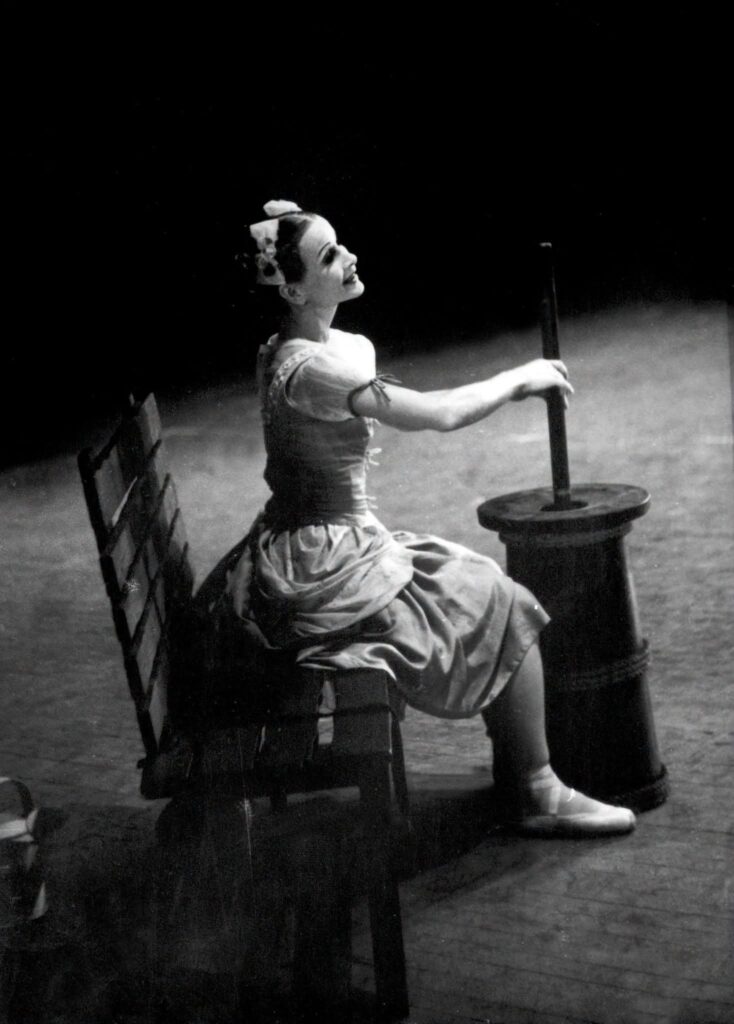
Ofélia, the role that only María Elena Llorente has ever danced
María Elena Llorente’s repertoire includes the great classics: Lisette in *La fille mal gardée*, where she established herself as a leading figure in Cuban ballet; Giselle and Myrtha in *Giselle*; Odette-Odile in *Swan Lake*; Kitri in “Don Quixote,” Aurora and Florina in “Sleeping Beauty,” and Esperanza in “Afternoon of a Faun.” But one role remains inextricably linked to her name alone: Ophelia in the full-length production of “Hamlet” staged by the Ballet Nacional de Cuba.
No other dancer in the company has taken on this female title role since then—a rare occurrence in a repertoire where major classical roles are typically passed down through several generations of ballerinas. The 1977 New York performance with the Alvin Ailey Dance Theater confirmed a level of recognition that extended beyond the island’s borders, at a time when a Cuban tour of the United States was by no means a given. Her career also earned her the bronze medal at the fourth International Ballet Competition in Varna, Bulgaria—one of the most demanding classical dance competitions of her time—followed by the Alejo Carpentier Medal and the Félix Varela Order, First Class.

María Elena Llorente: Passing on the Repertoire After Her Stage Career
María Elena Llorente danced her final performance on October 28, 2002, in “Souvenir.” She did not leave the Cuban National Ballet. Instead, she became a teacher and rehearsal director, tasked with passing on to younger dancers the roles she had performed over four decades, correcting on stage the details of an arm position or a dramatic nuance that only the stage can truly teach.
Her work as an educator took her to the Cuban National Ballet School and then to Spain, where she taught classes in the Valencian Community on behalf of the Alicia Alonso Chair, in turn spreading the legacy of the school that had trained her. In 2015, the Cuban government awarded her the National Dance Prize, a recognition of a long career spent entirely within a single company, from her entry into the corps de ballet to her patient transmission of the repertoire.
María Elena Llorente died on September 21, 2026, in Havana, at the age of 80. She leaves behind a repertoire that other dancers continue to perform on Cuban stages—the very same Havana where she had made her debut—and the memory of a New York evening when a Cuban role was enough to win over Harry Belafonte. What remains, on the stage in Havana, is the role of Ofélia, which has no successor, and the question of who, one day, will dare to take it on.

María Elena Llorente was a prima ballerina and ballet mistress with the Ballet Nacional de Cuba; she joined the company in 1962 and was promoted to the rank of prima ballerina in 1976. She died on September 21, 2026, in Havana, at the age of 80, after dedicating fifty years to that single company.
She played Lisette in “La fille mal gardée,” Giselle and Myrtha in “Giselle,” Odette-Odile in “Swan Lake,” Kitri in “Don Quixote,” and Aurora in “Sleeping Beauty.” She remains the only dancer with the Ballet Nacional de Cuba to have performed the role of Ophelia in the full-length version of “Hamlet.”
She received the Cuban National Dance Award in 2015, the bronze medal at the Fourth International Ballet Competition in Varna, Bulgaria, the Alejo Carpentier Medal, and the Félix Varela Order, First Class.
“Asere, ¿qué bolá?”, this Cuban street greeting, was already in common use in Havana’s working-class neighborhoods long before a U.S. president adopted it as well. On Saturday, March 19, 2016, on the eve of the first presidential trip to the island in nearly nine decades, Barack Obama appeared in a Cuban TV sketch alongside Pánfilo, a comedic character well known to viewers on the island, and delivered a “qué bolá” that no one expected to hear from a U.S. head of state.
The next day, upon setting foot in Havana, he did it again on Twitter: “¿Que bolá Cuba? Just touched down here.” In just a few hours, two words of Havana slang had bridged the gap between the street and the world of diplomacy.
What does “Asere, ¿qué bolá?” mean?
Taken literally, “asere” doesn’t really translate, and “qué bolá”—which comes from “bola,” meaning “ball”—doesn’t convey anything more literal than a vague “what’s up?” Together, the two words serve as a casual way to say hello among friends, the equivalent of “Hey, buddy, what’s up?” No translation truly captures the full meaning of the phrase. “Asere, ¿qué bolá?” belongs to that category of expressions that are understood primarily through context—the tone and situation in which they’re spoken.

"Asere, ¿qué bolá?": a greeting that dates back to West Africa
“Asere, ¿qué bolá?” did not originate on the modern street. Several linguists, including researcher Ivor L. Miller in a study published in 2005 in the journal *African Studies Review*, trace “asere” back to Efik, a language spoken in the Cross River region, between southeastern Nigeria and southwestern Cameroon. The word is believed to have made its way to Cuba with enslaved Africans who, in the 1830s, founded the Abakuá secret society in the Regla neighborhood of Havana. In this ritual context, “asere” serves as a greeting among initiates.
Other Cuban researchers lean more toward a Yoruba origin, linked to Santería, though no definitive consensus has been reached between the two hypotheses. What both versions have in common is an African root that is far older than the barroom slang to which the expression is sometimes reduced.


A word used by men, long considered vulgar
For decades, “Asere, ¿qué bolá?” was used mainly among men in Havana’s working-class neighborhoods. A woman who used it risked being labeled a “chusma,” a rather harsh way of saying “vulgar.” Language purists saw it as a sign of decline, a form of slang to be avoided in public. Cuban movies, TV shows, and telenovelas have changed the game, gradually weaving the expression into everyday scenes until it has become an almost commonplace greeting—recognized as a marker of Cuban identity rather than a linguistic flaw. In Havana, you’ll also come across neighborhood variations, such as “qué bola, consorte,” which you can still hear in La Habana Vieja.

When Cuba Heard Its Own Slang Coming from Washington
This cultural shift explains why Obama’s use of the word in March 2016 made such a strong impression. At the time, he was the first sitting U.S. president to visit Cuba since Calvin Coolidge in 1928. Using a word on Twitter—and then in person—that had long been considered too colloquial for an official setting was a public acknowledgment of Cuban urban culture rather than the more formal language typically expected in diplomatic exchanges. The Cuban and international press viewed the gesture as a calculated nod rather than an improvisation, and many Cubans saw it as a greeting that spoke directly to them, delivered unfiltered by a foreign leader.


A Cuban way of saying that we exist
“Asere, ¿qué bolá?” took nearly two centuries to make its way from the secrecy of the Abakuá societies to the streets of Havana, and then from the streets to the lips of a U.S. president. This journey illustrates, better than any long speech, how an expression born in the secrecy of an Afro-Cuban religious group can become the auditory calling card of an entire country. In Haiti, RK has already recounted how dèyè mòn, gen mòn conveys an entire philosophy in just a few words. In the Dominican Republic, ¿Qué lo que? plays a role similar to that of an oral signature. What other Caribbean expression, in turn, deserves to be deciphered?

“Asere, ¿qué bolá?” is a very common informal greeting in Cuba that has no exact literal translation but is equivalent to “Hey, what’s up?” among close friends.
Several linguists, including Ivor L. Miller in a 2005 study, trace “asere” back to Efik, a West African language, and to the Abakuá secret society founded by Africans in Regla, Havana, in the 1830s, although a competing hypothesis suggests a Yoruba origin.
Barack Obama tweeted “¿Que bolá Cuba? ” on Twitter on March 20, 2016, upon landing in Havana for the first visit by a sitting U.S. president since Calvin Coolidge in 1928, after having already used the phrase in a Cuban television sketch the day before.
The Series Stories of Caribbean Cinema continues its journey through several decades of filmmaking in the region. Following a first episode that began in the 1960s—from Cuba to the emergence of Jamaican cinema with *The Harder They Come*—this second installment takes us to Trinidad and Tobago, Cuba, and then Guadeloupe.
Amid social conflicts, the legacy of slavery, and political demands, three films demonstrate how Caribbean cinema took on history and power dynamics from the very beginning. This article is the second installment in a series of ten. The first installment is already available on Richès Karayib, and eight more episodes will continue this chronology through 2025.
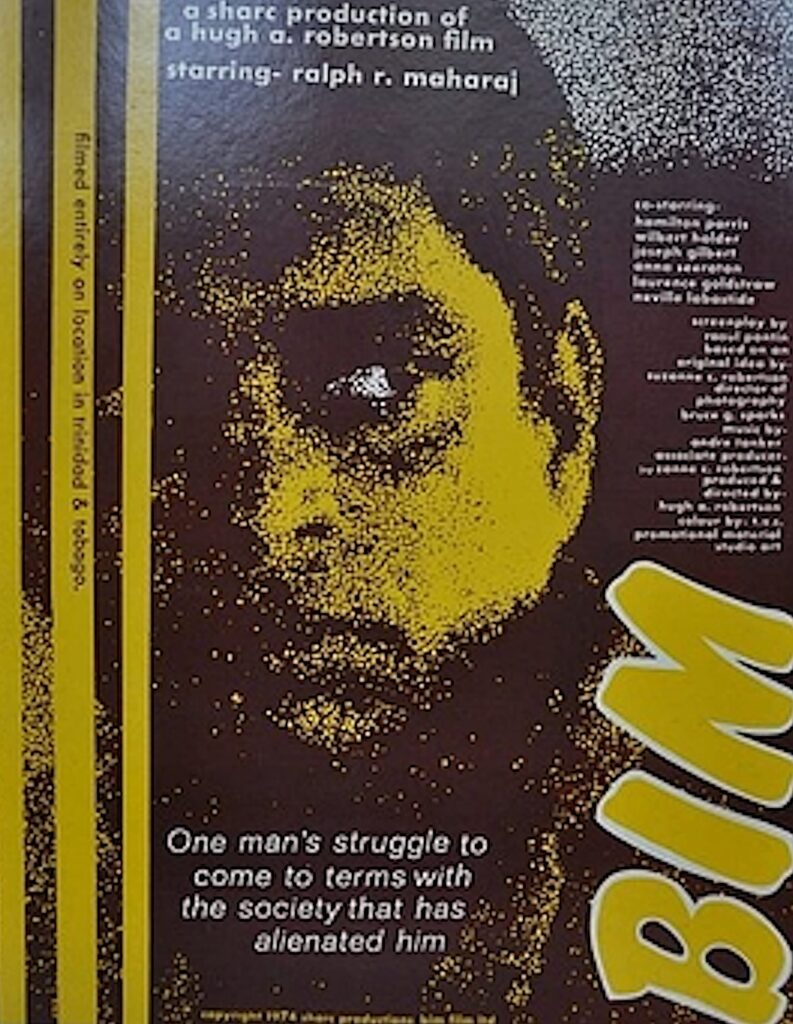
1974: TRINIDAD AND TOBAGO – BIM, BY HUGH A. ROBERTSON
Hugh A. Robertson has had an unconventional career path among Caribbean filmmakers. A New Yorker born to Jamaican parents, he got his start in the film industry at a very young age and held various positions, including that of editor on films such as the famous *Macadam Cowboy* (John Schlesinger, 1969), starring Dustin Hoffman and John Voight, and one of the classics of Blackploitation, *Shaft: The Red Nights of Harlem* (Gordon Parks, 1971), starring Richard Roundtree.
For his first film, he was nominated for an Oscar for Best Film Editing (a first for a Black person) and won the BAFTA that same year. After directing a few television projects and the feature film *Melinda* (1972)—a “Black Film,” as the poster put it—he moved to Trinidad and Tobago with his wife and children, where he directed Bim and then *Obeah* (1987), his second film, which was released upon the director’s death. Bim, modeled after the classic plot of a gangster movie, follows the life of a Trinidadian of Indian descent who, after enduring years of bullying from childhood onward, becomes a crime boss who eventually enters politics.
What stands out in this film is the direct nature of the interethnic conflicts, particularly between people of African and Indian descent (each group accounting for about 40 percent of the island’s population), ranging from the school setting to the political arena (where the white minority seems to be “pulling the strings”) and extending into marital life. Certain sequences have a strong ethnographic dimension: for example, the film opens with a traditional Hindu wedding.
While the latter is predominantly urban, much like *The Harder They Come* (Perry Henzell, 1972), Trinidad and Jamaica—which have major historic cities, Port-of-Spain and Kingston, respectively— work in the sugarcane fields—the historical foundation of most Caribbean societies—is highlighted in a plot set during the colonial era, amid the fervent independence movements of the 1950s and 1960s.
The strong political consciousness of this film echoes certain Trinidadian films that preceded it, such as *The Right and the Wrong* (1970) by Indian director Harbance Kumar, which depicts a revolt on a plantation at an unspecified time. Furthermore, Bim stands out for its energy and Ralph Maharaj’s impressive performance in the lead role. Given Robertson’s standing in the U.S. film industry, it’s not unreasonable to think that Brian De Palma might have seen his film, given Al Pacino’s brilliantly over-the-top performance in Scarface (1983) is so strongly reminiscent of Bim on several occasions.
1976: CUBA - THE LAST SUPPER (LA ÚLTIMA CENA), BY TOMÁS GUTIÉRREZ ALEA
This classic is a must-see film about the portrayal of slavery in the Caribbean, just as *Twelve Years a Slave* is for the southern United States, *Twelve Years a Slave* (Steve McQueen, 2013). Inspired by the novel *El Ingenio* (*The Plantation*) by Manuel Moreno Fraginals (which itself is based on true events), the plot of La Última Cena takes place on a slave plantation in Cuba in the 18th century, during Holy Week.
A wealthy landowner, a devout Catholic nobleman, decides to reenact the Last Supper around a lavishly set table, in the presence of twelve of his slaves. The group eats and drinks to their hearts’ content. The next day, the foreman wakes the slaves to send them to work in the sugarcane fields. A revolt breaks out…
In a film industry that, at first, rarely addressed the “Black Question” (to borrow the title of a book by the Trinidadian intellectual C.L.R. James), this film confronts the history of slavery—a reality shared by the vast majority of Caribbean countries—through a visual and auditory portrayal of rare precision regarding the “racialized” hierarchy specific to plantations: white and Black bodies do not occupy the same space (both literally and figuratively) nor do they have the same right to speak.
The banquet sequence (the famous reenactment of the Last Supper), which lasts nearly 45 minutes, displays great mastery both in terms of theater (dialogue and the actors’ performances) and cinema (technical editing, in which changes in camera angles reflect the power dynamics between characters). As for the final third of the film, it is one of the most beautifully staged depictions—through both camera movements and the framing of bodies and landscapes—of a slave revolt followed by a mass escape (the slaves’ flight from the plantation) ever made. A true masterpiece!

1979: GUADELOUPE - "COCO LA FLEUR," DIRECTED BY CHRISTIAN LARA
This film by the most prolific director from the French Antilles—who achieved the remarkable feat of directing nearly 25 films (even if it was sometimes under challenging technical conditions)—heralds the arrival of Antillean cinema. Two years earlier, in Martinique, the feature film *Dérives ou la femme-jardin* (1977), directed by Jean-Paul Césaire—one of the sons of the poet, politician, and champion of Négritude, Aimé Césaire—had not been given the chance for a commercial theatrical release.
Loosely based onAn Island in the Sun by Robert Rossen (1957), starring the famous Harry Belafonte, *Coco la Fleur, Candidate* is a political comedy that follows the journey of Coco, a so-called “apolitical” candidate controlled by technocrats from the prefecture, who decides during the campaign to take an interest in the future of his “country.” The demand—at the very least—for autonomy for Guadeloupe and Martinique is directly raised by the lead protagonist of this emerging cinema, who repeatedly takes on the role of the traditional Creole storyteller, a central figure in this body of films.
Furthermore, this film makes extensive use of the Creole language. It was a resounding success, drawing more than 100,000 viewers in Guadeloupe and Martinique, according to various sources, and remained in the lineup at the Louxor cinema in Paris for several years. An effective blend of lightheartedness and political activism that the director would brilliantly revisit in his third film, *Mamito* (1980), another classic of this cinematic tradition, whose main character is a Creole mother (a single mother raising her children on her own).
Played by the indispensable Lucrèce Saintol (who also plays Coco’s mother), who clearly illustrates the “feminocentricity” of Caribbean cinema—namely, the nearly systematic presence of strong women (fanm doubout) in this cinema. This significant presence of women was foreshadowed in *Dérives ou la femme-jardin*, a film loosely based on the short story Alléluia pour une femme-jardin by Haitian author René Depestre, featuring its enigmatic protagonist Isa.

About the Author
Guillaume Robillard holds a Ph.D. in film studies; he is a professor and researcher, a documentary filmmaker, and a specialist in Caribbean cinema and artistic production. He is the author of two books: *Conquest of Space and Time: Caribbean Cinema (Éditions Jannink, “Hypothèses d’Art,” 2023) and Decolonial Cinema: Characters in Caribbean Cinema (Presses Universitaires des Antilles, “Arts et Esthétique,” 2024).
"Stories of Caribbean Cinema" Series. Season 1, Episode 10 is already available on Richès Karayib. Stay tuned for Season 3, Episode 10 coming soon.
With this first episode, Richès Karayib launches a ten-part series dedicated to the history of Caribbean cinema, based on the work of Guillaume Robillard, a Ph.D. in film, professor and researcher, documentary filmmaker, and specialist in Caribbean cinema and artistic production. From Cuba to Jamaica, from Martinique to Curaçao, this chronology spans more than sixty years of filmmaking in the Caribbean.
This first installment takes us back to the 1960s and early 1970s, first to Cuba and then to Jamaica, where several films began to lay the groundwork for cinematic traditions deeply rooted in the social, cultural, and political realities of their respective regions. This article is the first in a series of ten, available on Richès Karayib.
Thus, the history of Caribbean cinema did not begin until the 1960s, even though films had been shot in the Caribbean since the early 20th century—notably two short films by the Lumière brothers in Martinique in 1902. In fact, it is common to make a clear distinction between films shot in the Caribbean and films made by filmmakers from the various islands of this archipelago.
As for productions from Jamaica, Trinidad and Tobago, and the Dominican Republic, they have shown a certain consistency punctuated by pleasant surprises, while in Haiti, a semi-professional production scene was long prolific and enjoyed a large audience.
On the other hand, a few smaller countries produce films only sporadically (Saint Lucia, Grenada) or rarely (Barbados, Puerto Rico) produce films whose themes overlap with those of other regional cinemas, reflecting a shared “Caribbean spirit” despite the evident diversity of these productions.
As for “Caribbean cinema” specifically from Guadeloupe and Martinique it now comprises some forty films, most of whose plots are set on these two islands. Finally, it should be noted that this timeline focuses on the insular Caribbean, and thus does not include films from the mainland, such as those from French Guiana or Mexico. It’s worth noting that most Caribbean films are available on free or paid streaming platforms for everyone to enjoy.
1964: CUBA - "Cumbite", by Tomás Gutiérrez Alea
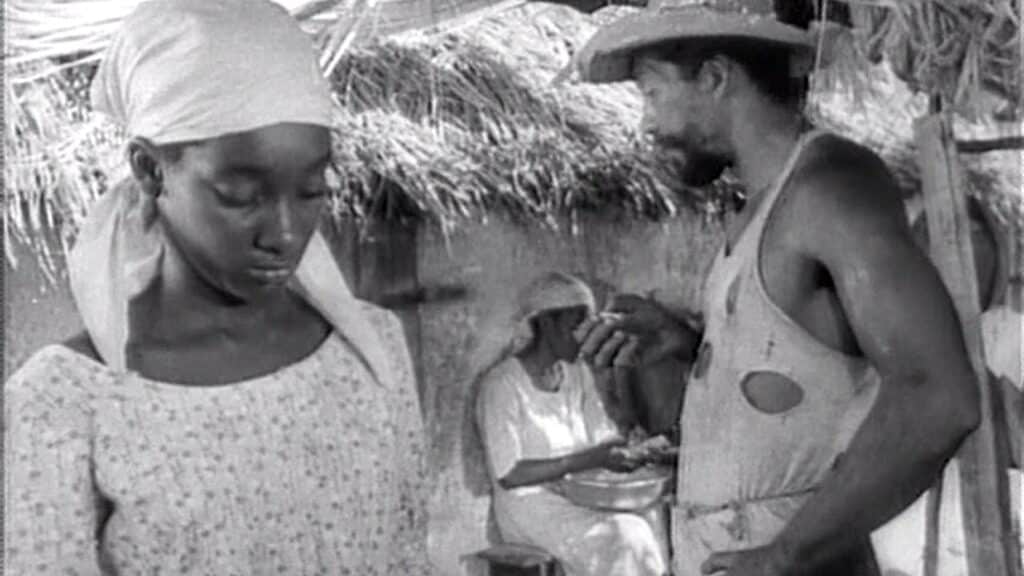
The third feature film by the renowned Cuban director Tomás Gutiérrez Alea, one of the co-founders of the ICAIC (Instituto Cubano del Arte y la Industria Cinematográficos), the renowned Cuban film school that has trained generations of Latin American professionals, is an adaptation of one of the classics of Haitian literature, “Gouverneurs de la rosée” by Jacques Roumain. After leaving for the island of Cuba, where he worked in the sugarcane fields, the protagonist, Manuel, returns to his small rural village in Haiti, which is suffering from a drought.
The hero then sets out in search of water and finds a hidden spring. He will only succeed in the mission he has set for himself, a mission that will cost him his life without his beloved Annaïse and his mother Délira. Thanks to them, the villagers come to realize the need to come together as a community through “coumbite,” a Creole word meaning collective work based on mutual aid, and bring water to the village. Addressing the issue of rampant deforestation, which has left a deep mark on Haitian history, the book has a strong ecological dimension that is generously reflected in its film adaptation.
A worthy heir to Italian neorealism (the director studied film in Italy), this film oscillates between grand visual classicism (composition of light and framing, photogenic portraits, fluid editing) and cinéma du réel, particularly in a striking voodoo sequence (an African religion still practiced in Haiti) that rivals the famous documentary “Divine Horsemen” by the Russian filmmaker Maya Deren (shot between 1947 and 1951), which is considered a seminal work on the subject. Last but not least, “Cumbite” is one of the very first and exceptionally beautiful adaptations of a work from Caribbean literature.
1966: CUBA – THE DEATH OF A BUREAUCRAT (LA MUERTE DE UN BUROCRATA), BY TOMÁS GUTIÉRREZ ALEA
At the very beginning of the film, we witness the funeral of a man who is buried with his worker’s ID card to honor his commitment to the working class. However, this card turns out to be an essential document for his widow if she is to receive a pension. Needing to recover this precious item but unable to have the body exhumed, a nephew of the deceased goes so far as to illegally dig up his uncle’s grave, triggering a cascade of administrative dead ends…
This film, influenced by 1960s Italian comedy, captivates with its formal freedom (including the use of photographs and time-lapse editing, among other techniques), which is rare in Caribbean cinema. Furthermore, it exhibits strong intertextuality with a group of filmmakers, credited in the opening credits (typed on a typewriter onto a piece of official paperwork, in keeping with the film’s subject matter): a montage of various archival footage to depict the life of the deceased (echoing *Citizen Kane* by Orson Welles), and stop-motion animation featuring a “human shredder” machine (a nod to Modern Times by Charlie Chaplin), and a dream sequence referencing *Un Chien Andalou* by Luis Buñuel, etc.
This interplay of references, a sign of a deep knowledge of cinema, does not, however, make it a European or American film. Indeed, deeply rooted in Cuban society, the plot explores how a regime (in this case, Fidel Castro’s) can itself become an “absurd” bureaucracy despite its stated intention to do away with bureaucracy (“Muerte a la burocracia,” as stated several times in the film).
Furthermore, the Native American heritage of the protagonist, who faces the wrath of the administration, the majority of whose representatives are of European descent, may subtly suggest a “racialized” Cuban social hierarchy. This critical examination of the limitations of a regime or, more broadly, of the exercise of power is continued in the equally famous *Memoirs of Underdevelopment* (1968), the director’s next film, which takes a more overtly political stance and was honored with a screening at Cannes Classics in 2016.

1972: JAMAICA – "THE HARDER THEY COME", BY PERRY HENZELL
This film marks the beginning of Jamaican cinema and would establish a “formula” that has since been widely emulated: a focus on Jamaican music primarily reggae, whose international fame is well established as seen through the journey of the young singer Ivan (played by the famous Jimmy Cliff) in search of a producer, but also of Jamaican Creole (a mixed form of English with a distinctive accent and phrasing) as a Caribbean “linguistic anchor,” and, finally, the figure of the rebellious hero standing up against a “system” deemed unjust or repressive.
The potential of the urban landscape (in this case, Kingston) is also highlighted: the film’s opening features some of the most beautiful images capturing the city’s energy at that time, paired with stunning portraits. Furthermore, the “baroque” and “fragmented” architecture of the impoverished neighborhoods is given extensive screen time. Against the backdrop of religion’s heavy influence, a love story unfolds, marked by flirtation and a bit of nudity.
Confrontations with law enforcement, particularly through gunfights and prison scenes, are also featured, including a notable sequence of physical punishment. All of these elements with the exception of the figure of the rebel (or resistance fighter), were virtually absent from French Caribbean cinema (for example) for nearly thirty years, with a few exceptions. While being chased by a police officer on a motorcycle, the protagonist shoots at the officer as an act of defiance against the established order: a multi-stage chase ensues, ending in the mangrove swamps and culminating on a beach where he attempts to reach Cuba (an island considered revolutionary) by boarding a boat.
On the city’s walls, you can see graffiti that says things like ” I was here but I disappeared ” (“I was here but I disappeared”), all of which evoke the image of a maroon (a slave fleeing the plantation) “modern” maroon who stands in opposition to a society where the wealthy (producers, for example) and those in authority (police commissioners) are subtly mixed-race or white, while the impoverished Black population yearns for comfort (“ You can get it if you really want it; you’ll succeed in the end / “You can have it if you really want it; you’ll finally succeed,” says a song from the movie as Ivan drives down a golf course in a stolen luxury car: a “racialized” social hierarchy that strangely echoes the colonial past.

About the author:
Guillaume Robillard holds a Ph.D. in film studies; he is a professor and researcher, a documentary filmmaker, and a specialist in Caribbean cinema and artistic production. He is the author of two books: *Conquest of Space and Time: Caribbean Cinema (Éditions Jannink, “Hypothèses d’Art,” 2023) and Decolonial Cinema: Characters in Caribbean Cinema (Presses Universitaires des Antilles, “Arts et Esthétique,” 2024).
"Stories of Caribbean Cinema" series. Coming soon: S2/10.
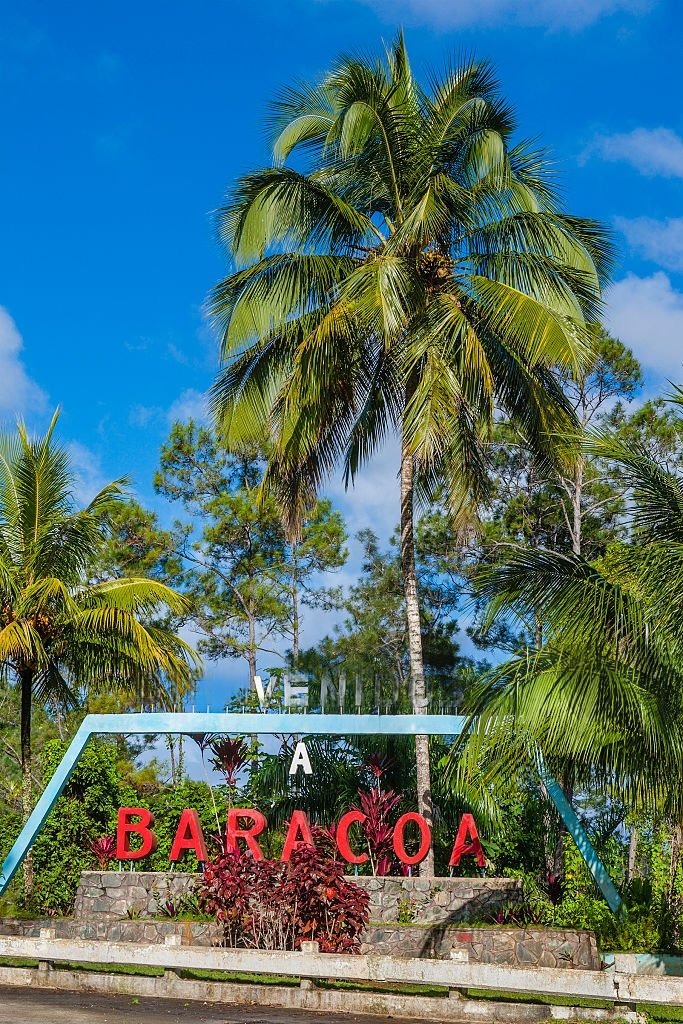
Founded in 1511, Baracoa was Cuba’s first colonial city. Yet it wasn’t until December 1965 that it gained a modern road connection to the rest of the country. The 454 years between these two dates tell the story of a geography that protected, slowed, and profoundly shaped the identity of the “Ciudad Primada.”
A road suspended between the mountain and the precipice
On La Farola, the drive never feels like just an entry into the city. The road clings to the slopes of the Sagua-Baracoa mountain range, winds through a series of curves, and overlooks valleys covered in vegetation. For drivers, every turn serves as a reminder of the same fact: reaching Baracoa by land was long a challenge.
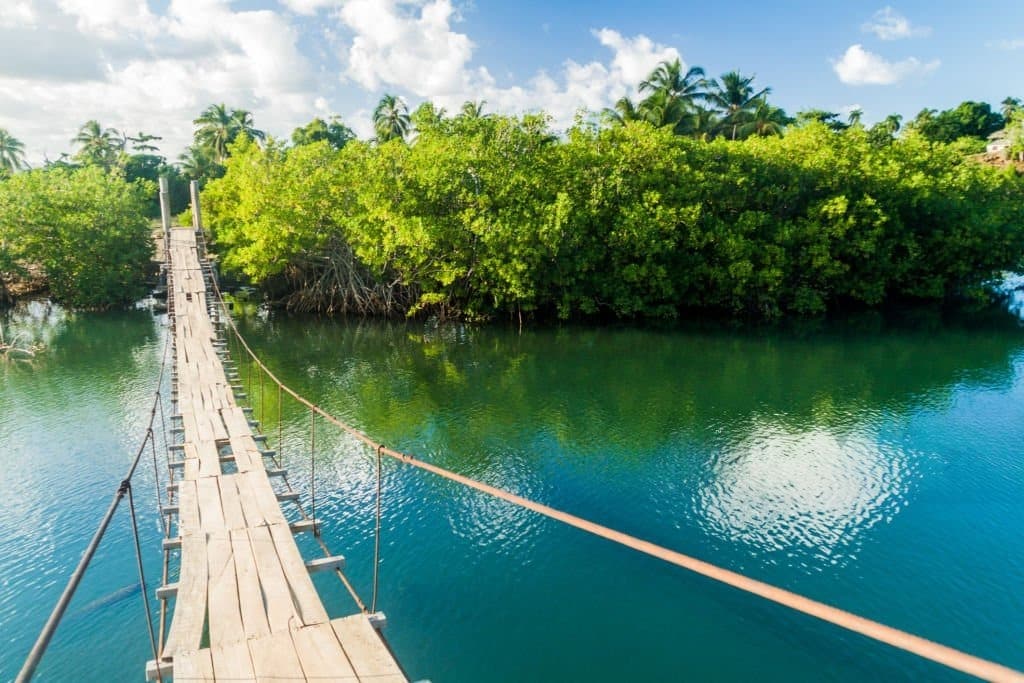
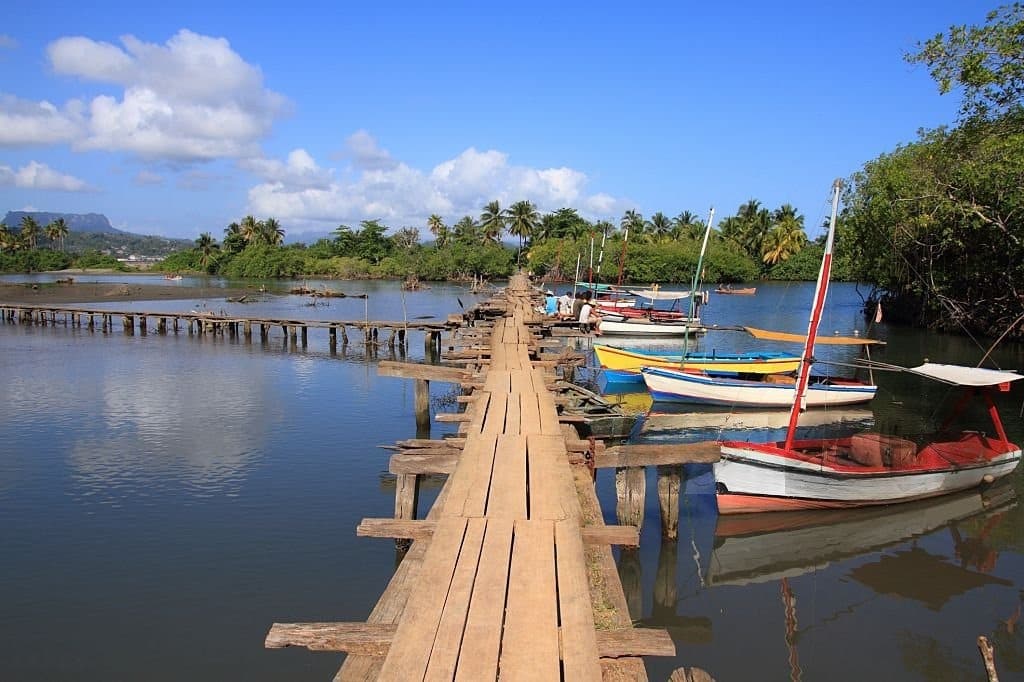
The city is located at the eastern tip of Cuba, between the Atlantic Ocean and a mountainous range that is difficult to cross. This location has given it spectacular scenery, but it has also limited overland travel for centuries. Baracoa was not cut off from the world: the sea, trails, and local trade maintained connections. However, it lacked a continuous road network comparable to those in the rest of the island.
1511: Cuba's first city
Diego Velázquez founded Nuestra Señora de la Asunción de Baracoa in 1511. Official Cuban sources describe it as Cuba’s first town, first capital, and first episcopal see. It also retains its original location, another unique feature among the island’s earliest Spanish settlements.
This status might have led one to imagine a city that would quickly become a hub of national trade. History took a different turn. After colonial power shifted to other cities, Baracoa remained isolated behind its mountains. Its coastal presence remained essential, while its hinterland developed its own agricultural, dietary, and cultural practices.
This relative isolation helped, in particular, to strengthen the role of cacao and coconut in the local economy. Even today, these crops are closely associated with Baracoa, right down to its recipes and rural landscapes.

36 kilometers built in 20 months
The transition began in April 1964. Construction on the La Farola Viaduct began to create a road through the mountain range. The project spanned 36 kilometers and was completed in December 1965, after twenty months of work. Construction crews are facing steep slopes, ravines, heavy rains, and landslides. Some operations are carried out on steep slopes, with limited space for heavy equipment. The challenge, therefore, is not just to build a road, but to maintain a stable course through a wet and rugged mountain.
In 1997, La Farola was named one of the seven wonders of Cuban civil engineering. This recognition captures its technical significance, but not its full human significance. The road finally established a regular land connection between Baracoa, Guantánamo, and the rest of the country. It facilitates the movement of people, goods, and services, without negating the constraints of the terrain.


Biodiversity that also explains isolation
The mountains surrounding Baracoa are not merely an obstacle. They are part of one of the most remarkable natural areas in the Caribbean. The Cuchillas del Toa Biosphere Reserve covers 208,305 hectares, including 6,013 hectares of marine area. UNESCO has identified 928 endemic species there. These figures offer a different perspective on La Farola. The road crosses a region whose inaccessibility has likely helped preserve exceptional ecosystems. While opening up the area has made Baracoa more accessible, it has also raised a long-term question: How can we improve mobility without compromising what makes the region unique?


What 454 Years Have Left Behind in Baracoa
La Farola has changed Baracoa’s relationship with Cuba, but it has not turned the city into just another tourist destination. Its architecture, agricultural traditions, relationship with the sea, and mountainous surroundings still bear the marks of a history shaped far from the major thoroughfares.
Perhaps that is the real takeaway. Baracoa didn’t just wait for a road for 454 years. During that time, it developed an identity strong enough to survive its opening to the outside world. Sixty years after La Farola, the challenge is no longer simply to reach the city. It is to figure out how to better connect it without diminishing the unique character that its isolation helped shape. This has become a central issue for its cultural and environmental future.
Baracoa is considered Cuba’s first colonial city, as it was founded in 1511 under the name Nuestra Señora de la Asunción de Baracoa. It was also the island’s first capital and one of its earliest administrative and religious centers. However, its location between the Atlantic Ocean and the mountains of eastern Cuba limited its development by land for several centuries.
La Farola is a mountain road built between 1964 and 1965 to connect Baracoa to the rest of Guantánamo Province and Cuba. Approximately 36 kilometers long, it winds through rugged terrain marked by ravines, steep slopes, and heavy rainfall. Its opening put an end to Baracoa’s long-standing isolation from the rest of the country and facilitated the movement of people, services, and goods.
Baracoa offers insight into how centuries of isolation have shaped a unique local identity. The city is particularly known for its cacao, coconuts, historic architecture, and mountainous surroundings. Travelers can also explore La Farola, take in the views dominated by El Yunque, and discover a region near the Cuchillas del Toa Biosphere Reserve.
When Alicia Alonso passed away in October 2019, the Ballet National de Cuba, which Alicia Alonso had founded in 1948 and directed for seven decades, was orphaned. Only one person has been entrusted with the responsibility of following in her footsteps: Viengsay Valdés. Now 49, she leads one of the world’s most respected ballet companies. She does so from Havana, a city in crisis, with resources that no comparable institution in Europe or the United States would accept. The challenge is from another time. But Viengsay Valdés holds her ground.
Demanding Cuban training
Born in Havana in 1976, she began dancing at the age of 9 at the Alejo Carpentier elementary ballet school, before continuing her training at the Cuban National Ballet School, one of the most prestigious in the world, free and open to all Cuban children by audition. It was here that she encountered the world of Alicia Alonso, then director of the school. It was an encounter that would shape her entire career. She joined the Cuban National Ballet in 1994, at the age of 18. Principal dancer in 1996, principal ballerina in 2001. A rapid career, even by Cuban standards.
A recognized technical signature
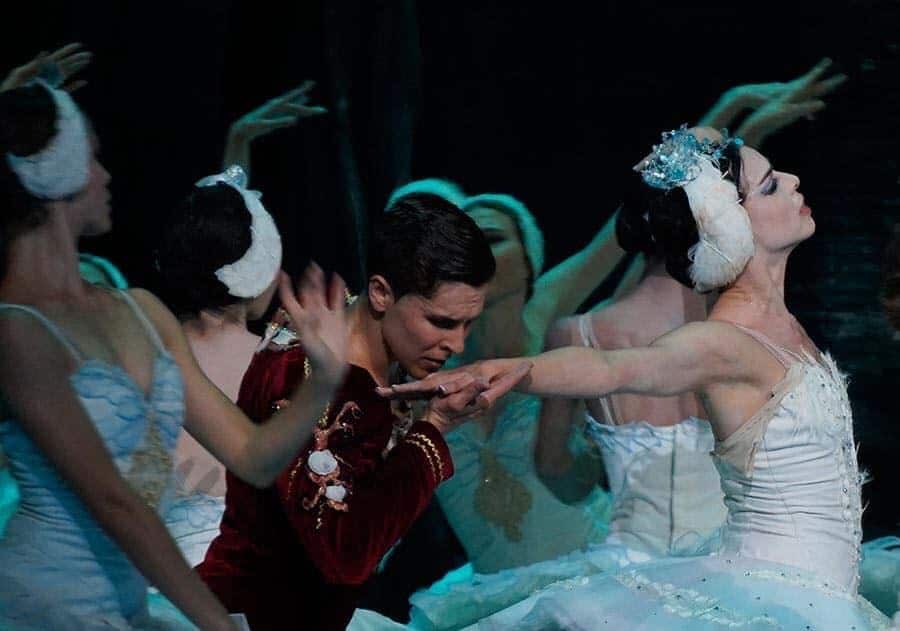
Her fouettés have become her signature. She executes them with a particular slowness, almost suspended, that forces juries and spectators alike to hold their breath. This technique, honed over many years, has earned her invitations to major international companies, including the Washington Ballet, Ballet Concierto de Puerto Rico, Joburg Ballet, Bolshoi and Mariinsky. She remains principal dancer with Cuba’s National Ballet. Unlike many of her contemporaries, she never left the island.


Loyalty comes at a price
This loyalty comes at a price. Between 2000 and 2010, several leading Cuban dancers left the island for Miami and Europe. The Ballet National de Cuba was hemorrhaging talent. Viengsay Valdés stays. She has often explained this choice as a form of indebtedness to the system that trained her for free, and her attachment to the Cuban ballet school.
After Alicia Alonso, a historic responsibility
In 2019, Alicia Alonso dies at 98. The succession is one of the most delicate in the world of dance. Alicia Alonso was not just a director: she was a political, cultural and feminist icon. To lead the Ballet National de Cuba after Alicia Alonso is to carry a massive symbolic burden. Viengsay Valdés was appointed sub-artistic director in January 2019, before being named general director of the Ballet National de Cuba in January 2020. She takes up her post against the backdrop of Cuba’s severe economic crisis, compounded by the pandemic and the power cuts that affect the capital several times a week.

Maintaining the Cuban school while opening up the repertoire
Her strategy? Maintain Cuban technical excellence – the famous “Cuban school of ballet” – while opening up to new repertoires. It commissions choreographies from young Latin American authors. It invites foreign dancers to take up residencies. It is gradually restoring international collaborations. The “Alicia Alonso” Havana International Ballet Festival, an emblematic event founded in 1960, should hold its 29th edition in autumn 2026 under her direction, if the announced schedule is maintained. This will be its great public test.

Art direction under pressure
Running a world-class ballet company on the budget of a country in crisis is as much an administrative feat as an artistic one. Costumes have to be mended, studios sometimes lack electricity or equipment, and trips abroad have to be negotiated one by one. Yet the Ballet National de Cuba continues to produce full seasons, training dancers who go on to work for the world’s leading companies, and maintaining a technical quality that many in the ballet world consider to be intact.
A Cuban woman at the head of a global institution
One particular dimension of this portrait is worth mentioning. Viengsay Valdés is a Cuban woman at the head of a world-class ballet institution. This situation, in a world of international classical ballet long dominated by major European and North American institutions, remains rare. Cuba, since Alicia Alonso, is an exception. This singularity, in the global landscape, is one of the legacies that Viengsay Valdés carries with her.

The 2026 rendezvous
In autumn 2026, therefore, the 29th Havana International Ballet Festival “Alicia Alonso” is due to be held in Havana under her direction, if the announced schedule is confirmed. Guest companies, former stars, young premieres – everyone who counts in international ballet is expected to attend. For Viengsay Valdés, it will be a demonstration. For Cuba, an affirmation. And for the Caribbean, perhaps a reminder that excellence does not depend on hard currency. If Viengsay Valdés holds, then a certain idea of Caribbean culture holds with her.
📸 Photo credit: Instagram account of Viengsay Valdés – @Viengsay_v
Viengsay Valdés is a Cuban dancer born in Havana in 1976. Trained at the Cuban Ballet School, she joined the Cuban National Ballet in 1994, became principal ballerina in 2001, and took over the company’s general management in 2020, after being appointed artistic subdirector in 2019.
Viengsay Valdés follows in the artistic footsteps of Alicia Alonso, founder of the Ballet National de Cuba in 1948. After Alicia Alonso’s death in 2019, Viengsay Valdés becomes one of the figures responsible for preserving the excellence of the Cuban ballet school, while opening up the company to new repertoires.
Viengsay Valdés embodies a form of Caribbean artistic excellence often less visible than the region’s music, carnivals or popular heritage. At the helm of Cuba’s National Ballet, she shows that the Caribbean is also a place of classical training, choreographic discipline and international cultural influence.
José Martí is not only a great figure in Cuban history. He is one of the most important intellectuals in the Caribbean world, because he was able to combine writing, political thought, journalism and revolutionary action in a single career. Born in Havana on January 28, 1853, and killed in action at Dos Ríos on May 19, 1895, he became the symbol of Cuba’s struggle for independence from Spain. His influence soon extended beyond Cuba’s borders, however, to the whole of Latin America and the Caribbean.
Why is José Martí still such a major figure?
What distinguishes José Martí from many political figures of the 19th century is the breadth of his legacy. He was a poet, essayist, journalist, political organizer and thinker of sovereignty. His name remains associated with the idea of dignity, emancipation and historical responsibility.

A youth marked by repression and exile
José Martí’s life changed at a very early age. As a teenager, he took a stand in favor of Cuban independence in the context of the war that began in 1868. As a result, he was sentenced to hard labor and deported to Spain. There, he continued his studies and obtained a university degree in Saragossa. This period was decisive in shaping a man convinced that political freedom could not be dissociated from education, culture and historical lucidity.
Exile did not take him away from Cuba. On the contrary, it broadened his horizons. José Martí went on to visit several countries, including Mexico, Guatemala, Venezuela and above all the United States. From New York, he observed the geopolitical tensions of his time and developed a central idea: Cuba must free itself from Spanish domination without falling into another form of dependence.
José Martí, leading writer and journalist
It would be a mistake to reduce José Martí to a revolutionary figure. His literary importance is immense. His writing combines political density, moral force and stylistic rigor. His essays are often considered his most enduring contribution to Spanish-American letters. His poetry, on the other hand, is never cut off from reality. For José Martí, writing is not a matter of distancing oneself from the world, but of looking at it with greater precision. This link between literature and commitment explains why his work continues to be studied well beyond Cuba.


"Nuestra América", a fundamental text
Among his writings, “Nuestra América” published in 1891, remains central. In it, José Martí defends a simple but profound idea: the peoples of the region must not mechanically copy models from elsewhere. They must build their institutions, their culture and their future on the basis of their own historical reality. These ideas remain highly topical in the contemporary Caribbean. It sheds light on debates about identity, cultural sovereignty, education and how Caribbean societies can assert their voice in a world dominated by large centers of power.


The strategist of Cuban independence
He didn’t just write. He played a concrete role in organizing the last phase of the Cuban independence struggle. He helped form the Cuban Revolutionary Party and made New York the center of preparations for the uprising. His aim was to unify the independence forces and give political coherence to the Cuban cause. In 1895, he joined the expedition to Cuba with Máximo Gómez. Shortly after his return to Cuba, he was killed in action at Dos Ríos on May 19. This premature death freezes his image in the collective memory: that of a man who matched his thoughts with his deeds.

A legacy still alive in the Caribbean
José Martí ‘s influence did not stop in the 19th century. His legacy lives on in contemporary debates. In fact, he remains essential because he embodies a rare idea: that of a Caribbean intellectual capable of transforming literature into a historical force. His life is a reminder that the Caribbean has not only produced resistance, but also major thoughts capable of illuminating the present. José Martí remains an essential reference not only for understanding Cuba, but also the political and cultural depth of the region.
José Martí was a Cuban writer, journalist, poet and politician born in Havana in 1853. He is best known for his central role in the struggle for Cuban independence from Spain. His career combined intellectual commitment and political action, making him a major figure not only in Cuban history, but also in Caribbean and Latin American thought.
José Martí is considered one of the great symbols of the Cuban nation, because he defended the idea of a free, sovereign and politically conscious Cuba. Not only did he support independence through his speeches and writings, he also played an active role in organizing the independence struggle. His name remains associated with dignity, patriotism and coherence between thought and action.
No, and that’s precisely what makes his legacy so strong. José Martí was also a leading author, with a wealth of literary and journalistic work. His texts deal with freedom, identity, education, justice and the future of the region’s peoples. He thus occupies a special place, at the crossroads of literature, journalism and political history.
“Nuestra América” is one of José Martí’s most influential texts. In this essay, he defends the idea that the peoples of Latin America and the Caribbean must build their future from their own historical, social and cultural reality. This text remains highly topical, as it raises essential questions about identity, cultural sovereignty and how to think about development without mechanically reproducing external models.
José Martí continues to interest contemporary readers because his reflections transcend his era. He speaks of freedom, political responsibility, education and collective dignity, subjects that remain at the heart of today’s debates. For readers in the Caribbean, he also represents proof that a thought born in the region can have a universal scope and continue to enlighten the present.
