
We’ve reached the halfway point of the series “Stories of Caribbean Cinema.” The first four episodes have spanned nearly three decades of cinema, from Cuba in the 1960s to productions from Martinique and Curaçao in the 1980s. This fifth installment moves into the 1990s with two films set in very different worlds. Euzhan Palcy’s *Siméon* delves into a Caribbean imagination where music, ghosts, and magical realism converge. Raoul Peck’s *The Man on the Quay* revisits François Duvalier’s dictatorship in Haiti through the eyes of a child.
You are now reading the fifth episode in a series of ten. Four episodes have already been published on Richès Karayib, and five more will follow in this series through 2025.
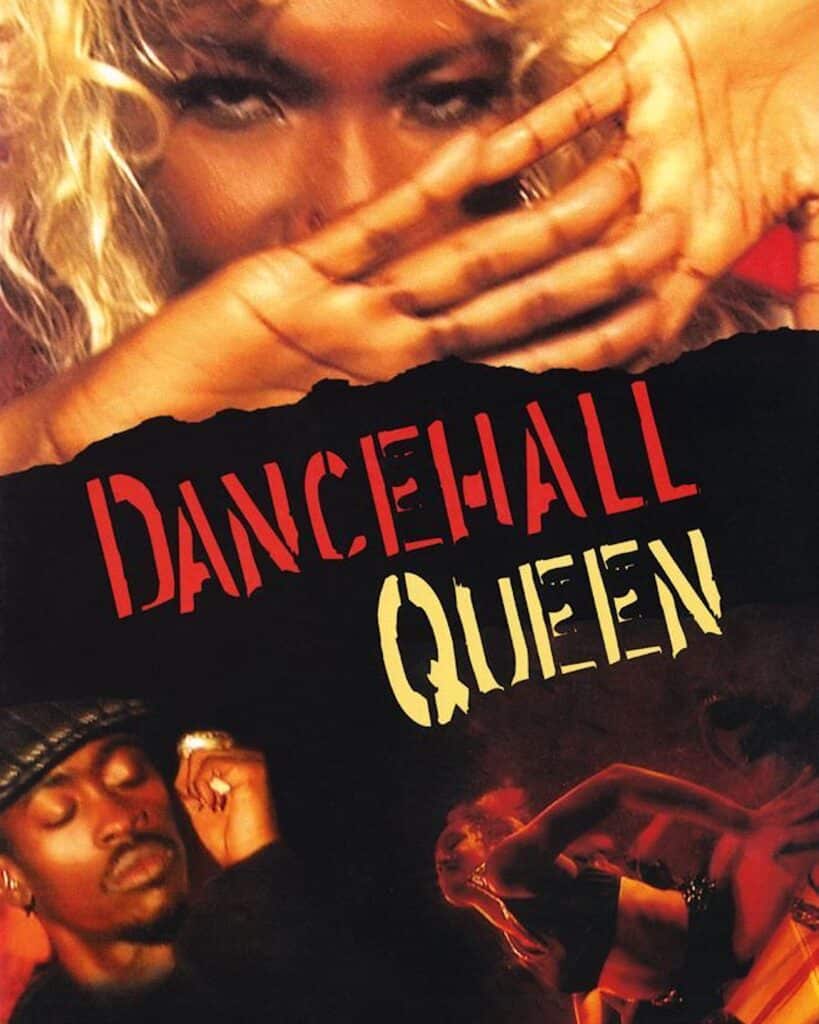
1997: JAMAICA - "DANCEHALL QUEEN" BY RICK ELGOOD & DON LETTS
Dancehall Queen is one of many Jamaican films that follow the formula established by *The Harder They Come* (Perry Henzell, 1972): Jamaican music (reggae or dancehall), known internationally; sexualized dance (as seen in the closing credits of Henzell’s film, with a close-up of a woman’s hips as she dances, like an invitation to what comes next); violence in the ghetto, and sporadic police interventions.
This is true of some major films in this genre, including *Rockers* (1978) by Greek director Theodoros Bafaloukos, considered by some to be the film that best captured the rebellious spirit of reggae and Rastafarian philosophy (a community presence that plays a central role in *Countryman* by Dickie Jobson in 1982), and which sparked a riot during its screening at the Cannes Film Festival in 1979; or, more recently, *Better Mus’Come* by Storm Saulter (2011), which takes on a more overtly political dimension by drawing inspiration from actual riots that occurred during an election period.
So, *Dancehall Queen* opens with a “music video”-style sequence featuring the famous Beenie Man, who plays a supporting role, singing—just as in the film’s final act, several performances take place on stage during a dance competition. However, one major difference stands out: the main character is a woman. Marcia is a street vendor who decides to enter a dance competition as a way to break free.
At the same time, one of his daughters is being hit on by her uncle Larry, who provides financial support to the family. When she tells her mother about this, her mother downplays her own brother’s behavior and points to her financial difficulties. As she gradually realizes the true nature of her brother Larry—who, in the meantime, has slept with his own niece—she manipulates one of his henchmen to turn against him.
The issue of violence against women is a recurring theme in English-language Caribbean cinema, particularly in the semi-professional productions of Mathurine Emmanuel (St. Lucia) and Anderson Quarless (Grenada), whereas this subject remains taboo in Guadeloupean and Martinican cinema, with a few rare exceptions. The directness with which the issue of rape—and, more specifically, incest—is addressed sets *Dancehall Queen*.
2000: MARTINIQUE - "PASSAGE DU MILIEU" BY GUY DESLAURIERS
To mark the turn of the 21st century, director Guy Deslauriers and his screenwriter Patrick Chamoiseau (winner of the 1992 Prix Goncourt for his famous novel Texaco) invite us to relive the Atlantic crossing aboard a slave ship, which during the era of slavery was known as the “ Middle Passage ” (meaning the “Middle Passage”), as a necessary act of remembrance.
Three-quarters of the film takes place in the hold, among the slaves torn from Africa. Several flashbacks “take us back” to that continent—to the villages, rivers, and vast plains—all accompanied by the voice-over of an anonymous slave whose face constantly changes (often looking directly at the camera) throughout the film, as if he were representing each and every one of them.
This lost Africa is, quite clearly, embodied by a woman who stares directly into our eyes—the eyes of the audience—while the voice-over says: “Woman, you are the earth, violated twice. You are the mother from whom her children are snatched. Of all our Africas, you are the most real. ” In the first feature film directed by Deslauriers and Chamoiseau, *The Exile of King Béhanzin* (1996), the film depicted the imprisonment (a historically verified event) of King Ahydjéré of the Kingdom of Dahomey (present-day Benin), in Martinique, following his defeat at the hands of Alfred Dodds’ French troops: a way for Caribbean cinema to reestablish a connection with the “Pays d’avant” (the “Land of Before”), to borrow an expression from the poet and philosopher Édouard Glissant.
A few years after *Amistad* by Steven Spielberg (1997), *Passage du milieu* was widely acclaimed for its meticulous portrayal of this chapter of colonial history. As a result, it won an award at the renowned Sundance Film Festival and was broadcast and later released on DVD by HBO in the United States.

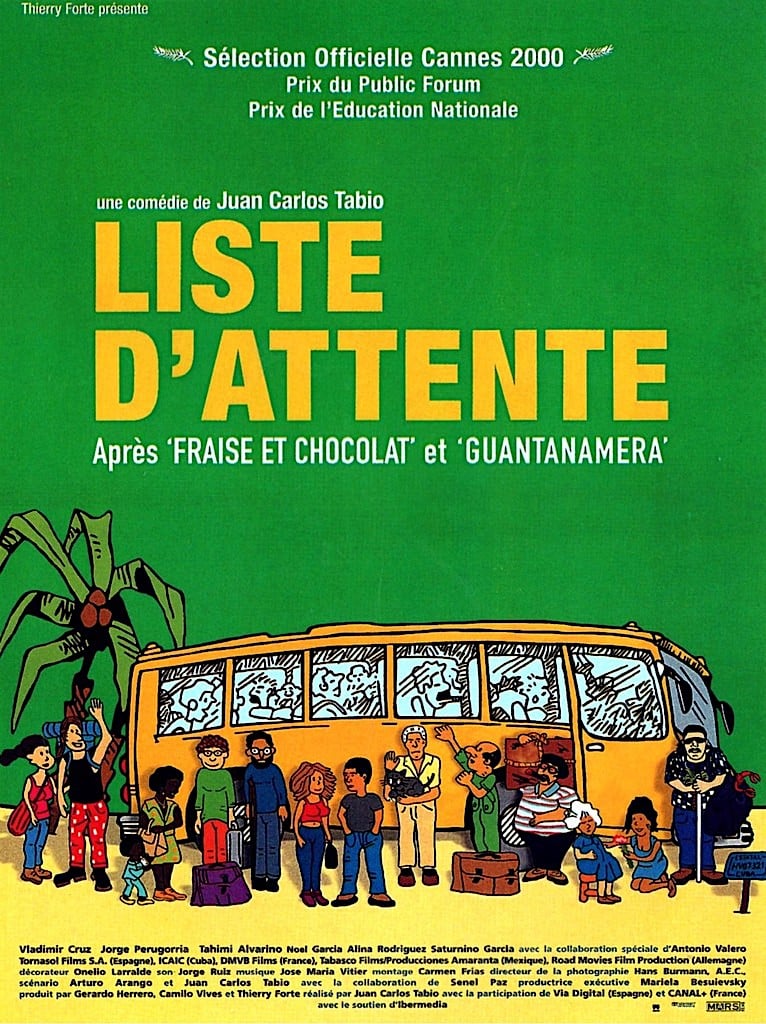
2000: CUBA – WAITING LIST (LISTA DE ESPERA), BY JUAN CARLOS TABÍO
A close friend of Tomás Gutiérrez Alea, Juan Carlos Tabío co-directed with him the last two films by the famous director, known in Cuba as “El Titón” (“The Titan”), namely Strawberry and Chocolate / Fresa y Chocolate (1993) and Guantanamera (1995). The first is a comedy about the lives of gay people and the state’s control over them in Cuba, based on a screenplay co–written by Senel Paz, an author who has frequently addressed the place of homosexuality in Cuban society in his various writings, and who was honored with an Oscar nomination for Best Foreign Language Film—a first for a Cuban film.
The second is a fast-paced, offbeat road movie that, like *Strawberry and Chocolate*, does not shy away from casting a critical eye on the Cuban regime and stands as Alea’s true cinematic testament. As for Juan Carlos Tabío, this is by no means his first attempt, since his debut feature film, *Se permuta*, dates back to 1985. In the satirical vein of Alea’s films, Waiting List follows the journey of a group of characters waiting for a bus—sometimes bound for Havana, sometimes for Santiago—at an isolated bus stop.
Between the buses that never show up and those that are so worn out they break down, the station manager repairs a battered bus himself in the absence of spare parts—parts that cannot come from either the communist regime of the former USSR, which has collapsed, nor from the United States, which has imposed an economic embargo on the island—waiting passengers will have to learn to live together and overcome all the current difficulties, including finding food…
In addition to being a film that offers a critical view of Cuba, this bittersweet comedy with multiple plot twists, carried by an exceptional cast that highlights the immense professionalism of Cuban cinema, is a subtle reflection on the difficulty of overcoming individualism and coming together as one—that is, of functioning in a communist manner. The final section, blurring the lines between dream and reality, establishes a beautiful political utopia with infectious cheerfulness. A pinnacle of Cuban cultural refinement.
About the Author
Guillaume Robillard holds a Ph.D. in film studies; he is a professor and researcher, a documentary filmmaker, and a specialist in Caribbean cinema and artistic production. He is the author of two books: *Conquest of Space and Time: Caribbean Cinema (Éditions Jannink, “Hypothèses d’Art,” 2023) and Decolonial Cinema: Characters in Caribbean Cinema (Presses Universitaires des Antilles, “Arts et Esthétique,” 2024).
The release of *Magma*, a film by French director Cyprien Vial heavily inspired by the 1976 eruption of La Soufrière, which raised fears that the capital city of Basse-Terre (Guadeloupe) would be destroyed, followed by two films directed by Guadeloupeans: *Fanon* (Jean-Claude Barny), about the famous anti-colonialist intellectual during his time in Algeria, and *Zion*, in less than a month, succeeded in drawing the attention of the French media (Le Monde, Libération, etc.) to the potential of Caribbean cinema and, more broadly, of films dealing with the French overseas territories.
"Stories of Caribbean Cinema" series. Episode 5/10 is already available on Richès Karayib. Stay tuned for Episode 7/10 coming soon.
With this third episode, *Stories of Caribbean Cinema* moves into the 1980s. The first two installments covered Cuba, Jamaica, Trinidad and Tobago, and Guadeloupe, from the 1960s through the emergence of Caribbean cinema. This time, two films made in the same year take radically different directions. In Jamaica, *Children of Babylon* explores romantic, sexual, and racial relationships with unusual freedom. In Guadeloupe, *Live Free or Die* draws on several centuries of history centered on the legacy of Commander Ignace.
This article is the third installment in a series of ten. Two installments have already been published, and seven more will follow in this chronology of Caribbean cinema.
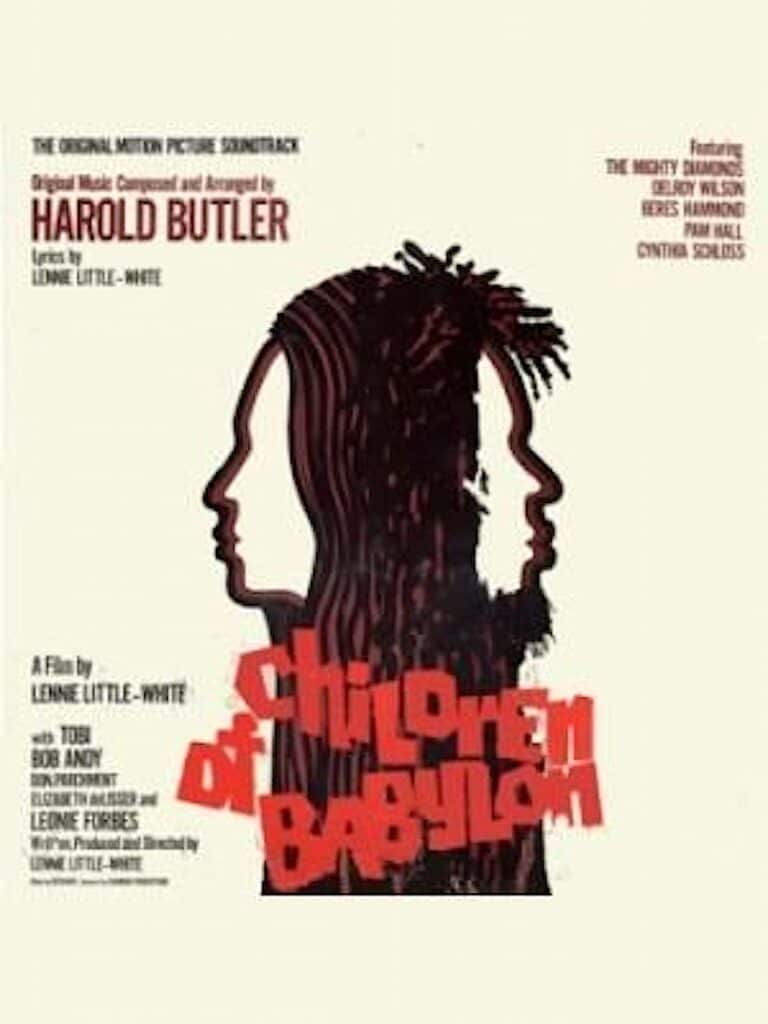
1980: JAMAICA – "CHILDREN OF BABYLON", BY LENNIE LITTLE-WHITE
This film is unique in Jamaican cinema and, more broadly, in Caribbean cinema as a whole. Far from the social deprivation of Kingston’s ghettos, in a villa in the countryside (complete with a swimming pool, champagne, and a gourmet buffet), we follow the adventures of Rick and Penny—a Black man and a white woman—as they discuss art (he’s a painter) and sexuality (she’s conducting research on the subject among rural women—whom we never see on screen).
The film is structured as a “closed-door” drama: a single setting and time counted down on a calendar. The two protagonists experience a passionate romance marked by multiple sexual encounters, parallel to those of a strangely silent maid and Luke, a Rastafarian henchman, who maintain the villa. This film embodies the free-spirited tone of the rise of erotic cinema as well as the emergence of pornographic movie theaters in the 1970s.
Nevertheless, it stands out in Caribbean cinema, where depictions of the sexual act remain rare, with foreplay (kissing, in particular) or the moment afterward often taking center stage, just as nudity is almost always partial—at least in the early decades of these cinematic traditions. Here, however, the nudity is full-frontal, particularly as part of a comedic gag, in a beach scene where, while swimming naked, the couple finds themselves temporarily without clothes after they are stolen by mischievous children.
Two “romantic” threesomes will complicate the plot, all under the curious gaze of the servants: Rick with Penny and another white woman—a situation that will tear the couple apart—and then Penny with Luke, the Rastafarian employed by Rick.
As we’ve seen, in addition to the issue of sexuality, there is a surprising freedom of expression regarding interracial couples (“domino couples,” as they’re called in Guadeloupe and Martinique), in a sexuality liberated from the drama of the colonial past. This is a breakthrough that other Caribbean film industries have yet to achieve—particularly those of Guadeloupe and Martinique—where a certain modesty still prevails.
1980: GUADELOUPE – LIVE FREE OR DIE, BY CHRISTIAN LARA
Live Free or Die is one of four films Christian Lara shot in just two years. This timeless courtroom drama features characters from various historical periods taking the stand, such as Christopher Columbus, Victor Schoelcher, Pèdre (one of the first slave rebels in Guadeloupe), and the Napoleonic general Richepanse, to determine whether or not Commander Ignace’s legacy should be restored.
This debate refers to the “Guadeloupe War” of 1802—namely, three weeks of fighting between Napoleonic troops sent to reestablish slavery following the first abolition of 1794 enacted by the First Republic, and those who resisted the reinstatement of slavery—namely, in addition to Ignace, the famous Colonel Delgrès, the mulatto woman Solitude (who was at one time considered for induction into the Panthéon), and Marthe-Rose.
Her impassioned testimony clearly highlights the important role women played in this resistance. The narrative structure adopted reveals an important characteristic of Caribbean cinema: the past is irrevocably part of the present, and the present is (almost) always intertwined with the past, in a circular or “spiral” conception of time that differs from the Western linear conception (the famous timeline).
The director, grandson of Guadeloupe’s first Black historian, Oruno Lara (with *Guadeloupe in History* in 1921), will revisit this historic event in *Sucre amer* (1998), an unofficial remake of *Vivre libre ou mourir* (once again featuring the excellent actor Robert Liensol, who had previously appeared in *Coco la Fleur, Candidate*), and the historical reenactment 1802, the Guadeloupean Epic (2002), which highlights the character of the mulatto woman Solitude in a surprising battle sequence by the river pitting Guadeloupean women against Napoleonic soldiers. Christian Lara has made this period in history the major defining moment (to date) of Guadeloupean cinema.

About the Author
Guillaume Robillard holds a Ph.D. in film studies; he is a professor and researcher, a documentary filmmaker, and a specialist in Caribbean cinema and artistic production. He is the author of two books: *Conquest of Space and Time: Caribbean Cinema (Éditions Jannink, “Hypothèses d’Art,” 2023) and Decolonial Cinema: Characters in Caribbean Cinema (Presses Universitaires des Antilles, “Arts et Esthétique,” 2024).
"Stories of Caribbean Cinema" Series. Season 2, Episode 10 is now available on Richès Karayib. Stay tuned for Season 4, Episode 10 coming soon.
With this first episode, Richès Karayib launches a ten-part series dedicated to the history of Caribbean cinema, based on the work of Guillaume Robillard, a Ph.D. in film, professor and researcher, documentary filmmaker, and specialist in Caribbean cinema and artistic production. From Cuba to Jamaica, from Martinique to Curaçao, this chronology spans more than sixty years of filmmaking in the Caribbean.
This first installment takes us back to the 1960s and early 1970s, first to Cuba and then to Jamaica, where several films began to lay the groundwork for cinematic traditions deeply rooted in the social, cultural, and political realities of their respective regions. This article is the first in a series of ten, available on Richès Karayib.
Thus, the history of Caribbean cinema did not begin until the 1960s, even though films had been shot in the Caribbean since the early 20th century—notably two short films by the Lumière brothers in Martinique in 1902. In fact, it is common to make a clear distinction between films shot in the Caribbean and films made by filmmakers from the various islands of this archipelago.
As for productions from Jamaica, Trinidad and Tobago, and the Dominican Republic, they have shown a certain consistency punctuated by pleasant surprises, while in Haiti, a semi-professional production scene was long prolific and enjoyed a large audience.
On the other hand, a few smaller countries produce films only sporadically (Saint Lucia, Grenada) or rarely (Barbados, Puerto Rico) produce films whose themes overlap with those of other regional cinemas, reflecting a shared “Caribbean spirit” despite the evident diversity of these productions.
As for “Caribbean cinema” specifically from Guadeloupe and Martinique it now comprises some forty films, most of whose plots are set on these two islands. Finally, it should be noted that this timeline focuses on the insular Caribbean, and thus does not include films from the mainland, such as those from French Guiana or Mexico. It’s worth noting that most Caribbean films are available on free or paid streaming platforms for everyone to enjoy.
1964: CUBA - "Cumbite", by Tomás Gutiérrez Alea
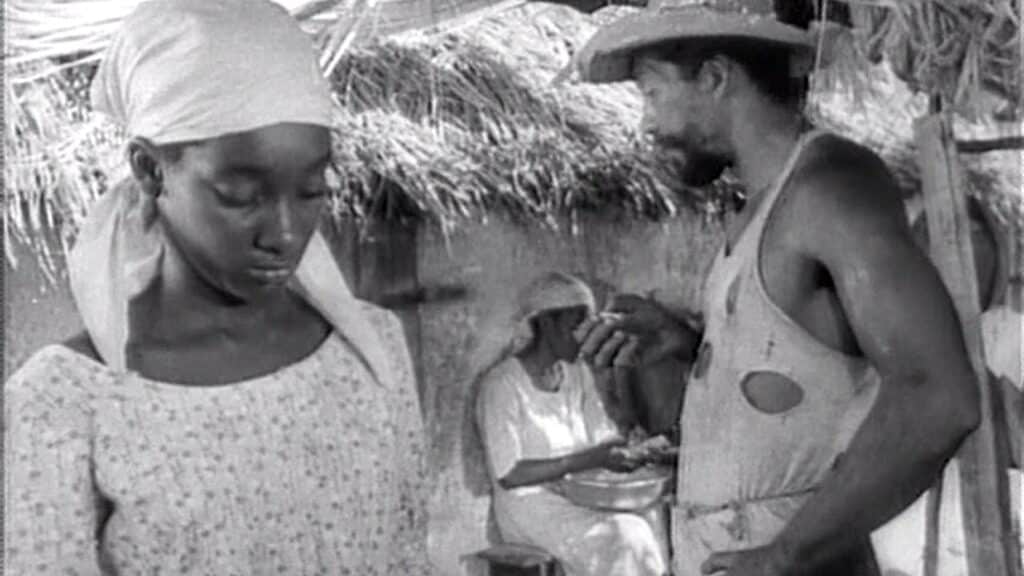
The third feature film by the renowned Cuban director Tomás Gutiérrez Alea, one of the co-founders of the ICAIC (Instituto Cubano del Arte y la Industria Cinematográficos), the renowned Cuban film school that has trained generations of Latin American professionals, is an adaptation of one of the classics of Haitian literature, “Gouverneurs de la rosée” by Jacques Roumain. After leaving for the island of Cuba, where he worked in the sugarcane fields, the protagonist, Manuel, returns to his small rural village in Haiti, which is suffering from a drought.
The hero then sets out in search of water and finds a hidden spring. He will only succeed in the mission he has set for himself, a mission that will cost him his life without his beloved Annaïse and his mother Délira. Thanks to them, the villagers come to realize the need to come together as a community through “coumbite,” a Creole word meaning collective work based on mutual aid, and bring water to the village. Addressing the issue of rampant deforestation, which has left a deep mark on Haitian history, the book has a strong ecological dimension that is generously reflected in its film adaptation.
A worthy heir to Italian neorealism (the director studied film in Italy), this film oscillates between grand visual classicism (composition of light and framing, photogenic portraits, fluid editing) and cinéma du réel, particularly in a striking voodoo sequence (an African religion still practiced in Haiti) that rivals the famous documentary “Divine Horsemen” by the Russian filmmaker Maya Deren (shot between 1947 and 1951), which is considered a seminal work on the subject. Last but not least, “Cumbite” is one of the very first and exceptionally beautiful adaptations of a work from Caribbean literature.
1966: CUBA – THE DEATH OF A BUREAUCRAT (LA MUERTE DE UN BUROCRATA), BY TOMÁS GUTIÉRREZ ALEA
At the very beginning of the film, we witness the funeral of a man who is buried with his worker’s ID card to honor his commitment to the working class. However, this card turns out to be an essential document for his widow if she is to receive a pension. Needing to recover this precious item but unable to have the body exhumed, a nephew of the deceased goes so far as to illegally dig up his uncle’s grave, triggering a cascade of administrative dead ends…
This film, influenced by 1960s Italian comedy, captivates with its formal freedom (including the use of photographs and time-lapse editing, among other techniques), which is rare in Caribbean cinema. Furthermore, it exhibits strong intertextuality with a group of filmmakers, credited in the opening credits (typed on a typewriter onto a piece of official paperwork, in keeping with the film’s subject matter): a montage of various archival footage to depict the life of the deceased (echoing *Citizen Kane* by Orson Welles), and stop-motion animation featuring a “human shredder” machine (a nod to Modern Times by Charlie Chaplin), and a dream sequence referencing *Un Chien Andalou* by Luis Buñuel, etc.
This interplay of references, a sign of a deep knowledge of cinema, does not, however, make it a European or American film. Indeed, deeply rooted in Cuban society, the plot explores how a regime (in this case, Fidel Castro’s) can itself become an “absurd” bureaucracy despite its stated intention to do away with bureaucracy (“Muerte a la burocracia,” as stated several times in the film).
Furthermore, the Native American heritage of the protagonist, who faces the wrath of the administration, the majority of whose representatives are of European descent, may subtly suggest a “racialized” Cuban social hierarchy. This critical examination of the limitations of a regime or, more broadly, of the exercise of power is continued in the equally famous *Memoirs of Underdevelopment* (1968), the director’s next film, which takes a more overtly political stance and was honored with a screening at Cannes Classics in 2016.

1972: JAMAICA – "THE HARDER THEY COME", BY PERRY HENZELL
This film marks the beginning of Jamaican cinema and would establish a “formula” that has since been widely emulated: a focus on Jamaican music primarily reggae, whose international fame is well established as seen through the journey of the young singer Ivan (played by the famous Jimmy Cliff) in search of a producer, but also of Jamaican Creole (a mixed form of English with a distinctive accent and phrasing) as a Caribbean “linguistic anchor,” and, finally, the figure of the rebellious hero standing up against a “system” deemed unjust or repressive.
The potential of the urban landscape (in this case, Kingston) is also highlighted: the film’s opening features some of the most beautiful images capturing the city’s energy at that time, paired with stunning portraits. Furthermore, the “baroque” and “fragmented” architecture of the impoverished neighborhoods is given extensive screen time. Against the backdrop of religion’s heavy influence, a love story unfolds, marked by flirtation and a bit of nudity.
Confrontations with law enforcement, particularly through gunfights and prison scenes, are also featured, including a notable sequence of physical punishment. All of these elements with the exception of the figure of the rebel (or resistance fighter), were virtually absent from French Caribbean cinema (for example) for nearly thirty years, with a few exceptions. While being chased by a police officer on a motorcycle, the protagonist shoots at the officer as an act of defiance against the established order: a multi-stage chase ensues, ending in the mangrove swamps and culminating on a beach where he attempts to reach Cuba (an island considered revolutionary) by boarding a boat.
On the city’s walls, you can see graffiti that says things like ” I was here but I disappeared ” (“I was here but I disappeared”), all of which evoke the image of a maroon (a slave fleeing the plantation) “modern” maroon who stands in opposition to a society where the wealthy (producers, for example) and those in authority (police commissioners) are subtly mixed-race or white, while the impoverished Black population yearns for comfort (“ You can get it if you really want it; you’ll succeed in the end / “You can have it if you really want it; you’ll finally succeed,” says a song from the movie as Ivan drives down a golf course in a stolen luxury car: a “racialized” social hierarchy that strangely echoes the colonial past.

About the author:
Guillaume Robillard holds a Ph.D. in film studies; he is a professor and researcher, a documentary filmmaker, and a specialist in Caribbean cinema and artistic production. He is the author of two books: *Conquest of Space and Time: Caribbean Cinema (Éditions Jannink, “Hypothèses d’Art,” 2023) and Decolonial Cinema: Characters in Caribbean Cinema (Presses Universitaires des Antilles, “Arts et Esthétique,” 2024).
"Stories of Caribbean Cinema" series. Coming soon: S2/10.
In Jamaica, sometimes just a few words are enough to remind us that even a small gesture is never truly insignificant. “One-one coco full basket” is one of those expressions that sticks in your mind: a simple image—a basket filling up little by little—and behind it, an idea of patience, perseverance, and progress.
One-one coco full basket has even spread far beyond everyday conversation. In 2013, it lent its name to a fundraising campaign aimed at supporting the relocation to Canada of a group of Maroons from Charles Town, Jamaica. This choice perfectly captured the spirit of the proverb: even a small contribution can be part of something greater.
What does “One-one coco full basket” mean?
The expression can be understood this way: one coconut at a time, the basket eventually fills up. But its meaning obviously goes beyond the basket. It reminds us that an important goal can be achieved gradually, through the accumulation of small efforts. What seems modest on its own takes on a whole new dimension when added to what has already been accomplished.

That is the true strength of this approach. It doesn’t promise any shortcuts. It doesn’t claim that results will come immediately. Rather, it’s about building something over time, piece by piece. One-by-one. Just a few words are enough to transform an abstract idea—patience, consistency, progress—into a scene that everyone can visualize: a basket that’s still empty, then less and less empty.

But what exactly is a “coco”?
For a reader outside Jamaica, the word “coco” may immediately bring to mind the coconut. However, in Jamaican culinary vocabulary, the term also refers to a tuber. The Jamaican Ministry of Agriculture notes, in particular, that dasheen, also known as taro, may be called “coco”. In Jamaican Food: History, Biology, Culture, historian B. W. Higman devotes an entire section to coco among the roots, while the coconut is discussed separately among the fruits.
This detail immediately gives the proverb a whole new meaning. It’s no longer just a nice saying about perseverance. The image becomes concrete: something is added to the basket, then something else, then yet another thing. No single item is enough on its own to fill it. Yet each one counts. And suddenly, the message becomes almost visible.

A proverb to help you get through tough times
Perhaps that is precisely what explains the appeal of “One-one coco full basket”. The image is very concrete, but its message isn’t confined to a basket. Saving little by little. Learning step by step. Building a project. Contributing to a collective effort. Continuing to work even when the results aren’t yet visible.

In all these situations, the principle remains the same: don’t underestimate what seems small simply because the final result isn’t there yet. The proverb, therefore, does not celebrate a spectacular feat. Rather, it draws attention to all those intermediate steps that are less easily noticed. The basket remains the same. What each person decides to put in it may change. And it is precisely this simplicity that allows the expression to continue to make sense far beyond its initial meaning.

Small actions, big results
In French, one might be tempted to compare “One-one coco full basket” with “little by little, the bird builds its nest.” The general idea is similar: something important is built gradually. But translating an expression isn’t just about finding an equivalent. The Jamaican saying has its own rhythm, its own words, and above all, its own imagery. Where the French expression evokes a bird and its nest, the Jamaican proverb presents us with a basket that is filling up. Two expressions can convey a similar idea without telling the same story.
That’s also what makes proverbs so valuable. In just a few words, they convey advice, experience, or a particular way of capturing everyday life. They also show how a language can give a local expression to an almost universal idea. In Jamaica, this progression is described “one-one”. One thing at a time. One effort at a time. Until the moment you look at the basket again and realize it’s no longer empty. One-one, a basket full of coconuts. What seemed like very little, taken separately, ended up making a difference.


“One-one coco full basket” is a Jamaican proverb that means that small efforts, when accumulated over time, can eventually produce a significant result.
In Jamaica, “coco” can refer to a tuber. In the proverb, the image is that of a basket gradually filling up, one item at a time.
This expression is similar to “little by little, the bird builds its nest.” Both convey the idea that a significant result can be achieved through a series of small, successive efforts.
Four artists, four regions, four journeys. On September 19, 2026, the National Academy for the Performing Arts in Port of Spain will host a ceremony at which Patra, Calypso Rose, Alan Cavé, and Shyne will each receive a special award. The 2026 Caribbean Music Awards will bring them together on the same stage, but their journeys tell different stories about Caribbean music and its ability to transcend borders.
One Scene, Four Legacies
The announcement made by the Caribbean Music Awards highlights four distinct honors. Patra will receive the Lifetime Achievement Award. Calypso Rose will be honored with the Elite Calypso Honors. Alan Cavé will receive the Elite Konpa Honors, while Shyne will be awarded the Global Ambassador Award.
This selection almost maps out the region’s musical landscape. Jamaica, Trinidad and Tobago, Haiti, and Belize are thus represented by artists whose careers have taken very different paths. More than just a list of winners, this selection offers a glimpse into the cultural diversity of the Caribbean.
Patra, a leading figure in Jamaican dancehall
With Patra, the 2026 Caribbean Music Awards are honoring an artist associated with a significant period in the globalization of Jamaican dancehall. Her style, visual identity, and positioning have helped bring to the forefront a strong female presence in a musical world often dominated by male figures.
The Lifetime Achievement Award highlights this aspect of longevity and influence. It is not merely a matter of recalling past successes, but of recognizing an artist whose image remains closely tied to a pivotal moment in the spread of dancehall beyond Jamaica.

Calypso Rose, the Living Legend of Calypso
Calypso Rose represents a different story. A native of Tobago, she has for decades embodied the narrative power of calypso, a genre that reflects society, comments on its times, and transforms the stage into a space for expression.
The Elite Calypso Honors, therefore, highlight more than just an individual career. Through her, it also celebrates a musical tradition deeply rooted in Trinidad and Tobago. Her presence in Port of Spain will give this honor a special significance: that of an artist being honored in the very heart of the land to which her musical history remains intimately tied.

Alan Cavé and the Spread of Konpa
With Alan Cavé, Haitian konpa also takes its place in this regional landscape. The singer is one of those artists whose career has unfolded across Haiti, the diaspora, and audiences located far beyond his homeland.
His *Elite Konpa Honors* serves as a reminder that Caribbean music isn’t limited to the genres that enjoy high visibility in English-speaking markets. Konpa has its own networks, communities, and collective memory. Alan Cavé’s recognition brings this history back to the forefront of a scene designed to celebrate the sounds of the entire Caribbean.

Shyne: An Influence That Goes Beyond Music
Shyne’s career offers a fourth perspective. A native of Belize, he was honored with a Global Ambassador Award—a category that goes beyond musical performance alone. His public career has gradually combined music with representing and promoting his country on the international stage. This award thus broadens the very definition of cultural influence. Promoting the Caribbean can be achieved through a song, a musical genre, or an artistic career, but also through the ability to project a region’s image beyond its borders.

Four Ways to Experience the Caribbean
Bringing together Patra, Calypso Rose, Alan Cavé, and Shyne ultimately reveals what the 2026 Caribbean Music Awards aim to celebrate this year: not a single Caribbean musical identity, but multiple heritages capable of coexisting. Dancehall, calypso, konpa, and cultural representation don’t all tell the same story. Yet each demonstrates how a region can produce a voice that travels, transforms, and reaches new audiences.
In this context, their differences will thus become the true common thread: four distinct legacies, four different relationships with the world, and a shared ability to integrate Caribbean creations into international and sustainable cultural networks. On September 19, these four paths will converge in Port of Spain. And perhaps that is where the strength of this edition lies: in reminding us that the Caribbean shines precisely because it never speaks with a single voice.
Patra, Calypso Rose, Alan Cavé, and Shyne will each receive a special award at the 2026 Caribbean Music Awards.
Patra will receive the Lifetime Achievement Award, Calypso Rose will receive the Elite Calypso Honors, Alan Cavé will receive the Elite Konpa Honors, and Shyne will receive the Global Ambassador Award.
The 2026 Caribbean Music Awards ceremony will take place on September 19, 2026 at the National Academy for the Performing Arts in Port of Spain, Trinidad and Tobago.
On July 25, 2026, dBURNZ is at the Ranny Williams Entertainment Centre. He performed “I Love Jamaica” against eight other finalists, but refuses to believe he’ll win. When his name is announced, Melbourne Douglas wins the 60th Jamaica Festival Song Competition as well as the award for Best Performer.
The image is powerful, but it captures only a single moment. Behind this success lie years of learning and stage work. dBURNZ is not just the man behind a patriotic song. He is a Jamaican artist shaped by multiple disciplines and a constant belief: the stage must convey something personal.

From Linstead to the Early Stages
Melbourne Douglas grew up in Linstead, St. Catherine. His father owned a sound system. Together with his brother, he would use the instrumental tracks from the family’s records to improvise lyrics and experiment with poetry. With his brothers and sisters, even a doorknob became an imaginary microphone.
This detail from his childhood sheds light on his approach to performance. Before he started working in studios, he learned how to build an audience with almost nothing. At Glenmuir High School, he became a singer in the choir and discovered dub poetry. He also participated in competitions organized by the Jamaica Cultural Development Commission, where he won medals in music.
The JCDC isn’t just a name associated with its 2026 victory. It has been supporting its members since their school days. Its success demonstrates how cultural competitions can serve as a testing ground, uncover talent, and provide artists with their first professional setting.


An artist who refuses to be pigeonholed
In 2014, dBURNZ introduced a style he calls “one beat,” a fusion of Jamaican sounds and electronic influences. His influences range from Buju Banton and Damian Marley to Frank Sinatra. He views music as an open space, without ever losing sight of his Jamaican roots.
This approach shaped his academic training. At the University of the West Indies, Mona Campus, he studied Entertainment and Cultural Enterprise Management. So his education wasn’t limited to singing; he also learned about production, the cultural industries, and managing an artistic career.
His travels broaden his experience. He performs in the United Kingdom, Suriname, and Haiti. Each venue requires him to adapt his energy to a different audience. This mobility adds depth to his identity: dBURNZ represents not just a musical genre, but an ability to bring a piece of Jamaica to other places.
Television confirms this versatility. In the series “Ring Games,” he plays Brandon. Accustomed to projecting his voice and gestures on stage, he must learn to exercise restraint in front of the camera. This transition from the spectacular to the natural becomes another form of mastery.


Las Vegas, Longing, and Song
In 2025, dBURNZ spent six months in Las Vegas working on the immersive production “Bob Marley Hope Road.” The experience provided him with an international platform, but it also created a sense of distance. Along with other Jamaicans in the cast, he realized what he was missing: the beaches, the rivers, the trees, and a familiar light.
From this sense of loss arose the idea for “I Love Jamaica,” written with Mark Anthony Reid and Dale Brown, and produced by dBURNZ. The song is therefore not just an anthem written for a competition. It stems from an experience of leaving, comparing, and returning. This origin story explains why the song goes beyond a mere slogan. dBURNZ isn’t singing about an abstract Jamaica. He’s singing about what his absence has taught him to see in a new light.
After the trophy, the real challenge
The 2026 victory cements dBURNZ’s place in the history of a competition launched sixty years earlier. It brings him national recognition, but offers no guarantee of what comes next. The challenge will be to turn this visibility into a lasting body of work, more ambitious roles, and projects that bring together music, theater, and cultural outreach.
His strength is clear: he knows how to combine his education, grassroots experience, and international exposure. His journey reminds us that a Caribbean career isn’t always built on a dramatic breakthrough. It can develop gradually, until the day a song brings all that previous work into the spotlight. After singing about what Jamaica means to him, dBURNZ will have to show just how far his voice can travel.
📸 @dBURNZ
dBURNZ, whose real name is Melbourne Douglas, is a Jamaican artist from Linstead, in the parish of St. Catherine. His career spans music, theater, television, and cultural industry management.
The idea for “I Love Jamaica” came about after he spent six months in Las Vegas working on the Bob Marley production *Hope Road*. Being away rekindled his attachment to Jamaica’s landscapes, culture, and everyday life.
In July 2026, dBURNZ won the 60th Jamaica Festival Song Competition with “I Love Jamaica,” as well as the award for Best Performer. This double honor brought national recognition to an artistic career that had been building over several years.
At 11:59 p.m. on August 5, 1962, the National Stadium in Kingston was plunged into darkness. A minute later, the British flag was lowered and the new black, green, and gold flag rose into the sky, accompanied by cheers and fireworks. Sixty-four years after that historic night, Jamaica is celebrating its independence under the theme “United in Celebrating Resilience.”
At 11:59 p.m., a nation changes its flag
In the stadium stands, families, religious leaders, and representatives of the young nation witness a scene that goes beyond protocol. The British flag is lowered. The Jamaican flag is raised for the first time as the emblem of an independent nation. Across the island, bells, concerts, dances, bonfires, and community gatherings keep the celebration going.
That night marked the political birth of modern Jamaica. But it does not, on its own, encapsulate the path to independence. August 6, 1962, was the culmination of several decades of social activism, constitutional reforms, and debates over the country’s place within the British Caribbean.

Freedom Built in Several Stages
After more than three centuries of British rule, Jamaican society remains deeply marked by slavery, inequality, and the harsh living conditions imposed on a large portion of the Black population. Emancipation took full effect in 1838, but legal freedom was not enough to erase the economic and social relationships inherited from the plantation era.
In the 1930s, workers’ demands and social movements accelerated political transformation. The unrest of 1938 drew particular attention to working conditions and the lack of representation for a large portion of the population. A new Constitution, adopted in 1944, then introduced universal adult suffrage, regardless of race or class.
Then joined the West Indies Federation in 1958, which was conceived as a union of ten British territories in the region. Three years later, a referendum led the Jamaican people to vote to withdraw from the federation. The country then began its own transition to sovereignty.
The Constitution took effect on August 6, 1962. It established the legal and institutional framework of the new state, while Sir Alexander Bustamante became the first prime minister of independent Jamaica.

Why Is Independence Expressed Through Culture?
Since 1962, Jamaica’s National Day has been more than just official speeches. It is celebrated in the streets, stadiums, churches, and communities. Music, dance, crafts, contests, and costumes bring the nation’s history to life in a way that resonates with the people.
This emphasis on culture is not merely for show. It allows the country to tell the story of its independence on its own terms, in its own voices. The Jamaica Festival Song Competition is one of the best-known examples of this. In 2026, the competition will celebrate its 60th anniversary. The song “I Love Jamaica”, performed by dBURNZ, won this year’s competition.
In this way, the festival transforms a constitutional anniversary into a shared memory. It also serves as a reminder that a nation is not built solely through legal texts. It is built through the songs that many generations know, through the performances passed down to children, and through the symbols that people choose to wear.


Jamaica 64: The 2026 Celebration Schedule
This year, the festivities are being held under the theme “United in Celebrating Resilience”, which can be translated as “United to Celebrate Resilience.” Independence Village, located at the National Stadium Complex in Kingston, is open to the public from August 1 to 6 and opens daily at 4 p.m.
The festival kicked off on August 1 with the crowning of Miss Jamaica Festival Queen. It continued with the Jamaica Gospel Star finals on August 2, Mello-Go-Roun’ on August 3, Independence Soul Tuesday on August 4, and an evening of bingo, dominoes, and games on August 5.

This Thursday, August 6, the celebrations will culminate with the Independence Grand Gala at the National Stadium. The show is scheduled to begin at 6 p.m. and will be broadcast on TVJ as well as on digital platforms. A public viewing event is also planned at Independence Village. Some street dances are set to keep the party going in parish capitals and several cities across the country.
The Grand Gala remains the main event of the national holiday. Cultural performances, musical tributes, and fireworks are expected to draw thousands of people to the stadium, while other celebrations take place across the island and among the diaspora.


Much more than just a birthday
Sixty-four years on, the independence remains both a legacy and a responsibility. The flag raised in 1962 symbolized the end of British colonial rule. The 2026 celebrations, meanwhile, show how Jamaica continues to breathe life into that freedom. Black, green, and gold are now displayed on buildings, clothing, and stages. But behind the colors lies a question that remains as relevant as ever: how can political sovereignty be transformed into real opportunities for every generation?
Perhaps that is the strength of the Jamaica Festival. It does not merely call on us to remember August 6, 1962. It invites every person to decide what independence can still help us build.

Jamaica gained independence from the United Kingdom on August 6, 1962. This date marks the entry into force of its Constitution and the country’s emergence as an independent state.
The official theme of the celebrations for Jamaica 64 is “United in Celebrating Resilience”, or “United to Celebrate Resilience.” In 2026, Jamaica will celebrate the 64th anniversary of its independence.
The 2026 celebrations include cultural contests, concerts, performances, community games, and street dances. They culminate on August 6, featuring the Independence Grand Gala at the National Stadium in Kingston.
On the eve of Jamaica’s Independence Day, celebrated on August 6, two words capture a unique way of saying goodbye. “Walk good” means more than just “goodbye”: the phrase wishes the person leaving to stay safe, travel safely, and continue on their way under favorable conditions.
A few words spoken as we set off
Imagine a late afternoon in Jamaica. A visit is coming to an end. The door opens. Someone walks down the steps and heads out onto the road. Behind him, a voice simply calls out: “Walk good!”
The person doesn’t just receive a greeting. They take a gesture of care with them. This short phrase conveys the idea of setting off safely, taking care of oneself, and arriving safely at one’s destination. The Jamaica Tourist Board also presents “Walk good” as a farewell greeting that can mean “goodbye,” “take care,” or “have a safe trip.” It is said with good wishes for the person who is leaving.

What does “Walk good” really mean?
Taken literally, “Walk good” could be translated as “have a good trip.” But this literal translation isn’t enough. In Jamaican usage, the expression is more like “take care of yourself,” “travel safely,” or “have a safe trip.” It’s said to someone who is leaving. This could be a loved one leaving home, a friend hitting the road again, or a visitor whose stay has come to an end.
The expression can also be written as “Waak gud”. It is defined as a wish for good luck and a safe journey for those who are setting out. What matters, then, is not the act of walking in the physical sense. It is the journey that begins, even if it lasts only a few minutes.

A kind suggestion, not an order
“Walk good” does not give an order. The phrase conveys a sense of concern. It says: take care of yourself. Stay safe. May everything go well until you arrive. This nuance explains why a simple “goodbye” doesn’t fully capture its meaning. Saying goodbye brings the exchange to a close. Saying “Walk good” It continues to accompany the person for a little while, even as they are already walking away. The tone naturally plays a role. Among friends or within a family, the phrase can be lighthearted and informal. In a different context, it can take on a more solemn tone.
The University of the West Indies has notably featured her in public tributes, particularly to honor the memory of Louise Bennett-Coverley, known as Miss Lou, or to wish Usain Bolt a safe return. These examples show that the expression can also convey respect, remembrance, and collective affection.

When do we use “Walk good”?
The phrase naturally fits into everyday farewells. It can be used to wrap up a visit, to walk someone to the door, or when two people part ways after a conversation. Jamaican cultural guides also describe it as a way to wish someone a safe journey after leaving their host’s home. So it doesn’t require a long journey. The “journey” could be the trip home, the trip to your next appointment, or a new chapter in life. That’s precisely what makes the expression so powerful: it transforms an everyday action into an act of kindness toward others.

What “Walk Good” Tells Us About Jamaica
Caribbean languages do more than simply name the world. They also convey ways of navigating relationships. “Walk good” This is simply illustrated by the fact that, even as people part ways, speech still maintains the connection. The phrase is deeply rooted in Jamaica and its patois. It should not be diluted into a vague notion of “Caribbean speech.” Its power stems precisely from its Jamaican roots, its rhythm, and the warmth it conveys at the moment of parting.
On August 5, 2026, it also coincides with the eve of a national holiday. Jamaica gained independence on August 6, 1962 and will therefore celebrate, in 2026, its 64 years of independence. In this context, “Walk good” reminds us that identity is also passed down through the expressions we preserve, repeat, and share with others.

More Than Just Goodbye
A door closes. A car pulls away. The person drives off. Yet those two words linger in the air for a few more seconds: “Walk good.” They don’t promise that the journey will be easy. They offer something more human: the hope that it will go well. What if the different ways of saying goodbye also reflected how each region cares for those who are leaving?


In Jamaica, “Walk good” means “take care,” “have a safe trip,” or “travel safely.” This expression is used to see someone off when they’re leaving.
Jamaicans use “Walk good” to wrap up a visit, wish someone a safe trip home, or see off a loved one, a friend, or a traveler.
“Goodbye” simply means “goodbye.” “Walk good” adds a kind wish: hoping the person will stay safe and continue on their way safely.
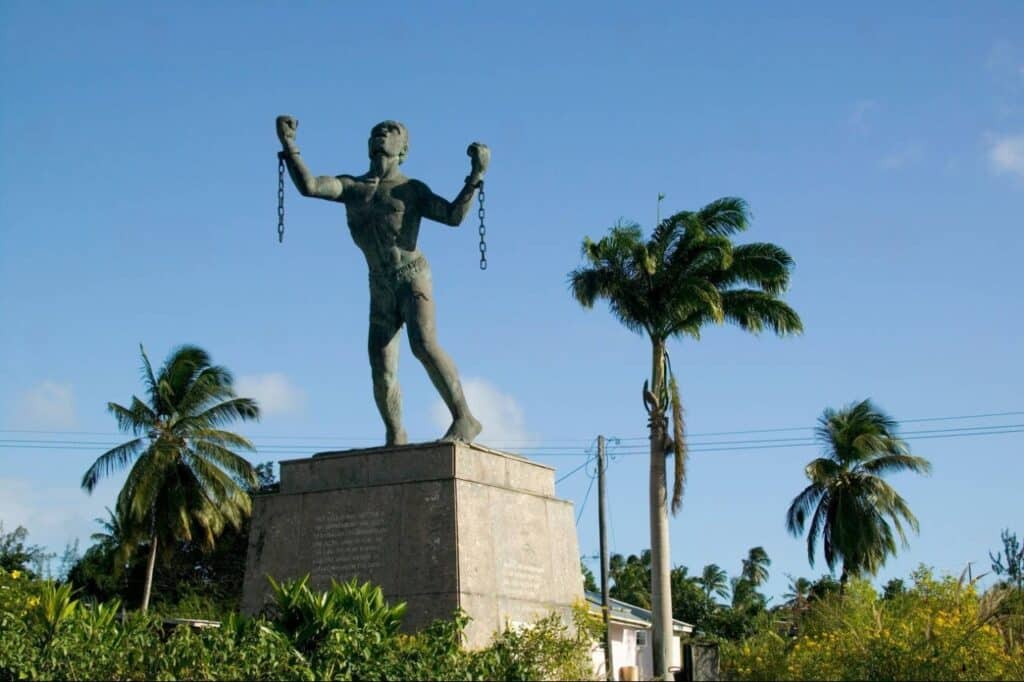
In Barbados, two bronze arms rise up, their wrists still encircled by broken chains. Sculptor Karl Broodhagen imbued this figure with a power that is immediately apparent: that of a body that now refuses enslavement. Often referred to as the Bussa statue, the work has become one of the most visible symbols of emancipation on the island. As August 1 approaches, this image serves as a reminder that Emancipation Day is more than just a holiday. In several former British colonies in the Caribbean, the date provides an opportunity for reflection. It invites us to consider the struggles, the suffering, and the freedoms won, but also what today’s societies choose to pass on.
Emancipation Day: What Does August 1 Actually Commemorate?
The Slavery Abolition Act was passed by the British Parliament in 1833 and took effect on August 1, 1834. However, that date did not mark complete freedom for everyone. A large proportion of formerly enslaved people were subjected to an “indentured servitude” system, which kept them working for their former masters.
This system came to an end in 1838 in the relevant British colonies. This timeline is crucial. It serves as a reminder that legal abolition and the actual exercise of freedom do not always coincide. Emancipation Day, therefore, has a more complex history than simply a break between slavery and freedom.
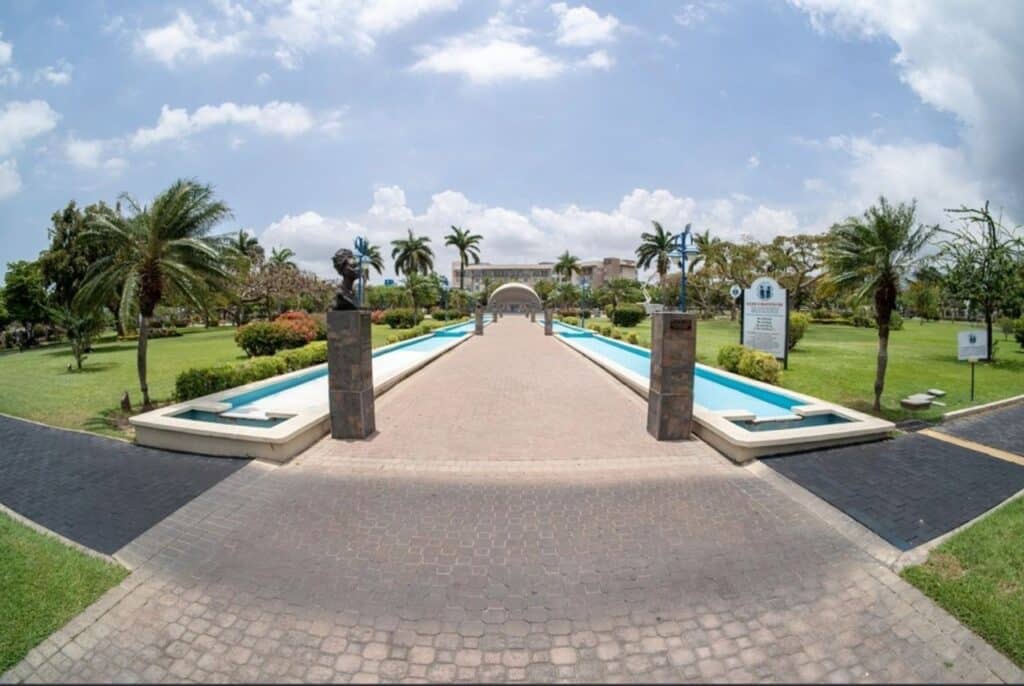
In Barbados, Bussa embodies resistance
The statue known as the Bussa Statue commemorates the revolt that broke out in Barbados in April 1816. The British National Archives describe it as an insurrection organized by enslaved women and men. Bussa, himself a slave, became one of its leading figures.
In Barbados, Emancipation Day also highlights the resistance movements that preceded abolition. The monument, therefore, does not merely recount a decision made in London; it places Caribbean action at the center of the narrative. The broken chains serve as a reminder that enslaved people were not merely beneficiaries of an imperial decision. They challenged the system, organized revolts, and defended their own vision of freedom.
In Jamaica, freedom looks up to the sky
In Kingston, Emancipation Park is hosting “Redemption Song”, a sculpture by Laura Facey unveiled in 2003. Two black bronze figures—a woman and a man—stand naked, gazing toward the sky. The artist sought to depict a sense of elevation following the violence of slavery. In Jamaica, Emancipation Day thus finds a contemporary expression in the public sphere. The work does not seek to recreate a historical scene. Rather, it offers a symbolic language composed of bodies, water, and gazes. In a popular park in the heart of the capital, emancipation is no longer just a chapter in a textbook: it becomes an everyday presence.

In Dominica, Neg Mawon commemorates the freedom that was won
In Roseau, the Neg Mawon monument pays tribute to the Maroons and those who resisted the slave system. The Dominican government has presented it as a place intended to commemorate their role in the struggle for freedom. In Dominica, Emancipation Day recalls that the history of freedom was also shaped by marronage and resistance. The symbol affirms that emancipation began before 1834. It was also forged through escapes to the mountains, maroon communities, acts of defiance, and confrontations. This memory engages with sites associated with the history of slavery, such as the former market in Roseau.

One Date, Many Caribbean Memories
Barbados, Jamaica, and Dominica all commemorate a history tied to the British Empire, but they do not tell that story in the same way. One highlights a revolt and its heroes. Another turns to contemporary art to express liberation. The third emphasizes the Maroon legacy and sites of resistance. This diversity prevents the Caribbean from being reduced to a single narrative. Emancipation Day thus becomes a meeting point for distinct regional histories. Monuments, ceremonies, conferences, music, and community gatherings extend this memory beyond the archives.
The real challenge, however, remains the transmission of this history. Emancipation Day retains its power only if the commemoration helps us understand what was abolished, what has survived, and what continues to influence Caribbean societies. When the August 1 ceremonies come to an end, what place does this history hold in the lives and concerns of the younger generations?
Emancipation Day commemorates the abolition of slavery in several former British colonies. It is primarily celebrated on August 1 in various Caribbean territories.
August 1 marks the effective date of the Slavery Abolition Act in 1834. However, the “indentured servitude” system kept many formerly enslaved people in a form of forced labor until 1838.
Emancipation Day is celebrated with ceremonies, cultural activities, lectures, and community gatherings. Monuments such as the statue of Bussa in Barbados or “Redemption Song” in Jamaica also help to preserve this memory.
With her thirteenth album, “Too Too Bad”, Buju Banton reached No. 3 on the U.S. iTunes Reggae Albums chart. This strong start reflects significant support for the Jamaican artist, though it remains to be seen how long this success will last.
On July 17, 2026, Buju Banton released “Too Too Bad,” a 13-track, 35-minute album. Released by Gargamel Music under an exclusive license from VP Music Group, the album debuted at number three on the U.S. iTunes Reggae Albums chart. This chart provides a useful snapshot. It shows that an audience was ready to buy the album right away. However, it does not yet allow us to gauge the album’s total audience or its ability to remain prominent for several weeks.
A launch that goes beyond the United States
The release of “Too Too Bad” also made an impact on several iTunes reggae charts, notably in Belgium, Canada, the United Kingdom, France, Japan, and Germany. On the global iTunes Albums chart tracked by Kworb, the album peaked at No. 17 on July 20 before dropping in rank.
This variation serves as a reminder of the need for caution. iTunes charts can change rapidly. They are based on purchases made in the iTunes Store, whereas a significant portion of music consumption now takes place via streaming. Apple, in fact, distinguishes between purchasing an album on iTunes and streaming it on Apple Music. For Buju Banton, however, this Top 3 ranking remains significant. It demonstrates an ability to generate immediate engagement, which is particularly valuable for an artist whose career spans more than three decades.

Buju Banton Returns to His Dancehall Roots
The title “Too Too Bad” is a direct reference to *Too Bad*, an album released in 2006. Twenty years later, Buju Banton has chosen to reaffirm dancehall’s place in his musical identity. The album features productions by Supa Dups, DJ Khaled, and Di Genius, along with collaborations with Ari Lennox and Gramps Morgan.
The project also plays with familiar elements of Jamaican music. “We Nuh Play” references the Diseases riddim, while “Butterflies” uses the Real Rock riddim. In reggae and dancehall, a riddim refers to an instrumental backing track over which different artists can record their own tracks. Apple Music also notes the influence of contemporary hip-hop vibes on “House Call” and “Like You.” At the other end of the album, “Power” maintains the social commentary that has long been a hallmark of the artist’s body of work.
Why American Audiences Are Still Responding
The first reason has to do with Buju Banton’s status. His voice, his body of work, and his seamless transition between dancehall and roots reggae have forged a lasting connection with several generations. His album *Before the Dawn* earned him the Grammy for Best Reggae Album in 2011. The second reason relates to the album’s positioning. “Too Too Bad” is aimed at listeners who recognize the historical conventions of dancehall, while also featuring collaborators and sounds that resonate in today’s music market. Its release by VP Music Group can also help foster connections between Jamaica, the United States, and the Caribbean diaspora.
The real test begins now
An iTunes chart primarily measures the impact of a release. Lasting success is then reflected in streams, cumulative sales, the circulation of tracks, and their longevity on the charts. The Billboard charts, in fact, use a method that combines album sales, single sales, and streaming. The debut of “Too Too Bad” therefore proves one thing: Buju Banton retains an immediate appeal. Time will tell whether this momentum can become a sustainable trajectory and pass the torch of Jamaican dancehall on to a new generation.
A few days after its release, “Too Too Bad” reached No. 3 on the U.S. iTunes Reggae Albums chart. This result reflects strong initial interest at launch, but it does not yet constitute proof of lasting success.
“Too Too Bad” marks Buju Banton’s confident return to dancehall. The track echoes “Too Bad,” released in 2006, while the album blends classic Jamaican riddims with more contemporary sounds and collaborations.
This chart shows that audiences in the U.S. and the diaspora remain eager to snap up a Jamaican dancehall album. However, we’ll need to monitor streaming numbers, cumulative sales, and chart longevity to gauge its true success.
