Dominica offers the most spectacular adventure in the Lesser Antilles: the hike to the Valley of Desolation and the Boiling Lake. On a 13-kilometre round trip loop, with almost 900 metres of ascent and descent, hikers enter a world shaped by the power of volcanoes. Smokers, bubbling springs and lunar landscapes make for a unique Caribbean experience.

An exceptional volcanic heritage

Located in Morne Trois Pitons National Park, a UNESCO World Heritage site since 1997, the Vallée de la Désolation and Boiling Lake are two of the world’s most spectacular natural wonders. are at the heart of a volcanic territory of rare intensity. Dominica, with its nine active volcanic centers, is one of the most volcanic islands in the West Indies. Its 751 km² surface is the result of millions of years of eruptions linked to the subduction of the Atlantic plate beneath the Caribbean plate, at a rate of around 2 centimetres per year.

The island is dominated by steep slopes and dense forests. The Morne Trois Pitons, culminating at 1,387 meters, gives the park its name. Its rocks, mainly andesitic and dacitic, feed fertile soils covered with lush tropical vegetation. But in the heart of the Valley of Desolation, underground heat and volcanic gases prevent all life from developing.

Boiling Lake
©discoverdominica
Boiling Lake
©discoverdominica

The Valley of Desolation: a timeless landscape

The Valley of Desolation is a volcanic amphitheatre created by the collapse of several craters. In this mineral terrain, geothermal activity is omnipresent: mud pots, hissing fumaroles, hot springs sometimes exceeding 100°C. The gases, a mixture of water vapour, sulphur dioxide and hydrogen sulphide, give off a characteristic rotten-egg smell and create an environment where vegetation is absent.

The scenery is striking: yellow and orange deposits of sulfur and iron oxides, boiling sludge that seems to breathe, plumes of steam rising from the ground. Guides like to demonstrate the power of nature by cooking an egg directly in the boiling water…

Boiling Lake
©discoverdominica
Boiling Lake
©discoverdominica

Boiling Lake: a unique phenomenon

After crossing the Valley of Desolation, the hike leads to Boiling Lake. the world’s second-largest boiling lake after New Zealand’s Frying Pan Lake. Located at an altitude of around 800 metres, it measures almost 60 metres in diameter and over 59 metres in depth. Its blue-grey water is constantly stirred by the heat of volcanic gases rising from underground.

Temperatures at the edges reach between 82 and 91°C. The permanently boiling center remains impossible to measure. Discovered in 1870 by Edmund Watt and Henry Nicholls, the Boiling Lake has fascinated scientists since it was first studied in 1875. Since then, it has undergone spectacular variations: in 1880 and 2005, phreatic eruptions temporarily emptied the lake before it filled up again.

Boiling Lake
©discoverdominica
Boiling Lake
©discoverdominica

A demanding hike

The trail begins at Titou Gorge, near Laudat, at an altitude of 480 metres. After a gradual climb through the rainforest, hikers reach Breakfast River, the first stop before climbing Morne Nicholls, some 965 metres high. The descent that follows leads to the Valley of Desolation, over steep and often slippery terrain. Some sections can be equipped with ropes to secure the passage.

The final stretch crosses the geothermal valley before climbing to the viewpoint overlooking Boiling Lake. . In all, the route requires between 6 and 8 hours’ walking, in sometimes difficult conditions. Good physical preparation is essential, as the effort is well worth the reward: a breathtaking panorama over the Boiling Lake.

Boiling Lake
©discoverdominica

When to go?

The best time to visit is from January to April, during the dry season. Rainfall is less frequent, especially on the coast, and temperatures hover around 28°C. In the mountains, the climate remains humid all year round, but the trails are more practicable in the dry season. Conversely, the hurricane season, from June to November (with a peak between August and October), makes hiking more risky and less enjoyable.

Preserving a fragile site

The Valley of Desolation and Boiling Lake are UNESCO World Heritage Sites. It is forbidden to pick up stones, leave garbage or go off the marked trails. These simple gestures avoid weakening an ecosystem already subject to extreme conditions. Visitors must also respect the local fauna, including the Sisserou parrot, an endemic species and emblem of Dominica.

Boiling Lake
©discoverdominica

Mythical hike across the Valley of Desolation to Boiling Lake is more than a sporting challenge: it’s an immersion in the raw power of the Earth. The landscapes, between lush forests and sulfur-burnt lands, reveal Dominica’s dual identity as an island of greenery and volcanoes. Venturing along this trail, accompanied by a guide, visitors enjoy a rare experience in the Caribbean: walking above the bowels of the planet, in a setting that few other places in the world can offer.

Between Macouria and Montsinéry-Tonnegrande, the French Guiana Zoo has established itself as a unique site of its kind. Far from being just a place to observe wildlife, it plays a central role in the conservation, care and rehabilitation of local species that are often threatened. The park, which is a member of the European Association of Zoos and Aquariums (EAZA), is part of an approach that combines welcoming the public with scientific preservation missions, in a territory where the Amazon occupies more than 90% of the land.

From singular origins to a strengthened mission

The history of the  French Guiana Zoo began in 1983, under the name of Fauna Flora Amazonicaa center specializing in hummingbird breeding. The site soon broadened its scope to become a wildlife park, home to various species emblematic of the Amazon region. Closed in 2007 for safety and modernization reasons, it was reopened in 2008 by Franck and Angélique Chaulet, already owners of the “Zoo de Guadeloupe” and Jardin de Balata.

Since then, the site has undergone complete restructuring and the addition of major infrastructures, including a vast aviary inaugurated in 2014, paying tribute to Eugène Bellony, a pioneering figure in wildlife parks in French Guiana.

French Guiana Zoo
©zoo de Guyane
French Guiana Zoo
©zoo de Guyane

Why create such a refuge?

The creation of French Guiana Zoo was a response to a dual need: to provide a safe space for endangered species, and to raise public awareness of the richness and fragility of Guiana’s biodiversity. This Amazonian department is home to an exceptional natural heritage, but is subject to multiple pressures: deforestation, illegal hunting, animal trafficking and habitat destruction. In this context, the structure has become an essential link in the fight for the survival of certain emblematic species, such as the jaguar or the ferocious harpy, which are experiencing a progressive reduction in their vital space.

French Guiana Zoo
©zoo de Guyane
French Guiana Zoo
©zoo de Guyane

A scientific and environmental mission. Pic ©zoo de Guyane

At the heart of its actions, the Zoo runs breeding programs under the EEP (European Endangered Species Programme), concerning more than a dozen endangered species housed on the site. These initiatives make it possible to maintain viable populations in captivity, while providing for their reintroduction into their natural habitat whenever possible.

At the same time, the Zoo is working with the association SOS Faune Sauvage, a care center for injured, sick or poached animals. After rehabilitation, some specimens are returned to the Amazon rainforest, completing a rescue cycle that goes beyond the scope of a conventional zoo. This collaboration gives rise to concrete actions in the field, ranging from veterinary follow-up to the release of animals such as sloths and toucans, which are sometimes nursed for several months.

Zoo de Guyane
©zoo de Guyane
Zoo de Guyane
Zoo de Guyane

A space designed for animal welfare

French Guiana Zoo extends over several hectares of forest, with spacious enclosures designed to reproduce the natural environment of each species as closely as possible. The tour follows forest trails and suspended walkways, offering visitors a respectful immersion in the Amazonian environment. The canopy bridges, almost 400 metres long, allow visitors to observe the animals in close-to-natural conditions. Jaguars, pumas, fierce harpies, red-faced spider monkeys, caimans, tapirs, red ibises and margays are among the permanent residents.

Each facility is designed to encourage natural behavior: ponds for aquatic species, high perches for birds, wooded areas for felines. The site’s caretakers and veterinarians work daily to enrich the animals’ environment, in order to stimulate their instincts and well-being.

Zoo de Guyane
©zoo de Guyane
Zoo de Guyane
©zoo de Guyane
Zoo de Guyane
©zoo de Guyane
Zoo de Guyane
©zoo de Guyane

Added value for local tourism

In addition to its ecological role, the Zoo has become the department’s second most popular tourist attraction, behind only the Isles of Salut. It attracts both residents and travelers seeking a better understanding of Amazonian wildlife. Economic spin-offs include the creation of direct jobs, the training of specialized personnel and the stimulation of related activities, such as hotels and restaurants. The site is also integrated into wider discovery circuits, linking natural and cultural heritage.

A lasting commitment. Pic ©Zoo de Guyane

The existence of the French Guiana Zoo illustrates how tourism and the environment can complement each other. By showcasing local species and playing an active part in their preservation, the park embodies a form of responsible tourism, focused on imparting knowledge and protecting natural heritage. This model proves that a public establishment can become a key player in conservation, while remaining a major asset for the local economy.

Zoo de Guyane
Zoo de Guyane
Zoo de Guyane
Zoo de Guyane
Zoo de Guyane
Zoo de Guyane
Zoo de Guyane
Zoo de Guyane

SOTIC 2025, an acronym for State of the Tourism Industry Conference, represents a crucial moment for all those involved in tourism in the Caribbean. Scheduled from September 30 to October 3, 2025 at the Hilton Barbados Resort, this flagship conference, organized by the Caribbean Tourism Organization (CTO), places at the heart of its debates the importance of an approach based on research and relevance in order to forge a stable and buoyant future for the sector.

An essential event for the region's tourism sector

SOTIC 2025 brings together ministers, business leaders, international experts, media and young leaders to discuss current and future issues affecting the region. These high-level exchanges, essential for fine-tuning regional strategies, aim to boost economic competitiveness while promoting sustainable, inclusive tourism.

SOTIC 2025
©CTO
SOTIC 2025
©CTO

The central theme and its strategic implications

Under the official title : “Reinventing Caribbean tourism: research, relevance and the way forward”, the event highlights the need to use reliable data to guide tourism policies and actions. This approach ensures that the initiatives adopted correspond to the changing expectations of visitors, while consolidating the islands’ economic and environmental foundations.

SOTIC 2025
©CTO

The importance of reliable data to guide tourism policies

SOTIC 2025 advocates the rigorous use of research to adapt supply to global trends and the specific characteristics of the Caribbean. The work presented will focus on tourism flows, visitor satisfaction and economic spin-offs, providing decision-makers with precise information to develop effective strategies.

Emerging tourism markets to diversify our offering

Among the key themes, SOTIC 2025 will highlight the growth segments of sports tourism, medical tourism and health and wellness tourism. These expanding sectors are essential levers for diversifying the region’s economy, boosting its attractiveness and offering more resilient alternatives to fluctuations in traditional markets.

SOTIC 2025
©CTO
SOTIC 2025
©CTO

Sports, medical and wellness tourism: levers for economic growth

Sports tourism benefits from the development of attractive infrastructures and events, while medical tourism meets growing demand for specialized care in pleasant surroundings. Wellness tourism, meanwhile, meets today’s expectations for escape and revitalization, promoting sustainable, quality tourism.

SOTIC 2025
©CTO

The role of young leaders in transforming the sector

The Regional Youth Congress, scheduled for October 2, 2025, will provide an opportunity for the region’s talented young people, known as “Junior Ministers of Tourism”, to present their ideas. This initiative reinforces the commitment of new generations to innovative, socially responsible and environmentally-friendly tourism.

SOTIC 2025
©CTO

Barbados, a committed host and a regional model

Barbados, headquarters of the CTO and a reference in the region, offers an exemplary setting for the SOTIC 2025 debates. The event is being organized in close collaboration with the local Ministry of Tourism and Barbados Tourism Marketing Inc, affirming a shared commitment to promoting integrated, sustainable and forward-looking tourism.

SOTIC 2025
SOTIC 2025
SOTIC 2025

The program and highlights of SOTIC 2025

SOTIC 2025 kicks off on September 30 with the CTO’s internal work, with ministerial and board meetings focusing on tourism governance and regional cooperation. From October 1-3, the conference will come alive with panel discussions highlighting innovative research, collaborative workshops and presentations of recent industry data.

Among the highlights, the Regional Youth Congress on October 2 will give the floor to young ministers, bringing a new dimension to the debates. Specialized sessions will address the challenges of sports, medical and wellness tourism. Practical workshops and conferences will also enable experts and decision-makers to exchange views on best practices and emerging projects.

This edition of SOTIC 2025 will foster strategic partnerships in tourism innovation, while consolidating a more inclusive and sustainable model for the region.

SOTIC 2025
©CTO
SOTIC 2025
©CTO
SOTIC 2025
©CTO
SOTIC 2025
©CTO
SOTIC 2025
©CTO

SOTIC 2025 is set to be a milestone in charting the course of Caribbean tourism. With a focus on rigorous research, relevant action and collaboration between young people and experts, the conference promises to redefine the contours of a sector capable of meeting economic, social and environmental challenges. Barbados, as host, symbolizes this desire for a stronger, more attractive regional tourism future.

Willemstad stands like an architectural jewel in the heart of the Caribbean Sea, where Dutch colonial history meets tropical exuberance. The capital of Curaçao and a UNESCO World Heritage Site since 1997, the city’s multicolored facades and its multicultural heritage, enriched over nearly four centuries, are a delight to behold.

A unique architectural heritage in the heart of the Caribbean

Fort Amsterdam: the birth of a capital

The history of Willemstad began in 1634, when Dutch admiral Johan van Walbeeck and his 200 soldiers took possession of the island, then in Spanish hands. In 1635, construction began on Fort Amsterdam on the eastern shore of Sint Anna Bay. Built of coral stone with walls up to three meters thick, it became the headquarters of the Dutch West India Company. Today, it is still the seat of Curaçao’s government.

The four historic districts

Willemstad is structured around four districts that trace three centuries of urban development. Punda, the oldest, was built in the 17th century according to Dutch urban planning principles, with its narrow streets and triangular gabled houses. Otrobanda, Pietermaai and Scharloo were developed in the 18th century, each with its own architectural character.

Willemstad
©unesco
Willemstad
©unesco

Colored heritage: a tradition since 1817

Governor Kikkert’s decree and local legend

In 1817, Governor Albert Kikkert banned the exclusive use of white facades, citing the need to reduce glare under the tropical sun. Popular tradition has it that this decision was also intended to relieve his migraines, but this explanation remains the stuff of legend. This measure gave rise to the colorful palette for which the company is renowned today. Willemstad: deep reds, luminous ochres, varied blues and greens.

A Caribbean architectural kaleidoscope

More than 700 protected historic buildings – around half of the downtown area – make up the urban landscape. Each façade contributes to the visual identity of Willemstad, offering a lively reading of its history.

Willemstad
©Latin America & Caribbean Geographic
Willemstad
©Latin America & Caribbean Geographic

Punda and Otrobanda: two shores, one town

Queen Emma Bridge

Since 1888, the Queen Emma floating bridge has linked Punda and Otrobanda across Sint Anna Bay. Nicknamed the “Swinging Old Lady”, it swings sideways using two diesel engines and perpendicular propellers to let ships pass. This masterpiece of engineering remains a powerful symbol of Willemstad.

The Handelskade, a showcase for world heritage

Punda’s waterfront, the Handelskade, lines up a series of colorful 18th-century buildings, comparable to Amsterdam canal houses but in tropical latitudes. Among them, the Penha building, dating from 1708, exemplifies Dutch commercial style with its distinctive curved gable.

Willemstad
©Latin America & Caribbean Geographic
Willemstad
©unesco

Pietermaai and Scharloo: colonial elegance and cultural renewal

Curaçao’s Baroque style

The 18th century saw the development of an architectural style unique to Curaçao: “Curaçao Baroque”, recognizable by its curved gables, sculpted facades and sunshade galleries. Pietermaai and Scharloo are home to a number of luxurious residences representative of this style.

Neighborhood renaissance

Pietermaai, once a residential and then a business center, has undergone a profound transformation with the opening of boutique hotels, cafés and galleries. Scharloo is following a similar dynamic and is now home to start-ups, restaurants and cultural venues. These reconversions give Willemstad renewed vitality.

Willemstad
©unesco
Willemstad
©unesco

The Mikvé Israel-Emanuel synagogue: an exceptional landmark

Four centuries of history

In the heart of Punda, the Mikvé Israel-Emanuel synagogue, consecrated in 1732, is the oldest in continuous use in the Americas. Its congregation, established in 1651 by Sephardic Jews from the Netherlands and Brazil, illustrates the cultural diversity of Punda. Willemstad.

Willemstad
©Latin America & Caribbean Geographic

A sandy soil with multiple meanings

The interior is distinguished by a floor covered in white sand. This rare tradition, found in only a few historic synagogues, evokes the wanderings of the Jewish people in the desert, the discretion required for prayer during the Inquisition, and a practical legacy of the Dutch-Portuguese communities.

Willemstad
©Latin America & Caribbean Geographic

Willemstad is much more than a capital city: it’s a cultural crossroads, blending Dutch, Spanish, Portuguese, African and Caribbean influences. Its four historic districts, colorful facades and architectural heritage make it a veritable open-air history book. Between tradition and renewal, Willemstad continues to embody a unique identity in the Caribbean and fully deserves its place among the world’s heritage treasures.

Willemstad
©unesco
Willemstad
©unesco
Willemstad
©unesco
Willemstad
©unesco
Willemstad
©unesco
Willemstad
©unesco
Willemstad
©unesco

Every summer, the island of Saba celebrates its carnival with a rare intensity. From July 28 to August 3, 2025, the Saba Carnival returns for a new edition, blending Caribbean traditions, community spirit and cultural richness in an exceptional natural setting.

A long-standing tradition since 1975

Saba Carnival doesn’t follow the pre-Lenten calendar like traditional carnivals. It is held in July, to enable Saban students living abroad to participate. First held in 1975, this summer festival has become an integral part of the identity of the island’s 1,500 inhabitants. It reflects the history of Saba, colonized by the Dutch in the 17th century, where African, European and Caribbean cultures have intermingled over the centuries.

In its fifty years of existence, Carnival has grown from a local celebration to an event recognized throughout the region. Today, it mobilizes all generations, in a society where family and community ties remain strong.

Saba Carnival
©Saba Carnival
Saba Carnival
©Saba Carnival

A rich, structured program

The official 2025 program, released by the local authorities, includes seven days of festivities punctuated by popular events.

Monday, July 28 opens the festivities with a ceremony at The Bottom, the island’s capital. On Tuesday, July 29, it’s time for Bouyon Night, an energetic evening dedicated to the Bouyon musical genre, originally from Dominica. On Wednesday July 30, the Calypso and Road March competition will showcase local artists in two emblematic Caribbean musical styles.

Thursday, July 31, is the Big Jam, an evening of music with an international flavour. On Friday August 1, the International Flag Fest will fly Caribbean banners in the streets of The Bottom and Windwardside, in a festive and colorful atmosphere.

The weekend marks the climax of the carnival. Saturday August 2 kicks off at dawn with the traditional Jouvert Morning, a morning procession typical of Caribbean carnivals. The Grand Parade follows during the day, with its decorated floats, flamboyant costumes and musical performances.

Finally, on Sunday August 3, the Second Parade, also known as the Last Lap, is the last major parade before the festival closes.

Saba
©Saba Carnival
Saba
©Saba Carnival
Saba
©Saba Carnival
Saba
©Saba Carnival
Saba
©Saba Carnival

A unique island of nature and heritage

Saba is a 13-square-kilometer volcanic island dominated by Mount Scenery, the highest point in the Kingdom of the Netherlands at 887 meters above sea level. Since 2010, together with Bonaire and St. Eustatius, it has been a special municipality of the Netherlands. This administrative status provides logistical support without compromising its Caribbean identity.

Divided into four villages – The Bottom, Windwardside, Hell’s Gate and St. Johns – the island cultivates a peaceful, communal way of life. This intimate setting gives the carnival a warm, almost family feel.

Saba
©viator
Saba
©viator
Saba
©viator

A strong commitment to the environment

True to its nickname of “Unspoiled Queen”, Saba is renowned for its conservation efforts. Its marine park, created in 1987, protects 1,300 hectares around the island, offering exceptional underwater biodiversity. Thirty dive sites are listed, with visibility of up to 90 meters.

The island also boasts a network of hiking trails traversing several ecosystems, from tropical rainforest to tidal pools. Although a number of renewable energy initiatives have been launched, no official source confirms that the electricity grid has been predominantly solar-powered since 2019.

Saba
©viator
Saba
©viator
Saba
©viator

An essential economic and cultural lever

Carnival is Saba’s annual tourist peak. Its accommodations, mostly small hotels and cottages, are fully booked during the week. This is of direct benefit to restaurateurs, craftsmen, musicians, costume designers and service providers.

Far from mass tourism, Saba focuses on authenticity. The carnival is part of this strategy, offering an immersive, sincere experience in a preserved environment. According to the Association of Caribbean States, island carnivals are powerful vectors of revenue and identity for small territories.

Saba Carnival
©Saba Carnival

A pillar of cultural transmission

The Saba Carnival is much more than a tourist event. It embodies the island’s living memory. By showcasing local music, dance and traditional costumes, it strengthens the bond between young people and their heritage.

Preparations take several months and involve all generations. This collective organization weaves local solidarity and perpetuates the values of sharing and unity. What’s more, the growing recognition of carnival on a regional scale is helping to put Saba on the Caribbean cultural map.

A 2025 edition to match history

For its 50th edition, Saba Carnival 2025 promises a structured, festive and inclusive program. While certain traditions, such as the cremation of King Momo, are not on the program this year, other strong rituals, such as the Jouvert Morning and the Grand Parade, will be maintained.

In a Caribbean context where many islands are rethinking their tourism models, Saba remains true to its approach: focusing on quality, identity and the preservation of its natural and cultural resources.

Saba Carnival
©Saba Carnival

Saba Carnival 2025 proves once again that a small territory can produce a large-scale event without denying its authenticity. From July 28 to August 3, this extraordinary island will make the heart of the Caribbean beat to the rhythm of its music, traditions and deep attachment to its culture. More than a festival, it’s the expression of a people and a territory proud of their roots and resolutely looking to the future.

A neighborhood shaped by history

Located east of Fort Amsterdam, Pietermaai is one of Curaçao‘s oldest districts. It takes its name from Pieter de Meij, a ship’s captain who came from Brazil in 1674 to establish a plantation called “Zeelucht”. As early as 1680, the Dutch West Indies Company began to subdivide the land outside the city walls, creating a suburb that was both strategic and autonomous.

This development was part of a desire to maintain a clear firing range around the Willemstad fortifications, while responding to demographic pressure.

Pietermaai town planning was thus born of a compromise between military security and residential expansion. Colonial villas quickly sprang up in this intermediate zone, marking the beginnings of an original, structured urbanization. The famous “Steenen Padt”, linking the fortified city to Caracas Bay, played a crucial role in trade, particularly during the French attack of 1673.

Pietermaai
©Pietermaai District Curaçao 2
©pietermaaidistrict
©Pietermaai District Curaçao
Pietermaai
©pietermaaidistrict

From strategic suburb to Bohemian enclave

Over the centuries, Pietermaai has seen its ramparts fall and its boundaries evolve. The gradual demolition of the fortifications in the 19th century allowed architecture to express itself fully, with colorful residences, small shops and European-style buildings. Some urban expansion projects never came to fruition, giving the district a distinct personality, untouched by large-scale real estate development.

Today, the town is often compared to a “Caribbean Soho”, not to follow a trend, but for its ability to bring together residents, artists, artisans and visitors in the same space. Far removed from standardized circuits, the district has become a veritable living space where artistic and culinary expression find fertile ground. This revival is no accident: it’s the fruit of careful renovation and constant local involvement.

Pietermaai
©pietermaaidistrict
Pietermaai
©pietermaaidistrict

The beating heart of Nieuwestraat

The Nieuwestraat is Pietermaai’s main thoroughfare. Pietermaai. Lined with houses painted in pastel hues, it comes alive in the early hours of the morning. Restored facades bear witness to an attention to detail and a deep respect for old buildings. At night, the soft lighting of the establishments gives the street a warm, almost cinematic atmosphere.

Restaurants, cafés, jazz bars… there’s no shortage of addresses, each with its own ambience, without excess or uniformity. Here, world cuisines mingle with local traditions, and menus are designed to appeal to palates without artifice. Visitors will find something to satisfy both their appetite and their curiosity.

A neighborhood fueled by creativity

The town is also a place of cultural expression. Art galleries, walls painted by local artists and designer boutiques line the side streets. Each wall seems to bear a trace of the past, while leaving room for contemporary imagination. Far from being static, this collective memory evolves in step with community initiatives.

Some places pay tribute to emblematic figures, such as Wilson “Papa” Godett, a respected trade unionist and politician, whose name adorns one of the neighborhood’s main thoroughfares. These references are not decorative: they recall the social struggles that have shaped the identity of Curaçao and its people.

Pietermaai
©corendon
Pietermaai
©Pietermaai District Curaçao

Sleep in the heart of the neighborhood

Stay in Pietermaai is choosing authenticity without sacrificing comfort. Numerous boutique hotels and charming guesthouses have taken up residence here. Their architecture respects the heritage of the area while incorporating modern amenities. Establishments such as BijBlauw or Scuba Lodge stand out for their attention to detail, ideal location and respectful approach to the local environment.

This type of accommodation offers a real immersion in local life. In the morning, visitors meet local residents, craftsmen and fruit deliverymen; in the evening, they share the terraces with musicians and students. This relaxed rhythm makes Pietermaai is a popular place to stay because of its close proximity to Willemstad’s centers of interest, without the hustle and bustle of crowded areas.

Pietermaai
©mycuracaoguide
Pietermaai
©Pietermaai District Curaçao

A successful heritage renaissance

Renovating Pietermaai was not a quick process. Abandoned for several decades, particularly in the 1970s and 1980s, the district had lost its lustre. It was local players – architects, entrepreneurs, artists – who initiated the revival, with ambitious rehabilitation projects that respected the original setting.

Today, this renaissance is cited as a successful example of urban conservation. Island authorities see it as a model of balance between heritage enhancement and economic dynamism. This success is based on collaborative management, combining private initiatives and institutional support.

Pietermaai
©Pietermaai District Curaçao
Pietermaai
©Pietermaai District Curaçao
Pietermaai
©corendon

Pietermaai is neither an open-air museum nor just another fashionable district. It embodies a way of life, where collective memory meets contemporary creativity. It is precisely this tension between roots and contemporary uses that gives it its unique personality.

While other areas of Curaçao are focusing on more uniform developments, Pietermaai charts a different course, one that is both demanding and faithful to its history. The aim is not to reproduce a decor, but to maintain an atmosphere. An editorial and architectural choice that continues to seduce those in search of authenticity and roots.

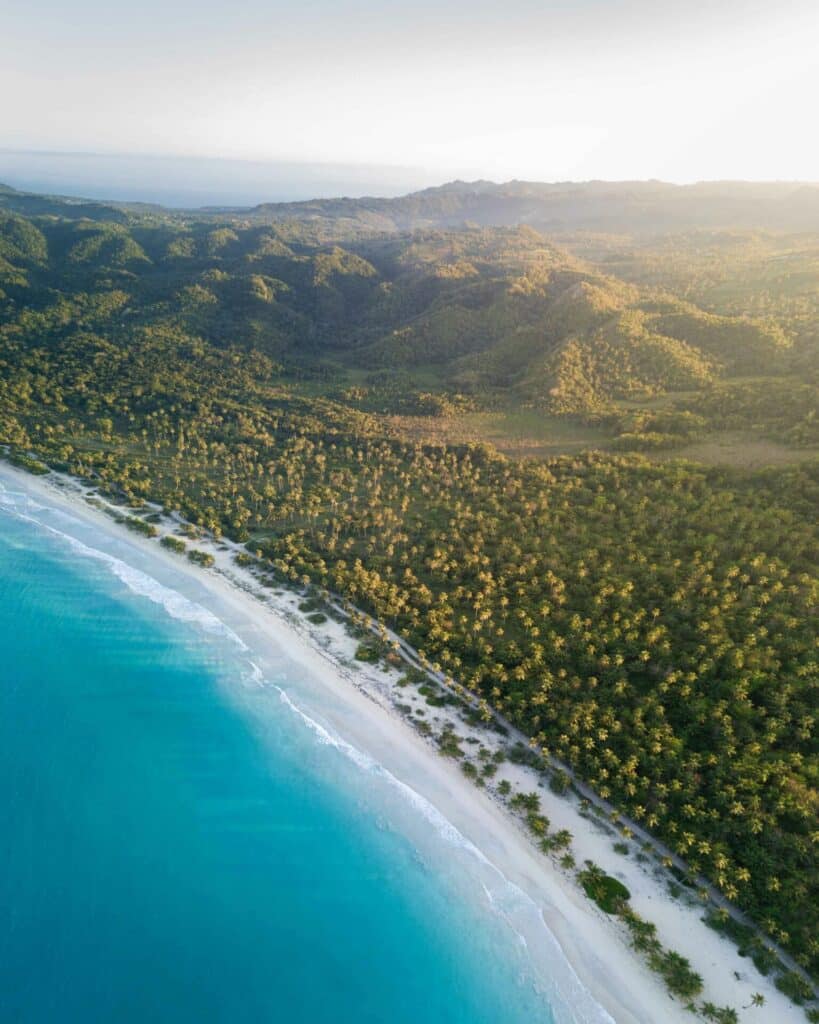
At Grandes Cayes beach rises to the top of the list when you think of the wild, authentic beauty of Saint-Martin. This coastline, protected by the National Nature Reserve, offers a setting where nature reigns supreme, far from the crowds and hustle and bustle. Over the years, Grandes Cayes beach has preserved its identity: once a place where families gathered for Sunday barbecues, today a preserved area where white sand stretches as far as the eye can see, under the peaceful gaze of the island of Tintamarre.

Exceptional ecological wealth

A site classified as a National Nature Reserve

It takes more than just a glance to grasp the biodiversity of Grandes Cayes beach. The majority of the site is fully protected. Every season, sea turtles choose this beach to lay their eggs, preserving a precious natural cycle. The coastal vegetation, dominated by majestic cacti and other xerophilous species, shapes a landscape typical of northern Saint-Martin, at the foot of the Red Rock massif.

Remarkable flora and fauna

The terrain surrounding Grandes Cayes beach is home to red gum trees, mapous, pear trees and the rare guaiac tree, all protected by the reserve’s strict regulations. Careful walkers may also spot rare orchids or striped iguanas, an invasive species that has replaced the Lesser Antillean iguana. The area is also home to endemic lizards, such as anolis, skinks and geckos, veritable guardians of this ecological heritage.

Grandes Cayes beach
©wearesxm

Landscapes shaped by sea and rock

A spectacular waterfront

Atlantic rollers lick the northeast-facing of Grandes Cayes beach, but the coral reef protects the bay and Pinel islet from the most powerful assaults. This reef, enclosing a narrow channel, provides shelter for seagrass beds. At depths of between three and seven meters, rays, turtles and sharks frequently come across it: this sanctuary serves as a nursery for a number of aquatic species, as Julien Chalifour, deputy director of the Nature Reserve, explains.

Two trails to immerse yourself in nature

The site is not just a destination for contemplation; it also invites discovery on foot. To the north, the sentier des Froussards guides walkers to Anse Marcel, winding through lush vegetation. To the south, another trail follows the hill along the coastline, offering breathtaking views of îlet Pinel and the sea below.

Grandes Cayes beach
©wearesxm

An authentic place, far removed from tourist development

Absolute serenity and simplicity

The Grandes Cayes beach offers a rare experience in the Caribbean: no facilities, no services, just peace and space to reconnect with the essential. It’s advisable to bring your own food and water, as nature reclaims its rights. The place exudes peace, and you hardly come across other walkers: ideal for those seeking tranquillity away from conventional beaches.

A heritage to protect

Grandes Cayes beach, with its rich biodiversity, is the subject of a restoration project designed to enhance its protection. The project, which is currently underway, reflects the company’s ongoing commitment to the sustainable management of the site, so that everyone, whether expert naturalist or curious visitor, can find something to marvel at and learn from.

Grandes Cayes beach
©wearesxm
Grandes Cayes beach
plage grandes cayes ©st-martin.org

Grandes Cayes, the promise of a return to basics

When you step onto the sands of Grandes Cayes beach, the whole of Saint-Martin is revealed in its rawest, most authentic version. Far from clichés, this unspoilt spot gives the impression of being at the end of the world, where nature reveals itself without artifice. Whether you’re an ecology enthusiast or simply looking for a soothing interlude, all you have to do is let yourself be carried away by the magic of this unique area.

In the north of the Lesser Antilles, the island of Saint-Martin is home to remarkably rich marine ecosystems. Coral reefs, sea grass beds, mangroves, turtles and marine mammals cohabit in an environment that is as fragile as it is essential for the territory.

Exceptional biodiversity under pressure

Saint-Martin’ s marine ecosystems form a natural heritage of rare complexity. The island, divided between France and the Netherlands, concentrates a variety of coastal and underwater habitats: fringing and barrier reefs, seagrass beds and mangroves. The reefs alone cover almost 19.4 km² around the island, mainly around Baie Orientale, Coralita, Le Galion and Grandes Cayes.

The Nature Reserve boasts over 1,040 marine species, including some 30 corals and over 500 molluscs. There is an impressive diversity of reef fish, sea turtles, starfish, sea urchins, anemones and marine mammals – including dolphins, sperm whales and humpback whales.

These marine ecosystems on Saint-Martin provide refuge, nursery and feeding grounds for emblematic species such as the green turtle, hawksbill turtle and leatherback turtle. From March to November, several of the island’s beaches become crucial egg-laying sites for these protected reptiles.

marine ecosystems

Reefs, seagrass beds, mangroves: essential ecological roles

Coral reefs protect coastlines from erosion and mitigate the impact of storms. They are home to a biodiversity that guarantees the balance of marine food chains. Seagrass beds, covering more than 60 km² around the island, and mangroves (24.2 hectares) complete these functions by acting as biological filters, sequestering carbon and ensuring ecological continuity between land and sea.

These marine ecosystems on Saint-Martin act as a natural shield against climate change, playing a central role in climate regulation, local food security and the preservation of endangered species.

marine ecosystems
©st-martin.org
écosystèmes marins
©st-martin.org
écosystèmes marins
©st-martin.org

A major economic lever

Saint-Martin’ s marine ecosystems generate an estimated economic value of 26 million euros per year. Coastal protection alone represents 6 million in potential savings, while nautical and diving activities contribute 20 million to the local economy.

Almost 2,600 jobs and over 400 businesses depend directly or indirectly on these natural environments. Blue” tourism – diving, snorkeling, marine excursions – attracts up to 80% of visitors. With underwater visibility of up to 30 meters, St. Martin’s waters are among the best in the Caribbean for ecological discovery.

Innovative projects such as the “Under SXM” underwater sculpture park in Little Bay create artificial reefs, while diversifying the tourist offer and relieving congestion at the most sensitive natural sites. This type of initiative makes the most of Saint-Martin’s marine ecosystems, while protecting them at the same time.

écosystèmes marins
©st-martin.org

A worrying deterioration

But this ecological treasure is in peril. According to Ifrecor, only 20% of Saint-Martin’s coral reefs are in “good” condition. None are considered to be in “excellent” condition. The rest are showing signs of advanced degradation, directly linked to urbanization, port developments and pollution from untreated wastewater.

Sediments from urban or agricultural runoff asphyxiate corals. Chemicals favor invasive algae to the detriment of constructive species. The overexploitation of marine resources is putting further pressure on Saint-Martin’s already fragile marine ecosystems.

Coral bleaching in 2023, caused by water temperatures in excess of 30°C, affected the entire nature reserve. Despite this, some corals have shown an encouraging capacity for resilience. However, this positive dynamic remains fragile.

Nature reserves and protection strategies

Created in 1998, the Réserve Naturelle Nationale de Saint-Martin covers over 3,000 hectares, of which 2,796 hectares are marine. It is the main conservation tool, protecting reefs, mangroves, seagrass beds, ponds and coastal forests. This protected area alone is home to almost 2,000 species in 44 taxonomic groups.

A five-year management plan provides a framework for actions to preserve the marine ecosystems of Saint-Martin: habitat restoration, control of uses, user awareness, scientific monitoring and regional cooperation.

Marine mammals benefit from the Agoa sanctuary, which covers the entire exclusive economic zone of the French West Indies, while turtles are the subject of coordinated action plans with networks of eco-volunteers monitoring nesting sites.

écosystèmes marins
©Réserve Naturelle Nationale de Saint-Martin
écosystèmes marins
©Réserve Naturelle Nationale de Saint-Martin
écosystèmes marins
©Réserve Naturelle Nationale de Saint-Martin
écosystèmes marins
©Réserve Naturelle Nationale de Saint-Martin

Sustainable tourism and ecological restoration

The Nature Reserve is developing an eco-friendly mooring strategy, with mooring buoys and digital tools to limit destructive anchoring. Diving centers are also trained in eco-responsible practices, helping to protect Saint-Martin’s marine ecosystems while maintaining a high-quality tourist industry.

Reef restoration programs include the creation of coral nurseries and targeted transplants. Research into the thermal resistance of corals is opening up new prospects for strengthening the resilience of Saint-Martin’s marine ecosystems in the face of climate change.

Towards a sustainable blue economy

Saint-Martin’ s future depends on the balanced development of its blue economy, making the most of ecosystem services such as coastal protection, carbon sequestration and tourist appeal. Payment for environmental services schemes could provide new sources of funding for conservation.

Saint-Martin’s participation in regional networks such as the CAMAC project also enables the pooling of knowledge and best practices, reinforcing the protection of Saint-Martin’s marine ecosystems on a Caribbean scale.

American Airlines is introducing new flights from Boscobel and Kingston to Miami, starting December 18. This change, which goes beyond a simple adjustment of the flight schedule, is part of a territorial development strategy that could transform the economic, social and cultural dynamics of several regions of the country over the long term.

An overhead network redesigned to meet demand

For almost fifty years, American Airlines has accompanied the region’s development in terms of connectivity. The addition of two daily flights from Ian Fleming airport in Boscobel, and four daily flights between Kingston and Miami, is a direct response to the increasing flow of travellers – whether from tourism, the diaspora or the business world.

Miami, a major base for Jamaicans living in the United States, is now closer and more accessible. Thanks to American Airlines, passengers will now benefit from optimized routes, with extended schedules and a better distribution of flows. The offer has been designed to adapt to the reality of different uses: family travel, business trips or tourist stays.

American Airlines
©American Airlines

An ambitious winter program

From December 18, the company will operate :

  • ✅ Two daily flights between Boscobel (St Mary) and Miami
  • ✅ Four daily flights between Kingston and Miami

These new routes reinforce an already dense winter schedule, with more than twenty daily departures from Jamaica to seven major U.S. cities: Boston, New York, Dallas-Fort Worth, Charlotte, Chicago, Philadelphia and Miami. The increase in capacity, estimated at 20% over the previous year, illustrates American Airlines’ determination to adapt to new trends and meet the strong growth in international mobility needs.

American Airlines
©American Airlines

Economic leverage for St Mary's and Kingston

The opening of Ian Fleming Airport to direct flights to the USA offers an unprecedented opportunity for the St Mary’s region. This area, long considered secondary on traditional tourist circuits, could now benefit from new visitor numbers, stimulated by the presence of American Airlines. Local restaurateurs, craftsmen, innkeepers and carriers could all benefit immediately from this increased international exposure.

In Kingston, the growing importance of connections with Miami is consolidating the capital as a strategic center for Jamaica. Thanks to American Airlines, local companies, particularly in the trade, services and logistics sectors, benefit from easier access to the North American market, encouraging exchanges, partnerships and the circulation of skills.

American Airlines
©airports authority jamaica
American Airlines
©airports authority jamaica
American Airlines
©airports authority jamaica
American Airlines
©airports authority jamaica

A stronger link with the diaspora

The Jamaican community residing in Florida, particularly in the Miami-Dade and Broward areas, maintains intense family, cultural and economic ties with the country of origin. The new connections offered by American Airlines facilitate these interactions by reducing physical and symbolic distances.

Homecomings are becoming more frequent and simpler, and are often accompanied by transfers of skills, investments or community projects. By enabling more families to reunite more easily, this initiative supports social cohesion on a transnational scale.

A new dynamic for regional tourism

The integration of Boscobel into the international network represents a significant step forward in the company’s tourism diversification strategy. While Montego Bay and Ocho Rios have historically concentrated the majority of traffic, American Airlines is redirecting attention to the as yet under-exploited northeast coast.

This territorial rebalancing not only relieves pressure on certain infrastructures, but also enhances Jamaica’s other natural, heritage and human assets. The local authorities, in coordination with the air transport industry, ensure that this development is sustainable and respects local communities.

Measurable effects on daily life

Several direct impacts can be observed in the short term:

  • ✅ Greater accessibility: Residents of St Mary’s and Kingston can now travel more easily, with more flexible timetables and smoother connections.
  • ✅ Job creation: Increased air traffic generates new needs in the hotel, security, ground transportation and catering sectors.
  • ✅Enhanced appeal: By partnering with American Airlines, the destination gains greater visibility in the North American market, without sacrificing its authenticity.
American Airlines
©American Airlines

A shared vision for the future

The arrival of these new flights reflects the shared ambition of the Jamaican authorities and American Airlines to build a long-term partnership. This partnership is based on mutual commitments to sustainable growth, local value creation and community support.

The company is already planning to keep a close eye on traffic trends, adjusting frequencies and destinations if necessary. The aim: to position Jamaica as a modern, connected and forward-looking Caribbean hub.

With these new routes between Boscobel, Kingston and Miami, American Airlines is establishing itself as a key player in the transformation of mobility and regional development. By improving connectivity, generating tangible economic benefits and enhancing the value of previously less exposed regions, this initiative creates the conditions for a more balanced and inclusive development of Jamaica.

Antigua Carnival 2025 doesn’t just occupy a place on Antigua and Barbuda ‘s cultural calendar: it embodies a collective memory, a moving heritage and a powerful showcase for Caribbean realities. From July 25 to August 5, this year’s Itz A Vibe combines artistic excellence, historical significance and popular intensity. Twelve days in which an entire island takes center stage, carried by the echo of emancipation and the vitality of a creation that refuses to be erased.

A carnival born of freedom

The origins of Antigua Carnival 2025 go back to a founding moment: August 1, 1834, the date of the abolition of slavery in the British colonies. In Antigua, freedmen spontaneously went out to celebrate their freedom. This popular outburst, rooted in the streets and music, is the foundation of Carnival as it is organized today.

In 1957, Carnival became an official event, replacing the Old Time Christmas Festival. This marked a move towards modern tourism, while retaining traditional elements such as steel bands, satirical characters like John Bull, and Scottish-influenced Highland Fling dancing. This hybridization of cultural resistance and festive reinvention remains the festival’s DNA.

Antigua Carnival 2025
©antiguaobserver

A 2025 program structured around key milestones

Antigua Carnival 2025 opens with a series of pre-events on July 13, including Aunty Claudette’s Kiddies Party, in tribute to Claudette “CP” Peters’ 25-year career. The Calypso Monarch and Party Monarch semi-finals on July 17 and 18, and the Queen of Carnival election on July 20, will set the tone for a highly anticipated edition.

The official Antigua Carnival 2025 week kicks off on July 25 with Face Off, a musical clash between Asa Banton and Tian Winter in Carnival City. On July 26, the popular T-Shirt Mas will transform the streets of St. John’s into a huge parade of textile creativity.

Antigua Carnival 2025

July 30 marks the 40th anniversary of the legendary group Burning Flames, whose influence extends beyond Antigua’s borders. The following day, three major events will take place simultaneously: the Drink Till Ya Weak Boat Cruise, the Caribbean Melting Pot and Watch Night, a cultural vigil organized at the Botanical Gardens.

August 1, Emancipation Day, will be marked by the Calypso Monarch final. On August 2, three events will take place: RISE at Sir Vivian Richards Cricket Stadium, Carnival Dreamz in Hodges Bay, and Panorama, the great steel band meeting. On August 3, D’Breakfast Fete at Splash Antigua and Party Monarch will bring the musical intensity to a close.

Finally, August 4 and 5 are the climax of the festival. J’ouvert kicks off at dawn on Monday, followed by the Monday Mas Parade. The following day, the Parade of Bands parade will offer a final flamboyance in costume, before the traditional Last Lap through the streets of the capital.

Antigua Carnival 2025

Three important cultural anniversaries

This year, Antigua Carnival 2025 celebrates three major figures in its musical heritage. The 80th anniversary of Hell’s Gate Steel Orchestra, founded in 1945, will be honored. Antigua’s oldest steel band was recently hailed as Steelband of the Year at the National Music Awards 2024. In February 2025, the orchestra gave a remarkable performance in Parham Town, blending gospel and classical music.

Burning Flames, a veritable soca monument, celebrates its 40th anniversary. Founded in 1984 by the Edwards brothers, they have made a name for themselves with iconic tracks such as Workey Workey and Stiley Tight, which have marked past editions of the carnival.

Finally, singer Claudette “CP” Peters celebrates 25 years on stage. Renowned for her vocal power and longevity, she embodies the evolution of soca in Antigua, between roots and audacity.

Antigua Carnival 2025
Antigua and Barbuda Tourism Live2
Antigua Carnival 2025
©Antigua and Barbuda Tourism Live
Antigua Carnival 2025
©Antigua and Barbuda Tourism Live

A strong economic impact

For the authorities, Antigua Carnival 2025 is not just a cultural event. It’s also a major economic driver. According to the Minister of Creative Industries, Daryll Matthew, Carnival generates a massive influx of tourists, with hotel occupancy exceeding 90% during the period.

Government investments, estimated at over 5 million US dollars, cover logistics, communications, artistic fees and support for local service providers. From the catering sector to the fashion industry and artisans, the spin-offs are palpable at every level.

Antigua Carnival 2025 also acts as an indirect economic catalyst. Agriculture, transport and related services benefit from the multiplier effect of Carnival tourism. Tourism Minister Charles Fernandez insists that visitors come not only for the official events, but also for the quality of the welcome and the human encounters.

Antigua Carnival 2025
©Antigua and Barbuda Tourism Live

A reinforced transportation and accessibility strategy

Faced with increased demand, several airlines have adapted their offer. American Airlines has added special flights from Miami between July 25 and 28. Caribbean Airlines will operate a dedicated route from Toronto on July 31. Regional carrier LIAT 20 is offering a 25% discount on its fares to Antigua between July 13 and August 12, provided the code VIBE25 is used.

In addition, Frontier Airlines has reopened its weekly service between San Juan (Puerto Rico) and Antigua’s V.C. Bird International Airport since February 2025, strengthening access from the continental USA.

Ahead of Antigua Carnival 2025, a promotional campaign was carried out in Trinidad and Tobago, Antigua’s main Caribbean market. This initiative, led jointly by the Tourism Authority and LIAT 20, aimed to stimulate last-minute bookings through a series of media events and travel agency presentations.
Antigua Carnival 2025
©Antigua and Barbuda Tourism Live

A deep-rooted event, constantly renewed

Antigua Carnival 2025 combines historical roots with ongoing reinvention. While it draws its inspiration from the history of emancipation, it never ceases to redefine itself to the rhythm of generations, musical movements and economic stakes.
With its dense program, the richness of its heritages and the logistical resources deployed to welcome visitors, this edition is a key event in the Caribbean cultural calendar. Every year, this event is much more than just a celebration: it’s an affirmation of identity, a local economy on the move, and a collective memory written in music and dance steps.