Caye Caulker is a small Belizean island in the Caribbean Sea, close to the Belizean barrier reef. Its identity is based on a simple idea, repeated throughout the island: “Go Slow“. This local motto isn’t just an empty slogan; it’s a way of living in the area, welcoming visitors and preserving the island’s distinctive rhythm.
A human-sized island off the coast of Belize
Caye Caulker’s first attraction is its scale. The island is easy to explore on foot, by bike or in a buggy. The sandy streets, small colorful houses, modest accommodations and restaurants overlooking the sea make up a simple setting, where tourism remains close to local life. This organization allows visitors to quickly understand the area, without artificial distance from the locals. Its proximity to Belize City makes it easy to get to, while maintaining a real break with the mainland. On arrival, visitors immediately experience a change of pace: the sound of engines gives way to conversations, boats, wind and the steady movement of the sea.
The coral reef, one of the region's major assets
Caye Caulker’s main natural asset lies offshore. The island is close to the Belize Barrier Reef Reserve System listed as a UNESCO World Heritage site in 1996. This reef system is part of the largest coral reef system in the Atlantic-Caribbean and one of the most important marine ecosystems in the region. This position explains the importance of sea-related activities: underwater observation, outings to the reefs, sailing and supervised fishing. For travelers, Caye Caulker offers direct access to remarkable biodiversity, provided that local rules are respected and responsible operators are chosen.
The Split, a place that has become a symbol
North of the inhabited part, The Split is one of the best-known spots on Caye Caulker. This channel separates the island into two parts and today functions as a meeting place, bathing and sunset spot. It’s here that the local atmosphere is concentrated: boats passing by, locals chatting, visitors coming to sit facing the water. The site is also a reminder of the fragility of small islands in the face of climatic phenomena. At Caye Caulker, the beauty of the landscape is always accompanied by a very concrete awareness of the environment, currents, reefs and coastal balances.
Creole culture visible in everyday life
The island belongs to an English-speaking and Creole Caribbean that is often less present in French-language accounts. English is widely spoken, but local identity is also reflected in the island’s cuisine, music, street life and relationship with the sea. Grilled fish, coconut rice, seafood and simple dishes recall the importance of local resources in daily life. This culture gives the island a distinct personality. Visitors don’t just come for the beach; they encounter a land where hospitality, fishing, slowness and sobriety all come together.
Tourism must remain measured
Caye Caulker ‘s popularity is growing, driven by its international reputation and the appeal of Belize. This visibility represents an economic opportunity, but also a challenge. The reefs, mangroves and coastal areas are sensitive. Poorly managed visitor numbers could undermine the very value of the island. For travelers, the right reflex is to choose respectful service providers, limit waste, avoid touching coral, avoid disturbing marine fauna and support small local structures. Caye Caulker offers a lot, but demands real attention in return.
A valuable destination for understanding Belize
Putting Caye Caulker in the spotlight means showing an essential facet of Belize: a Caribbean that is Creole, maritime, popular and focused on preservation. The island has a rare strength: it remains immediately understandable, while opening up to wider issues of reef protection, responsible tourism, island identity and the local economy. For the novice traveler, the island is an accessible gateway to the Belizean Caribbean. For the more experienced reader, it shows how a small territory can build its appeal around a rhythm, a culture and an environment to be protected.
Caye Caulker lies off the coast of Belize in the Caribbean Sea. The island is located close to the Belize Barrier Reef, making it a popular destination for marine activities, including underwater observation and reef excursions.
Caye Caulker is known for its local motto “Go Slow”, its relaxed atmosphere, its sandy streets and its proximity to the Belize Barrier Reef Reserve System, a UNESCO World Heritage Site. The island attracts travelers looking for a simple, seaside holiday rooted in Creole culture.
Caye Caulker is ideal for travelers looking for an island on a human scale, with little traffic, a strong presence of the sea and visible local life. It is particularly suited to those who enjoy walking, reef watching, eating local food and taking the time to understand a territory rather than quickly consuming a destination.
Earth Day: April 22 offers a particularly apt entry point for re-examining the Caribbean through its major protected sites. Recognized by the UN as International Mother Earth Day, this date invites us to look at landscapes in a different way: not as a mere backdrop, but as spaces where biodiversity, human memory, ancient knowledge and the power relationships inherited from history intersect.
In the region, Earth Day takes on a special resonance, as several UNESCO-inscribed sites demonstrate an often underestimated truth: in the Caribbean, the mountain, the forest, the reef or the volcano preserve concrete traces of the past. Some sites tell of the struggle for freedom, others of the geological formation of the islands, still others of the fragile balance between marine environments, human activities and the protection of life itself.
In Jamaica, the forest has protected a history of resistance
For Earth Day, the Blue and John Crow Mountains are perhaps the strongest example of this alliance between nature and history. Classified by UNESCO as a mixed property, this vast 26,252-hectare complex of tropical mountain forest is located in eastern Jamaica, within two ranges that cover around 20% of the island’s surface. The site’s interest lies in its remarkable biodiversity, with numerous habitats and a high level of endemism, but also in its role as a refuge.
UNESCO recalls that these mountains were first home to Taino people fleeing slavery, then to Maroon communities, who established trails, hideaways, observation points and settlements linked to the Nanny Town Heritage Route. Here, the rugged terrain has offered much more than shelter: it has enabled the organization of a self-sufficient life and the transmission of a cultural heritage that is still very much alive.
In Belize, the reef tells the long ecological story of the Caribbean Sea
In Belize, Earth Day brings us back to another kind of memory: that of the marine world. The Belize Barrier Reef Reserve System, inscribed in 1996, comprises seven protected areas and forms the largest reef complex in the Atlantic-Caribbean region;UNESCO also describes it as the second largest reef system in the world. This listing protects a complex of barrier reefs, atolls, mangroves, cays, lagoons and estuaries.
This underwater landscape tells the story of the reefs’ evolution over time, but it also sheds light on some very topical issues for the Caribbean: coastal protection, the survival of endangered species such as the West Indian manatee and several sea turtles, and the dependence of many island economies on the health of the marine environment. Through this site, the sea emerges as a major ecological archive for the region.
In Saint Lucia, the Pitons link geology, Amerindian presence and visual identity
From an Earth Day perspective, the Pitons Management Area offers a densely-packed view of Saint Lucia. Inscribed in 2004, this 2,909-hectare site combines land and sea around the famous Gros Piton and Petit Piton, which rise to 770 and 743 meters respectively.UNESCO emphasizes the geological richness of the site, marked by the Soufrière volcanic center, fumaroles, hot springs and fringing reefs covering more than 60% of the marine area.
The site also preserves petroglyphs and various objects linked to the Amerindian presence in the Caribbean. In other words, this emblematic St. Lucia landscape bears the imprint of both the Earth’s internal forces and early human occupation.
In Dominica, volcanic soil recalls the founding power of the islands
For Earth Day, Morne Trois Pitons National Park provides a clear understanding of the geological matrix of the Eastern Caribbean. The park, inscribed by UNESCO in 1997, covers 6,857 hectares, or around 9% of Dominica’s territory. UNESCO describes a landscape of steep volcanoes, deep canyons, natural lakes, rivers, hot springs and active areas such as the Valley of Desolation.
Morne Trois Pitons itself is one of the park’s five active volcanic centers. On a regional scale, this site is a reminder that many of the Caribbean islands were built on a constant dialogue between the beauty of the landscape, natural hazards, water resources and the fertility of the land. The memory of the region can be read as much in the rock as in the vegetation.
What these heritages say about the Caribbean today
Earth Day is a reminder that a sound heritage policy in the Caribbean is as much about culture as it is about the environment. Protecting these places means preserving stories of resistance, knowledge linked to natural environments, powerful identity markers and ecosystems on which tourism, fishing, water resources and coastal equilibrium depend. For today’s reader, the stakes are clear: Caribbean World Heritage helps us understand how the region was formed, how its societies have adapted, and why conservation remains a long-term issue.
In the Caribbean, Earth Day takes on a special depth. From the mountains of Jamaica to the reefs of Belize, from the Pitons of Saint Lucia to the volcanic landscapes of Dominica, nature speaks of history, freedom, settlement, ecological fragility and collective responsibility. It is precisely this link between territory and memory that gives these UNESCO sites a significance that goes far beyond their beauty.
April 22 is International Mother Earth Day, recognized by the UN. This date provides a relevant framework for talking about UNESCO sites in the Caribbean, as many of them combine the protection of biodiversity, the memory of peoples and an understanding of the formation of islands.
The Blue and John Crow Mountains in Jamaica are a particularly strong example. UNESCO highlights both the ecological importance of the massif and its historical role as a refuge for Taino and then Maroon peoples, with material traces associated with the Nanny Town Heritage Route.
The Belize Barrier Reef Reserve System shows that the Caribbean’s heritage also extends to the sea. Registered in 1996, it comprises seven protected areas and represents the largest reef complex in the Atlantic-Caribbean region. Its protection covers habitats, endangered species and the ecological balance of coastal areas.
The Pitons Management Area allows visitors to explore the geology, ancient occupation and richness of the coastal environment. UNESCO mentions two volcanic pitons, fumaroles, hot springs and coral reefs, as well as petroglyphs and objects linked to the Amerindian presence in the Caribbean.
Morne Trois Pitons National Park is a powerful reminder that the Caribbean is a region shaped by volcanism. The park covers around 9% of the Dominican territory, and brings together steep volcanoes, canyons, lakes, hot springs and areas of geothermal activity. It helps us understand how geology has shaped the landscapes, resources and living conditions of many of the region’s islands.
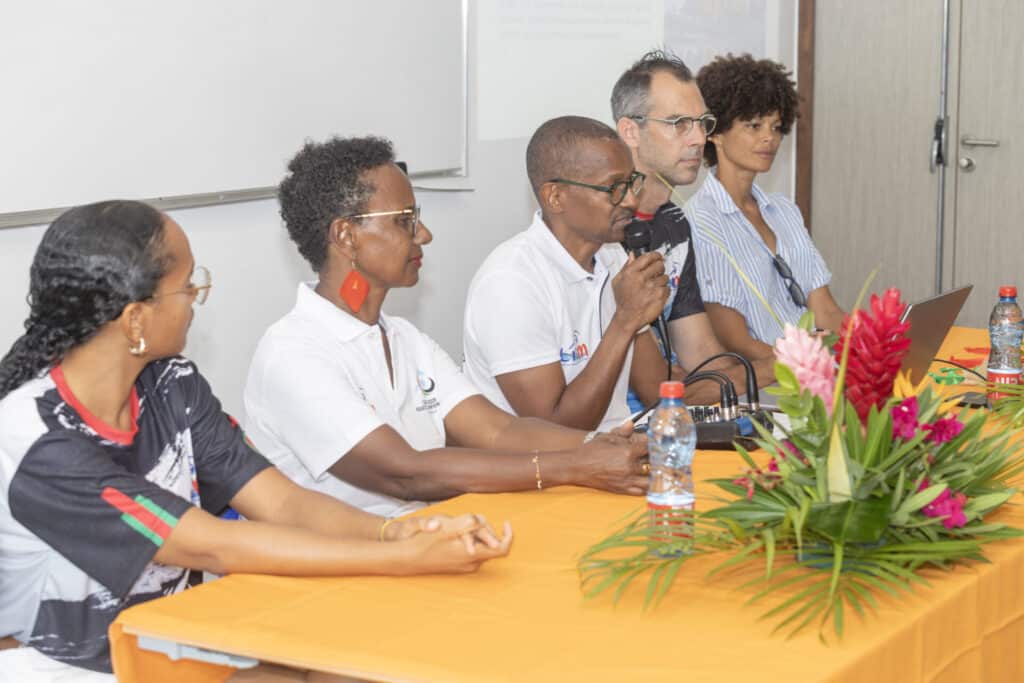
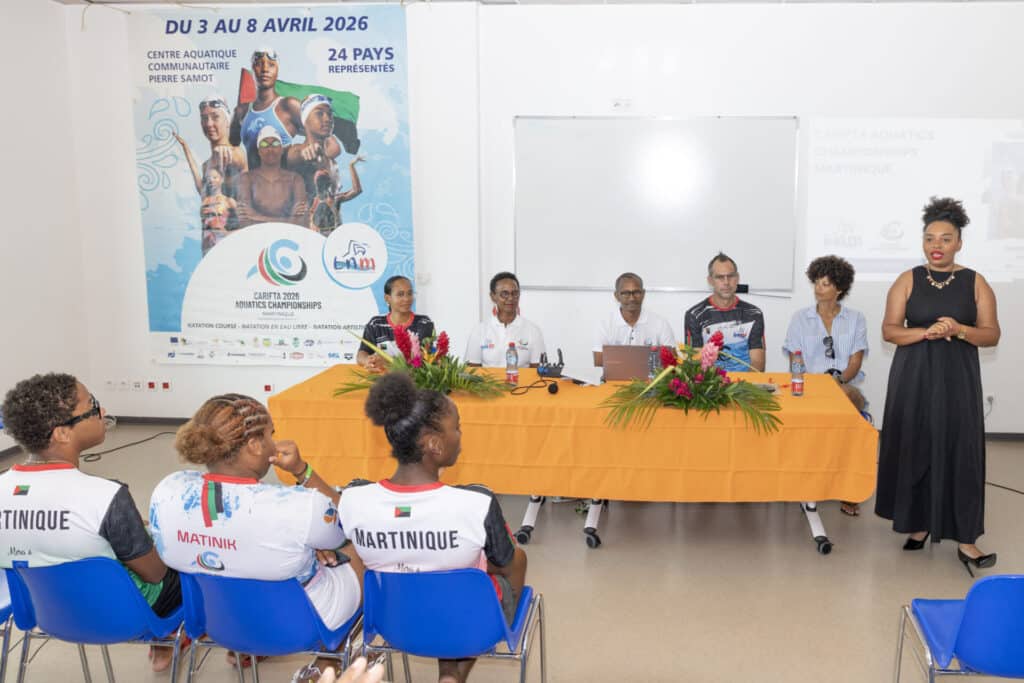
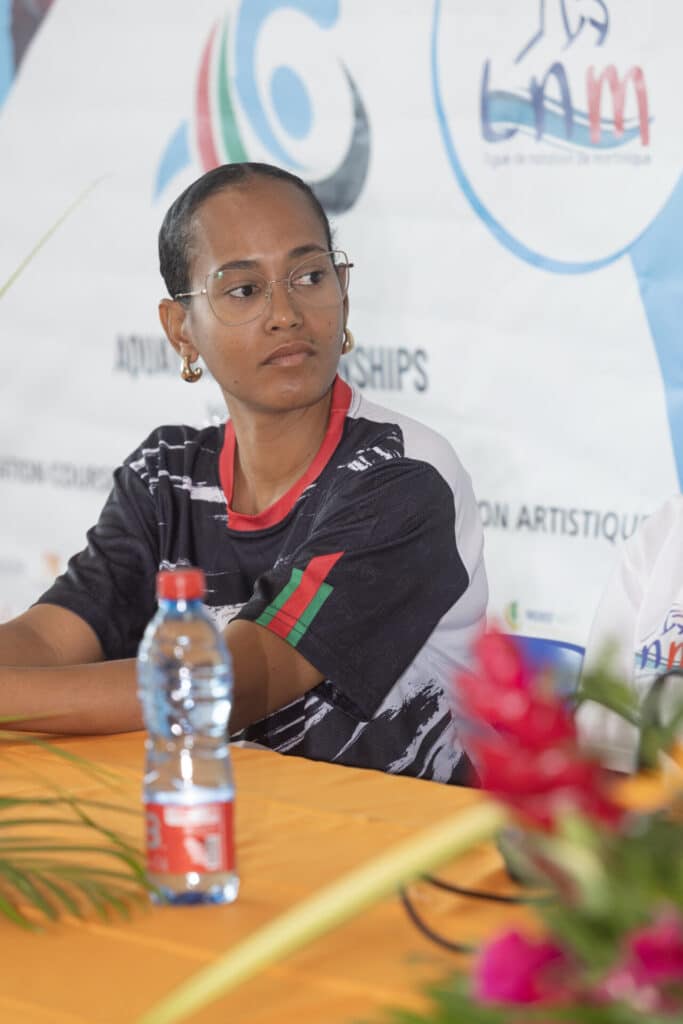
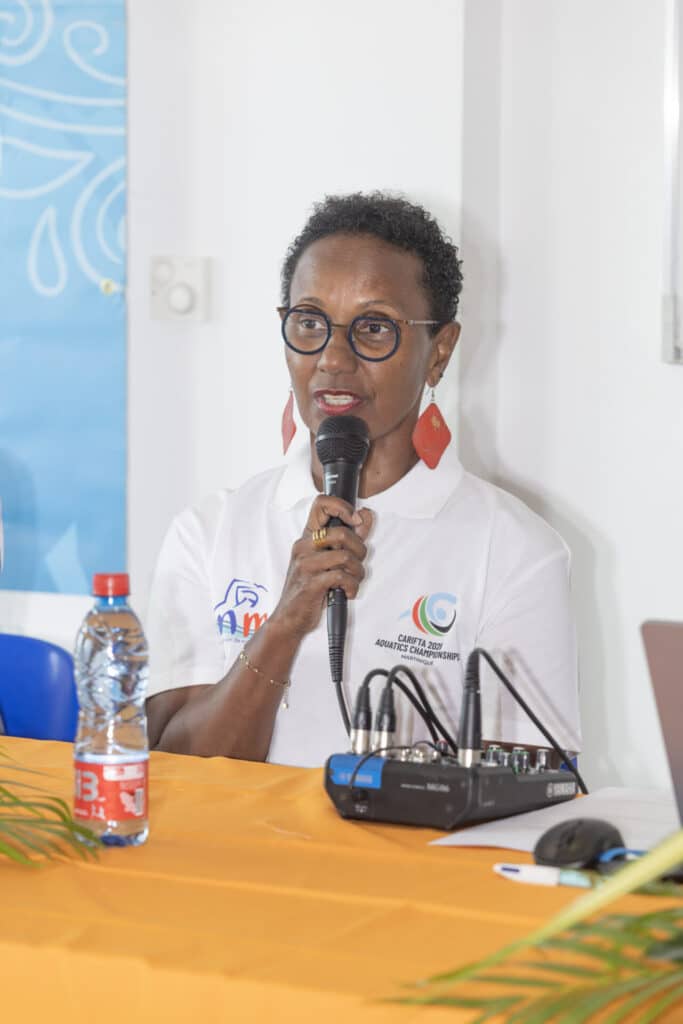
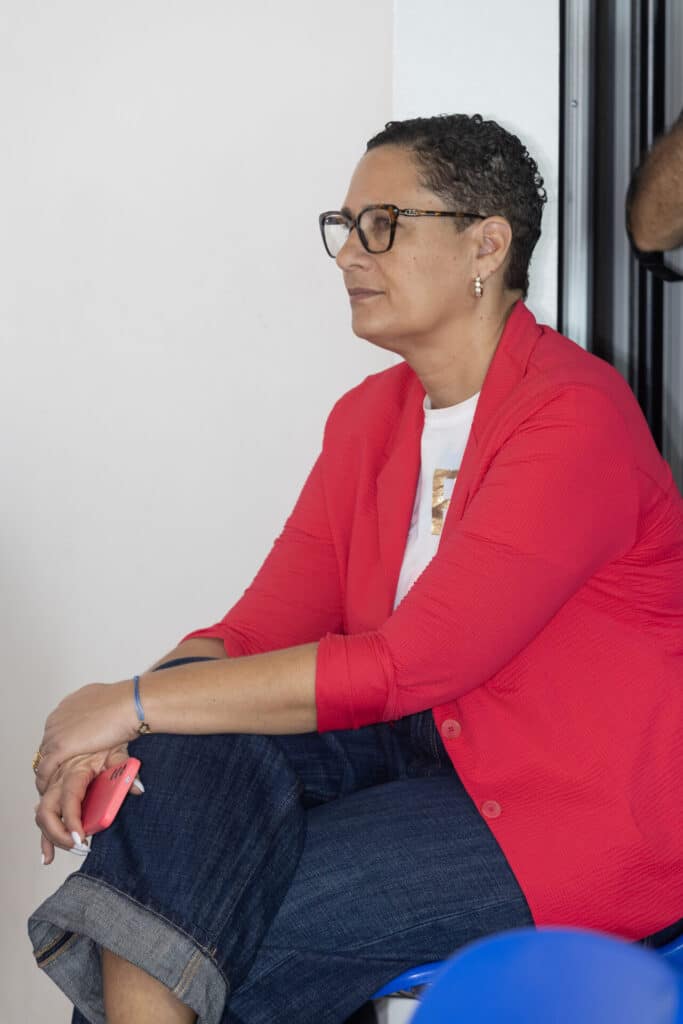
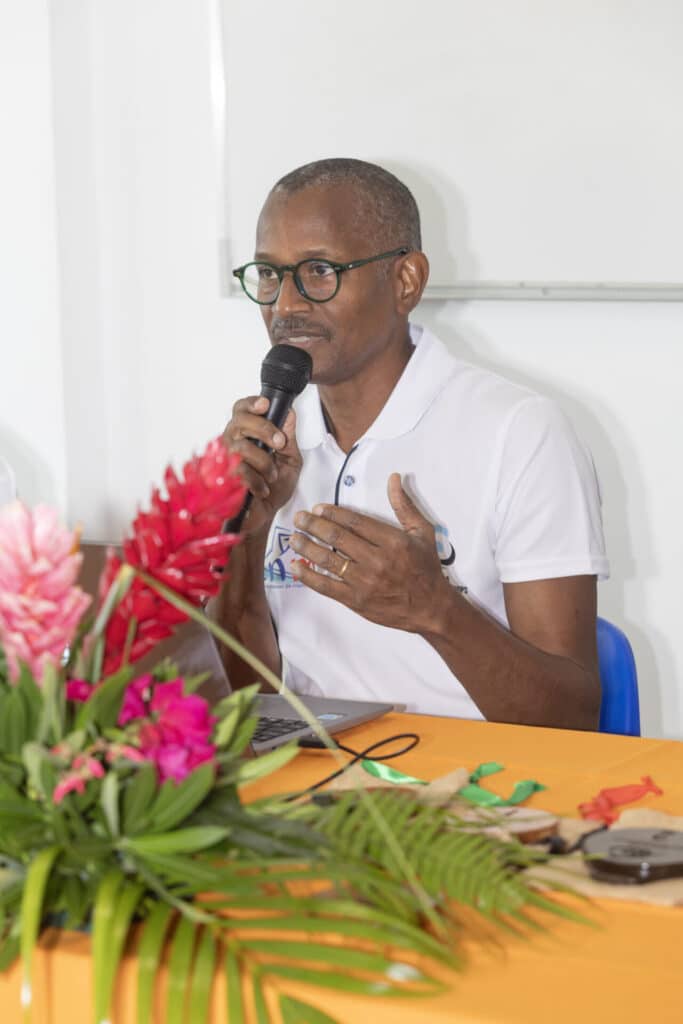
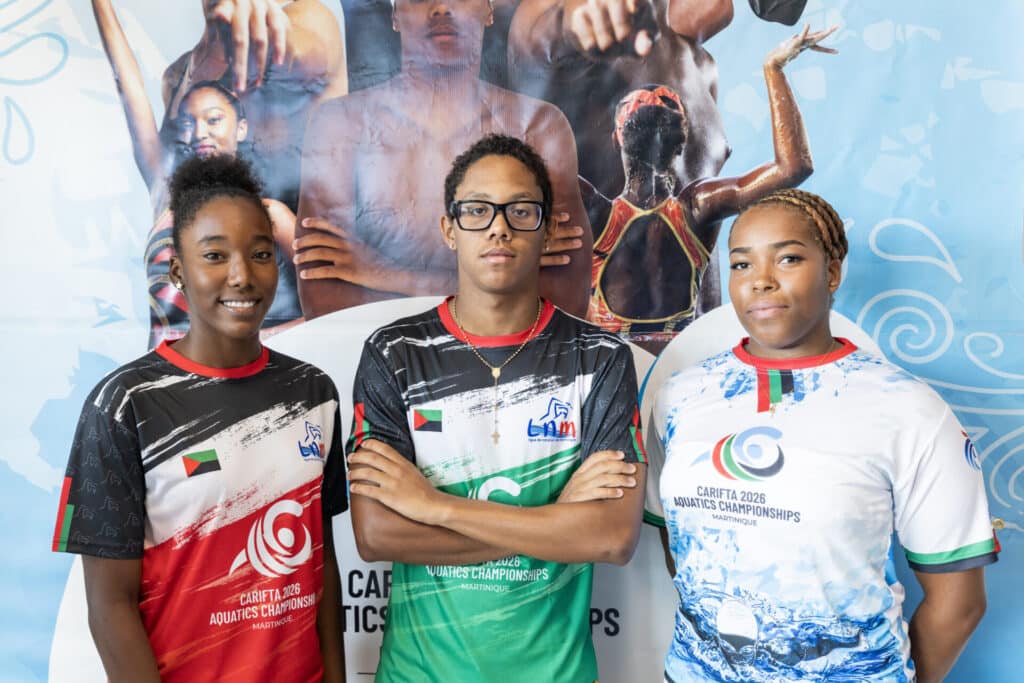
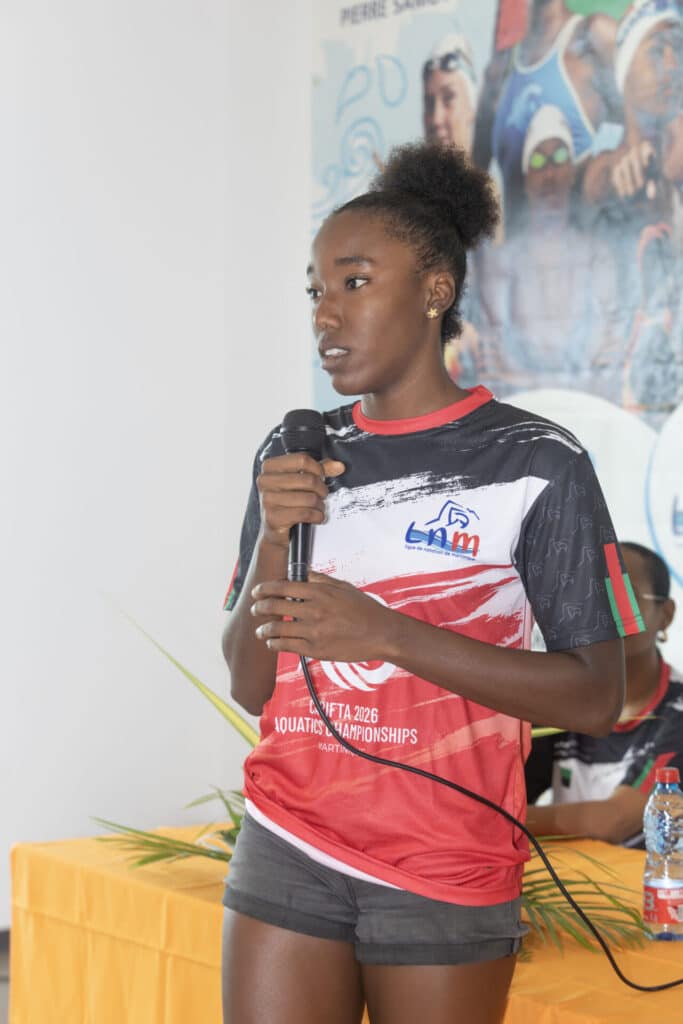
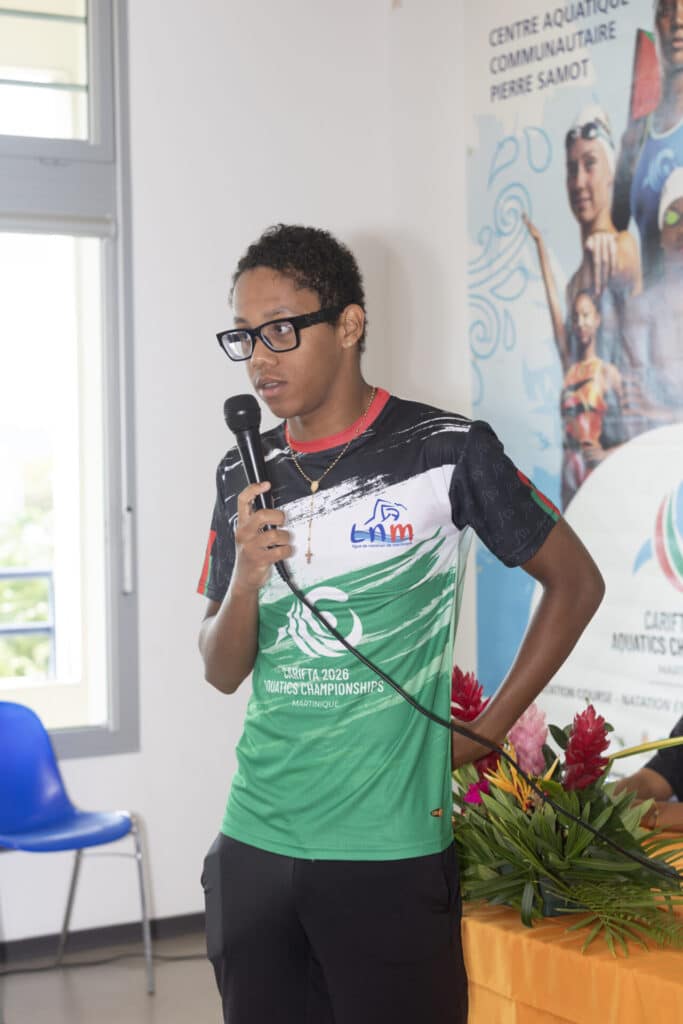
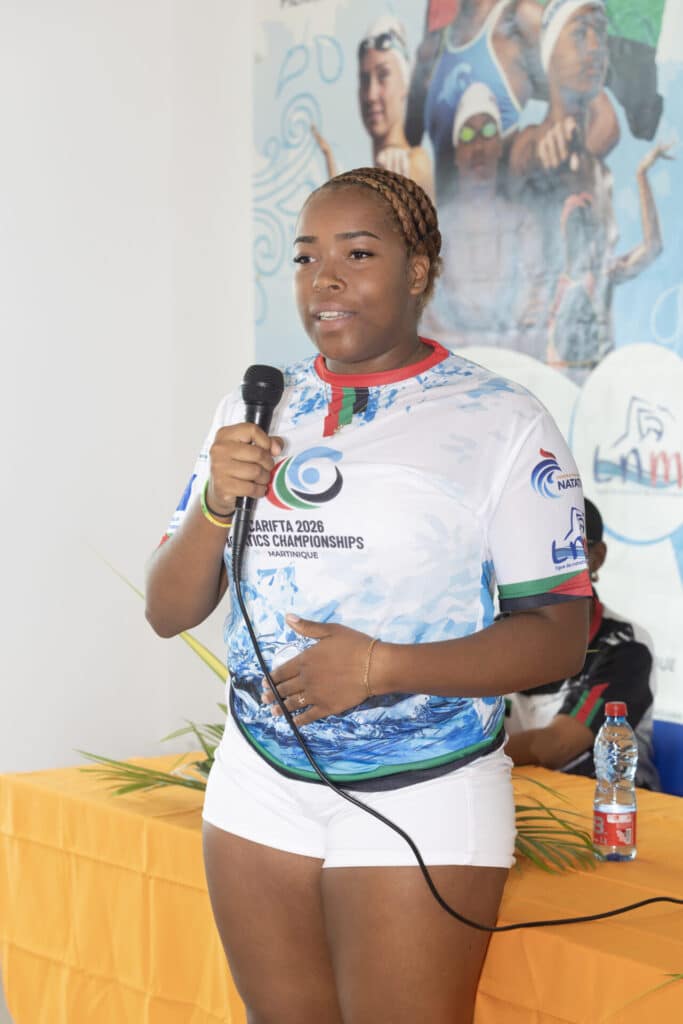
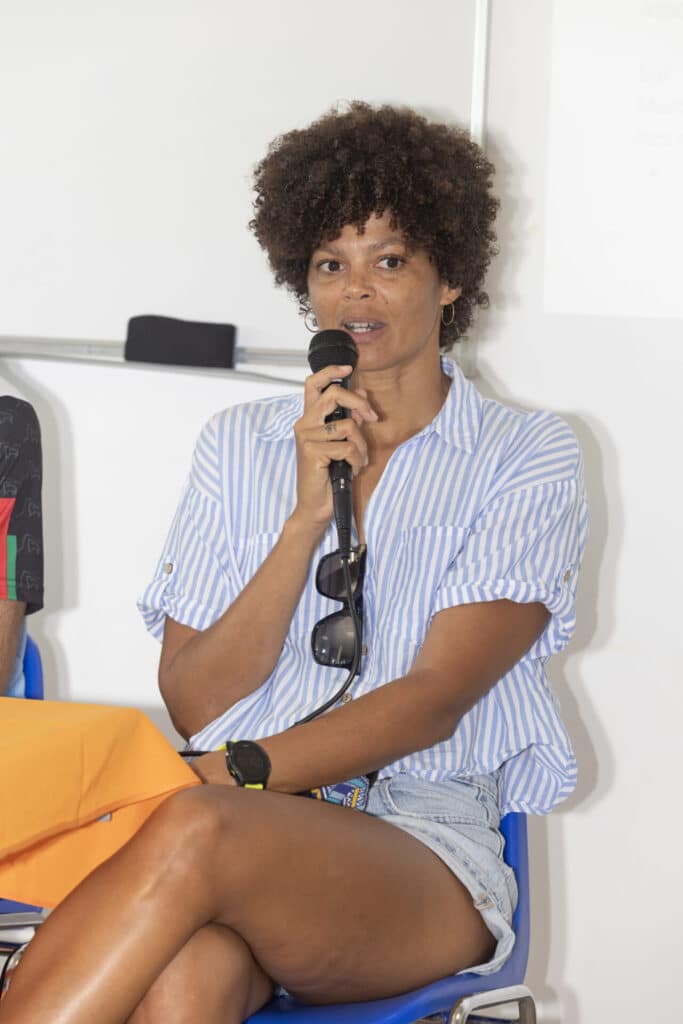
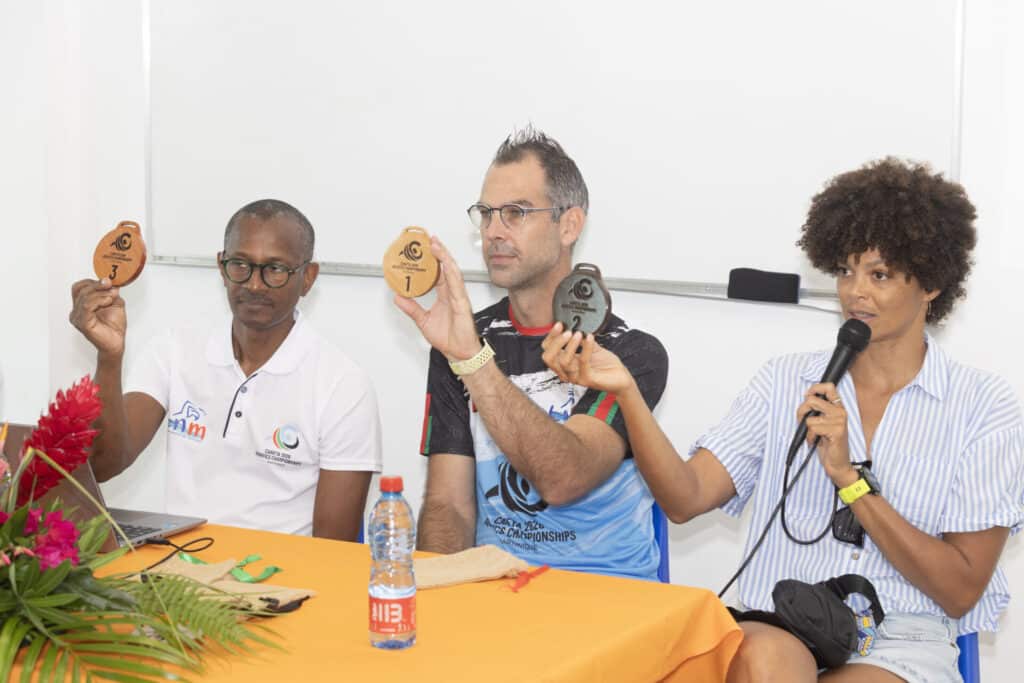
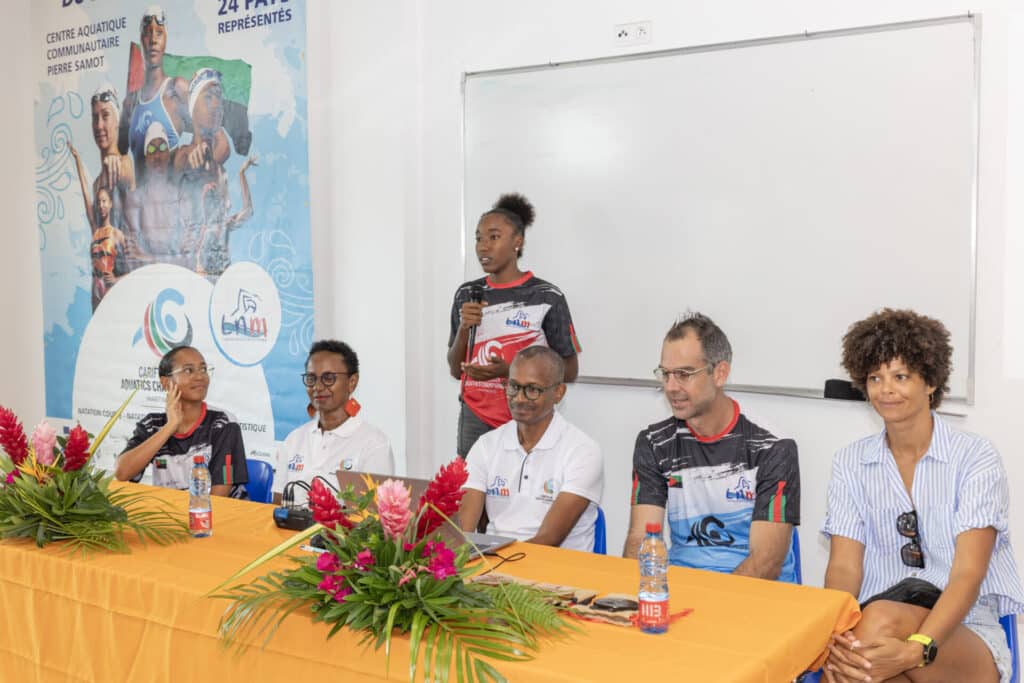
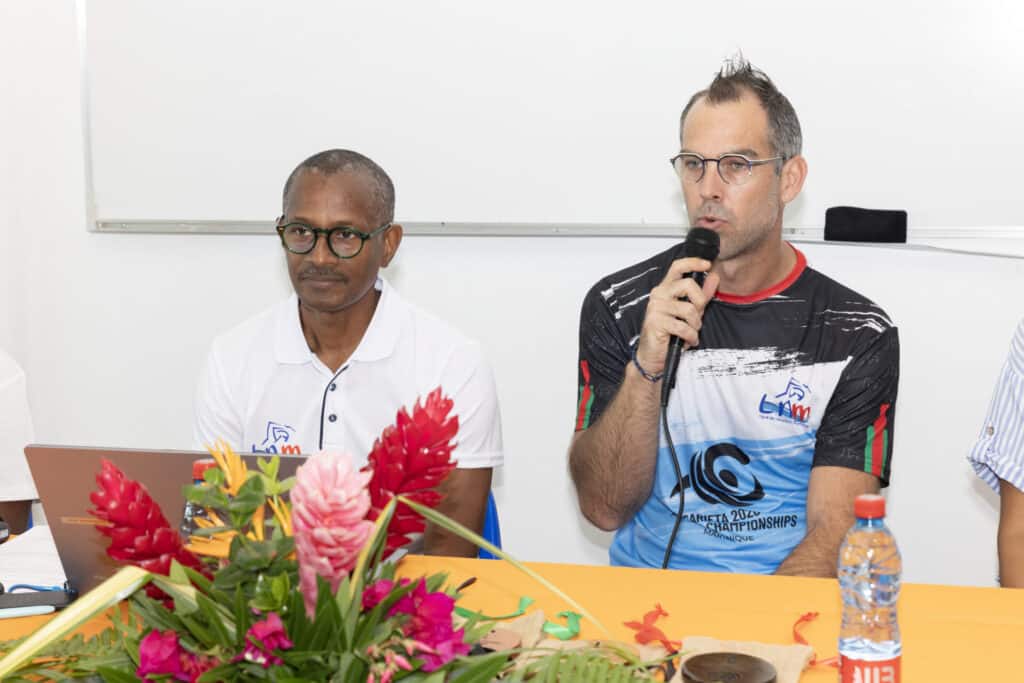
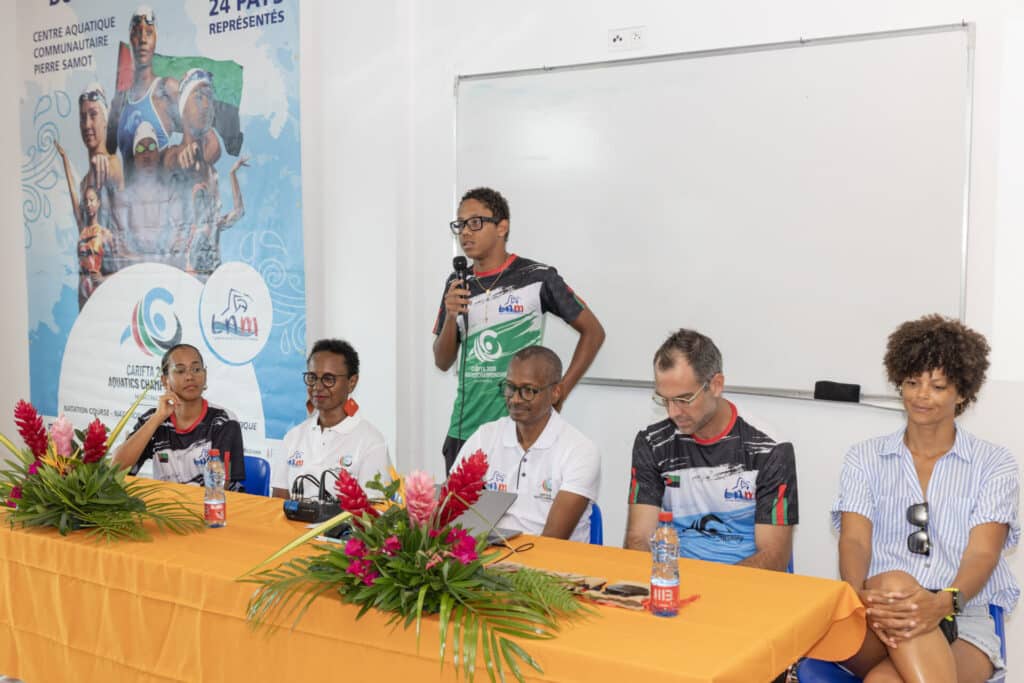
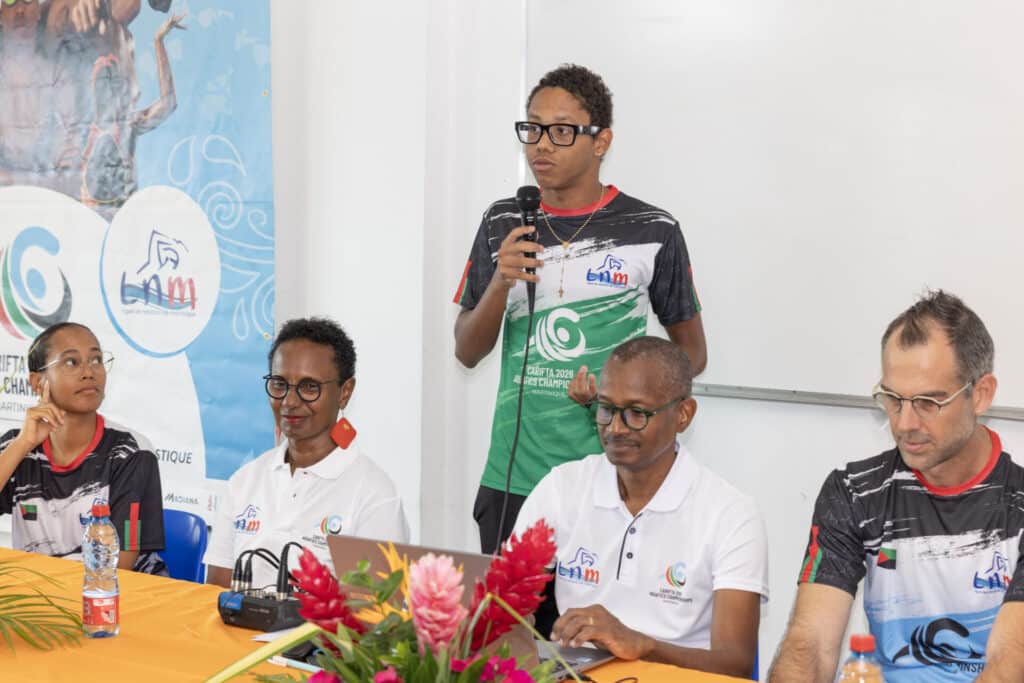
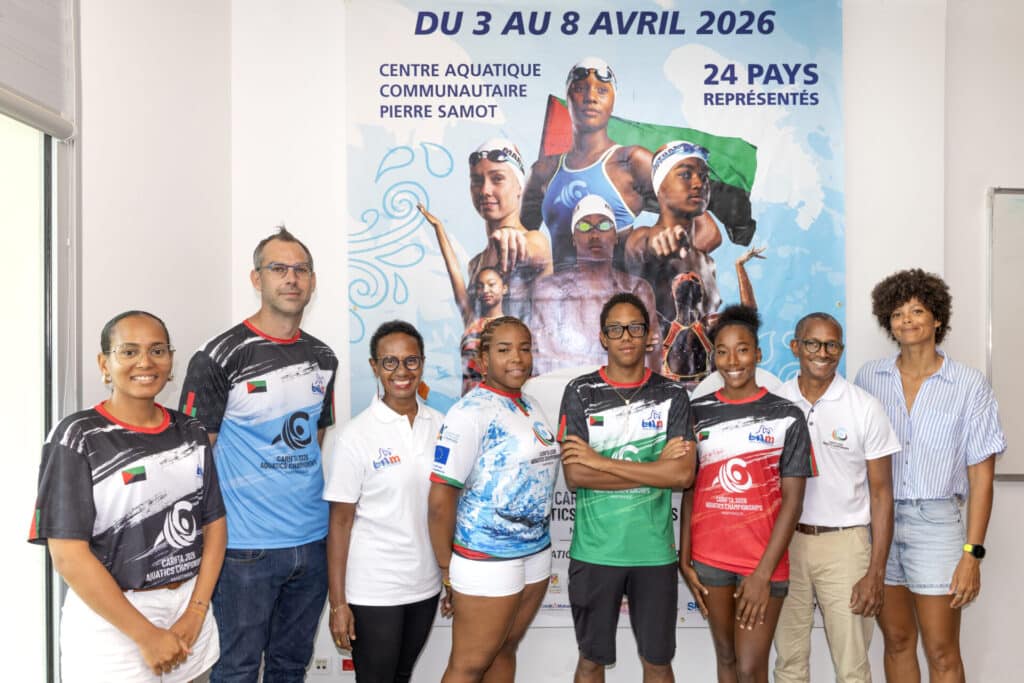
On Saturday March 28, at the Centre Aquatique Pierre Samot in Le Lamentin, the CARIFTA Aquatics Championships 2026 press conference was more than just an information meeting. Over the course of an hour and a half, organizers, athletes and partners presented much more than just the sporting program: from April 3 to 8, Martinique will host the 39th edition of the Caribbean’s leading junior aquatic event, ten years after the first edition was so memorable. Twenty-four nations. Three disciplines. A home territory that knows it.
A bid driven by collective memory
In 2024, at the Caribbean Aquatics Association Congress held in the Bahamas, two bids were put forward to host the 2026 CARIFTA Aquatics Championships: Saint Lucia and Martinique. The vote was clear-cut: some thirty votes for Martinique, ten for Saint Lucia.
Behind this result is a story. The 2016 edition, the first ever to be held on home soil, left its mark on the minds of all those who were there: coaches, delegation leaders, officials. In 2024, when it came time to vote, many still remembered that week.
"It was a beautiful edition, and one that will always be remembered."
The other factor was more concrete: Sainte-Lucie did not yet have its own pool. Martinique, on the other hand, can count on the Centre Aquatique Pierre Samot in Le Lamentin, with its ten-lane Olympic pool, 800-seat grandstand and 25-meter warm-up pool. One of the best facilities in the Caribbean.
The organization also emphasized its capacity to welcome delegations from outside the basin, with several accommodation solutions mobilized in the south of the island, supplemented by other structures if necessary. This logistical aspect, rarely secondary in this type of event, reinforced the credibility of Martinique’s bid.
Three disciplines, 24 nations, a demanding format
The CARIFTA Aquatics Championships 2026 will bring together 24 countries: 21 English-speaking Caribbean nations, plus Martinique, Guadeloupe and Guyana. The swimming races will take place over four days: heats in the morning, finals in the afternoon, from Saturday April 5 to Tuesday April 8. Artistic swimming gets underway on Monday during the lunch break, with solos followed by technical events. The duets and teams round off the program on Wednesday morning. On the same Wednesday, the open water event takes place over five kilometers in the Anses d’Arlets.
Competitors: Benjamins (11-12 years), Minimes (13-14 years), Cadets (15-17 years) do not enter as individuals. They are national selections, with the best swimmers from each territory. To enter the Martinique selection, swimmers must satisfy a time grid established over the previous two seasons, which only selects swimmers capable of reaching the finals.
In the minds of the organizers, selection is based on a simple logic: to score points, you have to enter the final, and to enter the final, you have to be among the top eight times in the morning heats. In other words, the swimmers selected are supposed to have a level that enables them to play a real role in the competition, and not just participate.
The Martinique delegation at the CARIFTA Aquatics Championships 2026 has 61 swimmers: 36 in racing, 12 in open water, five of whom also race, and 18 in artistic swimming. The team is led by five captains: Jean-Naël Zozime and Maxime Auguste-Charlery for boys’ racing (15-17 age group), Cyrielle Manin and Sayanne Guivissa for girls’ racing, and Nohemy Marajo for artistic swimming.
Water as starting point and destination
When asked how he got started, Jean-Naël Zozime, captain of the boys’ selection, answers straightforwardly: “I was introduced to swimming so that I wouldn’t drown. Cyrielle Manin, captain of the girls’ selection, tells much the same story: she almost drowned as a child, and that’s what led her to learn to swim.
These two testimonies, heard just a few minutes apart, say something important about this territory. Two young Martiniquans, initially frightened by the sea, who are now representing their island against twenty-three Caribbean nations. This is more than just a sporting achievement.
"Swimming is a tough sport. You can't expect it to be easy, but with a lot of perseverance, anyone can do it."
— Jean-Naël Zozime
Nohemy Marajo, artistic swimming captain, has been practicing for ten years a discipline that the public still knows little about. She explains it concretely: learning choreographies on dry land, rehearsing them in the water, controlling your breathing under the surface while your legs draw figures above. It’s a sport that’s as technically demanding as it is physically demanding, and has as much to do with ballet as it does with endurance.
"You have to know how to endure, how to save every last breath to finish the choreography."
— Nohemy Marajo
The conference of the CARIFTA Aquatics Championships 2026 also pointed out that artistic swimming is still a confidential discipline in the Caribbean, due to the infrastructure it requires and the level of preparation required. It requires three-dimensional work and very thorough technical preparation, as well as the support of outside professionals, particularly in dance and gymnastic preparation. For the supervisors, the challenge of CARIFTA is twofold: to support those who are already practising and to encourage new vocations.
What the coaching team observes in these youngsters is a constant: they train, take their exams, compete at weekends, and do it all over again. “Generally, swimmers perform well in their studies too, because they’ve worked on this rigor on a daily basis.” What you learn in the pool also applies elsewhere, and the organizers insist on this daily requirement: it’s not enough to qualify, you have to be able to show up on the day, in a sport where regularity and discipline count as much as talent.
Medals from the hands of the island
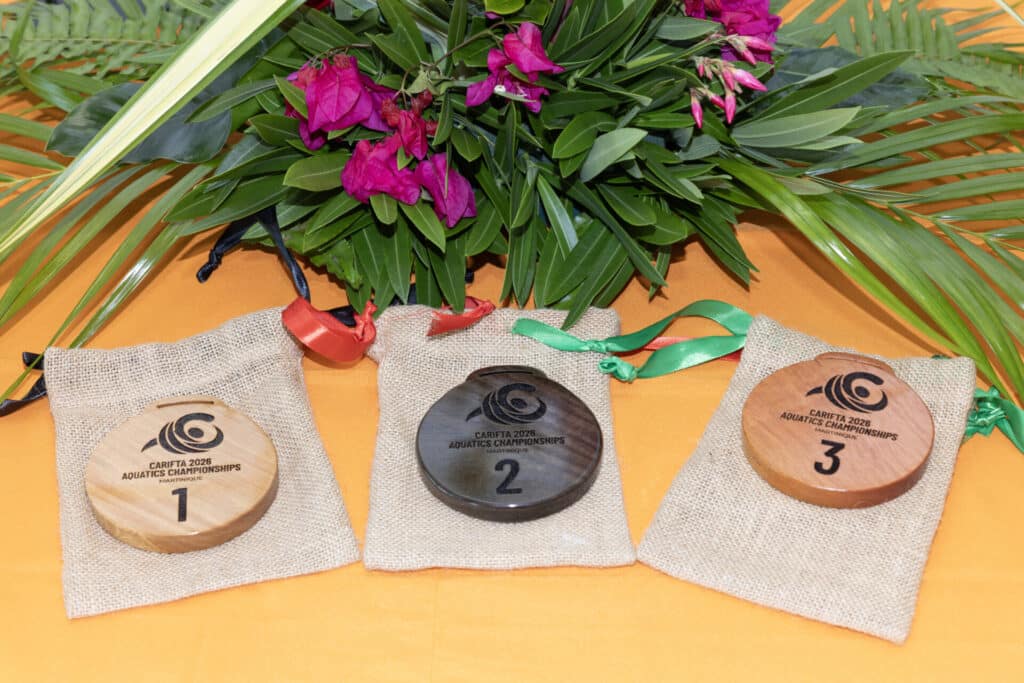
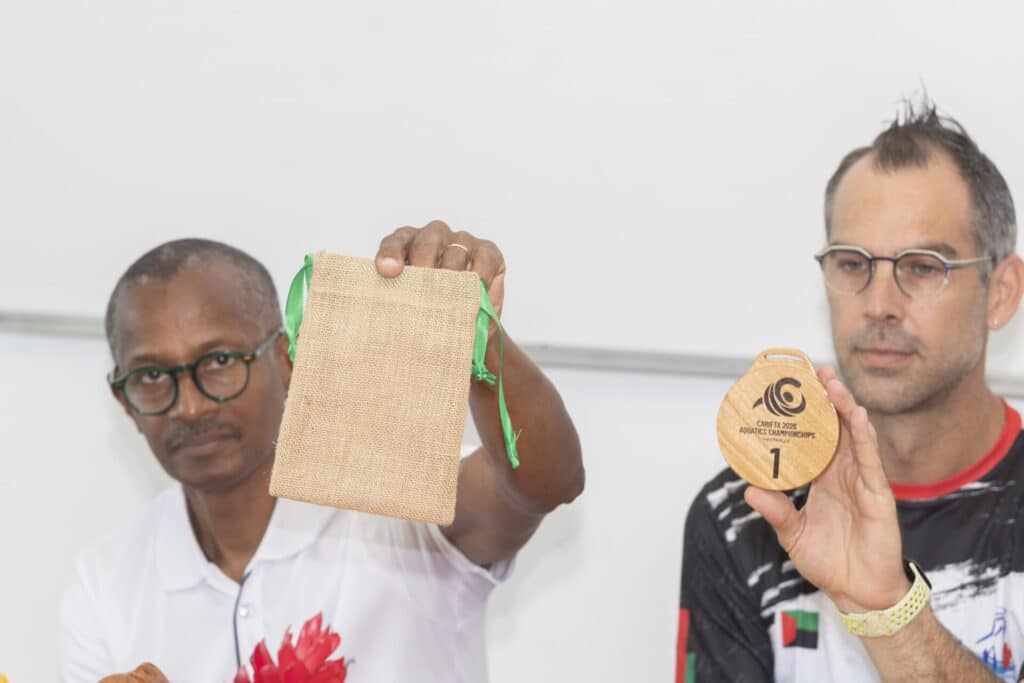
The way an event rewards its champions often says a lot about what it stands for. At the CARIFTA Aquatics Championships 2026, the medals were made in Martinique from noble woods: pearwood for gold, mao bleu for silver, mao ghani for bronze. A craftsman from the Nord-Atlantique region produced them, Joseph Galliard signed the engravings, and a local seamstress made the pouches in the three colors of the Martinican flag.
The initiative was spearheaded by the event’s godmother, Coralie Balmy, a former top-level swimmer who had taken part in the CARIFTA four times in her career. An eco-responsible and identity-affirming initiative, hailed as a first on the Caribbean scale.
Every Caribbean athlete who reaches the podium at the CARIFTA Aquatics Championships 2026 will leave with a piece of Martinique, a unique medal made by local craftsmen, unlike any other.
The conference also specified that trophies would accompany these awards, and that the medals had yet to receive their lanyards before the competition opened. Here too, the aim is clear: to make each award a sporting, local and symbolic object.
A week that mobilizes the whole territory
The CARIFTA Aquatics Championships 2026 won’t just be played out in the pools. Between 1,500 and 1,800 people are arriving in Martinique: swimmers, staff and families spread out over several hotels in the south of the island. Every day, around 150 volunteers ensure the smooth running of the event: former swimmers, parents, locals who sometimes have no direct connection with swimming, but who wanted to get involved.
Among them, the officials play a decisive role: some 26 officials from the Caribbean will reinforce the Martinique officials, bringing the number of people around the pool to around fifty for each morning and afternoon meeting. In addition, there will be first-aid attendants, reception teams, people in charge of awards, delegation escorts and areas open to the public.
Welcoming delegations to the CARIFTA Aquatics Championships 2026 was also thought through in detail. They all had to arrive on April 2, at different times of the day, sometimes very early in the morning, sometimes late at night. In conjunction with the transport company and SAMAC, a precise plan was drawn up at the airport to ensure smooth exits, transfers to buses and settling into accommodation, with particular attention paid to meals depending on the time of arrival.
The opening ceremony of the CARIFTA Aquatics Championships 2026, on Friday April 3 at the Georges Gratiant stadium, is free and open to all: 2,800 seats to fill. The group “Nou Pa Sav” will accompany the parade of delegations. On Saturday, April 4, Les Hommes d’Argile will be on hand as the delegations arrive on site, offering a strong cultural backdrop intended as a symbolic first encounter with Martinican identity. Throughout the week, Martinican cultural groups will be on hand to ensure that visitors leave with a living image of the region, not just competition results.
The CARIFTA Aquatics Championships 2026 ceremony is scheduled to take place from 4 to 6 p.m., and will be broadcast on a giant screen, as well as relayed by media partners and via YouTube for wider distribution in the Caribbean. The ambition is clear: to make Martinique the center of the Caribbean for the duration of the event.
In addition to sport, the organizers of the CARIFTA Aquatics Championships 2026 also have an economic and cultural objective. Bringing in up to 1,800 people means filling accommodation, generating consumption, encouraging car rentals and putting the hotel and restaurant sectors to work. It’s also a way of showcasing Martinique’s culture, notably through the entertainment planned for the opening ceremony and the arrival of the delegations.
The open water event at Anses d’Arlets also serves as a reminder that the sea is a living, fragile environment that deserves protection. The association’s representative at the conference sums up its mission simply: “learn to swim to discover the seas and protect them.”
This educational dimension goes beyond drowning prevention. It also touches on the appropriation of water by the people of Martinique, the discovery of the discipline by the youngest and the broader desire to reinforce the region’s aquatic culture in the long term.
An assertive island
A phrase uttered at the end of the conference sums up the general mood: “We’re ready, and we’ll make the CARIFTA Aquatics Championships 2026 a collective success and a great source of pride for our region.”
What the delegations take away with them on the evening of April 8 is more than just a ranking. It’s an image of Martinique, a territory that knows how to welcome, organize and assert its identity. For six days, the whole Caribbean will be there. It’s up to Martinique to show what it can do.
But the organizers of the CARIFTA Aquatics Championships 2026 also want to leave their mark after the event. The Ligue de Natation de Martinique ended the 2024-2025 season with some 2,540 members, around ten affiliated clubs and, generally speaking, 7 to 8 clubs involved in competition. With this in mind, the CARIFTAs are not intended as a parenthesis, but rather as a possible catalyst to encourage vocations, boost membership and establish swimming as a permanent fixture on the Martinique sports scene.
The organizers of the CARIFTA Aquatics Championships 2026 have also chosen not to reproduce the large village of 2016. In 2026, the activities surrounding the competition are to be more focused, with one day in particular being highlighted, in order to concentrate energy and attendance rather than scattering the highlights.
The CARIFTA Aquatics Championships 2026 is the 39th edition of the Caribbean’s leading junior aquatic event, held in Martinique from April 3 to 8. Twenty-four nations are taking part in racing, artistic and open water swimming, in categories ranging from 11 to 17 years of age.
The swimming race and artistic swimming events take place at the Centre Aquatique Pierre Samot in Le Lamentin. The 5-kilometer open water event takes place in Anses d’Arlets on Wednesday April 8.
Tickets are available on cariftamartinique2026.com and on the Ligue de Natation de Martinique social networks. Prices: €10 in the morning, €20 in the afternoon for adults, 4-day pass at €125. The opening ceremony at the Georges Gratiant stadium is free of charge.
Twenty-four countries are taking part: 21 English-speaking Caribbean nations, plus Martinique, Guadeloupe and Guyana.
The Martinique squad is led by five captains: Jean-Naël Zozime and Maxime Auguste-Charlery for boys’ racing, Cyrielle Manin and Sayanne Guivissa for girls’ racing, and Nohemy Marajo for artistic swimming.
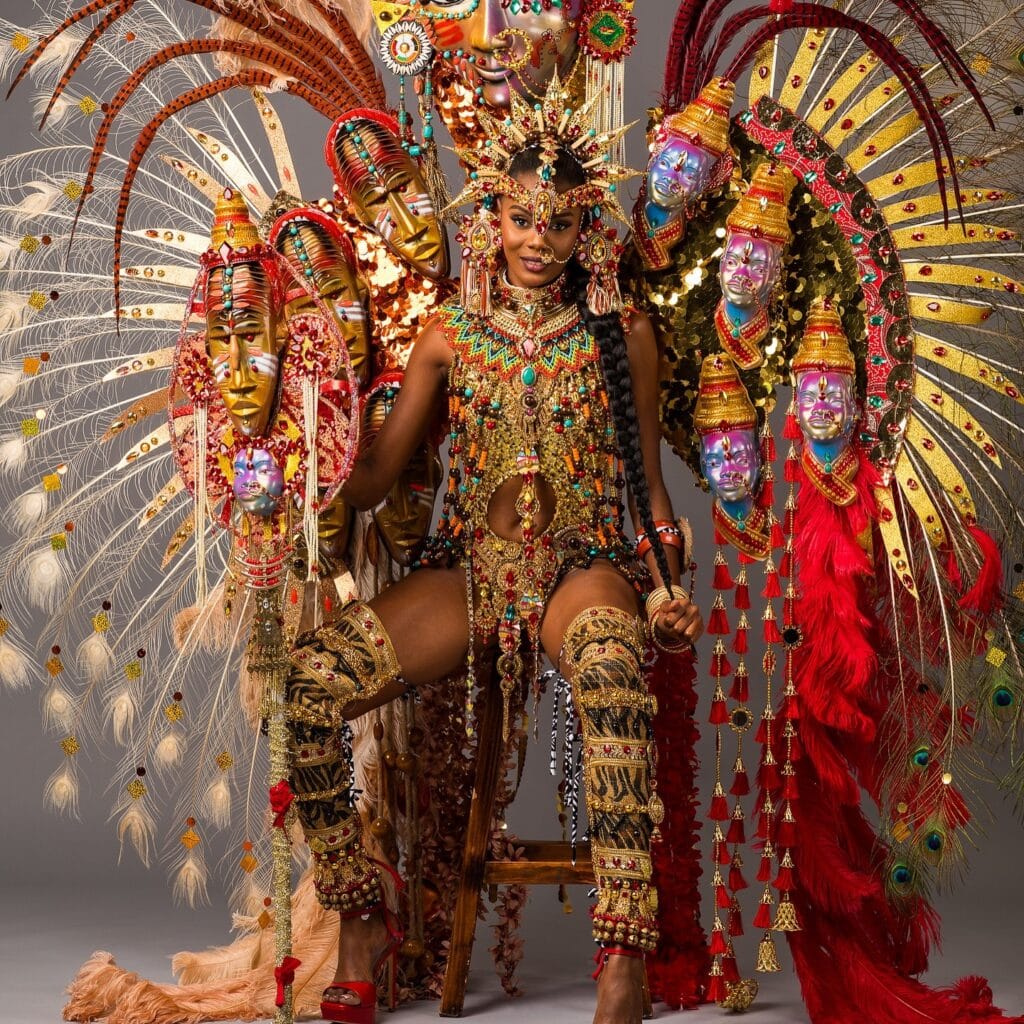
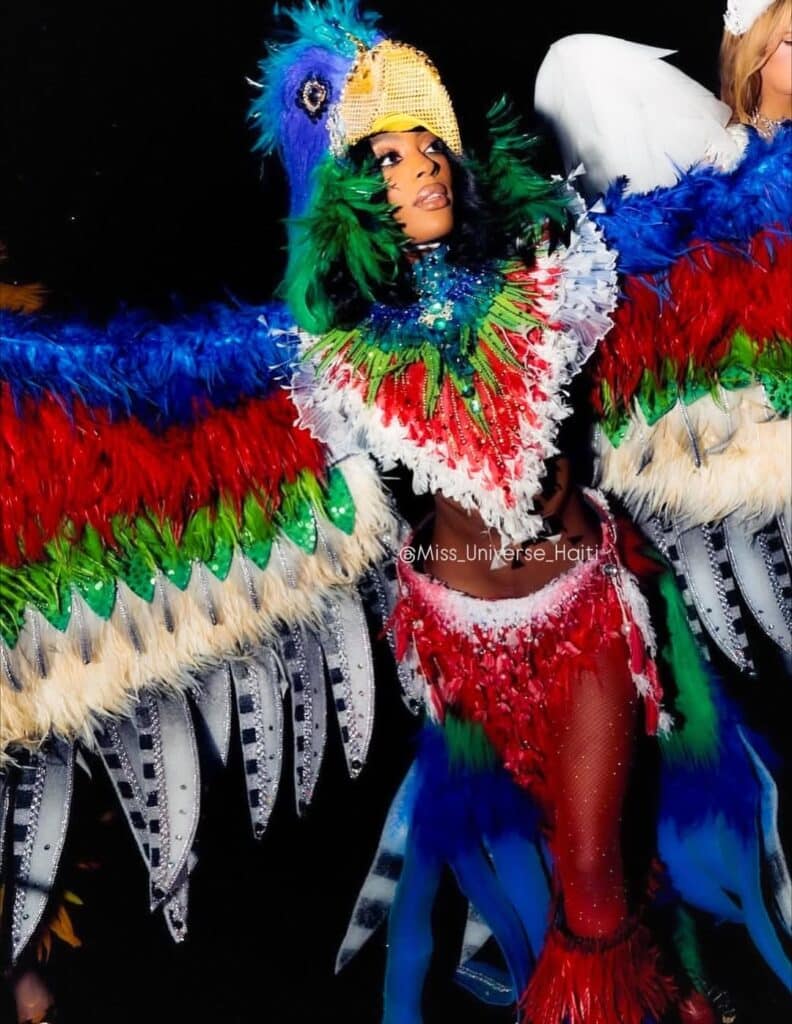
This year, the international scene is witnessing a singular edition of Miss Universe 2025. In Thailand, the first presentations quickly showed that the Caribbean occupies a special place, carried by Caribbean candidates whose backgrounds reflect the social and cultural evolution of the region. They arrive with solid skills, real commitment and a way of representing their territories that goes far beyond the contest.
This movement tells the story of a Caribbean in transformation, attentive to its issues and determined to take them beyond its borders. It highlights a region that is no longer content to exist in the event, but wishes to offer a clear vision of its realities and assert its Caribbean influence on the world stage. Through the discussions surrounding Miss Universe 2025, this presence also testifies to a need to better understand the trajectories that structure the region.
Trajectories rooted in Caribbean realities
Among the most frequently observed profiles, that of Bereniece Dickenson representative from Turks and Caicos, illustrates this dynamic. Trained in architecture and construction technology, a junior accountant and quadrilingual, she runs a mentoring program for young people. Her career path is a testament to her determination to combine technical expertise with collective responsibility, a concrete example of women’s leadership in the region.
The Guadeloupean Ophély Mézino advances with a trajectory marked by resilience and a deep commitment to women’s mental health. Her preparation, carried out with a specialized team in Guadeloupe, shows the attention paid to a candidate who wishes to convey a useful message to her territory.
The return of Haiti with Melissa Sapini, a journalist born in the United States, she is very active in the media and involved in access to scholarships for Haitian students. She is the voice of a diaspora that plays a full part in the country’s visibility.
The Jamaican Dr Gabrielle Henry, an ophthalmologist, puts the spotlight on visual health and access to care. His commitment is a reminder of the importance of academic and professional backgrounds in building public figures capable of defending essential issues.
In the other territories – Martinique, Saint Lucia, Curacao, Aruba, Belize, Bahamas, Guyana and the Cayman Islands – the candidates champion a wide range of commitments: educational success, inclusion, violence prevention, protection of LGBTQ+ rights, entrepreneurship and mental health. Each brings a unique vision to the table, while contributing to a coherent overall image of the Caribbean candidates for this edition of Miss Universe 2025.
A presence that changes perceptions
What we see around Miss Universe 2025 goes beyond the competition.
Caribbean participation acts as a vector of visibility for realities that often go unreported internationally.
In their speeches, the candidates describe their islands, their study paths, their daily challenges and the initiatives that shape their communities.
These are stories that don’t usually cross regional borders, and which reinforce Caribbean influence on a global scale.
The exhibition also highlights key issues such as mental health, the fight against violence, access to education, social inclusion and local development.
Subjects that are often neglected in the international media find a place to exist here.
Associations, educational structures and civic initiatives benefit from this visibility, which strengthens their work and sometimes opens the way to new collaborations.
For young people in the Caribbean, the impact is significant. The candidates show that paths to excellence can be forged in a wide variety of contexts: villages, urban neighborhoods, island territories, diaspora.
Their experiences – including studies, family responsibilities, social commitment and professional ambitions – provide a stimulating benchmark for young girls looking for a role model who is both close to them and open to the world, a symbol of female leadership in the Caribbean. This is particularly evident in the discussions surrounding Miss Universe 2025, where these trajectories are echoed more widely.
This edition also contributes to transforming the way we look at the region. By presenting women who are educated, committed and attentive to social issues, the Caribbean appears to be an area capable of preparing solid, legitimate personalities. This renewed image also finds its place on the cover of Miss Universe 2025, which gives rare visibility to these careers.
An edition that counts for the region
Since Wendy Fitzwilliam’s victory in 1998, the region has not won Miss Universe. Yet the 74ᵉ edition brings a different kind of significance: it reveals a Caribbean that is moving forward in earnest, defending its causes and reminding us that its territories have their rightful place in international spaces. The Caribbean candidates for Miss Universe 2025 show a region attentive to its challenges and confident in its ability to carry useful voices.
Whatever the final outcome, this Caribbean presence highlights women who embody authentic female leadership and a determination to advance their territories. It testifies to a Caribbean influence that continues to assert itself in the contemporary world. In the discussions surrounding Miss Universe 2025, this dimension is clearly evident.
Cooperation between CARICOM member states has taken on a new dimension since 1ᵉʳ October 2025. Barbados, Belize, Dominica and Saint Vincent and the Grenadines have officially lifted barriers to the movement of their citizens. These four nations have launched an unprecedented agreement that allows their nationals to live, work and settle freely within this Caribbean space without work permits. A strong signal for the construction of a more united and supportive region.
A founding agreement for free regional mobility
Launched under the name “Enhanced Cooperation in Free Movement”, this commitment was ratified by heads of government at the 49ᵉ CARICOM summit in Montego Bay. For the first time, Caribbean countries are fully applying the principles of free movement already outlined in the Treaty of Chaguaramas.
Thanks to this agreement, nationals of Barbados, Belize, Dominica and Saint Vincent and the Grenadines can enter, leave, work and reside in the partner countries without a CSME certificate or special permit. They also enjoy limited but effective access to essential public services, including basic health care and primary or secondary education.
This cooperation between CARICOM member states is the first step in a wider project to unify the region in human and economic terms.
Strategic leverage for four complementary economies
- – For Barbados, the challenge is clear: to cope with an aging population and a shortage of manpower. Bridgetown hopes to attract young workers from neighboring countries to support the key sectors of tourism, services and healthcare.
- – Belize, whose territory is sixty times larger than that of most Caribbean islands, is keen to encourage the settlement of its rural areas and boost its development. With a population of just 400,000 over 22,000 km², the country sees this cooperation between CARICOM member states as an opportunity to attract talent and boost productivity.
- – Dominica and Saint Vincent and the Grenadines, for their part, are focusing on cultural and historical links. In Kingstown, Prime Minister Ralph Gonsalves pointed out that this initiative also has an identity dimension:
“Our Garifuna brothers and sisters in Belize can come and spend more time here, work if they wish, and our citizens are now free to go there.”
A shared history, the foundation of integration
This cooperation between CARICOM member states is based on a common historical foundation. The four nations share a British colonial experience, a close linguistic heritage and a similar institutional structure. These affinities have facilitated the implementation of a mobility scheme unprecedented in the region.
A common verification mechanism has been set up to filter applications. The authorities retain the right to refuse entry to any individual representing a risk to public order or a financial burden for the host state. This clause aims to preserve the balance between openness and responsibility.
A laboratory for regional integration
The leaders consider this cooperation between CARICOM member states to be a pilot project. If the results are conclusive, it could be extended to other member countries as early as 2026. Discussions are already underway with Jamaica, Saint Lucia and Trinidad & Tobago to join the initiative.
According to regional economists, this cooperation between CARICOM member states represents a major opportunity to facilitate the exchange of skills and strengthen local value chains. By removing administrative constraints, it encourages professional mobility, entrepreneurship and the networking of Caribbean talent.
Sustainable social and human benefits
Beyond the figures, the human impact of this agreement is considerable. Thousands of families can now look forward to a future beyond their national borders. Access to employment, training and basic healthcare paves the way for real integration of Caribbean societies.
This cooperation between CARICOM member states also gives new meaning to the Community’s original project: to build a region of solidarity where citizens share the same fundamental rights. It embodies a new generation of regional policies based on trust and reciprocity.

Towards a united and inclusive Caribbean
The entry into force of this measure confirms the region’s determination to write a new page in its history. Cooperation between CARICOM member states goes beyond economic considerations: it symbolizes the political will to unite peoples and strengthen social stability.
By opening their borders to each other, Barbados, Belize, Dominica and Saint Vincent and the Grenadines are demonstrating that another Caribbean is possible: a Caribbean that is mobile, connected and aware of its common destiny.
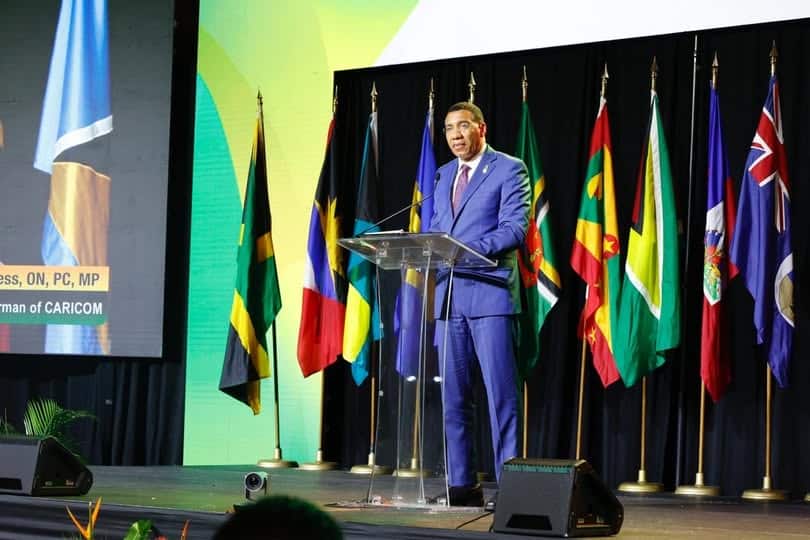
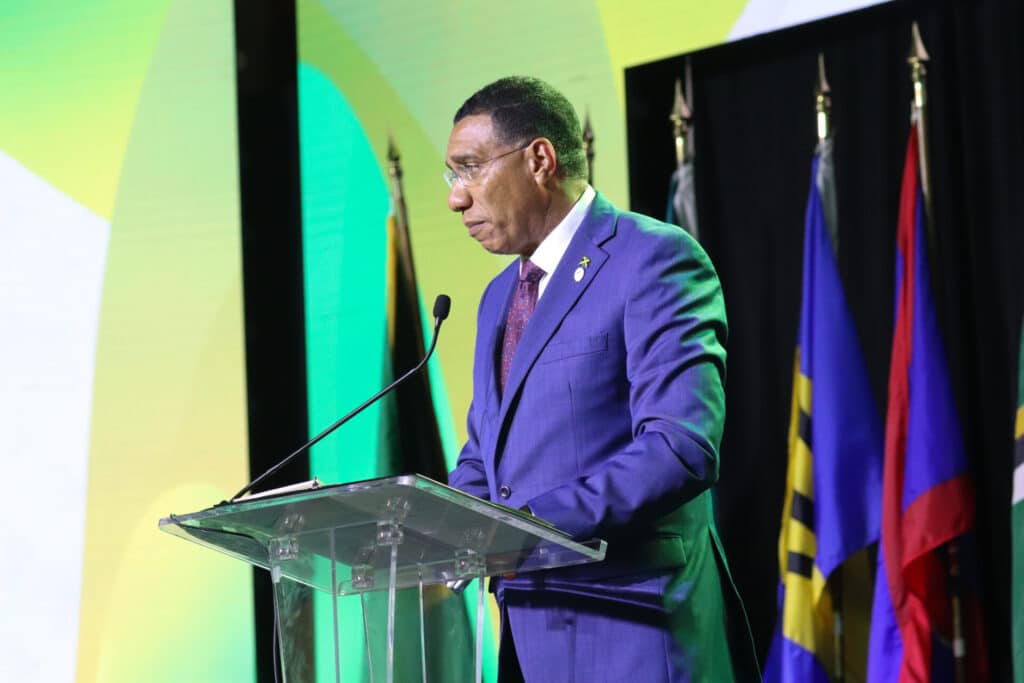
From July 6 to July 08, 2025, Montego Bay will vibrate to the rhythm of the 49th CARICOM Summit, where the Heads of State and Government of member countries will meet to discuss the major challenges facing the region. Chaired by Andrew Holness, Prime Minister of Jamaica, the atmosphere at this year’s summit is both solemn and charged with urgency, as each delegation has come with high expectations in terms of food security, economic resilience, the Haitian crisis and, above all, the overhaul of regional logistics.
The corridors of the Montego Bay Convention Centre are buzzing with strategic conversations, while plenary sessions alternate with thematic workshops, giving each territory the chance to make its voice heard.
A demanding regional context
Right from the opening of the 49th CARICOM Summit, the tone was set: the Caribbean is going through a pivotal period. Successive speeches by representatives from Barbados, Trinidad & Tobago, Saint Lucia and Dominica highlighted the reality of logistical disruption, dependence on costly air transport and the fragility of supply chains. The debates were lively, with each head of delegation insisting on the need for concrete and immediate solutions. Behind-the-scenes exchanges testify to a shared determination to make this summit a decisive moment for the region.
The priorities of the Jamaican presidency
In his inaugural address, Andrew Holness reiterated the importance of strengthening cooperation and diversifying trade, while stressing the need for rapid responses to security and climate issues. His call for collective mobilization did not go unheeded: the 49th CARICOM Summit featured a series of round-table discussions on regional peace, the pooling of resources and the role of young people in building shared prosperity.
Mia Mottley: a plea for logistics transformation
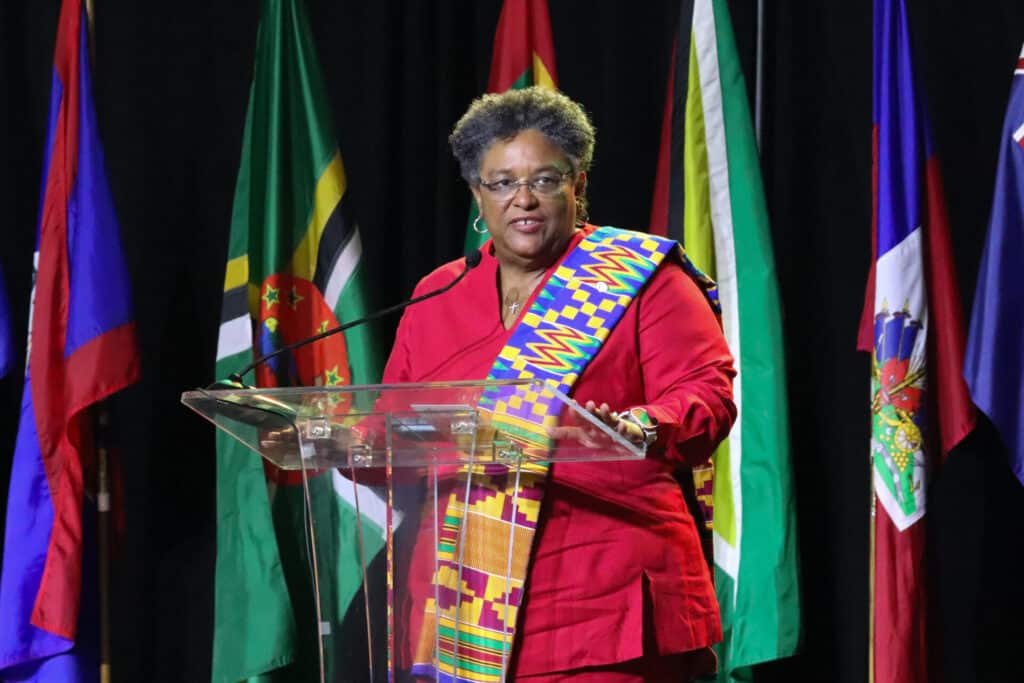
One of the highlights of the 49th CARICOM Summit was the address by Mia Mottley, Prime Minister of Barbados. With eloquence applauded by all participants, she painted a lucid picture of the logistical shortcomings holding back Caribbean development. Her voice, firm and poised, resonated in the auditorium as she spoke of the need for a “regional freight revolution”, stressing the urgent need to democratize transport and restore the sea to its historic role as a link between islands.
Concrete proposals for regional freight
Mia Mottley was not one to rest on her laurels. She announced that two CARICOM member states are in advanced negotiations to acquire cargo aircraft, an initiative she believes will help to fluidify trade and guarantee the supply of essential goods. She also mentioned the expected presentation of a private-sector-led regional ferry project, which could revolutionize connectivity between the islands. These announcements, made at the heart of the 49th CARICOM Summit, were greeted with thunderous applause, a sign that the logistics issue is at the heart of our collective concerns.
Political will at the heart of change
Mia Mottley took advantage of her platform to point out that the success of these projects depends above all on the political will of leaders. She fondly evoked memories of the Federal Maple and Federal Palm, symbols of a time when the sea united the peoples of the Caribbean. Her plea, echoed in several sessions of the 49th CARICOM Summit, found particular resonance with the delegations, who recognized the need to overcome institutional inertia to build a modern, resilient regional logistics system.
The concrete contributions of the 49th CARICOM Summit for member territories
Food security and trade fluidity
Food security was one of the key topics discussed at the 49th CARICOM Summit. Participants emphasized that the establishment of new sea and air links, such as those mentioned by Mia Mottley, will ensure a steady supply of agricultural produce and essential goods. The exchange of best practices between the Ministers of Agriculture and the Economy testifies to a shared desire to optimize logistics circuits and strengthen the food sovereignty of each territory.
Strengthening economic integration and resilience
Discussions on economic integration have highlighted the importance of pooling resources and diversifying trading partners. The 49th CARICOM Summit’s announcements of public and private investment in regional freight pave the way for enhanced cooperation, enabling member territories to better withstand external shocks, whether economic, health-related or climatic. The participants agree that this edition represents a crucial milestone on the road to shared prosperity.
Outlook for youth and innovation
Throughout the workshops, Caribbean youth and technological innovation took center stage. The initiatives presented, whether in training programs, student mobility or support for entrepreneurship, illustrate the determination of leaders to prepare the next generation and give young people the means to become part of the regional dynamic. These perspectives, discussed in depth at the 49th CARICOM Summit, point to new, concrete opportunities for young people.
The 49th CARICOM Summit, catalyst for a new regional era
In Montego Bay, the 49th CARICOM Summit continues in a studious and determined atmosphere. Led by the likes of Mia Mottley and Andrew Holness, the region is taking a decisive step towards modernizing its infrastructure and deepening its integration. The discussions, rich and sometimes passionate, bear witness to a collective determination to transform challenges into opportunities and build a sustainable future for all the people of the Caribbean.
📸 Photo gallery: relive the highlights of the opening ceremony ©CARICOM
An election that goes beyond the competition
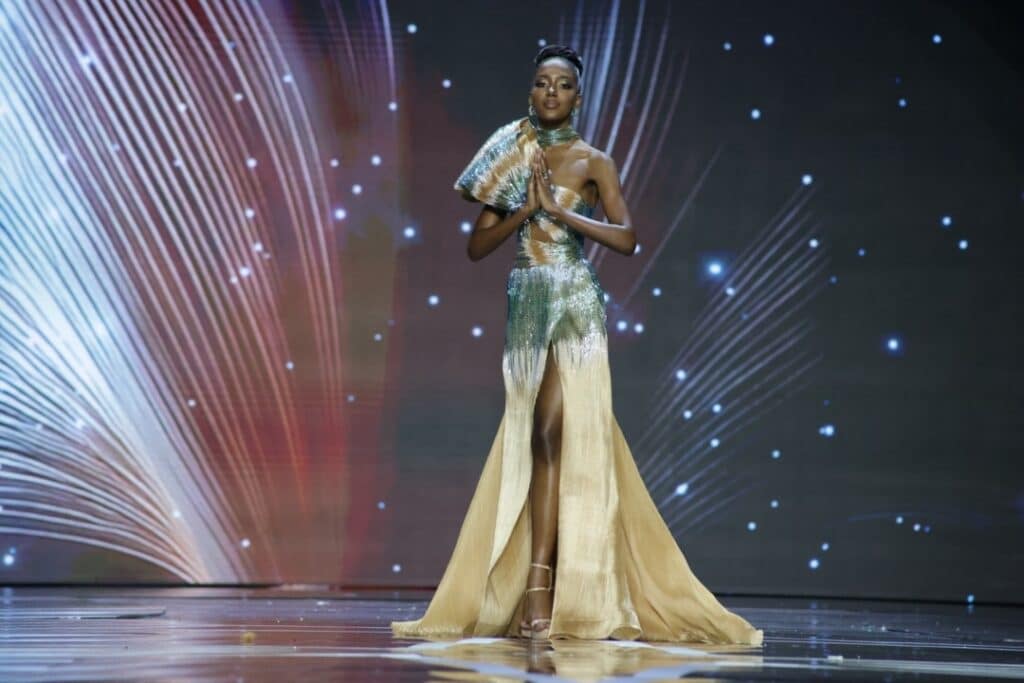
Miss Universe Belize 2025. More than just a beauty pageant, this edition marks a significant milestone for Belize. By crowning Isabella Zabaneh, the country has not only chosen a representative for the international stage: it has also recognized itself in a young woman with profound values, a singular trajectory and an assumed ambition. On the evening of the coronation, an entire nation hailed her as a symbol of unity, diversity and pride.
The event, broadcast live and watched by thousands of television viewers, highlighted Belize’s commitment to authentic representation of its young women: cultured, eloquent and invested in the issues of their time. Through Miss Universe Belize 2025, the country affirms its desire to be heard on the world stage, carried by inspiring figures.
Belize: a wealth of human and natural resources ©Travel Belize
Few countries can boast such a density of cultural and ecological treasures. Nestled between Mexico, Guatemala and the Caribbean Sea, Belize is a land of many faces. Its coral reef – the second largest in the world – attracts divers from all over the world, while its tropical forests and thousand-year-old Mayan sites bear witness to a living heritage.
But the real wealth of Belize is its people. The country is a mosaic of peoples and cultures: Creoles, Mestizos, Garifunas, Mayans, descendants of Indian, Chinese and European immigrants. This diversity is expressed in languages, rituals, gastronomy, music and community life. Through figures like Isabella Zabaneh, Miss Universe Belize 2025 becomes a reflection of this complex, deeply-rooted identity.
Isabella Zabaneh: a journey at the crossroads of worlds
Isabella Zabaneh, 21, is no stranger to her homeland. A master’s student in professional communications with a degree in international relations, she combines academic rigor with practical commitment. Born in Texas, but deeply attached to her Belizean origins, she grew up between two cultures, learning at an early age to navigate between different realities and to value intercultural dialogue.
It’s this dual background that forges her keen sense of representation. For her, Miss Universe Belize 2025 is more than a crown: it’s a platform. A spokesperson for her generation, she campaigns for education, women’s empowerment and the preservation of natural resources. She is also involved in community projects, convinced that true beauty lies in action and sharing.
An evening of celebration and transmission
The Miss Universe Belize 2025 ceremony featured five finalists: Isabella Zabaneh, Monisha Hyde, Imani Jex, Libny Rodriguez and Hope Panton. Each had her own story, her own roots, her own energy. Through the various events – speeches, interviews, cultural presentations, fashion shows – these young women demonstrated that elegance today goes hand in hand with social awareness.
The jury enthusiastically elected Isabella Zabaneh. Monisha Hyde was named first runner-up, Hope Panton second runner-up and Miss Photogenic, while Imani Jex received the title of Miss Congeniality, underlining the strong bonds forged between the participants.
The handover of the crown to Halima Hoy, Miss Universe Belize 2024, was a special moment. Halima, who had shone at the international edition in Mexico City, emotionally passed on the torch, reminding us of the importance of continuity and mutual support between beauty queens.
A platform for impact and representation
Beyond appearances, Miss Universe Belize 2025 has established itself as a genuine platform for expression. By giving visibility to young and diverse voices, the contest is part of a paradigm shift: beauty queens are no longer judged solely on their looks, but on their ability to convey powerful messages and embody causes.
Isabella Zabaneh understands this and has made it her mission. In her first speeches, she emphasized the importance of trained, listened-to and involved youth. Her ambition is to highlight the challenges facing young Belizeans, particularly in rural areas, and to forge partnerships with educational and environmental institutions.
Miss Universe Belize 2025 thus becomes a lever for action, a channel of hope for those who, beyond the glitz, want to believe in a future of solidarity and boldness.
An ambassador to carry the country's colors high
In a few months’ time, Isabella Zabaneh will represent Belize at the Miss Universe International pageant in Thailand. A major challenge, but also a fantastic opportunity to promote the country’s assets. For through her, an entire territory is being exported: its traditions, its languages, its music, its landscapes, its spirit of resilience.
Miss Universe Belize 2025 is more than just a local competition: it’s a strategic outreach tool. The media exposure surrounding the winner draws attention to Belize, stimulates tourism, strengthens cultural diplomacy and inspires vocations.
Government, business and civil society organizations see this as a unique opportunity to position the country as a model of peaceful diversity, female leadership and ethical commitment.
A generation ready to get involved
The enthusiasm surrounding Miss Universe Belize 2025 reveals a changing society. The country’s young people, connected, plural and ambitious, want to have their say and influence decisions. They are demanding a place in the debates that concern them: the environment, education, equality, culture and employment.
In this way, the competition becomes a revelation of collective aspirations. Isabella’s personality and career illustrate this. She shows that it’s possible to be both rooted in one’s roots and internationally-minded, that it’s possible to combine elegance and impact.
An election that opens a new chapter
Miss Universe Belize 2025 will go down as a seminal event. It not only spotlighted an exceptional young woman, but also raised the profile of a pageant that had long been reduced to mere appearances. With Isabella Zabaneh, Belize has an ambassador who combines intelligence, humanity and influence.
Through her, an entire generation feels represented, encouraged and ready to write the next pages of national history. The crown is no longer just a symbol of beauty: it becomes the diadem of a vision, that of a Belize that is bold, open and resolutely turned towards the future.
The Garifunas of Honduras embody a living memory of the Black Caribbean, at the crossroads of history, maritime tradition and contemporary struggles for cultural survival. For this Afro-Indigenous community, artisanal fishing is much more than an economic activity; it is the foundation of their identity. Heirs to a unique blend of escaped Africans and indigenous Caribbean populations, the Garifunas have developed and preserved a maritime know-how that intimately links everyday gestures to a vision of the world shaped by the ocean.
A story born of exile and resistance
The Garifunas of Honduras were not born on the shores of Central America. Their story takes root in the 17th century, on the Caribbean island of Saint-Vincent, where shipwrecked – and sometimes escaped – African slaves found refuge among the indigenous Kalinagos and Arawaks. This mix, unique in Caribbean colonial history, gave rise to a new community: the Garifunas.
But this relative autonomy came to an end with the arrival of the British. In 1797, accused of supporting the French, the Garifunas were captured and deported en masse to the island of Roatan, off the coast of Honduras. From there, they gradually settled on the Caribbean coasts of Honduras, Belize, Guatemala and Nicaragua. It was on these shores that their special relationship with the sea emerged, through artisanal fishing.
Fishing rooted in tradition
Even today, the Garifunas of Honduras perpetuate techniques that have been passed down orally for generations. Far removed from industrial logics, their practice relies on light boats, often made of wood, powered by oars or small motors, as well as on the use of nets, lines and creels. Respect for the reproductive cycle of species, detailed knowledge of currents and the seabed, and the ability to read the signs of the sky are all part and parcel of their expertise.
Fishing is not just a matter of subsistence. It’s a deeply cultural act, closely linked to cuisine, music and spirituality. Traditional dishes such as Machuca (mashed plantain with fish in a coconut milk broth) tell the story of the sea as much as they nourish the body. The transmission of these recipes, the sharing of meals and the songs sung on fishing trips are all part of a genuine community ritual.
A central role for women in the maritime economy
If the figure of the fisherman is often masculine, the Garifunas of Honduras are actually an ecosystem in which women play a central role. They prepare, process and sometimes even sell the fish. They keep culinary practices alive and organize the solidarity networks that keep villages alive. In some communities, they are also involved in coastal fishing, particularly for shellfish.
The Garifuna social model is based on complementarity between the sexes, structured around the extended family and the community. This strong social fabric provides a bulwark against external pressures, but is now under threat.
Land pressure and ecological upheaval
Since the 1990s, the Garifunas of Honduras are seeing their way of life threatened by the expansion of agro-industrial, tourism and sometimes extractive projects on their coastal lands. The development of palm oil plantations, resorts and marinas is encroaching on traditional fishing grounds, sometimes without prior consultation with local communities.
Expropriations, often contested by local residents, raise legitimate concerns about respect for Garifuna land rights. This phenomenon is leading to a scarcity of accessible marine resources, increased pressure on ecosystems and the gradual economic marginalization of fishermen.
Added to this are the effects of climate change. Coastal erosion, rising sea temperatures and disrupted breeding seasons have a direct impact on the abundance and diversity of fish species. The Garifunas of Honduras must now navigate in an increasingly uncertain environment.
Community and legal mobilization
In the face of these challenges, communities are not remaining passive. The Black Honduran Fraternal Organization (OFRANEH), a pillar of the Garifuna movement, has been working for over 40 years to defend the cultural and territorial rights of the Garifunas. It supports the Garifunas of Honduras through awareness-raising campaigns, legal action at national and international level, and support for food sovereignty projects.
Emblematic cases include that of the community of Triunfo de la Cruz, which won its case before the Inter-American Court of Human Rights. OFRANEH also campaigns for sustainable fishing practices that respect biodiversity and are adapted to the local ecological context.
Community and legal mobilization
In the face of these challenges, communities are not remaining passive. The Black Honduran Fraternal Organization (OFRANEH), a pillar of the Garifuna movement, has been working for over 40 years to defend the cultural and territorial rights of the Garifunas. It supports the Garifunas of Honduras through awareness-raising campaigns, legal action at national and international level, and support for food sovereignty projects.
Emblematic cases include that of the community of Triunfo de la Cruz, which won its case before the Inter-American Court of Human Rights. OFRANEH also campaigns for sustainable fishing practices that respect biodiversity and are adapted to the local ecological context.
A threatened but resilient living heritage
Beyond the material aspects, the Garifunas of Honduras are the guardians of an exceptionally rich intangible heritage. Their language, their music to the rhythm of drums and the puntatheir dances and beliefs linked to the sea make up a powerful symbolic universe. Fishing is both an everyday act and a metaphor for our relationship with the world.
Every trip out to sea, every net cast into the water, is also an act of cultural resistance. Sea tales, work songs and prayers to ancestors before fishing bear witness to a sacred relationship with the environment.
Garifuna of Honduras are not just economic players in coastal areas. They embody a balance between tradition and resilience, between ancestral know-how and contemporary issues. Their presence on the shores of Honduras is a reminder that the sea is not just a space of resources, but also a place of memory, transmission and struggle. Defending their way of life also means preserving another way of living in the world, one that is more respectful of natural and human balances.
Chukka Caribbean Adventures, with its stunning white sand beaches, turquoise waters, and rich biodiversity, represents a dream destination for many travelers. At the heart of this enchanting region, one company stands out for its commitment to sustainable tourism and customer experience: Chukka Caribbean Adventures.
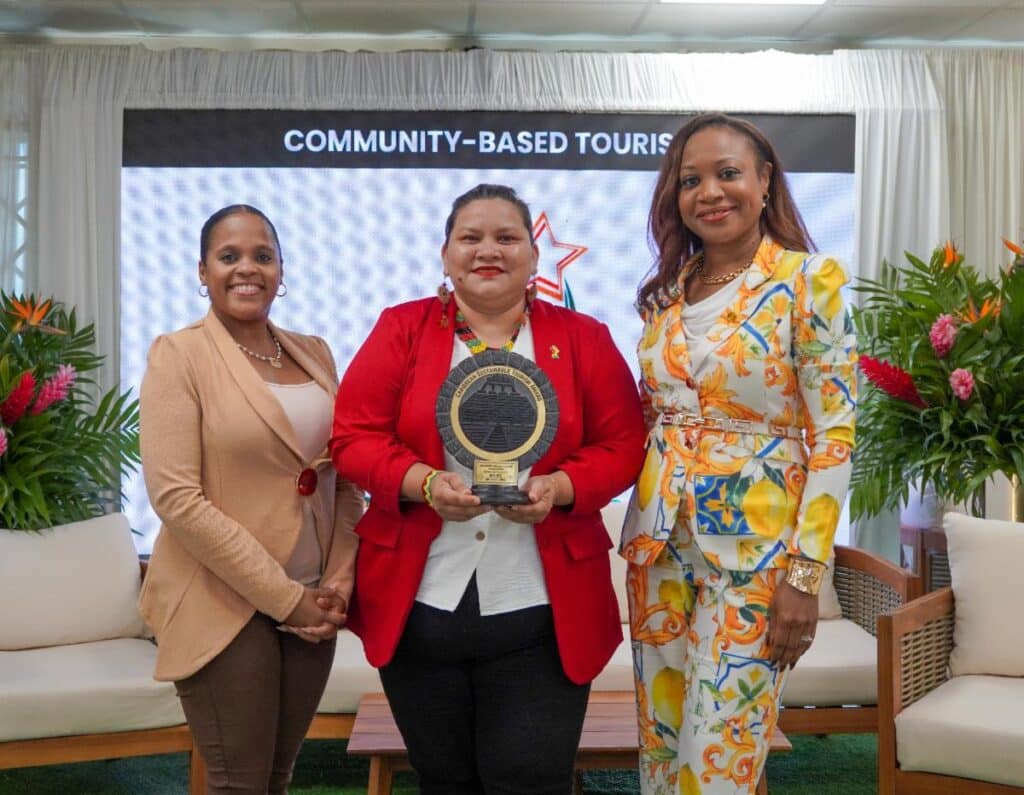
Recently, Chukka was honored as the “World’s Leading Destination Experiences 2024” at the 31st World Travel Awards, celebrating its role as a leader in the adventure tourism industry. This article explores the impact of Chukka Caribbean Adventures on the tourism sector, its innovative approach, and the reasons it has become a benchmark in tourist experiences.
A Commitment to Sustainable Tourism
Chukka Caribbean Adventures was founded to provide authentic experiences while preserving the environment and supporting local communities. The company is devoted to protecting the fragile ecosystems of the Caribbean by integrating sustainable practices into every aspect of its operations. This includes using eco-friendly materials, reducing waste, and raising customer awareness about the importance of conservation.
Marc Melville, the CEO of Chukka, stated: “Our mission is to create extraordinary experiences that reflect the beauty and culture of the Caribbean while respecting our environment.” This commitment to sustainability has allowed Chukka to stand out in an increasingly competitive sector, where travelers seek options that positively impact the communities they visit.
Diverse and Immersive Experiences
Chukka Caribbean Adventures offers a wide range of activities that go beyond simple tourist excursions. Whether outdoor adventures, cultural immersions, or adrenaline-pumping activities, each experience is designed to foster a deep connection with the environment and local communities.
Eco-Adventures
The eco-adventures offered by Chukka allow travelers to discover the unique biodiversity of the Caribbean. From kayaking through mangroves to hiking in tropical forests, each activity is guided by experts who share their knowledge of local wildlife and flora. These educational experiences enable visitors to understand the importance of preserving these ecosystems and encourage responsible tourism practices.
Cultural Immersions
The cultural aspect of Chukka’s offerings is equally enriching. Visitors can participate in artisanal workshops, explore local cuisine, or attend traditional music and dance performances. These immersions not only entertain; they also support local artisans and artists, creating a virtuous cycle where tourism directly benefits communities.
Thrilling Activities
For thrill-seekers, Chukka Caribbean Adventures offers exhilarating activities such as zip-lining, rafting, and scuba diving. These experiences are designed to provide an adrenaline rush while adhering to the strictest safety standards. By integrating these activities into a sustainable framework, Chukka ensures that visitors can enjoy adventure without compromising environmental integrity.
The Impact of the World Travel Awards
Receiving the title of “World’s Leading Destination Experiences 2024” at the World Travel Awards is a significant achievement for Chukka Caribbean Adventures. These awards, often compared to the “Oscars of Travel,” recognize leaders who innovate and drive excellence in the tourism sector. This distinction shines a light not only on the hard work of the Chukka team but also on the growing importance of sustainable tourism globally.
A Well-Deserved Recognition
This recognition crowns over 40 years of experience in the adventure tourism sector. Since its inception in 1983, Chukka has adapted to market changes and consumer expectations while remaining true to its core values. The company’s ability to innovate while preserving its commitment to sustainability is what places it at the forefront of the industry.
In summary, Chukka Caribbean Adventures is more than just a tourism company; it is a model of success in the field of sustainable tourism. Through its commitment to environmental protection and support for local communities, Chukka offers experiences that leave a positive footprint on travelers and the Caribbean region.
By winning the title of “World’s Leading Destination Experiences 2024,” Chukka confirms its status as a leader in the tourism industry and inspires other companies to follow its example.
For travelers seeking unique and responsible adventures, Chukka Caribbean Adventures represents an essential option. Whether you’re looking for cultural immersion, an escape into nature, or an adrenaline rush, Chukka invites you to discover the best of the Caribbean while respecting the environment and supporting local communities.
The Roots of Caribbean Intangible Heritage (2008-2013)
From 2008 to 2011, several Caribbean cultural elements were recognized as intangible cultural heritage by UNESCO. This recognition emphasized the region’s rich traditions, many of which are a testament to its diverse history, from indigenous customs to the impact of African, European, and other influences.
2008
Nicaragua: El Güegüense
One of the oldest theatrical performances in the Americas, El Güegüense is a satirical drama that blends indigenous and colonial Spanish elements. It reflects Nicaraguan resistance to colonial rule and is celebrated for its witty dialogue, vibrant costumes, and musical accompaniment.Dominican Republic: The Fraternity of the Holy Spirit of Villa Mella
This religious brotherhood maintains African cultural practices in the Dominican Republic through its vibrant processions and rituals. The Fraternity’s performances of sacred music and the use of traditional instruments, such as the congos, are vital to the preservation of African cultural identity in the Caribbean.Colombia: Palenque de San Basilio
Recognized as the first free town of enslaved Africans in the Americas, San Basilio preserves its unique language, customs, and traditions. Its residents have managed to keep their African roots alive, making it a significant cultural and historical site in Colombia.Belize, Guatemala, Honduras, Nicaragua: Garifuna Language, Dance, and Music
The Garifuna people, descendants of indigenous Carib and Arawak populations mixed with Africans, have a rich cultural tradition. Their language, music, and dance embody their struggles and resilience, especially their punta music, a vibrant expression of their identity.
Dominican Republic: Cocolo Dance Theatre
The Cocolo dance theatre tradition originated among the descendants of British Caribbean slaves in the mid-19th century. This vibrant cultural expression blends African and European elements and is celebrated through annual performances during Christmas and Carnival.Guatemala: The Rabinal Achí Dance Theatre Tradition
The Rabinal Achí is a 15th-century Maya dynastic drama that reflects pre-Hispanic traditions and is presented through masked dances and theatrical performances. Danced annually on January 25th for Saint Paul, it connects the living with their ancestors, emphasizing cultural heritage and continuity.Cuba: The Tumba Francesa Dance Tradition
The Tumba Francesa, meaning “French drum,” is a dance, song, and drumming style imported to Cuba by Haitian slaves in the 1790s and reflects the Afro-Haitian heritage of the Oriente province. It is characterized by a fusion of Dahomey music from West Africa and traditional French dances, featuring vibrant performances led by a singer and accompanied by distinct hand-played drums and dancers in colonial-style dresses.Colombia: The Barranquilla Carnival
The Barranquilla Carnival, celebrated annually for four days before Lent, features a vibrant mix of dances and music from various Colombian cultures, reflecting the city’s rich heritage. This fusion of indigenous, European, and African traditions is showcased through lively performances, colorful costumes, and satirical songs that engage the community and celebrate contemporary life..
Mexico: Indigenous Festivals Dedicated to the Dead
El Día de los Muertos (Day of the Dead) is celebrated by indigenous communities in Mexico as a way to honor the temporary return of deceased loved ones, with festivities occurring from late October to early November. Families prepare altars with offerings and favorite foods of the departed, reflecting a blend of pre-Hispanic and Catholic traditions that strengthens community ties and cultural identity.Jamaica: The Traditions of the Maroons of Moore Town
The Maroons of Moore Town, descendants of escaped enslaved Africans, have preserved a unique cultural heritage that includes the Kromanti Play, a blend of African traditions expressed through dance, music, and rituals honoring their ancestors. Despite facing opposition from missionaries and economic challenges, these traditions remain central to the identity and resilience of the Maroon community.Costa Rica: Pastoral Traditions and Ox-Carts
The traditional ox-cart, known as the carreta, is a celebrated symbol of Costa Rican culture, originally used to transport coffee and adorned with vibrant regional designs. Despite their decline in practical use, these intricately decorated carts remain a cherished representation of the country’s rural heritage and are featured prominently in festivals and parades.
2009
Colombia: Carnaval de Negros y Blancos
Celebrated in the city of Pasto, this carnival brings together people of different ethnicities to celebrate cultural diversity. It symbolizes the unity of all races and features colorful parades, elaborate costumes, and traditional dances.Colombia: Processions of the Holy Week in Popayán
One of the oldest religious traditions in Latin America, these processions are marked by reverence and devotion. Participants carry religious icons through the streets, maintaining a solemn atmosphere as the community honors their faith.Mexico: Ceremony of the Voladores
This ancient Mesoamerican ritual involves performers climbing a tall pole and spinning towards the ground, mimicking the descent of birds. It is a spiritual act meant to honor the gods and seek blessings for fertility and a good harvest.
- Mexico: Otomí-Chichimeca Heritage
The Otomí-Chichimeca people of Querétaro honor their connection to the land through annual pilgrimages to sacred sites like Peña de Bernal, praying for water and ancestral blessings. Their vibrant traditions and rituals are essential to their cultural identity.
2010
Mexico: Traditional Mexican Cuisine
Recognized for its intricate methods of preparation and the role it plays in community-building, Traditional Mexican Cuisine reflects a harmonious relationship between people and nature. Corn, beans, and chili form the holy trinity of ingredients central to Mexican cuisine.Colombia: Wayuu Normative System
The Wayuu people, an indigenous group in the northern part of Colombia, have maintained their own legal system for centuries. This system promotes conflict resolution through dialogue, with spiritual leaders playing an important role in maintaining harmony within the community.Mexico: Pirekua
A traditional music genre of the Purépecha people in Michoacán, Pirekua is known for its poetic lyrics that express emotions ranging from love to mourning. Its slow tempo and melodic structure have been passed down through generations as a way of preserving their cultural heritage.
- Mexico: Parachicos in the Traditional Festival of Chiapa de Corzo
The traditional festival in Chiapa de Corzo, held annually from January 4 to 23, celebrates three Catholic saints with music, dance, and rituals, particularly honoring Saint Sebastian. The Parachicos dance, performed by masked dancers in colorful attire, serves as a collective offering and fosters mutual respect among the community.
2011
Mexico: Mariachi
One of Mexico’s most recognizable cultural exports, Mariachi music is a blend of Spanish, indigenous, and African elements. It is traditionally performed at celebrations such as weddings, birthdays, and national holidays, with its vibrant rhythms and passionate lyrics captivating audiences worldwide.Colombia: Jaguar Shamans of Yuruparí
The shamans of the Yuruparí communities play a vital role in maintaining the balance between nature and humanity. Their rituals involve music, storytelling, and offerings to the jaguar, a sacred animal representing strength and wisdom.
From the rich oral traditions of indigenous groups to the lively rhythms of musical performances, these UNESCO-recognized elements highlight the resilience and creativity of Caribbean cultures. In the next article, we will continue our journey, exploring more fascinating traditions recognized between 2012 and 2015.