
In Saint Lucia, the “fig” is a green banana. Cooked with salt cod, it becomes green fig and saltfish, the island’s national dish, where two histories meet: that of salt from the north and that of the export banana.
At the end of a muddy track, in the village of Desrameaux, the villagers gather in a large clearing. It is Jounen Kwéyòl, the Creole festival. Women take turns showing how cassava flour is prepared using traditional methods. On the tables are crayfish, green figs with dumplings in a red bean broth, salt cod with cucumber, and soups served in calabashes. A report published in 2008 describes this scene. It already says the essential about Saint Lucia: a cuisine of roots, bananas and salted fish.
A fig that isn’t a fig
On the island, bananas are called “figs.” “Green figs” are green bananas, picked before they ripen: firm, delicate and unsweetened. Green fig and saltfish pairs them with salt cod, slowly cooked with onions, tomatoes and peppers. On the plate, the banana takes the place the potato holds elsewhere. It provides the substance; the cod provides the salt and the flavor. The dish is eaten at breakfast as well as at lunch. On Saturday mornings, at the market in Castries, where the stalls open around six o’clock, it is served right beside the pot.

Salt cod, from the north
It does not come from Caribbean waters but from the North Atlantic. In the early 19th century, Newfoundland shipped more than 150,000 quintals of salt cod a year to the British colonies of the Caribbean, including Saint Lucia, in 1810 and 1811. Between 1817 and 1833, the annual average remained around 127,000 quintals. Jamaica, Barbados, British Guiana, Trinidad, Grenada, Dominica and Saint Vincent appear on the same list of colonies.
Behind this cod lies the sugar economy, which then relied on enslaved labor. Planters wanted a cheap, long-lasting source of protein. It fed enslaved people first, then free workers. The British colonies even asked for the cheapest grades. Dried and salted, cod travels well, which mattered on islands without refrigeration. The salt crossed the ocean before reaching the pot.

Bananas, an export crop
In the 1950s, the banana became an export crop in Saint Lucia. The island was then billed as the leading producer in the English-speaking Caribbean. The British market was protected by an agreement formalized in 1975 by the first Lomé Convention. In 1992, the island exported 132,000 tonnes of bananas. From 1993, the European Union restricted preferential access to its market, and Chiquita challenged the regime before the WTO. That same year, growers’ strikes left two people dead from gunshots. According to a BBC report, the number of growers fell from 10,000 to 1,800. On the world market, the banana lost ground. In the pot, the green fig stayed.
On the plate, the two histories meet. On one side, a salted fish from a colonial system of provisions. On the other, a fruit that became an export product for Europe. Saint Lucia’s national dish brings them together without explaining them.

Green fig and saltfish, a dish with many faces
The green fig is not confined to a single recipe. In the Desrameaux report, it is served with dumplings in a red bean broth, and the cod arrives on the side, with cucumber. On Friday nights in Gros Islet, green fig salad comes with grilled meats and bakes. Cod fritters and bouyon, a thick soup of red beans, meat and root vegetables, round out the repertoire. Green fig and saltfish is the best-known face of a family of dishes.

See also: Ackee and Saltfish: Jamaican Culinary Treasures, the Caribbean’s other great salt cod dish.
Jounen Kwéyòl, the last Sunday of October
This Sunday, October 25, Saint Lucia celebrates Jounen Kwéyòl. The festival is led by the Folk Research Centre, founded in 1973 by Monsignor Patrick Anthony and young students, in the wake of the Black Power movement. Born in the 1980s, it gives Kwéyòl a public place again, with music, crafts, storytelling and food. Schools, associations and cultural groups take part, and the streets are draped in madras. This year it is held in places including La Clery Playing Field, Dennery South and Vieux Fort.
The language we speak is answered by the one we eat. The banana fields have lost thousands of growers. The green fig, for its part, has stayed in the pot. What the island will put in it tomorrow remains to be seen.

Frequently asked questions about green fig and saltfish
Green fig and saltfish is the national dish of Saint Lucia. It pairs green bananas, called “figs” on the island, with salt cod slowly cooked with onions, tomatoes and peppers. It is eaten at breakfast as well as at lunch.
On the island, bananas are called “figs.” “Green figs” are green bananas, picked before they ripen: firm, delicate and unsweetened. On the plate, they take the place the potato holds elsewhere.
The cod comes from the North Atlantic, not from Caribbean waters. In 1810 and 1811, Newfoundland shipped more than 150,000 quintals a year to the British colonies of the Caribbean, including Saint Lucia, to feed first enslaved people and then free workers. Dried and salted, it travels well, which mattered on islands without refrigeration.
Sir Arthur Lewis, born in Castries, Saint Lucia, on January 23, 1915, was the economist who received the Nobel Prize in Economics in 1979 for his research on development. He began working as a clerk at age 14, became a professor at the University of Manchester at age 33, and served as the first president of the Caribbean Development Bank beginning in 1970. He died in Bridgetown, Barbados, on June 15, 1991.
In August 1952, on a street in Bangkok, Thailand, Sir Arthur Lewis realized he could abandon the idea of a limited labor force. This insight solved two puzzles: the relative prices of steel and coffee, and the fact that British wages had remained nearly stable during the early days of the Industrial Revolution. The story begins much earlier, in Castries.


Sir Arthur Lewis, a boy from Castries who became a clerk at age 14
Sir Arthur Lewis was born on January 23, 1915, in Castries, Saint Lucia. His parents were schoolteachers who had arrived from Antigua about a dozen years earlier. At age seven, an illness kept him at home. His father tutored him and taught him in three months what school taught in two years. The boy skipped from fourth to sixth grade.
His father died that same year, leaving behind a widow and five sons. He would always remember his mother as the most disciplined and hardworking person he had ever known. At age 14, he left school and became an administrative clerk. The job taught him how to write, type, and file. In 1932, he won a scholarship from the government of St. Lucia to study at a British university.
From the London School of Economics to a professorship at Manchester
Sir Arthur Lewis dreamed of becoming an engineer. In the British colonies at the time, neither the government nor white-owned companies would hire a Black engineer. So he chose business and enrolled in 1933 at the London School of Economics in London. He admits that at the time, he didn’t know what economics was. He graduated in 1937 with first-class honors.
In 1938, he became the first Black scholar at the London School of Economics. Friedrich Hayek, who was then acting head of the economics department, asked him to teach the interwar period. Sir Arthur Lewis replied that he did not know what had happened. Friedrich Hayek replied that the best way to learn a subject is to teach it. That course would result in a book, published in 1949. In January 1948, Sir Arthur Lewis was appointed professor of political economy at the University of Manchester in the United Kingdom. He was 33 years old.
The Dual Economy: The Concept of Bangkok Explained Simply
Its model is based on two sectors. The first is traditional subsistence agriculture, which employs the majority of the population. The second is a modern, market-oriented sector that drives growth. This modern sector draws on an almost unlimited labor force from rural areas. Wages remain close to rural levels. Profits are turned into savings, which finance factories and machinery.
He published this idea in 1954 in the journal *The Manchester School*, under the title “Economic Development with Unlimited Supplies of Labor.” The article drew both praise and outrage. Over the next twenty-five years, other researchers devoted five books and numerous articles to it.
From the University of the West Indies to the Caribbean Development Bank
In 1957, Sir Arthur Lewis became economic advisor to the Prime Minister of Ghana. Beginning in 1959, he headed the University College of the West Indies—the first Caribbean to hold that position—and later became vice chancellor of the University of the West Indies. In 1963, he joined Princeton University in the United States, where he taught until 1983.

He temporarily left Princeton to join the Caribbean Development Bank, which was established on January 26, 1970, and is headquartered in Barbados. He became its first president. Under his leadership, the bank focused on education and training. Sir Arthur Lewis also encouraged Caribbean countries to cooperate and to make joint use of the institution’s resources.
Sir Arthur Lewis's 1979 Nobel Prize in Economics
In 1979, Sir Arthur Lewis was awarded the Nobel Prize in Economics, which he shared with Theodore W. Schultz of the University of Chicago. The prize recognized his pioneering research on economic development. On December 8, 1979, at the Nobel Lecture, Sir Arthur Lewis presented “The Slowing Down of the Engine of Growth.” He explored a scenario in which wealthy economies slow down. According to his analysis, developing countries could maintain a growth rate of about six percent by increasing trade among themselves. He presented this calculation as a possibility, not as a prediction.
Sir Arthur Lewis's Legacy to Saint Lucia
He is buried in Saint Lucia, on the campus of Sir Arthur Lewis Community College in Morne Fortune, alongside Derek Walcott, winner of the Nobel Prize in Literature. The college opened on June 1, 1986, and celebrated its 40th anniversary in 2026, featuring his likeness at the center of its anniversary logo. In March 2023, the London School of Economics renamed its economics building the Sir Arthur Lewis Building. Every January 23, his birthday, Saint Lucia celebrates Nobel Laureate Day.


The 2026 Nobel Prize in Economics will be announced on Monday, October 12, in Stockholm. One question remains—the same one Sir Arthur Lewis posed in his 1979 lecture. Can developing countries continue to grow when wealthy economies are slowing down? For the latest news from the island, read our article on Jounen Kwéyòl 2026.
Frequently Asked Questions About Sir Arthur Lewis
Sir Arthur Lewis was an economist born in Castries, Saint Lucia, on January 23, 1915, and died in Bridgetown, Barbados, on June 15, 1991. He was awarded the Nobel Prize in Economics in 1979 and served as the first president of the Caribbean Development Bank beginning in 1970.
Sir Arthur Lewis was awarded the Nobel Prize in Economics in 1979 for his pioneering research on economic development. He shared the prize with Theodore W. Schultz of the University of Chicago.
This model, published in 1954, contrasts subsistence agriculture with a modern sector. This modern sector draws on a nearly unlimited labor force at wages close to rural levels and converts its profits into savings for investment.
On September 30, at the Laborie market, Saint Lucia kicked off its Kwéyòl Heritage Month. Jounen Kwéyòl 2026 will take place on October 25 in three villages. But one issue looms large over the celebration: how to pass the language on to children.
At the Laborie Market, a language speaks out
On Wednesday, September 30, in the late afternoon, the Laborie Market will host the launch of the Mwa Ewitaj Kwéyòl. The event is organized by the Folk Research Centre (FRC), in partnership with the government and the Events Company of Saint Lucia. The program features folk dance and music. Monsignor Patrick Anthony, founder of the FRC, takes the floor. “Kwéyòl is our culture, kwéyòl is our identity, and every Saint Lucian should understand that if I don’t know my language, I’m missing out on a lot about myself,” he said (translation of remarks made in English). He adds that “we created it, we shaped it, we formed it,” and that it is “the foundation of everything that is Saint Lucian.”

FRC Executive Director Melchoir Henry declared the month open and announced the three host communities for Jounen Kwéyòl. This year’s theme can be summed up in one sentence: “Kwéyòl-la Sé Sa Nou Tout”: Kwéyòl belongs to everyone.
Jounen Kwéyòl 2026: Three Villages and a Sunday at 5 a.m.
The big event is scheduled for Sunday, October 25. The festivities begin at 5 a.m. at three locations. La Clery, in North Castries; Level Grounds, in La Caye (Dennery); and the Vieux Fort Recreation Park. In Dennery, the festival’s theme is “From the Field to the People.”

The month has its highlights. A dawn walk, Douvan Jou, connects Belle Vue to Choiseul on October 5. The Wènn Kwéyòl, the election of the Creole queen, is held on October 10 at the National Cultural Centre. On the 28th, International Creole Day, a conference wraps up the month’s events. On the 25th, people wear madras. They eat green figs with salted cod, accras, and callaloo. You can hear drums, shak-shaks, a banjo, a cuatro, and a violin.

Nearly fifteen hours of radio, then a village
It all began in 1983, under the banner of Bannzil Kréyòl, a coalition of Creole-speaking islands. In Saint Lucia, the first International Creole Day was celebrated on the radio. Radio St. Lucia broadcast nearly fifteen hours of Kwéyòl, starting at 8 a.m., including a two-hour live link with Dominica. In Laborie, a public debate drew a crowd. At the Fond Assau school, a morning assembly kicked off a cultural program.
The following year, in 1984, the festival opened its doors to the entire community. In Mon Repos, the day began with a Mass in Kwéyòl led by Father Patrick Anthony. Sesenne Descartes, a figure in Saint Lucian folklore, was honored. Creole meals were served, walaba was played, and folk groups performed. According to the Saint Lucia Star, hundreds more people attended than expected.

More than forty years later, the FRC describes Jounen Kwéyòl as the country’s largest cultural event. Communities, schools, churches, businesses, and government agencies all participate. The FRC hopes this will lead to a greater appreciation of the value of Kwéyòl, the connections between social classes, and the local economic benefits. Last year, our article on Mwa éwitaj Kwéyòl 2025 already highlighted how deeply rooted the initiative is in communities.
A Language in Decline Among Children
According to the FRC, Kwéyòl emerged from the interaction between speakers of French and West African languages in plantation society. It remains present in conversations, proverbs, and songs. English is the island’s official language. Linguist Hubert Devonish documented this decline in 2022. In 1980, he explained, the majority of children entered school with Kwéyòl as their first language. By then, that number had fallen to less than 20 percent. He warned that schools could become “the graveyard of the language” if families stopped using it at home (Global Voices, translation by RK).


Schools have nonetheless begun to respond. Since the 2024–2025 school year, Kwéyòl has been taught in fifteen pilot schools. Education Minister Shawn Edward announced the initiative on September 4, 2024, after four decades of advocacy. Prime Minister Philip J. Pierre had promised it on Emancipation Day in August 2022. The announcements do not specify which grade levels are involved or what the initial results are.
What Jounen Kwéyòl 2026 Means for Saint Lucia
In the face of this decline, the festival plays a specific role. The FRC has set three goals for it: to demonstrate the strength of the language, to bridge the gap between social classes, and to create economic opportunities based on cultural resources. It also connects Saint Lucia with other territories. On October 28, International Creole Day brings together, according to the FRC, nine Creole-speaking territories, Saint Lucia included, among them Haiti, Guadeloupe, Martinique, Dominica, French Guiana, Mauritius, the Seychelles, and Réunion. Each retains its own language and history.

The theme for 2026 emphasizes the word “everything.” Kwéyòl belongs neither to a single generation nor to a single village. For Minister John Paul Estephan, it is a matter of responsibility. “If Kwéyòl belongs to us, its future belongs to us as well,” he said at the launch, according to the St. Lucia Times. On October 25, three villages will respond in their own way. Ten years from now, what will the children of these three villages be speaking?
Photo credit: © Travel Saint Lucia.
Frequently Asked Questions
Jounen Kwéyòl 2026 takes place on Sunday, October 25, starting at 5 a.m. It will be held in La Clery (North Castries), at Level Grounds (La Caye, Dennery), and in Vieux Fort. The event is part of Kwéyòl Heritage Month, which kicked off on September 30 in Laborie.
According to the Folk Research Centre, it was created to highlight the strength and value of Kwéyòl. It began in 1983 as a radio program centered around International Creole Day on October 28, before evolving into a community festival in Mon Repos in 1984.
No, English is the official language of Saint Lucia. Kwéyòl, a French-based Creole, remains widely used in everyday life and has been taught in fifteen pilot schools since the 2024–2025 school year.
In Saint Lucia, during the 51st meeting of CARICOM heads of government, Dr. Hyginus “Gene ” Leon, executive director of DBRP/The Nature Bank, presented an ambitious idea during a side event on reparations: using restorative justice to rethink Caribbean development. Here, the term does not refer solely to financial compensation. It aims to acknowledge the consequences of slavery and colonization, to redress the harm caused, and to transform the mechanisms that continue to perpetuate them.
Four Measures of Development
Development is often measured in terms of growth, investment, and infrastructure. This perspective is incomplete. An economy can build roads, ports, or hotels while at the same time undermining its natural resources, its population, or its institutions. This discussion is based on four forms of wealth. Productive capital includes infrastructure, businesses, and financial resources. Natural capital encompasses soil, forests, water, reefs, and the climate. Human capital encompasses health, education, skills, and dignity. Finally, societal capital relates to institutions, social cohesion, and trust.

Progress requires that these four forms of wealth advance together. When one form of capital develops at the expense of the others, growth becomes fragile. A region can achieve strong economic performance while simultaneously depleting the very foundations that make that prosperity possible.
A Five-Century-Old Economic Error
Restorative justice takes on a broader dimension here. It stems from a historical observation: for centuries, the economic system has assigned a price to produced goods while reducing people and nature to mere resources. The British Emancipation Act of 1833 illustrates this logic. More than 800,000 enslaved people were freed. Yet the 20 million pounds allocated compensated the slaveowners, while the freed people received no compensation. The financial value of property was recognized; the value of human life remained absent from the balance sheet.

This extractive model has not entirely disappeared. Cocoa produced in Ghana and Côte d’Ivoire fuels a global industry, while producers and the regions of origin retain only a small share of the value created. Incomes remain low, forests are shrinking, and the bulk of the profits are concentrated elsewhere.

Reparations, Climate, and Inequality: A Common Root
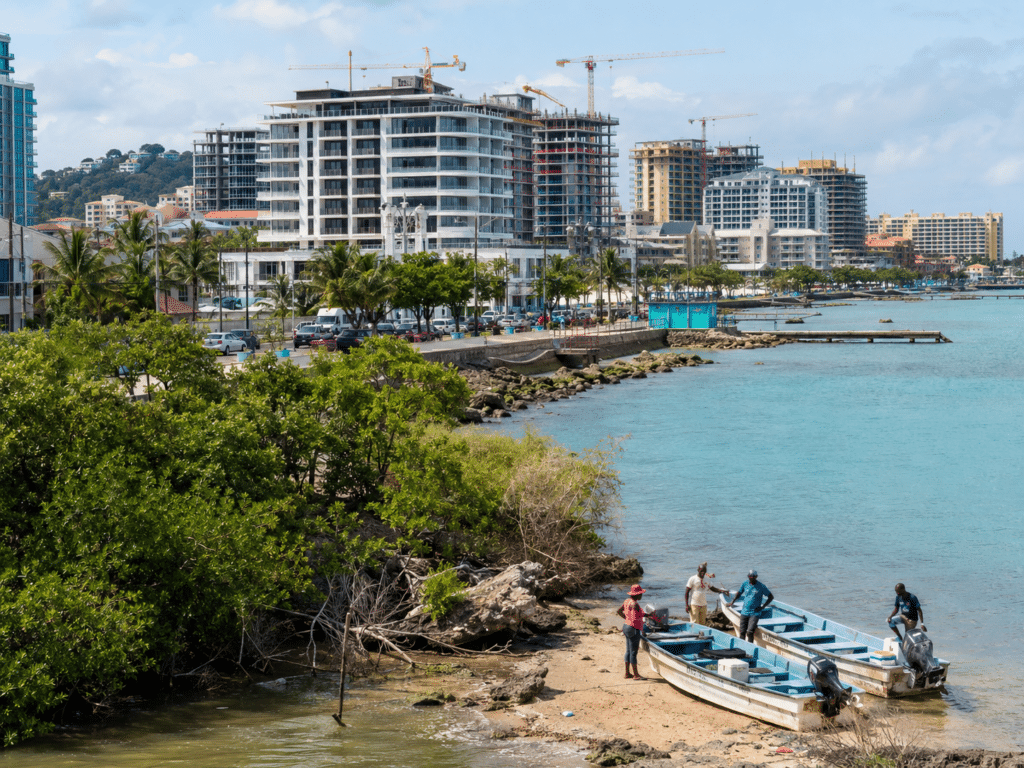
Reparations for slavery, climate-related losses and damages, and the fight against inequality are often addressed separately. Yet these issues stem from the same mistake: counting only part of the actual wealth. In the Caribbean, this contradiction is evident. A mangrove forest may be destroyed to make a project profitable in the short term. Its ability to protect coastlines, limit storm damage, or support fisheries is not always factored into the initial calculations. When disaster strikes, the region must finance reconstruction, often through debt. The value of nature is ignored at the outset, and then its absence becomes a collective burden.

Restorative justice thus links memory, the economy, and the environment. It raises a concrete question: How can we redress a historical injustice without reproducing the same imbalances in current decisions?

Rescue, Rebuild, and Transform
Restorative justice is structured around three stages: relief, reconstruction, and repositioning. The first addresses immediate emergencies. The second restores what has been lost. The third transforms the rules so that the harm is not repeated. This final stage is crucial. Rebuilding a house on the same fault line is tantamount to setting the stage for its next collapse. Similarly, compensation scattered across isolated projects may produce temporary results without addressing the root causes of vulnerability.

Restorative justice could therefore fund additional investments: education, health care, ecosystem protection, resilient infrastructure, strong institutions, and economies capable of retaining more value within the Caribbean region. The goal would be to compensate for a loss while making its recurrence less likely.

Three Possible Changes for CARICOM
Restorative justice offers three avenues for the region. First, every major public or financial decision could assess what it creates and what it destroys in terms of the four forms of wealth. Second, reparations could be organized as a coherent portfolio of reconstruction and transformation. Finally, human and environmental costs could be incorporated into the evaluation of projects, loans, and investments.
Restorative justice would thus shift the focus of the debate. For the Caribbean, making amends for the past could become a way to protect the future, by finally treating people, nature, institutions, and infrastructure as equally valuable.
In this context, restorative justice refers to an approach aimed at acknowledging and addressing the lasting consequences of slavery and colonization. It is not limited to the payment of financial compensation; it also seeks to invest in communities, institutions, the environment, and the economy to ensure that the same inequalities do not continue to be perpetuated.
The four forms of capital are productive capital, which includes infrastructure and businesses; natural capital, such as forests, reefs, and water; human capital, which encompasses health, education, and skills; and societal capital, based on institutions, trust, and social cohesion. Sustainable development requires advancing these four forms of capital together, without enriching one at the expense of the others.
It could help fund a coherent set of initiatives in education, health, ecosystem protection, climate resilience, and infrastructure. It also involves factoring human and environmental costs into financial decisions and assessing what each project creates or destroys. These guidelines were presented to CARICOM as proposals, not as decisions that have already been adopted.
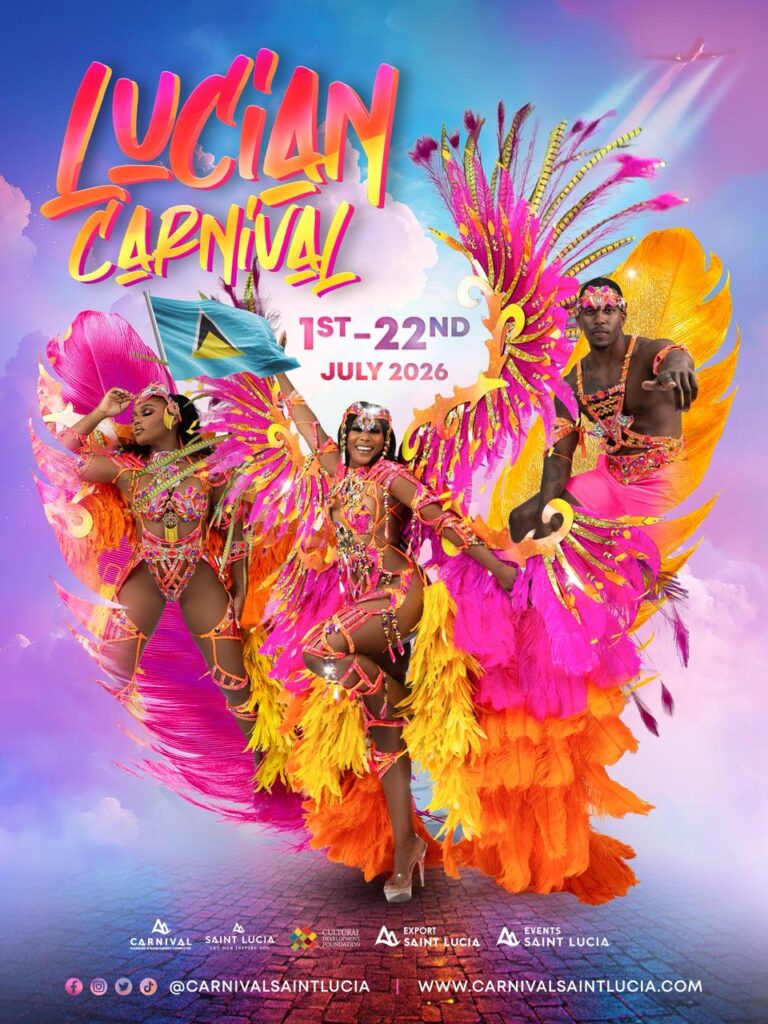
From July 1 to 22, the 2026 Saint Lucia Carnival marks one of the island’s most eagerly anticipated cultural events. For three weeks, the island builds up to the big parade days, but the carnival is about more than just the final spectacle of costumes in the streets. It takes shape beforehand, through rehearsals, competitions, neighborhood celebrations, and the voices that bring Castries to life.
Even before the bands take to the streets, the carnival makes itself heard. A soca track drifts from a cell phone to a bus. Artists test out their songs. Groups fine-tune the final details. In Saint Lucia, the carnival doesn’t happen all at once. It builds until it becomes a collective voice.
A cultural season—not just a parade
The official program for the 2026 Saint Lucia Carnival announces a full season, featuring calypso and soca competitions, community events, Junior Carnival, J’Ouvert, King and Queen of the Bands, and the National Parade of the Bands. Young people take center stage with Junior Carnival. Calypsonians carry on a tradition of social commentary. Soca artists seek the chorus that will stick in people’s minds. The bands transform costumes into a visual language. In this spirit, Carnival becomes a space not only for dancing, but also for finding a sense of belonging.
That’s where the 2026 Saint Lucia Carnival really comes into its own. The event isn’t just a series of parties. It’s a cultural celebration. It showcases an English-speaking island steeped in a strong Creole heritage.


A Memory Born on the Street
The history of the Lucian Carnival reminds us that the first recorded celebration in Saint Lucia dates back to 1947. According to the official account, a small group is said to have paraded through Castries in worn-out clothes, beating out rhythms on bottles and pieces of steel. By 1948, steel bands, calypso musicians, and costumed groups were already part of the festivities. This detail changes our understanding of the carnival. It didn’t arise solely from a program or a poster. It came from a grassroots movement. From a city. From an improvised sound. From a need to take to the streets in a different way.
Today, the 2026 Saint Lucia Carnival continues this momentum. When Castries hosts the parades and major events, the capital serves as more than just a backdrop. It once again becomes the place where history, music, and people come together.


When Kwéyòl Hits the Road
St. Lucia’s uniqueness is expressed through its language. St. Lucia is an English-speaking country, but its cultural identity is strongly rooted in Kwéyòl, the St. Lucian Creole. During Carnival, this coexistence becomes audible. Calypso conveys social commentary. Soca provides the collective momentum. Dennery Segment brings a more recent, more direct sound that is distinctly Saint Lucian in its energy. Born in Dennery in the 2010s, this genre blends soca, dancehall, and zouk. Its lyrics are often delivered in Saint Lucian Creole.
At the 2026 Saint Lucia Carnival, Kwéyòl is more than just a folkloric element. It becomes a living force. It bursts forth in the choruses, brings the street to life, and reminds us that Saint Lucian identity is also passed down through the way people speak, respond, sing, and dance.


Music as a Matter of Identity
This year, Listwa Kannaval 2026 added a special depth to the calendar. This cultural event posed a powerful question: Does music merely reflect who we are, or does it also shape the way we understand ourselves?
This question sheds light on the 2026 Saint Lucia Carnival. Behind the feathers, sequins, and sound trucks lies a conversation about memory, language, and transmission. What becomes of a song when it moves from the studio to the streets? What becomes of a language when it is taken up by a crowd? What does a parade convey when several generations march together? In Saint Lucia, Carnival provides the answer. It does not separate celebration from memory. It does not separate music from identity. It keeps both moving in the same rhythm.

A Voice from Lucien in the Caribbean
The Caribbean is home to major carnivals, each with its own traditions, sounds, and schedules. Saint Lucia’s strength does not lie in imitating Trinidad, Barbados, Saint Vincent, or Grenada. Its strength lies in asserting its own unique blend: a capital steeped in carnival history, an English-speaking culture enriched by Kwéyòl, a vibrant calypso tradition, and a contemporary sound known as Dennery. It is this uniqueness that gives Saint Lucia Carnival 2026 its value. It doesn’t just say, “Look at our carnival.” Rather, it says, “Listen to our way of being Lucians.”
When the bands enter Castries, all eyes will naturally turn to the costumes. But perhaps what matters most will be the choruses sung in unison, the Kwéyòl in the music, and the memory of 1947 that continues to pulse beneath today’s sounds. With the 2026 Saint Lucia Carnival, Saint Lucia isn’t just putting on a parade. For 22 days, it’s making the voice of Saint Lucia heard loud and clear.
The 2026 Saint Lucia Carnival takes place from July 1 to 22, 2026, in Saint Lucia. The carnival spans several weeks, featuring music competitions, community events, Junior Carnival, J’Ouvert, and the grand final parades. The most anticipated days are July 20 and 21, when the bands take to the streets of Castries for the National Parade of the Bands.
The 2026 Saint Lucia Carnival is significant because it is more than just a street party. It showcases Saint Lucian identity through music, language, costumes, and collective memory. The carnival gives voice to the diverse cultural expressions of Saint Lucia: calypso, soca, Kwéyòl, and the Dennery Segment. It is a time when the island asserts its uniqueness within the broader family of Caribbean carnivals.
Kwéyòl, the Saint Lucian Creole language, lends the carnival a unique cultural depth. It appears in songs, choruses, and popular expressions. The Dennery Segment, which originated in Dennery in the 2010s, brings a more recent, fast-paced, and highly expressive musical style. In Saint Lucia Carnival 2026, these elements demonstrate that the Saint Lucian carnival is not just a visual spectacle: it is also a voice, a language, and a way of telling the story of Saint Lucia.
In the Caribbean, a high energy bill can slow down a business. A storm can cut off a road, block a port, or jeopardize a harvest. A security crisis can also extend beyond the borders of a single country. It is against this daily reality that the Canada-CARICOM dialogue is taking on a new dimension today.
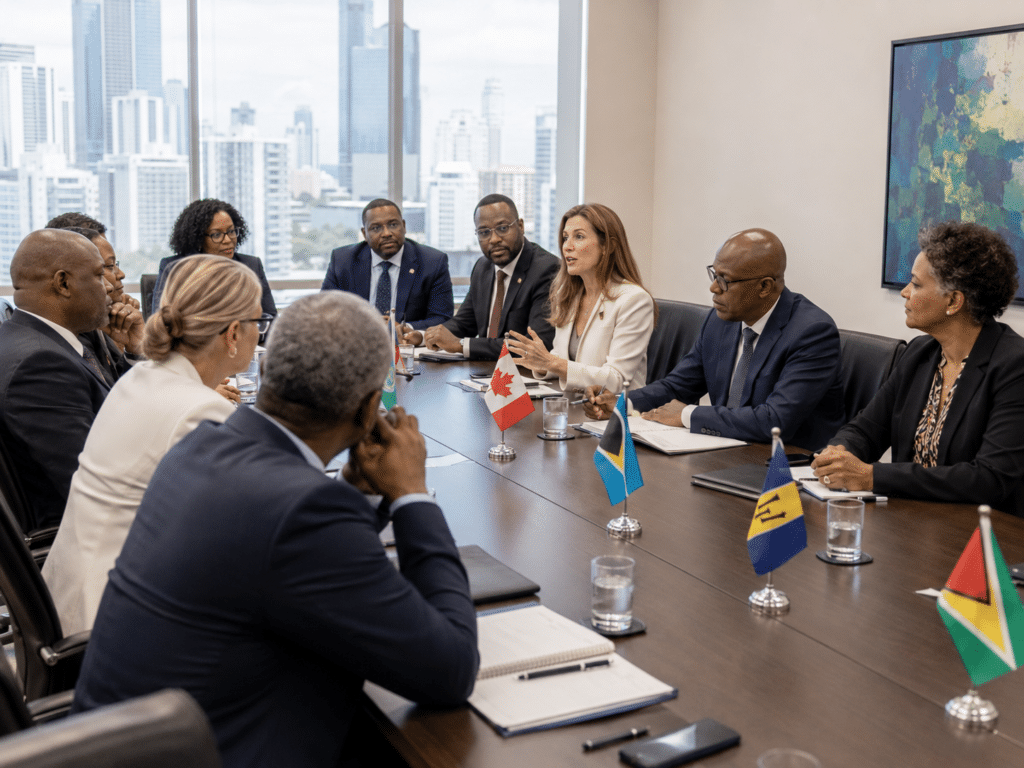
Meeting in Panama City on the sidelines of the 2026 General Assembly of the Organization of American States, the foreign ministers of Canada and CARICOM sought to reinvigorate their strategic partnership. At the heart of their discussions was an action plan focused on three major priorities for the region: security, climate, and the economy.
Cooperation Aimed at Achieving Concrete Results
The Canada-CARICOM partnership builds on the strategic agreement launched in 2023. But the 2026 meeting marks an important milestone: both parties now want to move forward with a plan that is more specific, clearer, and more measurable.
The goal is not merely to demonstrate diplomatic closeness. It is to establish priorities, timelines, and funding mechanisms capable of producing results. For Caribbean countries, this clarity matters. The region faces a range of interrelated challenges: energy costs, climate-related disasters, maritime security, financial vulnerability, and the crisis in Haiti. The Caribbean is not merely asking for aid. It is seeking partners capable of understanding its realities and working alongside it for the long term.
Security: A Regional Emergency
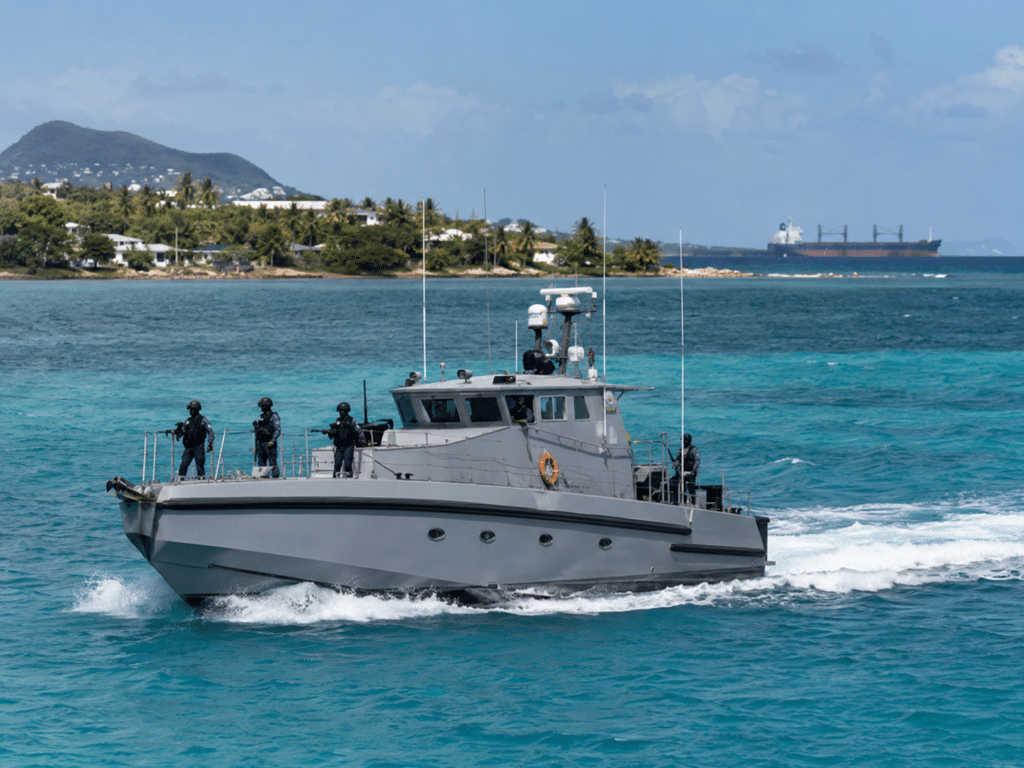
Security is central to this new Canada-CARICOM plan. The ministers discussed transnational crime, gangs, irregular migration, maritime security, and illicit flows. For the region, these issues are not isolated. The sea serves as a link, but it is also an area of vulnerability. Trafficking, criminal networks, cyberthreats, and political crises sometimes spread faster than institutional responses can keep up.
Canada already supports certain regional initiatives through capacity building, targeted interventions, and operational partnerships. The new challenge is to move toward a more coordinated response: better protecting maritime areas, strengthening institutions, sharing relevant information, and limiting the influence of criminal networks.
Haiti: A Crisis That Affects the Entire Caribbean
Haiti is a major focus of the discussions. The political, security, and humanitarian crisis the country is facing has direct consequences for the region. In particular, the ministers highlighted the risks associated with drug and arms trafficking. Support for the Gang Suppression Force was among the topics discussed. This force is intended to help restore security on the ground, with a mandate set to be renewed by the United Nations Security Council.
But the response cannot be limited to security measures alone. The ministers also reaffirmed the right of Haitians to choose their own government. They support the holding of credible elections as soon as conditions permit, as well as efforts to combat corruption and impunity. Haiti serves as a powerful reminder: no lasting stability in the Caribbean can be achieved by leaving a country to face such a profound crisis on its own.

Climate and the Economy: Two Sides of the Same Challenge
The new Canada-CARICOM plan also clearly links climate and the economy. In the Caribbean, a natural disaster is never just a weather event. It affects families, businesses, roads, schools, ports, and public finances. Access to reliable and affordable energy is once again a priority. Overly expensive energy stifles innovation and puts a strain on households. A more stable energy supply can support industry, services, investment, and the transition to more sustainable models.
Trade is also part of the equation. The CARIBCAN program, which grants duty-free access to the Canadian market for most products originating in 18 Caribbean Commonwealth countries and territories, remains an important tool. It serves as a reminder that the Canada-CARICOM partnership is not just about diplomacy. It also encompasses economic opportunities, supply chains, and the ability of Caribbean businesses to expand beyond their local markets.

Greater Attention to the Caribbean's Vulnerability
Another key aspect of the Canada-CARICOM partnership concerns financing. Several Caribbean states are considered middle-income countries. Yet their vulnerability to climate-related disasters, economic shocks, and supply disruptions remains very high. This is one of the region’s major paradoxes. On paper, some countries appear too “advanced” to easily access concessional financing. In reality, a single crisis can undermine years of progress.
The ministers therefore emphasized the need to reform the international financial architecture. The idea is simple: the actual vulnerability of small states must be taken into account more fully—not just their average income.

A plan to follow closely
The coming months will be crucial. Officials still need to finalize the details of the action plan, identify priority initiatives, develop an implementation schedule, and strengthen monitoring efforts. A dialogue among senior officials is scheduled for the fall to advance this work.
The Canada-CARICOM partnership alone will not solve the Caribbean’s challenges. But it says something about the current moment: the region wants to be heard as a strategic area, not just as a vulnerable one. Now the real question remains: Will this new plan bring about visible changes for Caribbean people, businesses, and territories?
The new Canada-CARICOM plan is a roadmap designed to strengthen cooperation between Canada and the Caribbean Community. It is based on three priorities: more resilient economies, climate action, and regional security. The goal is to move from a diplomatic partnership to more concrete actions, with timelines, measurable results, and sustainable financing mechanisms.
Haiti is a key focus because its political, security, and humanitarian crises have repercussions for the entire region. The ministers discussed drug and arms trafficking, support for the Gang Suppression Force, and the right of Haitians to choose their own government. For CARICOM, Haiti’s stability therefore remains a regional issue, not just a national one.
The Canada-CARICOM Partnership directly links climate and the economy. It emphasizes access to reliable and affordable energy, the development of trade, the strengthening of supply chains, and access to financing tailored to the vulnerabilities of small Caribbean states. The goal is to enable the region to better withstand natural disasters, economic shocks, and international crises.
Organized by the Caribbean Chamber of Commerce in Europe (CCCE), the second edition of Caribbean Days brought together various expressions of Caribbean culture at UNESCO headquarters in Paris. Over the course of four days, the event provided a forum for dialogue on regional cooperation, sustainable tourism, and economic relations between the Caribbean and Europe.
A Caribbean-style restaurant with a view of Paris
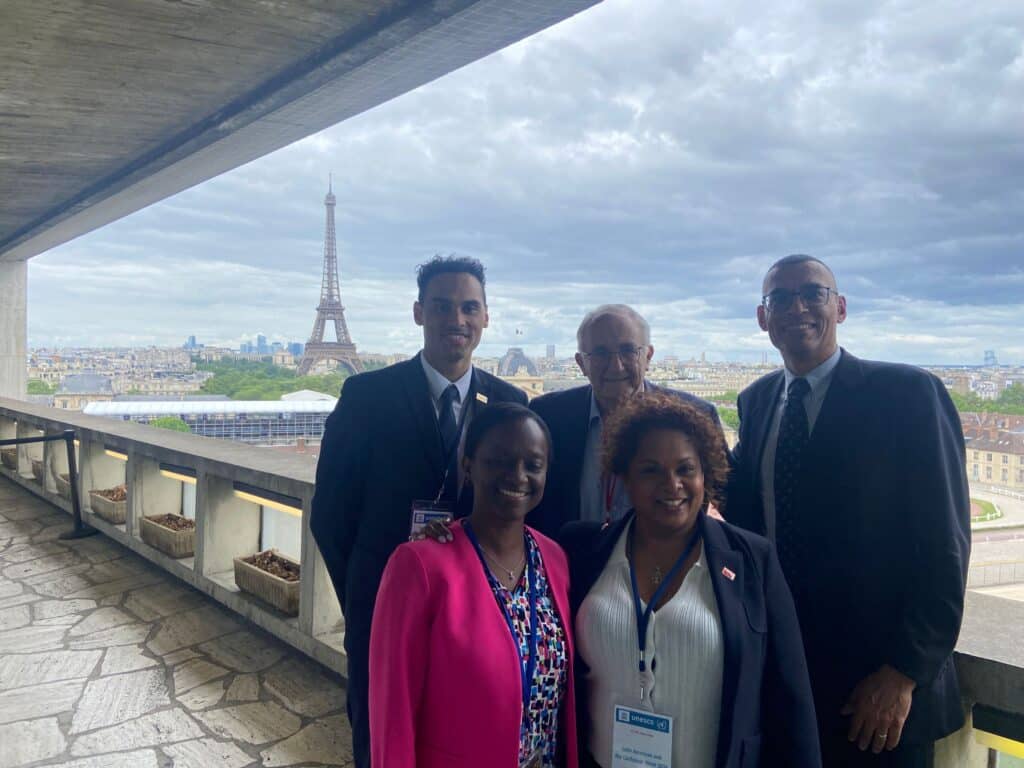
On the roof of UNESCO, Caribbean chefs from the association Les Toques françaises are preparing a three-course Caribbean menu. From the restaurant, guests can see the Eiffel Tower, Les Invalides, and the Left Bank. This scene captures the spirit of the Caribbean Days : to showcase the Caribbean through its creative works and craftsmanship, and then use this cultural presence to foster broader exchanges.
The Caribbean Chamber of Commerce in Europe (CCCE) organized this second edition as part of Latin American and Caribbean Week. Under the theme “Peace, Diversity, and Sustainability,” the event brought together representatives from the cultural, institutional, diplomatic, and economic sectors.
Over the course of four days, the program featured the visual arts, gastronomy, fashion, film, literature, poetry, music, and dance. These disciplines showcased various facets of Caribbean creativity in a venue dedicated to education, science, culture, and heritage.
Creative Industries Take Center Stage
The Caribbean Days highlighted the creative industries as one of the region’s strengths. Cuisine, fashion, film, storytelling, music, and dance served as points of connection between different regions and sectors.
This diversity brought together Caribbean ambassadors, other diplomats, representatives from the public sector, and private-sector stakeholders. Culture thus provided a common framework for discussions on development, investment, and partnerships.
Founded in November 2019, the CCCE’s mission is to facilitate exchanges between the Greater Caribbean and Europe. It also seeks to encourage European investment in the region’s sustainable economic development. In Paris, this mission has taken the form of meetings between institutions, businesses, and Caribbean representatives.
Regional Cooperation Over Lunch
A luncheon discussion focused on cooperation between France’s overseas territories in the Caribbean and CARIFORUM member states. Representatives from the Bank of France, Expertise France, and the OECD gave presentations.
The remarks by French Senator Micheline Jacques, who supports an economic partnership between France’s overseas territories and Haiti, refocused the debate on a concrete question: How can we strengthen ties among the various parts of the Caribbean region?
Through this event, the Caribbean Days brought culture, diplomacy, and the economy closer together. Gastronomy was not merely a backdrop; it served as a framework for dialogue on potential areas of cooperation and on the Caribbean’s role in its relations with Europe.
Sustainable Tourism in the Face of Climate Change
A roundtable discussion was held on sustainable tourism. Geoffrey Lipman, former president of the World Travel and Tourism Council and former deputy secretary-general of the World Tourism Organization, participated alongside Florian Valmy-Desvillers, director of business development for the Caribbean Tourism Organization in the United Kingdom and Europe.
Jo Spalburg, Secretary General of the CCCE, summarized the main message of these discussions. According to him, the acceleration of climate change makes it necessary to develop tourism that is more sustainable and more beneficial to local communities. These communities play a direct role in protecting the region’s natural and cultural heritage for future generations.
This reflection gives the Caribbean Days a specific scope. It links the promotion of Caribbean destinations to the responsibility of preserving what attracts visitors: landscapes, cultural heritage, cultural practices, and local knowledge.

From Cultural Visibility to Partnerships
As this second edition comes to a close, the CCCE is highlighting a collective goal: to transform cultural visibility into collaborations, innovation, and sustainable growth for the region.
The Caribbean Days have shown that culture can foster dialogue among diplomats, institutions, businesses, and creative professionals. What happens next will depend on the ability of the partners gathered in Paris to turn these exchanges into concrete partnerships that benefit Caribbean regions and communities.
Caribbean Days, also known as Journées des Caraïbes, is an event organized by the Caribbean Chamber of Commerce in Europe at UNESCO headquarters in Paris. Over the course of four days, the second edition of the event showcased the visual arts, gastronomy, fashion, film, literature, poetry, music, and dance. The event took place under the theme “Peace, Diversity, and Sustainability,” as part of Latin American and Caribbean Week.
Caribbean Days is organized by the Caribbean Chamber of Commerce in Europe (CCCE). Founded in November 2019, this organization seeks to facilitate exchanges between the Greater Caribbean and Europe, while encouraging European investment in the region’s sustainable economic development. In Paris, the CCCE brought together representatives from the cultural, diplomatic, institutional, and economic sectors to discuss Caribbean culture and challenges.
Caribbean Days combined the promotion of creative industries with discussions on regional cooperation and sustainable tourism. A luncheon forum focused on relations between France’s overseas territories in the Caribbean and CARIFORUM member states. A roundtable discussion also addressed the effects of climate change and the need to develop more sustainable tourism that better benefits local communities working to protect the region’s natural and cultural heritage.
Starting with the 2026–2027 season, Saint Lucia will join the Arsenal family as an official destination partner. This partnership places a Caribbean island at the heart of a strategy aimed at transforming global soccer into tourism, a source of pride, and opportunities for its youth.
A Partnership Formalized in Castries
In Castries, the Saint Lucia Tourism Authority formalized a multi-year global partnership with Arsenal Football Club. The London-based club will now serve as an ambassador for this Eastern Caribbean island, which has a population of approximately 180,500.
This choice is no small matter. Saint Lucia is seeking to raise awareness of its beauty, culture, and tourism offerings among an international audience. The United Kingdom plays a key role in this strategy, as it is one of the island’s main tourism markets. Arsenal serves as a gateway to millions of fans, matches watched in many countries, and platforms capable of spreading the island’s image far and wide. For an island destination, this visibility can make all the difference.


Saint Lucia, a showcase at the heart of English soccer
The partnership provides for Saint Lucia’s presence within the Arsenal ecosystem. In particular, the island will gain visibility at Emirates Stadium during Premier League, Women’s Super League, and cup matches. It will also be featured on the club’s digital platforms and channels.
Today, tourism is no longer limited to trade shows or traditional advertising campaigns. It also plays out through collective emotions. A game, a jersey, a video, a community of fans—these are places of memory, conversation, and sometimes the desire to travel. St. Lucia is therefore positioning its image where attention already exists to spread awareness of its name, its “Let Her Inspire You” campaign, and its identity among an audience that may know Arsenal before it knows the Pitons.
Saint Lucia Looks Back on Its Youth
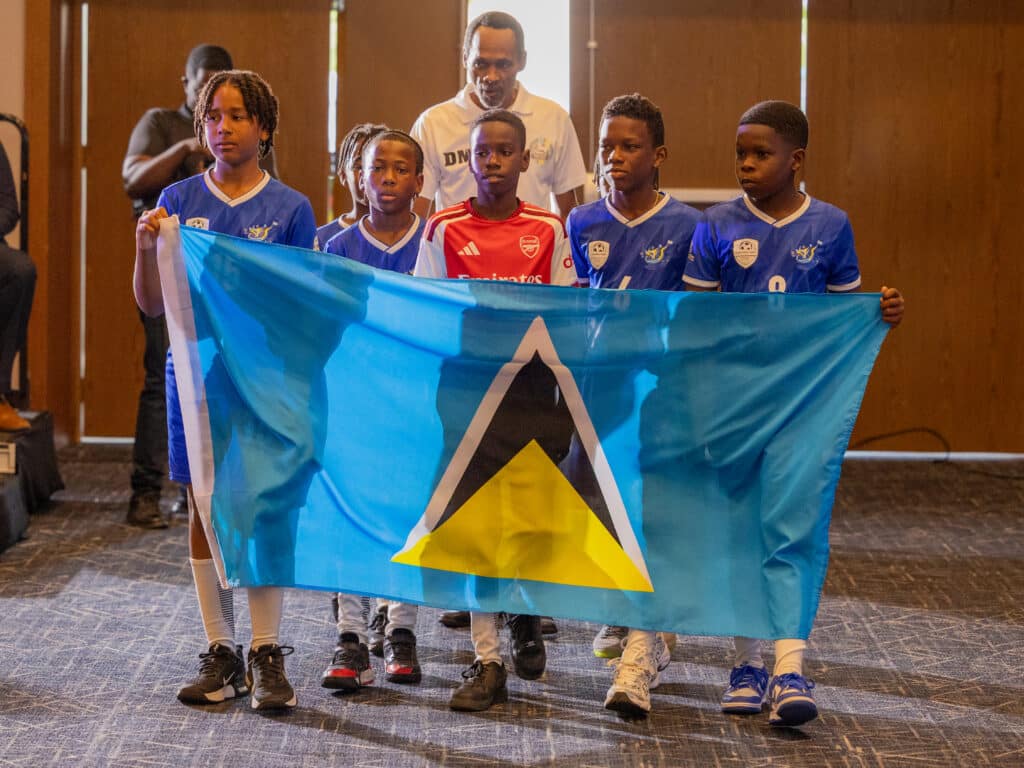
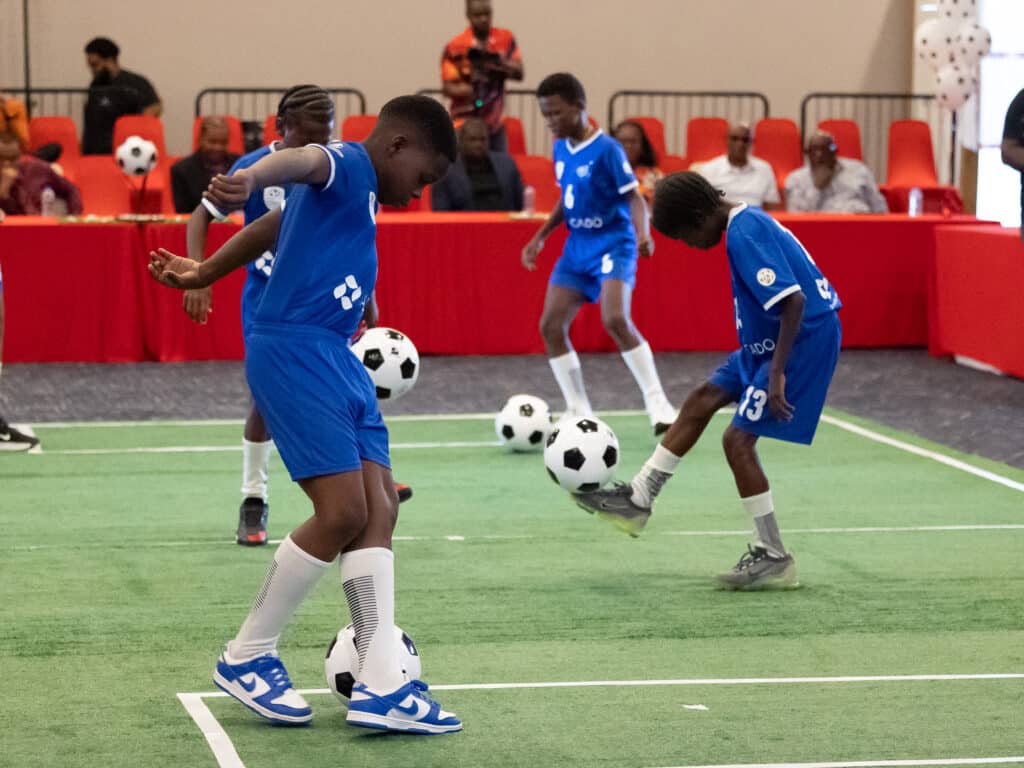
The most interesting part of the agreement lies far from the stands. The partnership is also intended to support the creation of an Academy Hub in Saint Lucia. The stated goal is to create mentoring opportunities and development pathways to help young players develop their talent.
On many islands, sports serve as a common language. They embody children’s dreams, families’ efforts, makeshift fields, local clubs, and coaches who volunteer their time. When an international partnership promises opportunities for young people, it deserves careful consideration. The challenge will be simple to articulate but harder to measure: Can this global visibility produce real results on the ground? For young players in Saint Lucia, the Academy Hub will be the one to watch.


A destination with a story to tell
The island is often described as the only country in the world named after a woman. It is known for the Pitons, aUNESCO World Heritage Site, as well as for its forests, beaches, mud baths at Sulphur Springs Park, its chocolate-making heritage, and its major cultural events.
The Gros Islet Friday Night Street Party, the Saint Lucia Jazz & Arts Festival, the Lucian Carnival, and Creole Heritage Month already give the island a packed calendar of events. The partnership with Arsenal therefore builds on an existing legacy. The involvement of Julien Alfred, Olympic champion and tourism ambassador, further reinforces this perspective. Saint Lucia already knows that sports can project a name far beyond its borders. With Arsenal, the island is simply taking things to a whole new level.
Sports Tourism as a Strategy
This isn’t the first time the Saint Lucia Tourism Authority has partnered with big names in sports. The organization has previously collaborated with the New York Yankees, the Toronto Raptors, the Toronto Maple Leafs, and the Brooklyn Nets. The agreement with Arsenal is therefore part of a broader strategy focused on sports tourism.
Soccer, cricket, rugby, swimming: Saint Lucia wants to attract teams, athletes, visitors, and attention. For a Caribbean island, this strategy can become a powerful tool if it remains rooted in the local community. Visibility alone is not enough. It must fuel the local economy, events, young talent, and cultural recognition. That is where this partnership will truly be judged—not just by the size of the screens or the number of fans reached, but by what it leaves behind on the island.


When an Island Enters the Global Arena
With Arsenal, Saint Lucia is entering a space where sports, tourism, and identity intersect. Soccer becomes a showcase. The island becomes a story. And its youth become a promise to watch. The question now is: to what extent can a small Caribbean island transform the power of a major club into tangible benefits for its people?
Saint Lucia will become Arsenal Football Club’s official destination partner starting with the 2026–2027 season. This multi-year partnership, led by the Saint Lucia Tourism Authority, is intended to boost the island’s international visibility, particularly in the United Kingdom, one of its key tourism markets. It also provides for Saint Lucia’s presence within the Arsenal environment, at Emirates Stadium, during men’s and women’s matches, as well as on the club’s digital platforms.
Saint Lucia is partnering with Arsenal to reach a global audience already passionate about soccer. The goal is to raise the island’s profile beyond traditional tourism campaigns by associating the destination with a club that has a following in many countries. This partnership also helps strengthen the “Let Her Inspire You” campaign and showcase Saint Lucia as a Caribbean destination known for its nature, culture, events, and sports tourism.
The Academy Hub planned for St. Lucia is intended to create mentoring opportunities and pathways to help young players develop their talent. This is one of the most important aspects of the partnership with Arsenal, as it goes beyond mere tourism promotion. The challenge will be to see how this collaboration can produce tangible results for young athletes, local clubs, and the development of soccer on the island.
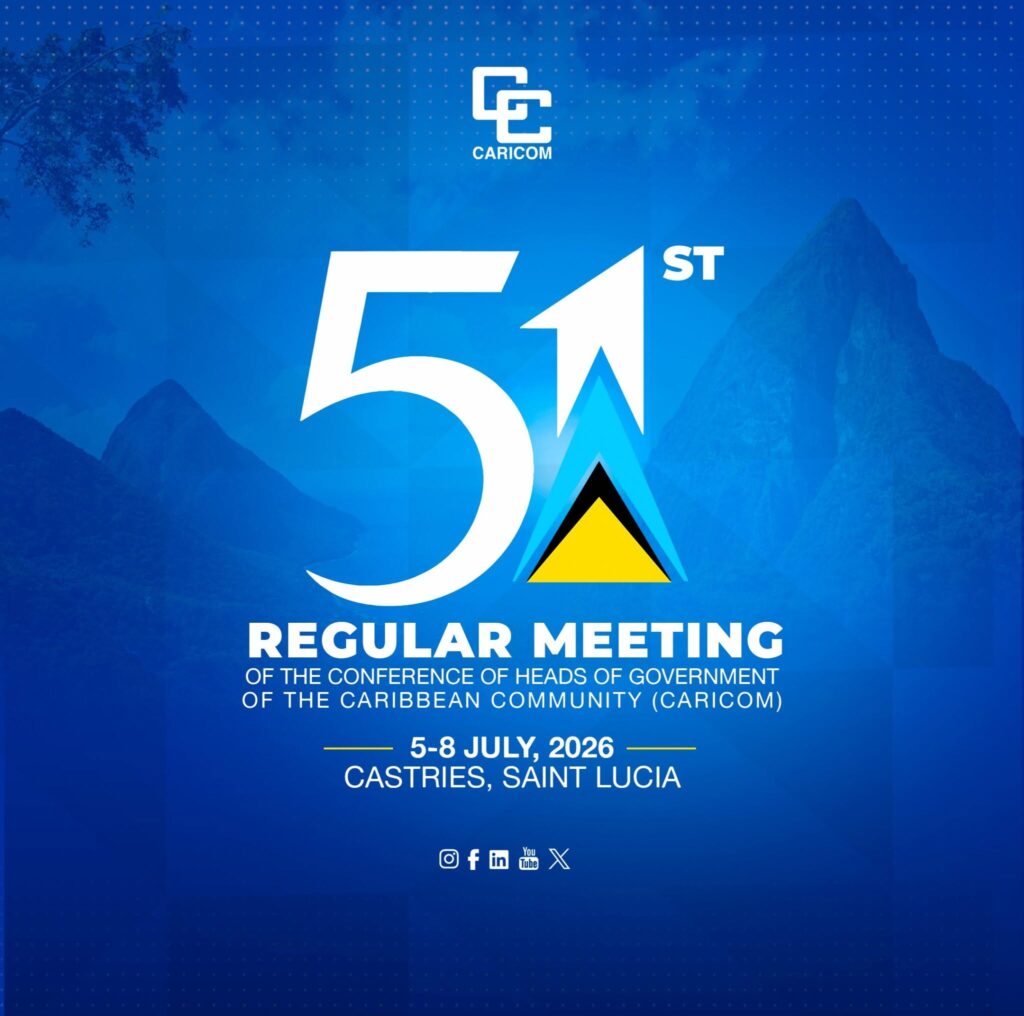
Starting July 1, 2026, Saint Lucia will assume the CARICOM chairmanship for a six-month term. A few days later, the island will host the 51st Regular Meeting of the Conference of Heads of Government, from July 5 to 8. Behind this official schedule, a broader question emerges: How can Caribbean integration be made more tangible for the people?
Saint Lucia Takes Center Stage in the Caribbean Calendar
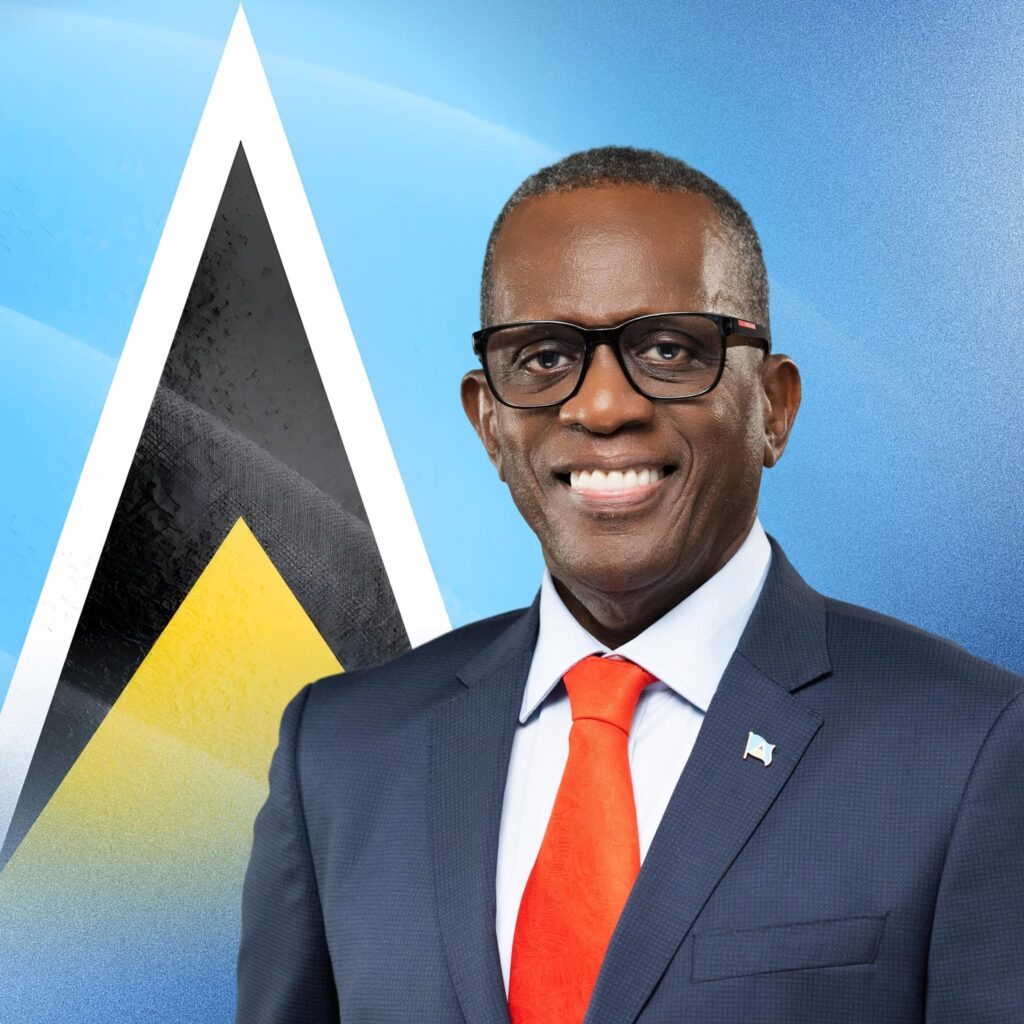
In the coming days, Saint Lucia will become one of the places where the Caribbean will come together to discuss itself, its pressing issues, and its shared future. At the national launch of the meeting, Prime Minister Philip J. Pierre described the event as an important moment for his country and for the entire Caribbean Community.
The schedule is clear. Saint Lucia will assume the CARICOM chairmanship on July 1, 2026. Philip J. Pierre will then succeed Dr. Terrance Drew, Prime Minister of Saint Kitts and Nevis and the organization’s current chair. This chairmanship will last until December 31, 2026.
A rotating presidency, a shared responsibility
Within CARICOM, the presidency rotates among member states. This principle may seem very institutional. Yet it reveals something essential about the region. The small Caribbean states do not face their challenges alone. They take turns, coordinate with one another, and seek to maintain continuity in collective decision-making.
For Saint Lucia, this responsibility comes at a time when the region is facing multiple pressures simultaneously. Climate change, economic vulnerabilities, security, food security, and youth issues are no longer separate topics. They intersect in the daily lives of residents. This is precisely where CARICOM wants to be held accountable: not just in words, but in results.
From July 5 to 8, CARICOM leaders met
The 51st Regular Meeting of the CARICOM Conference of Heads of Government will be held in Saint Lucia from July 5 to 8, 2026. The opening ceremony is scheduled for Sunday, July 5. On Monday, July 6, the heads of government or their representatives will participate in the Heads Retreat, a time set aside for direct discussions among leaders.
The formal sessions will then take place on Tuesday, July 7, and Wednesday, July 8. They are intended to address issues deemed essential to the Community’s future. This format, which combines political discussions and official meetings, aims to create a space for dialogue, coordination, and decision-making.

From Resilience to Renewal
The chosen theme encapsulates the stated ambition: “CARICOM: From Resilience to Renewal in a Changing World.” The phrase stems from an observation well known throughout the Caribbean. The peoples of the Caribbean have learned to persevere in the face of crises. Hurricanes, economic shocks, colonial legacies, and dependence on external factors: resilience is part of the region’s history. But the message conveyed by Saint Lucia is clear: simply holding on is no longer enough. The region wants to enter a phase of renewal—renewal of economies, institutions, cooperation, opportunities, and collective trust.

Decisions that need to be seen
One of the most important points in Philip J. Pierre’s speech concerns the visibility of results. CARICOM cannot remain merely an idea confined to summits, communiqués, or conference rooms. To be meaningful, regional integration must touch the lives of citizens.
This involves concrete issues: better disaster preparedness, security cooperation, climate justice, food security, sustainable development, public health, education, and economic opportunities. These themes may seem broad. They become tangible when a family has to pay for groceries, when an island is rebuilding after a hurricane, or when a young person is looking for a place in the regional economy.

A question for the entire Caribbean
In July 2026, Saint Lucia will host more than just a leaders’ summit. For six months, the island will shoulder a share of the region’s responsibility. The 51st CARICOM meeting will be a moment of diplomacy, but also a political test: Can the Caribbean turn its resilience into tangible decisions? The answer will not be decided solely in Saint Lucia. It will be measured by the entire region’s ability to make Caribbean cooperation a reality that people can see in their daily lives.
Saint Lucia will officially assume the CARICOM chairmanship on July 1, 2026. Prime Minister Philip J. Pierre will then succeed Dr. Terrance Drew, Prime Minister of Saint Kitts and Nevis. This rotating presidency will last six months, until December 31, 2026.
The 51st Regular Meeting of the CARICOM Conference of Heads of Government will be held in Saint Lucia from July 5 to 8, 2026. The opening ceremony is scheduled for Sunday, July 5, followed by the Heads Retreat on July 6 and the formal sessions on July 7 and 8.
This meeting is important because it comes as Saint Lucia assumes the CARICOM chairmanship. It should provide an opportunity for Caribbean leaders to address major issues such as climate, security, economic cooperation, food security, and the future of regional integration. The challenge is to translate political discussions into tangible results for the people of the Caribbean.
A constraint that can become a value
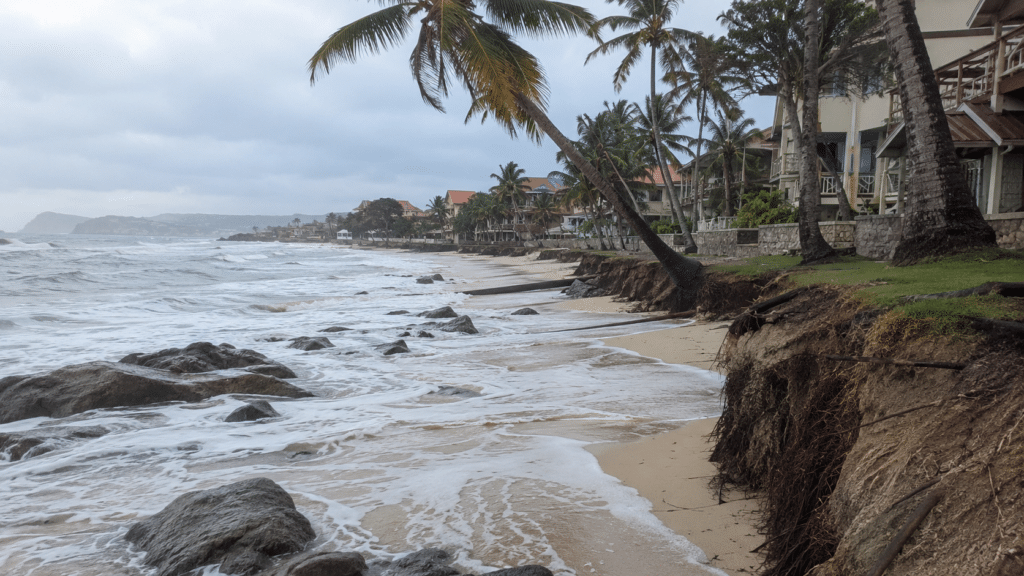
The Caribbean is experiencing climate change directly, brutally and continuously. More intense cyclonic seasons, accelerated coastal erosion, fragile coral ecosystems, energy vulnerability: no island in the region has been totally spared. For a long time, this reality has been presented as a constraint for public budgets, for tourism operators and for economic models based on the classic spa industry.
The Travel Dreams 2026 report by Amadeus, however, suggests a possible turnaround. What was once perceived as a fragility can become a value proposition, as long as it is acknowledged and accurately portrayed. This is where the notion of visible sustainability becomes central.
What travellers say
The study first documents the scale of demand. Of the 6,000 travelers surveyed across six major global markets, 75% say that a hotel’s sustainability commitments are important in their booking decision. More than one in three, precisely 35%, consider them “very important”.
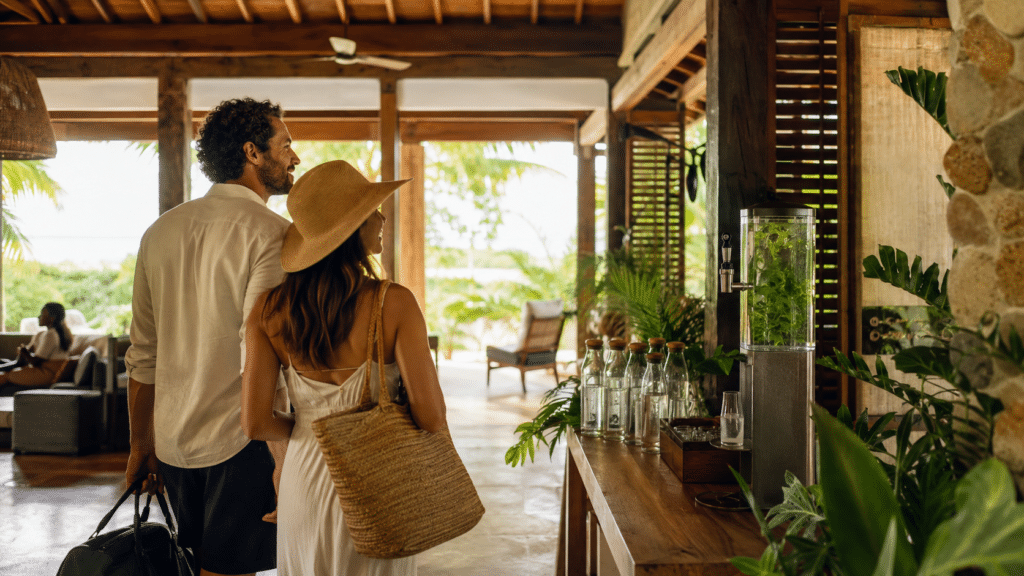
And this concern translates into willingness to pay. Travelers who place importance on this criterion say they are willing to spend an average of 11.7% more per night to stay in an establishment with serious sustainable practices. This represents around $29 more on a $250 room. Among Generation Z travelers, this willingness rises to 14.7%, or almost $37 more per night. Visible sustainability starts here: in a hotel’s ability to communicate why these practices are worth more.
One data point deserves particular attention for the Caribbean: sensitivity to sustainability varies greatly according to source markets. It reaches 93% of travelers surveyed in India and 85% in China, compared to 65% in the UK and Germany. For a region seeking to reduce its dependence on traditional markets, these discrepancies open up a strategic avenue to be handled with caution. These travelers won’t be satisfied with a generic discourse on nature. They’ll be looking for evidence, visible features, documented stories. For the Caribbean, visible sustainability can become a way of speaking to these audiences without denying its local roots.

What hotels do
On the supply side, Amadeus data show a widespread commitment among the hoteliers surveyed. Of the 500 general managers or equivalent profiles consulted across nine countries, all say they plan to spend on sustainability initiatives in the coming year. The average anticipated expenditure represents 6.7% of total company expenditure. And 35% of hoteliers identify sustainability as a key differentiating factor from their competitors.
But the study also highlights a revealing discrepancy. Hotels invest primarily in actions that have an internal operational efficiency rationale: water conservation (33%), sustainable catering supply (33%), responsible supply chains (33%), waste reduction (32%), staff training (32%).

On the other hand, practices that are more visible to the customer, such as renewable energies (28%), biodiversity and community initiatives (27%), and the link between sustainability and loyalty programs (21%), remain less developed. It is this tension that makes visible sustainability strategic: it forces us to move from internal effort to an experience understood by the traveler.
Closing the gap
Joerg Schuler, Head of Global Hospitality Sales at Amadeus, sums up this discrepancy by talking about sustainability as being more “visible, experiential and integrated into the stay”. The formula is important, because it changes the subject. It’s no longer just a question of saying that a hotel consumes less water or reduces its waste. It’s about making these choices understandable, concrete and experienced by the traveler. Visible sustainability therefore requires not only proof, but also an accurate narrative.

This gap is precisely what the Caribbean can bridge. Visible Caribbean sustainability is not an abstract technical program. It can be embodied in visible, relatable, situated practices. Restoring mangroves. Coral reef protection. Local solar energy. Short-distance sourcing from small island producers. Saving water in contexts where the resource is precious. Passing on traditional knowledge of how to use the environment sparingly.

Each of these practices can be both a serious environmental commitment and a story that travelers can experience during their stay. It is this articulation that transforms visible sustainability into perceived value, and thus into pricing leverage.
A value to be documented
A Caribbean hotel that can document, with figures, identified partners and measurable results, its role in restoring a local ecosystem is no longer just selling a room. It’s selling participation in a broader regional project. Travelers surveyed by Amadeus have already indicated their willingness to pay for this. Visible sustainability therefore requires showing what is being done, by whom, with what effects.

This logic goes beyond the individual hotel business. It also concerns destination management bodies, tourism authorities and regional economic players. A region’s ability to credibly communicate its ecological commitment is becoming a competitive variable in the face of other tropical destinations. At destination level, visible sustainability can become a common language for hotels, producers, associations, communities and travellers.

The Caribbean challenge
For the Caribbean, the challenge is not to become sustainable in the sense that other regions understand it. It is to make legible a sustainability that, in many cases, is already practiced at the level of communities, small businesses, local cooperatives and inherited know-how. The global market is willing to pay for it. The question is whether the region will be able to present this reality with the appropriate rigor, coherence and pride.

This series of articles, in its three parts, has attempted to defend the same thesis. The expectations of travelers in 2026 – disconnection, connection to place, visible sustainability – are not constraints that Caribbean players have to endure. They are expectations that the region structurally bears, by virtue of its geography, cultures and history. What remains, as always, is the patient task of putting them into words. This is the editorial mission that Richès Karayib will continue to carry out, alongside the region’s economic, institutional and creative players.
Visible sustainability refers to the set of sustainable commitments that a traveler can actually see, understand or experience during their stay. It’s not just about internal measures, such as reducing water costs or limiting waste behind the scenes. In the Caribbean, this can take the form of solar power clearly integrated into the hotel, a mangrove restoration program, coral reef protection, sourcing from local producers or community actions presented with concrete results. This approach makes the ecological commitment more legible and credible for the traveler.
Visible sustainability can become a competitive advantage as travelers increasingly value hotels’ environmental commitments. According to the data used in the article, a majority of travelers consider these commitments to be important when choosing an establishment, and a proportion are even willing to pay more for serious practices. For Caribbean hotels, the challenge is not only to act, but also to document and tell the story of these actions with precision. An establishment capable of demonstrating its local impact is no longer just selling a room: it is proposing participation in a local project.
Caribbean destinations can better promote their visible sustainability by linking the actions of hotels, producers, associations, local authorities and communities into a coherent narrative. This requires proof: figures, identified partners, measurable results, actions monitored over time. A destination that explains how it protects its reefs, saves water, supports short circuits or restores its ecosystems builds a stronger promise than a simple discourse on nature. For the Caribbean, this storytelling is strategic, as it transforms real climate vulnerability into a cultural, ecological and economic value proposition.
